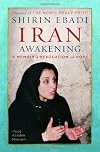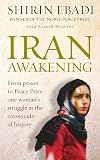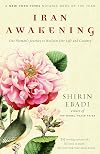
Iran Awakening: A Memoir of Revolution and Hope
by Shirin Ebadi, Azadeh Moaveni
On This Page
Description
The winner of the 2003 Nobel Peace Prize is an advocate for the oppressed, whose spirit has remained strong in the face of political persecution. Best known here as the lawyer working tirelessly on behalf of Canadian photojournalist Zara Kazemi--raped, tortured and murdered in Iran--Dr. Ebadi offers us a vivid picture of the struggles of one woman against the system. The book chronicles her childhood in a loving, untraditional family, her upbringing before the Revolution that toppled the show more Shah, her marriage and her faith, as well as her life as a mother and lawyer battling an oppressive regime in the courts while bringing up her girls. Outspoken, controversial, Ebadi became the first female judge in Iran; when the religious authorities declared women unfit as judges, she fought her way back as a human rights lawyer, defending women and children in cases that most lawyers were afraid to represent.--From publisher description. show lessTags
Recommendations

























Member Reviews
Every once in a while I read a book that not only personalizes a human rights issue, but does so in a way that inspires without candy-coating the situation. The first book I think of in this category is [I Shall Not Hate] by Izzeldin Abuelaish, who wrote about the Gaza Strip and some of the atrocities there, but also about the hope he sees for the future. Iran Awakening is another such book. Shirin Ebadi is a long-time human rights lawyer who won the Nobel Peace Prize in 2003. Her life has been a constant struggle as an Iranian woman to be educated, to become a female jurist, and to practice her profession with dignity despite the many obstacles in her way. When women are forbidden from being judges, she doesn't let that stop her, and show more becomes a renowned human right lawyer defending women and children from the vagaries and abuse of the government's system, often working pro bono. Learning there is a fatwa out for her assassination doesn't stop her. Imprisonment doesn't stop her. Disappointment doesn't stop her. She is single-minded in her demand for a better Iran, one which is ruled by law, not whims.
Although the story of her public life alone is enough to open eyes and inspire, I found the juxtaposition of her public and private lives to be the most complex and culturally interesting part of the book. For at home, Ms. Ebadi is a traditional wife and mother. Her faith is very strong and often helps her in her work, as she is able to quote religious passage back to imams who seek to create law based on very narrow interpretations of Islam. In addition, she sees herself as a woman devoted to her family, and in her context, that means cooking and freezing meals for her family so that they will eat well while she is in prison. She is devoted to her children and takes their upbringing seriously, while at the same time knowingly exposes them to danger through her work. She doesn't see a contradiction in these things. In her words:
In the last twenty-three years, from the day I was stripped of my judgeship to the years doing battle in the revolutionary courts of Tehran, I had repeated one refrain: an interpretation of Islam that is in harmony with equality and democracy is an authentic expression of faith. It is not religion that binds women, but the selective dictates of those who wish them cloistered. That belief, along with the conviction that change in Iran must come peacefully and from within, has underpinned my work.
I would highly recommend this book. It's a bit dated now, having been published in 2006, and I wish a new edition would be published, with updates. The message is important for those of us in the West to hear, and her life is an inspiring example of how to effect change in a complex political climate. The book is written with the assistance of Azadeh Moaveni, who went on to write her own very engrossing memoirs of her life as a young person in Iran: [Lipstick Jihad] and [Honeymoon in Tehran], two books which I would also recommend. My one fault with Iran Awakening is that the transitions between voices can occasionally be jarring. Some parts I assume Moaveni wrote (about politics and Iranian history, which are her forte) and other parts are clearly in Ms. Ebadi's voice (personal statements of belief and how she has chosen to live her life). Sometimes the transitions are seamless, sometimes not. But that is a minor quibble, and I would still encourage everyone to read this book. show less
Although the story of her public life alone is enough to open eyes and inspire, I found the juxtaposition of her public and private lives to be the most complex and culturally interesting part of the book. For at home, Ms. Ebadi is a traditional wife and mother. Her faith is very strong and often helps her in her work, as she is able to quote religious passage back to imams who seek to create law based on very narrow interpretations of Islam. In addition, she sees herself as a woman devoted to her family, and in her context, that means cooking and freezing meals for her family so that they will eat well while she is in prison. She is devoted to her children and takes their upbringing seriously, while at the same time knowingly exposes them to danger through her work. She doesn't see a contradiction in these things. In her words:
In the last twenty-three years, from the day I was stripped of my judgeship to the years doing battle in the revolutionary courts of Tehran, I had repeated one refrain: an interpretation of Islam that is in harmony with equality and democracy is an authentic expression of faith. It is not religion that binds women, but the selective dictates of those who wish them cloistered. That belief, along with the conviction that change in Iran must come peacefully and from within, has underpinned my work.
I would highly recommend this book. It's a bit dated now, having been published in 2006, and I wish a new edition would be published, with updates. The message is important for those of us in the West to hear, and her life is an inspiring example of how to effect change in a complex political climate. The book is written with the assistance of Azadeh Moaveni, who went on to write her own very engrossing memoirs of her life as a young person in Iran: [Lipstick Jihad] and [Honeymoon in Tehran], two books which I would also recommend. My one fault with Iran Awakening is that the transitions between voices can occasionally be jarring. Some parts I assume Moaveni wrote (about politics and Iranian history, which are her forte) and other parts are clearly in Ms. Ebadi's voice (personal statements of belief and how she has chosen to live her life). Sometimes the transitions are seamless, sometimes not. But that is a minor quibble, and I would still encourage everyone to read this book. show less
Shirin Ebadi's autobiography is an excellent read, not only for those who want to know something of the background of the mess currently developing in Iran, and why outside interference might be a Very Bad Idea, but also what it's like to live there, both as a free-thinker, as a woman, and as a lawyer - yes, the latter is very relevant - capped, bizarrely, with her having to sue the US Finance Dept. to be allowed to publish this very book in the US, since the embargo against Iran included literature.
Shirin Ebadi was the first woman to work as a judge in Iran in the 70s. The book follows her through her and the Iranian people's growing dissatisfaction with the shah, culminating in the 1979 revolution which she supported (and still show more supports)... and what happened when Khomeini's hardliners then took over and created a brand-new (or very old) kind of state: the Islamic Republic of Iran, where suddenly not only Ebadi found herself out of a job, but where the entire legal system she had spent her entire adult life learning was, overnight, replaced by a more-or-less arbitrary system of sharia laws where a woman is worth half a man and those who oppose the government oppose God himself and are treated accordingly. And as if that weren't enough, there was the war with Iraq on top of all of it.
And in this, she continued to work as a lawyer, specifically helping those who found themselves either screwed over by the system (rape victims and their families, mothers who couldn't get custody of their children) and those in more or less direct opposition to it. For all the horrific (or at times darkly comic) examples she cites, it's very hard not to be impressed by her ability to keep ducking and weaving despite being harrassed, jailed and finding her own name on official death lists. With no strict law to argue, she often finds herself arguing theology with judges - and even if they occasionally simply have her thrown out of court when they run out of arguments, she makes a difference. Not always, but simply getting the word out, simply keeping the debate alive in a country that's on its second generation as a theocracy, can mean the difference between life and death.
Over the last 23 years, from the day I was deposed as a judge to the trials in the revolutionary courts of Tehran, I've repeated my mantra: an interpretation of Islam which is compatible with equality and democracy is a true expression of faith. It's not religion which enslaves women, unlike what those say who want to keep women enslaved. That conviction, and the one that change must come peacefully from within, has always been the foundation of my work.
Iran Awakening isn't the dissident call to arms one might suspect; she got the Nobel peace prize, after all. It's a story of a woman who loves her country even though she (strongly, but politely) disagrees with her government, keeps her faith even when it's hijacked by fundamentalists, and works for justice and reform within a system that seems specifically designed to oppose both justice and reform, since overthrowing it completely simply isn't an option. Twitter is a fine tool; but if you want some more nuanced background, this makes a fine starting point. show less
Shirin Ebadi was the first woman to work as a judge in Iran in the 70s. The book follows her through her and the Iranian people's growing dissatisfaction with the shah, culminating in the 1979 revolution which she supported (and still show more supports)... and what happened when Khomeini's hardliners then took over and created a brand-new (or very old) kind of state: the Islamic Republic of Iran, where suddenly not only Ebadi found herself out of a job, but where the entire legal system she had spent her entire adult life learning was, overnight, replaced by a more-or-less arbitrary system of sharia laws where a woman is worth half a man and those who oppose the government oppose God himself and are treated accordingly. And as if that weren't enough, there was the war with Iraq on top of all of it.
And in this, she continued to work as a lawyer, specifically helping those who found themselves either screwed over by the system (rape victims and their families, mothers who couldn't get custody of their children) and those in more or less direct opposition to it. For all the horrific (or at times darkly comic) examples she cites, it's very hard not to be impressed by her ability to keep ducking and weaving despite being harrassed, jailed and finding her own name on official death lists. With no strict law to argue, she often finds herself arguing theology with judges - and even if they occasionally simply have her thrown out of court when they run out of arguments, she makes a difference. Not always, but simply getting the word out, simply keeping the debate alive in a country that's on its second generation as a theocracy, can mean the difference between life and death.
Over the last 23 years, from the day I was deposed as a judge to the trials in the revolutionary courts of Tehran, I've repeated my mantra: an interpretation of Islam which is compatible with equality and democracy is a true expression of faith. It's not religion which enslaves women, unlike what those say who want to keep women enslaved. That conviction, and the one that change must come peacefully from within, has always been the foundation of my work.
Iran Awakening isn't the dissident call to arms one might suspect; she got the Nobel peace prize, after all. It's a story of a woman who loves her country even though she (strongly, but politely) disagrees with her government, keeps her faith even when it's hijacked by fundamentalists, and works for justice and reform within a system that seems specifically designed to oppose both justice and reform, since overthrowing it completely simply isn't an option. Twitter is a fine tool; but if you want some more nuanced background, this makes a fine starting point. show less
I have recently returned from a trip to Iran and saw very much that was good, so was interested to read this. I hoped it would give a very different side to the story and give a good idea of what the Iranians have to go through to get where they are today. I was not disappointed. The book is clear and easy to read, always a plus point with subjects like this. Shirin Ebadi is clearly a courageous woman, twho has given up a great deal for what she believes in, and I was totally absorbed by her story.
This wonderful little book tells the story of an educated woman of Iran who participated in the Islamic Revolution and rose her voice to criticize it in terms of gender equality and other democratic issues, while remaining utterly faithful to her religion and to her country. She won the noble prize, as she see's it for her "one refrain: an interpretation of Islam that is in harmony with equality and democracy is an authentic expression of faith" (p. 204).
This was a quick read and definitely interesting. Even more than Reading Lolita in Tehran, it gave me a sense of what Iran is really like—and especially what it’s been like since the Islamic Revolution in 1979.
Shirin Ebadi won the Novel Peace Prize for her work as a lawyer and activist redressing the wrongs done to women and children in Iran. The book recounts her life and yet it seems deliberately to shy away from herself as a person. We know what she did, but only superficially how she felt. Reading the book, one might cry at the horrible situations she tried to redress (like a family of a murdered girl who had to raise the money to pay for the execution of the murderer after he’d been convicted, or the woman who wanted redress show more for the brutal deaths of her elderly dissident parents) but Ebadi is very circumspect about her own emotions. When she’s hauled off to prison she is still “accentuating the positive” even as she recounts her thoughts and feelings. There’s very little personal anger in the book (even though she faced situations that would make most women angry and bitter for life), and I suspect that’s the key to her having been so successful operating within a repressive Islamic republic and yet making significant progress toward peace and fairness for all citizens.
The book starts with the time she and other lawyers were given actual documents which might be able to prove that the government had hired assassinations to rid them of dissidents and other troublesome citizens. Even though the lawyers were given a time limit of 10 days to go through thousands and thousands of pages of documents without being allowed to photocopy or take notes, they realized that this was a breakthrough they could not pass up. The shock was when she found a document in which she herself had been named as a target for assassination.
She was born in 1947, the second daughter of what seems a fairly well-to-do middle class—certainly professional class—family. Her father had been in the government official and she had a relatively secular childhood. Her life sounded not unlike my own growing up in roughly the same time period—photographs show she wore pigtails and Peter Pan collars. She went to university to study law and became at judge at 23. (In the Iranian system one did not have to practice law before becoming a judge.) She grew up revering Mohammed Mossadegh, an effective Iranian prime minister who was dismissed when the US installed the latest Shah in 1953. She hated the profligate Shah and his minions and supported the Islamic Revolution of the Ayatollah Khomeini, not realizing that “freedom” for her country would significantly limit her personal freedom. (After all, she was a woman and as such only worth half of a man.)
She refused to quit her job as a judge when other women were harassed into doing so and when she was demoted, effectively, to the secretarial pool, she went to work every day and did what she was told. She did eventually resign but went back to work as a lawyer when that became possible, specializing in cases where women or children were unfairly treated. She took the most high profile cases pro bono, intending not only to work for the client but for changes in the laws that made such discrimination lawful. Eventually she gave up her paid clients completely. She was once thrown out of parliament where she had written a divorce law at the request of women members of that body. Questioned by a ruling cleric, she was able to justify her stance based on laws and textbooks taught to the mullahs. He couldn’t argue with her, but he could have her ousted from the building.
She’s an interesting character, whom you won’t feel like you know after reading this book, but will still be interested in. She was constantly satisfied with "some progress" rather than success in every effort. It built up over the years into a daunting reputation. show less
Shirin Ebadi won the Novel Peace Prize for her work as a lawyer and activist redressing the wrongs done to women and children in Iran. The book recounts her life and yet it seems deliberately to shy away from herself as a person. We know what she did, but only superficially how she felt. Reading the book, one might cry at the horrible situations she tried to redress (like a family of a murdered girl who had to raise the money to pay for the execution of the murderer after he’d been convicted, or the woman who wanted redress show more for the brutal deaths of her elderly dissident parents) but Ebadi is very circumspect about her own emotions. When she’s hauled off to prison she is still “accentuating the positive” even as she recounts her thoughts and feelings. There’s very little personal anger in the book (even though she faced situations that would make most women angry and bitter for life), and I suspect that’s the key to her having been so successful operating within a repressive Islamic republic and yet making significant progress toward peace and fairness for all citizens.
The book starts with the time she and other lawyers were given actual documents which might be able to prove that the government had hired assassinations to rid them of dissidents and other troublesome citizens. Even though the lawyers were given a time limit of 10 days to go through thousands and thousands of pages of documents without being allowed to photocopy or take notes, they realized that this was a breakthrough they could not pass up. The shock was when she found a document in which she herself had been named as a target for assassination.
She was born in 1947, the second daughter of what seems a fairly well-to-do middle class—certainly professional class—family. Her father had been in the government official and she had a relatively secular childhood. Her life sounded not unlike my own growing up in roughly the same time period—photographs show she wore pigtails and Peter Pan collars. She went to university to study law and became at judge at 23. (In the Iranian system one did not have to practice law before becoming a judge.) She grew up revering Mohammed Mossadegh, an effective Iranian prime minister who was dismissed when the US installed the latest Shah in 1953. She hated the profligate Shah and his minions and supported the Islamic Revolution of the Ayatollah Khomeini, not realizing that “freedom” for her country would significantly limit her personal freedom. (After all, she was a woman and as such only worth half of a man.)
She refused to quit her job as a judge when other women were harassed into doing so and when she was demoted, effectively, to the secretarial pool, she went to work every day and did what she was told. She did eventually resign but went back to work as a lawyer when that became possible, specializing in cases where women or children were unfairly treated. She took the most high profile cases pro bono, intending not only to work for the client but for changes in the laws that made such discrimination lawful. Eventually she gave up her paid clients completely. She was once thrown out of parliament where she had written a divorce law at the request of women members of that body. Questioned by a ruling cleric, she was able to justify her stance based on laws and textbooks taught to the mullahs. He couldn’t argue with her, but he could have her ousted from the building.
She’s an interesting character, whom you won’t feel like you know after reading this book, but will still be interested in. She was constantly satisfied with "some progress" rather than success in every effort. It built up over the years into a daunting reputation. show less
This was a quick read and definitely interesting. Even more than Reading Lolita in Tehran, it gave me a sense of what Iran is really like—and especially what it’s been like since the Islamic Revolution in 1979.Shirin Ebadi won the Novel Peace Prize for her work as a lawyer and activist redressing the wrongs done to women and children in Iran. The book recounts her life and yet it seems deliberately to shy away from herself as a person. We know what she did, but only superficially how she felt. Reading the book, one might cry at the horrible situations she tried to redress (like a family of a murdered girl who had to raise the money to pay for the execution of the murderer after he’d been convicted, or the woman who wanted redress show more for the brutal deaths of her elderly dissident parents) but Ebadi is very circumspect about her own emotions. When she’s hauled off to prison she is still “accentuating the positive” even as she recounts her thoughts and feelings. There’s very little personal anger in the book (even though she faced situations that would make most women angry and bitter for life), and I suspect that’s the key to her having been so successful operating within a repressive Islamic republic and yet making significant progress toward peace and fairness for all citizens.The book starts with the time she and other lawyers were given actual documents which might be able to prove that the government had hired assassinations to rid them of dissidents and other troublesome citizens. Even though the lawyers were given a time limit of 10 days to go through thousands and thousands of pages of documents without being allowed to photocopy or take notes, they realized that this was a breakthrough they could not pass up. The shock was when she found a document in which she herself had been named as a target for assassination.She was born in 1947, the second daughter of what seems a fairly well-to-do middle class—certainly professional class—family. Her father had been in the government official and she had a relatively secular childhood. Her life sounded not unlike my own growing up in roughly the same time period—photographs show she wore pigtails and Peter Pan collars. She went to university to study law and became at judge at 23. (In the Iranian system one did not have to practice law before becoming a judge.) She grew up revering Mohammed Mossadegh, an effective Iranian prime minister who was dismissed when the US installed the latest Shah in 1953. She hated the profligate Shah and his minions and supported the Islamic Revolution of the Ayatollah Khomeini, not realizing that “freedom” for her country would significantly limit her personal freedom. (After all, she was a woman and as such only worth half of a man.)She refused to quit her job as a judge when other women were harassed into doing so and when she was demoted, effectively, to the secretarial pool, she went to work every day and did what she was told. She did eventually resign but went back to work as a lawyer when that became possible, specializing in cases where women or children were unfairly treated. She took the most high profile cases pro bono, intending not only to work for the client but for changes in the laws that made such discrimination lawful. Eventually she gave up her paid clients completely. She was once thrown out of parliament where she had written a divorce law at the request of women members of that body. Questioned by a ruling cleric, she was able to justify her stance based on laws and textbooks taught to the mullahs. He couldn’t argue with her, but he could have her ousted from the building.She’s an interesting character, whom you won’t feel like you know after reading this book, but will still be interested in. She was constantly satisfied with "some progress" rather than success in every effort. It built up over the years into a daunting reputation. show less
I admire Shirin Ebadi not only her courage, but especially for the enormous amount of care and work she did while being both a Muslim housewife and mother and an activist lawyer. Her opinions are well founded, intelligent and compassionate. She doesn't brag about herself even though she has good reason to. This book is a must read if you want to understand the situation in Iran.
Members
- Recently Added By
Lists

The Emergence of the Modern Middle East
289 works; 13 members

Women in Islam
120 works; 8 members

All Things Iran/Persia
64 works; 1 member

Club Read's Recommended Nonfiction Written by Women
618 works; 30 members
Author Information

7+ Works 814 Members

4+ Works 1,807 Members
Awards and Honors
Distinctions
Notable Lists
Common Knowledge
- People/Characters
- Mohammad Reza Shah Pahlavi; Ayatollah Khomeini
- Important places
- Iran
- Epigraph
- Sadness to me is the happiest time,
When a shining city rises from the ruins of my drunken mind.
Those times when I'm silent and still as the earth,
The thunder of my roar is heard across the universe. (Mowlana Jalal... (show all)eddin Rumi)
I swear by the declining day, that perdition shall be the lot of man. Except for those who have faith and do good works and exhort each other to justice and fortitude.
(The Holy Koran 103:3) - Dedication
- In memory of my mother and my older sister, Mina, both of whom passed away during the writing of this book.
- First words
- In the fall of 2000, nearly a decade after I began my legal practice defending victims of violence in the courts of Iran, I faced the ten most harrowing days of my entire career.
Classifications
- Genres
- Biography & Memoir, Nonfiction, General Nonfiction, Politics and Government, Religion & Spirituality, History
- DDC/MDS
- 323.092 — Society, government, & culture Political science Civil Rights & Liberties/ Human Rights Civil Rights Biography And History Biography
- LCC
- KMH110 .I23 .A3 — Law Iran Iran
- BISAC
Statistics
- Members
- 606
- Popularity
- 48,260
- Reviews
- 17
- Rating
- (4.04)
- Languages
- 11 — Danish, Dutch, English, French, German, Italian, Norwegian (Bokmål), Portuguese, Slovenian, Spanish, Swedish
- Media
- Paper, Ebook
- ISBNs
- 28
- ASINs
- 6