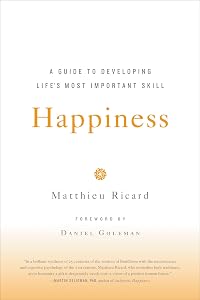
Happiness: A Guide to Developing Life's Most Important Skill
by Matthieu Ricard
On This Page
Description
In this groundbreaking book, Matthieu Ricard makes a passionate case for happiness as a goal that deserves as least as much energy as any other in our lives. Wealth? Fitness? Career success? How can we possibly place these above true and lasting well-being? Drawing from works of fiction and poetry, Western philosophy, Buddhist beliefs, scientific research, and personal experience, Ricard weaves an inspirational and forward-looking account of how we can begin to rethink our realities in a show more fast-moving modern world. With its revelatory lessons and exercises, Happiness is an eloquent and stimulating guide to a happier life. show lessTags
Recommendations



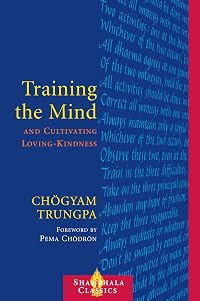
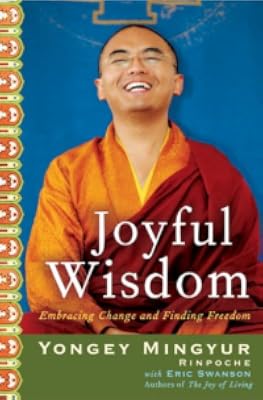
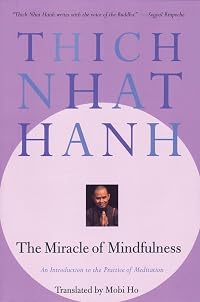

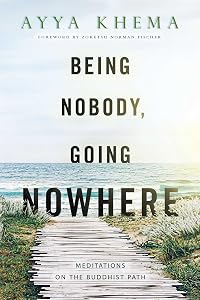






Member Reviews
After receiving his doctorate in molecular biology, Frenchman Matthieu Ricard chose to leave his privileged life for the ascetic life of a Buddhist monk. Since then he has been called the happiest person in the world. In this book he describes paths toward happiness drawn from ancient traditions and modern science.
Happiness is a general term encompassing many different experiences. It is important to distinguish pleasure—a fleeting emotion often based on outer circumstances—from contentment—an optimal and long-lasting state of being with an enlightened state of mind—the enduring form of happiness discussed in this book.
Ignorance in the form of ego involvement—described here as attachment to the illusion of the self—is the show more primary obstacle to happiness. A calm mind, attained through mediation, is essential to lifting the veil, seeing past the illusion, and allowing compassion to flourish. Exercises throughout the book help the conscientious reader practice these mental disciplines and move toward optimal states of being.
I imagine detaching the self by visualizing it as a spoiled three year old child. Think of taking a bratty toddler shopping. He might nag you to buy every toy in sight, make cruel and nasty comments about the appearance or behavior of other shoppers, impatiently ask to go home right now, annoy you with constant whining and misbehavior, and start crying at the least inconvenience. But you are not that child; you can use good judgment, act responsibly, calm the child, and move away from those behaviors. Similarly, the self—that bratty ego—can also be displaced, ignored, and silenced, because it has no substance.
Rigorous scientific examination, using EEG, fMRI, and other techniques confirm that monks who have extensively practiced various meditation techniques have achieved remarkably high levels of positive emotional experiences, mental coherence, and peace of mind. Ricard integrates ancient traditions with modern scientific thought to provide a coherent and reliable message.
A variety of mental disciplines are described, including a general technique for dispelling destructive emotions, and specific remedies to extinguish desire, hatred, and envy. Environmental, biological, and sociological factors affecting well-being are described, and many of these are within our control. The role of humility, optimism, perspectives on time, flow, ethics, and death are all explored in their own chapters.
Although the techniques are derived from the Buddhist traditions, they are presented here as entirely secular skills. The book is exceptionally well written, deep, and entirely accessible to the Western reader. This is not a how-to book full of quick fixes and platitudes. The simple paths described here require commitment, discipline, and practice. They may well change your life. show less
Happiness is a general term encompassing many different experiences. It is important to distinguish pleasure—a fleeting emotion often based on outer circumstances—from contentment—an optimal and long-lasting state of being with an enlightened state of mind—the enduring form of happiness discussed in this book.
Ignorance in the form of ego involvement—described here as attachment to the illusion of the self—is the show more primary obstacle to happiness. A calm mind, attained through mediation, is essential to lifting the veil, seeing past the illusion, and allowing compassion to flourish. Exercises throughout the book help the conscientious reader practice these mental disciplines and move toward optimal states of being.
I imagine detaching the self by visualizing it as a spoiled three year old child. Think of taking a bratty toddler shopping. He might nag you to buy every toy in sight, make cruel and nasty comments about the appearance or behavior of other shoppers, impatiently ask to go home right now, annoy you with constant whining and misbehavior, and start crying at the least inconvenience. But you are not that child; you can use good judgment, act responsibly, calm the child, and move away from those behaviors. Similarly, the self—that bratty ego—can also be displaced, ignored, and silenced, because it has no substance.
Rigorous scientific examination, using EEG, fMRI, and other techniques confirm that monks who have extensively practiced various meditation techniques have achieved remarkably high levels of positive emotional experiences, mental coherence, and peace of mind. Ricard integrates ancient traditions with modern scientific thought to provide a coherent and reliable message.
A variety of mental disciplines are described, including a general technique for dispelling destructive emotions, and specific remedies to extinguish desire, hatred, and envy. Environmental, biological, and sociological factors affecting well-being are described, and many of these are within our control. The role of humility, optimism, perspectives on time, flow, ethics, and death are all explored in their own chapters.
Although the techniques are derived from the Buddhist traditions, they are presented here as entirely secular skills. The book is exceptionally well written, deep, and entirely accessible to the Western reader. This is not a how-to book full of quick fixes and platitudes. The simple paths described here require commitment, discipline, and practice. They may well change your life. show less
I was turned on to this book by the writer's talk about happiness on TED.com. The book itself is fantastic in its simplicity and accessibility. I got out of it what Binyamin Cohen got out of his "Jesus Year" - an exploration in tangent of another religion to rediscover the nuances and enjoyments of one's own. The book reads like an expanded detailed version of Ethics of the Fathers and Proverbs. Bottom line? I'm definitely happier having read the book.
For me, the most interesting idea that this book had to offer was precisely what one reviewer found upsetting: "the way it treats emotions, by telling yourself to feel differently." The idea that Ricard advocates in this book is to not fall into the trap of feeling that pessimism and "gritty reality" make you perspicacious. This is exactly what keeps smart people from trying to change their situation when they're miserable. Pessimism, though, is a set of emotions just as empty as optimism. Optimism, even though it can be far from realistic too, makes the wiser choice, for your own peace of mind and for accomplishing whatever goals you might have in your life.
Brilliant! Though he takes a Buddhist perspective on happiness and ethics, Ricard discusses them in relation to recent developments in psychology, sociology and neuroscience, and to the Western philosophical tradition of ethics -- Kant, Bentham and Rawls, for example. I found his arguments persuasive and insightful. One of the best and most far-reaching books on happiness that I've read.
An outstanding book! It resonates strongly with my experience, even after years of "Western" thought and psychology. I believe profound truths work that way: One can learn something from all of the venerable schools of wisdom, and that one will likely find threads or more that resonate with one's being from all of the traditions, if one looks. Those that resonate are usually truths for the individual looking.
Often the truths will be expressed in different words, poetry, symbolism and so forth, but share a core meaning.
I can find many such truths in Matthieu's writings and enjoyed this book very much.
In particular, the ways to "free one's negative emotions" are very profound: "The use of Antidotes", "Freeing the Emotions", and "Using show more the Emotions as Catalysts". Please read these techniques very carefully! They are NOT ways to repress or sublimate one's bad or negative emotions, but to work with them in a constructive way that leads to happiness! show less
Often the truths will be expressed in different words, poetry, symbolism and so forth, but share a core meaning.
I can find many such truths in Matthieu's writings and enjoyed this book very much.
In particular, the ways to "free one's negative emotions" are very profound: "The use of Antidotes", "Freeing the Emotions", and "Using show more the Emotions as Catalysts". Please read these techniques very carefully! They are NOT ways to repress or sublimate one's bad or negative emotions, but to work with them in a constructive way that leads to happiness! show less
One of the top books I have listened to on happiness. He defines what happiness is from the Buddhist perspective while taking into account western thought. This definition includes what happiness is not. Many of his arguments are supported by everyday observations that you can relate to. He views happiness as a skill and includes actions one can try during and summarized at the end of the audio. This will be an audio I listen to again.
Comforting, cajoling, humorous and inspiring. This is a great book to just pick up and read every once in a while. Gives you a bit to chew on and see in your life.
Members
- Recently Added By
Lists

Wisdom
31 works; 5 members


Real Good Religion
32 works; 1 member
Author Information

80+ Works 4,040 Members
Matthieu Ricard, a Buddhist monk residing in Katmandu, is a coauthor of "The Monk & the Philosopher" & is the official French translator of His Holiness the Dalai Lama. (Bowker Author Biography)
All Editions
Common Knowledge
- Canonical title*
- Onnellisuus
- Original title
- Plaidoyer pour le bonheur
- People/Characters
- Dalai Lama; Dilgo Khyentse Rinpoche; Seneca the Younger; Maximilian Kolbe; Richard Davidson
- Dedication
- To Jigme Khyentse Rinpoche
*Some information comes from Common Knowledge in other languages. Click "Edit" for more information.
Classifications
- Genres
- Nonfiction, Religion & Spirituality, General Nonfiction, Philosophy
- DDC/MDS
- 294.3444 — Religion Other religions Buddhism/Hinduism Buddhism Buddhism - practice Religious experience, life, practice Religious life and practice
- LCC
- BQ4304 .R5313 — Philosophy, Psychology and Religion Buddhism Buddhism Doctrinal and systematic Buddhism Special doctrines
- BISAC
Statistics
- Members
- 1,003
- Popularity
- 25,964
- Reviews
- 21
- Rating
- (3.90)
- Languages
- 9 — Dutch, English, Estonian, Finnish, French, German, Italian, Portuguese, Spanish
- Media
- Paper, Audiobook, Ebook
- ISBNs
- 45
- ASINs
- 11