Texas Tough: The Rise of America's Prison Empire
by Robert Perkinson
On This Page
Description
In the prison business, all roads lead to Texas. This sweeping history of American imprisonment shows how a plantation-based penal system once dismissed as barbaric becomes the national template--and how that injustice can change.Tags
Recommendations












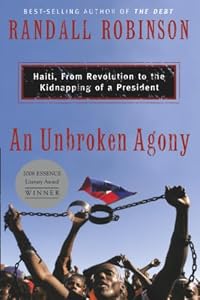

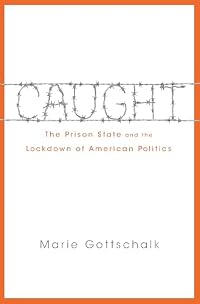

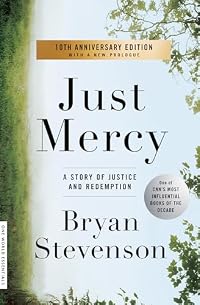

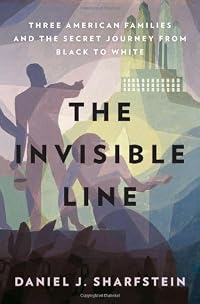














Member Recommendations
Member Reviews
Texas Tough traces the development of Texas’s prison system from the implementation of the penitentiary through the ascension of convict leasing, the development of the prison farm system, the massive prison growth through the war on drugs, and the court battle Ruiz v. Estelle which brought about an end to prison farming and the rise of the maximum security style incarceration seen throughout the United States today.
Some of the depressing statistics: Texas has 173,000 inmates; more paid employees than Google; imprisons 691 per 100,000 residents; 81% of all new inmates are nonviolent offenders (violent offenders include fighting, resisting arrest, illegal possession of pepper spray); 64% of female prisoners leave at least one show more dependent child behind; former prisoners are barred from such assistance as food stamps, public housing, etc.
Perkinson comes at the topic from a liberal political point of view (which admittedly I share), but is up front about this at the beginning and is able to give a very balanced history nonetheless, pointing out faults in both conservative and progressive approaches to reform. This has everything I’m looking for in a nonfiction: dense with information but highly readable and an important thought-provoking topic. This is one of my best reads this year – highly recommended.
“Prison history has been characterized less by advancement than corrosive cycle. From the birth of the penitentiary forward, prisons over the long haul have followed a distressingly predictable sequence: crisis begets reform; reform (plus cutbacks) unleashes unrest; unrest bleeds into disappointment; failure leads to rollback, retrenchment gives way to neglect, or worse, which finally generates crisis anew.”
Note: I received this through LibraryThing Early Reviewers. show less
Some of the depressing statistics: Texas has 173,000 inmates; more paid employees than Google; imprisons 691 per 100,000 residents; 81% of all new inmates are nonviolent offenders (violent offenders include fighting, resisting arrest, illegal possession of pepper spray); 64% of female prisoners leave at least one show more dependent child behind; former prisoners are barred from such assistance as food stamps, public housing, etc.
Perkinson comes at the topic from a liberal political point of view (which admittedly I share), but is up front about this at the beginning and is able to give a very balanced history nonetheless, pointing out faults in both conservative and progressive approaches to reform. This has everything I’m looking for in a nonfiction: dense with information but highly readable and an important thought-provoking topic. This is one of my best reads this year – highly recommended.
“Prison history has been characterized less by advancement than corrosive cycle. From the birth of the penitentiary forward, prisons over the long haul have followed a distressingly predictable sequence: crisis begets reform; reform (plus cutbacks) unleashes unrest; unrest bleeds into disappointment; failure leads to rollback, retrenchment gives way to neglect, or worse, which finally generates crisis anew.”
Note: I received this through LibraryThing Early Reviewers. show less
 This review was written for LibraryThing Early Reviewers.
The strength of Robert Perkinson’s Texas Tough: The Rise of America’s Prison Empire is its detail; it is not a cursory history of penology in America, and particularly prison life in Texas. The first (chapters 1-3) and last (chapters 7-9) thirds of this book are compelling, bordering on being a page-turner. The first third documents how the prison system, notably in Texas, successfully re-instituted slavery, and all of its inhumanity, primarily for the economic advantage of the white landed gentry.
The middle chapters, the more detailed, focus on “reform” efforts that only temporarily mediated the injustices that occurred at all levels, from the guards to the legislatures and governors. Often the rebound effects from such efforts show more led to even greater cruelty that has culminated today in the “maxi-maxi” prisons with such inhumane isolation that its captives can become psychotic and/or commit suicide.
The concluding chapters include more personal narratives of prisoners’s experiences. These stories are all the more powerful being so illustrative of the background and history that the author has so effectively detailed.
The inclusion of an index because of the enormous amount of detail would further strengthen this book, as would brief summaries at the end of each chapter. The one content area noticeably missing was the response of the religious community, particularly given that Texas is a part of the bible belt. Because of its absence, one might conclude that congregations and the clergy supported the prison system; at best, they may have been the silent majority. The author clearly shows that, “The measure of a civilization is [also] how it treats...” its incarcerated. show less
The middle chapters, the more detailed, focus on “reform” efforts that only temporarily mediated the injustices that occurred at all levels, from the guards to the legislatures and governors. Often the rebound effects from such efforts show more led to even greater cruelty that has culminated today in the “maxi-maxi” prisons with such inhumane isolation that its captives can become psychotic and/or commit suicide.
The concluding chapters include more personal narratives of prisoners’s experiences. These stories are all the more powerful being so illustrative of the background and history that the author has so effectively detailed.
The inclusion of an index because of the enormous amount of detail would further strengthen this book, as would brief summaries at the end of each chapter. The one content area noticeably missing was the response of the religious community, particularly given that Texas is a part of the bible belt. Because of its absence, one might conclude that congregations and the clergy supported the prison system; at best, they may have been the silent majority. The author clearly shows that, “The measure of a civilization is [also] how it treats...” its incarcerated. show less
This review was written for LibraryThing Early Reviewers.Texas Tough is a fascinating book documenting the development of criminal detention in the United States (Southern states in particular). Much of this book is chilling in its description of prison conditions that by any description constituted slavery for over a hundred years.
The book's writing is so good, it is disappointing that he tries to draw political boundaries around support for an oppressive prison system. Earl Warren is a compassionate Californian governor, whereas Richard Nixon is "governor of a sunbelt state". No mention whatsoever is made of Reagan's gubernatorial days either, making this reader wonder whether the lack of description was purposeful so as to fit his Texas = Bad, California = good paradigm. Seeing George show more H.W. Bush lumped in with the right-wing conservatives is surprising, considering he is widely viewed as a moderate republican. Once again, this is the only lacking area of the book - it is superbly researched, and incredibly well presented. Had the author left the current political landscape out of it, the book would have been close to perfect. show less
The book's writing is so good, it is disappointing that he tries to draw political boundaries around support for an oppressive prison system. Earl Warren is a compassionate Californian governor, whereas Richard Nixon is "governor of a sunbelt state". No mention whatsoever is made of Reagan's gubernatorial days either, making this reader wonder whether the lack of description was purposeful so as to fit his Texas = Bad, California = good paradigm. Seeing George show more H.W. Bush lumped in with the right-wing conservatives is surprising, considering he is widely viewed as a moderate republican. Once again, this is the only lacking area of the book - it is superbly researched, and incredibly well presented. Had the author left the current political landscape out of it, the book would have been close to perfect. show less
This review was written for LibraryThing Early Reviewers.Texas Tough by Richard Perkinson is a revisionist history the Texas prison system and indictment of its conditions. Perkinson argues the development of the modern prison system is inherently tied to the demise of slavery. Precisely how a reader feels about revisionist histories will likely determine whether he or she even finishes the book -- which is a shame, because despite its flaws, this is a book worth reading.
Perkinson begins with the story of the beginnings of the penitentiary in New York and Quaker Pennsylvania before narrowing his focus to the American South -- specifically Texas -- its racial tensions, and its prison systems. The book ends with a rather dreary assessment of modern-day prisons.
The book is written by an show more academic. The extensive endnotes make this clear. However, with only a few exceptions, Perkinson avoids the language and terminology of academia that can sometimes obscure similar works. There's a massive amount of information, but it's presented in a logical and cohesive way.
Texas Tough is not a perfect book, though. Perkinson has a point of view, and he does an excellent job of presenting it. However, there is no serious attempt to present any other viewpoint. It is this issue that will alienate readers for whom "revisionism" is a dirty word. This one-sided argument, no matter how compelling, suffers from a lack of credibility, since the reader can't compare the new information with the existing material. One very minor example near the beginning: Perkinson portrays Benjamin Rush dismissively as a hack, although historically, he's known for much more than bloodletting and having an insane child. This example is minor, but stood out for me. It, unfortunately, made me wary of what else the author glossed over.
I wish the author had been more even-handed, although perhaps it would have expanded the book to be too large to be marketable. Perkinson's essential argument seems convincing, but without reading outside sources, I'm withholding final judgment. I also wish Perkinson might have tempered the depressing tenor of the book with some ideas to solve the ills of the prison system. However, I understand he is a historian, not a social scientist and don't hold this against the book.
Despite my reservations, I'd recommend this book for anyone interested in civil rights, the prison system and prison history. Less confidently, I'd encourage those who enjoy reading about the American South in general to pick it up. It illuminates an alternative perspective, which should be taken with a grain of salt, but should also be taken seriously. show less
Perkinson begins with the story of the beginnings of the penitentiary in New York and Quaker Pennsylvania before narrowing his focus to the American South -- specifically Texas -- its racial tensions, and its prison systems. The book ends with a rather dreary assessment of modern-day prisons.
The book is written by an show more academic. The extensive endnotes make this clear. However, with only a few exceptions, Perkinson avoids the language and terminology of academia that can sometimes obscure similar works. There's a massive amount of information, but it's presented in a logical and cohesive way.
Texas Tough is not a perfect book, though. Perkinson has a point of view, and he does an excellent job of presenting it. However, there is no serious attempt to present any other viewpoint. It is this issue that will alienate readers for whom "revisionism" is a dirty word. This one-sided argument, no matter how compelling, suffers from a lack of credibility, since the reader can't compare the new information with the existing material. One very minor example near the beginning: Perkinson portrays Benjamin Rush dismissively as a hack, although historically, he's known for much more than bloodletting and having an insane child. This example is minor, but stood out for me. It, unfortunately, made me wary of what else the author glossed over.
I wish the author had been more even-handed, although perhaps it would have expanded the book to be too large to be marketable. Perkinson's essential argument seems convincing, but without reading outside sources, I'm withholding final judgment. I also wish Perkinson might have tempered the depressing tenor of the book with some ideas to solve the ills of the prison system. However, I understand he is a historian, not a social scientist and don't hold this against the book.
Despite my reservations, I'd recommend this book for anyone interested in civil rights, the prison system and prison history. Less confidently, I'd encourage those who enjoy reading about the American South in general to pick it up. It illuminates an alternative perspective, which should be taken with a grain of salt, but should also be taken seriously. show less
This review was written for LibraryThing Early Reviewers.A bit dogmatic in its politics. The author seems to see corrections policy in terms of an unchanging ideological lexicon of Liberal vs. Conservative aligned with the modern political parties. This ideological approach seemed not to leave room for an option 3 in which modern liberal and conservative ideas bear little resemblance to their philosophical beginnings, and no correlation at all with modern political platforms.
But it was a very well-written and comprehensive sociological history of the U.S. prison systems, and was very well worth reading. It just would have been even better had it been written from a less evaluative and more historical, factual basis.
But it was a very well-written and comprehensive sociological history of the U.S. prison systems, and was very well worth reading. It just would have been even better had it been written from a less evaluative and more historical, factual basis.
This review was written for LibraryThing Early Reviewers.Texas Tough by Robert Perkinson is a very well documented book about the history of incarceration in Texas, the South and the rest of the United States. If you are writing about prisons and looking at the history of housing prisoners in the US and Texas this is a good book and a good reference. I agree that there should be some reforms in who goes to prison but some of Perkinson's ideas are not realistic given the current state of the economy.
At least Perkinson lets the reader know well in advance of where he is coming from with his opinions and how and why he feels the way he does. Which I found interesting and allowed me to understand how is views were shaped.
At least Perkinson lets the reader know well in advance of where he is coming from with his opinions and how and why he feels the way he does. Which I found interesting and allowed me to understand how is views were shaped.
This review was written for LibraryThing Early Reviewers.Texas Tough is an excellently researched book that traces the development of the Texas penal system from the early establishment of Texas to the modern day. Starting from the frontier and the establishment of law enforcement bodies and practices that ensured the continued subjugation of nonwhites and a steady supply of free and underpaid labor. The book also discusses the gradual encroachment of Texan ideology of criminal justice over the US and how it affected citizens rights and led to the development of the prison industrial complex and deeper ingraining of biased justice system.
From the beginning, the Texas prison system was more about incarcerating and subjugating minorities and , to a lesser extent, poor whitesunder any pretext. show more Once slavery as an institution was threatened and then shelved, various industries needed access to
The book then shows the way the various conservative and liberal (for Texas) government attempt to one up each other with evermore stringent "best practices" and reforms. He draws comparison with other states and correctional facilities and the methods they used and the results they received. He ends the book with an overview of the spread of Texas' correctional ideology throughout the nation via various national and regional elections and lobby groups. He ends the book with an overview of the spread of Texas' correctional ideology throughout the nation via various national and regional elections and lobby groups.
If you are interested in sociology or prison reform, this is a great book for you. However, it is a very intense book and can be gruesome in some parts. It is definitely not for the light hearted. show less
From the beginning, the Texas prison system was more about incarcerating and subjugating minorities and , to a lesser extent, poor whitesunder any pretext. show more Once slavery as an institution was threatened and then shelved, various industries needed access to
The book then shows the way the various conservative and liberal (for Texas) government attempt to one up each other with evermore stringent "best practices" and reforms. He draws comparison with other states and correctional facilities and the methods they used and the results they received. He ends the book with an overview of the spread of Texas' correctional ideology throughout the nation via various national and regional elections and lobby groups. He ends the book with an overview of the spread of Texas' correctional ideology throughout the nation via various national and regional elections and lobby groups.
If you are interested in sociology or prison reform, this is a great book for you. However, it is a very intense book and can be gruesome in some parts. It is definitely not for the light hearted. show less
This review was written for LibraryThing Early Reviewers.Members
- Recently Added By
Published Reviews
ThingScore 75
By documenting relentlessly, almost without counterpoint, the inhumanity that has defined Texan and American incarceration, “Texas Tough” leaves us wondering, despairingly, whether there is any way our society can rise to the godlike responsibility that suffuses prison air, whether there is any way we can rehabilitate our prisons so that we can reliably reform the convicts we lock inside.
added by Shortride
With so many depressing facts and figures, this is not an easy book to plow through. But anyone interested in America's prison system should read it.
added by ToTheWest
Lists

Reading list
170 works; 1 member
Author Information
1 Work 150 Members
Awards and Honors
Common Knowledge
- Original publication date
- 2010-03-16
Classifications
- Genres
- Nonfiction, General Nonfiction, Sociology, History
- DDC/MDS
- 365.9764 — Society, Government, and Culture Social problems and social services Punishment History, geographic treatment, biography North America South Central U.S. Texas
- LCC
- HV9475 .T4 .P47 — Social sciences Social pathology. Social and public welfare. Criminology Social pathology. Social and public welfare. Criminal justice administration Penology. Prisons. Corrections By region or country
- BISAC
Statistics
- Members
- 150
- Popularity
- 217,601
- Reviews
- 13
- Rating
- (3.74)
- Languages
- English
- Media
- Paper, Ebook
- ISBNs
- 3
- ASINs
- 3