On This Page
Description
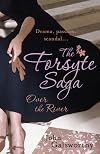
Clare Charwell has just fled her sadistic husband in Ceylon and boarded a ship back to England. On the boat, she meets the charming Tony Croom, who falls madly in love with her. Though Clare's relationship with Tony is platonic, her husband has been secretly gathering "evidence" to accuse her of adultery.Tags
Recommendations



















Member Reviews
This book focusses on Dinny & Clare. They are both having romance issues of very different types. Dinny is still holding a torch for Wilfred, while Clare has left her husband and is being sued for divorce. They are support by the usual cast of family and friends.
In the early books in the series, I said that I didn't think that Galsworthy could write women very well, but in Dinny he redeems himself. She is entirely believable and utterly human. I like her.
As an end this is an optimistic conclusion to a series that doesn't always see affairs of the heart turn out well.
In the early books in the series, I said that I didn't think that Galsworthy could write women very well, but in Dinny he redeems himself. She is entirely believable and utterly human. I like her.
As an end this is an optimistic conclusion to a series that doesn't always see affairs of the heart turn out well.
The last novel in the Forsyte Saga, this book mostly concerns Dinny Charwell's sister Clare, who has fled her husband Gerald after 18 months of marriage, because as we learn, he enjoys sexual sado-masochistic games. She flees their home in Ceylon and books passage back to England. On the boat she meets the handsome, but poor, Tony Croom.
Clare and Tony are thick as thieves on the boat, stupidly thinking that none of this will get back to Clare's husband. Of course it does, and he puts a detective on their trail, with the upshot being a divorce suit with Tony being named co-respondent. Of course the Charwell family is shocked to their knees, and also of course, it is Dinny who gets them all through it.
I found Clare to be extremely show more selfish as well as somewhat dim as to the consequences of her own actions. If this was the only plot in the book it would be a sad ending for the three trilogies that were Galsworthy's life work. this arre however, redeemed when Dinny finally finds a man she can truly love which makes it a happy ending all round. show less
Clare and Tony are thick as thieves on the boat, stupidly thinking that none of this will get back to Clare's husband. Of course it does, and he puts a detective on their trail, with the upshot being a divorce suit with Tony being named co-respondent. Of course the Charwell family is shocked to their knees, and also of course, it is Dinny who gets them all through it.
I found Clare to be extremely show more selfish as well as somewhat dim as to the consequences of her own actions. If this was the only plot in the book it would be a sad ending for the three trilogies that were Galsworthy's life work. this arre however, redeemed when Dinny finally finds a man she can truly love which makes it a happy ending all round. show less
This ninth and last novel in The Forsyte Chronicles was a fitting end to a wonderful story. Dinny's younger sister, Clare, has left her husband in Ceylon and refuses to give anyone but Dinny the true story of why she has left him. The husband is a brute and promises to take her to court. Times are changing, but a woman still seems to have no rights in the divorce court. Galsworthy handles it all very nicely though. I like his treatment of women in his telling of the story. Dinny also is trying to move on from her ill fated love with Wilfred Desert. The sisters both have suitable endings to their story. And even Fleur Forsyte comes out to be a good egg in the end.
If you've followed my thread, you'll see that The Forsyte Chronicles show more includes 9 novels and several interludes. It is divided into three trilogies:
1. The Forsyte Saga (The Man of Property, In Chancery and To Let)
2. A Modern Comedy (The White Monkey, The Silver Spoon and Swan Song)
3. End of the Chapter (Maid in Waiting, Flowering Wilderness and One More River)
According to Wikipedia: "Through his writings he campaigned for a variety of causes, including prison reform, women's rights, animal welfare, and the opposition of censorship. During World War I he worked in a hospital in France as an orderly after being passed over for military service. John Galsworthy was awarded the Nobel Prize in Literature in 1932..."
After 3,000 pages, I didn't want the story to end. If you have the time, I highly recommend the entire series. show less
If you've followed my thread, you'll see that The Forsyte Chronicles show more includes 9 novels and several interludes. It is divided into three trilogies:
1. The Forsyte Saga (The Man of Property, In Chancery and To Let)
2. A Modern Comedy (The White Monkey, The Silver Spoon and Swan Song)
3. End of the Chapter (Maid in Waiting, Flowering Wilderness and One More River)
According to Wikipedia: "Through his writings he campaigned for a variety of causes, including prison reform, women's rights, animal welfare, and the opposition of censorship. During World War I he worked in a hospital in France as an orderly after being passed over for military service. John Galsworthy was awarded the Nobel Prize in Literature in 1932..."
After 3,000 pages, I didn't want the story to end. If you have the time, I highly recommend the entire series. show less
I'm not buying it
that girl loves making them squirm
playing the coquette.
that girl loves making them squirm
playing the coquette.
Dinny, l'héroïne de la triloge "la fin du chapitre", après un deuil très douloureux va épouser celui qui l'aime depuis longtemps, car, comme le lui dit Fleur, sa cousine, "rester vieille fille serait du pur gaspillage". Là s'arrête cette saga passionnante, d'une richesse de personnages remarquable, qui tient en haleine jusqu'au bout.
Jun 5, 2009French
Ratings
Members
- Recently Added By
Lists

Best family sagas
244 works; 34 members

Publisher's Weekly Bestsellers Part I - 1895-1939
399 works; 8 members
Author Information

344+ Works 11,777 Members
At age 28, after a gentlemanly education at Harrow and Oxford, and a training at law, Galsworthy settled into simultaneous careers as a novelist and a playwright. The Silver Box, Galsworthy's first successful drama, was staged in 1906, the year he published the first volume of what was to become The Forsyte Saga. His one-word titles - Justice show more (1910), Strife (1909), Loyalties (1922)---suggest the nature of Galsworthy's artistic ambition: to generalize a social indictment, keeping faith with the objective methods of naturalism. In each, Galsworthy favors an austere irony and unresolvable situations, and balanced moral positions are displayed in the cabinetwork of "well-made" playwrighting. Reputed to have led to reforms in its time, his realism today seems contrived to produce aesthetic distance and a sense of resignation that is precisely what contemporary political dramatists strain hardest to avoid. Not surprisingly, critics have come away from revivals with the sense that (especially in his spare language) Galsworthy anticipates Harold Pinter rather than more socially engaged playwrights. Galsworthy wrote novels and plays alternately throughout his life. His masterwork, The Forsyte Saga, begun in 1906 and finished in 1928, and consisting of six separate novels and two linking interludes, is the most famous example of the sequence novel in English literature. It is a study of the property sense, the possessive spirit, in different individuals and generations of English middle-class society. He also completed a second trilogy dealing with the Forsyte family, called A Modern Comedy (1928). His last trilogy, a study of the Charwell family, is called End of the Chapter (1933). Galsworthy's later years brought him many honors, including the presidency of P.E.N. and honorary degrees from Oxford, Cambridge, and several other universities. After World War I, he was offered a knighthood, which he refused. He did, however, accept the Order of Merit in 1929, and in 1932 he was awarded the Nobel Prize. He was, however, too ill to attend the Nobel ceremony and died within two months of receiving the award. Although his posthumous reputation had waned, the centenary of his death, in 1967, brought a re-creation of The Forsyte Saga on British and American television in serial form. Interest in him skyrocketed, and the Forsyte novels again became bestsellers. With new popularity came fresh critical analysis. Pamela Hansford Johnson called The Forsyte Saga "a work of profound social insight and patchy psychological insight" (N.Y. Times). His critical writings include The Inn of Tranquility: Studies and Essays (1911) and Author and Critic. (Bowker Author Biography) show less
Some Editions
Awards and Honors
Distinctions
Series


Belongs to Publisher Series
Lanterne (L 91)
Work Relationships
Is contained in
Common Knowledge
- Canonical title
- Over The River
- Original title
- Over The River
- Alternate titles
- One More River
- Original publication date
- 1933
- People/Characters
- Clare Cherrell; Dinny Cherrill
Classifications
Statistics
- Members
- 215
- Popularity
- 152,289
- Reviews
- 5
- Rating
- (3.90)
- Languages
- 10 — English, Estonian, Finnish, French, German, Italian, Norwegian (Bokmål), Norwegian, Romanian, Spanish
- Media
- Paper, Audiobook, Ebook
- ISBNs
- 30
- ASINs
- 30