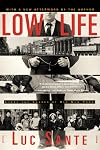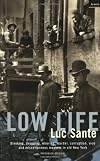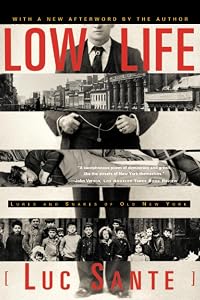
Low Life: Lures and Snares of Old New York
by Lucy Sante
On This Page
Description
Lucy Sante's Low Life is a portrait of America's greatest city, the riotous and anarchic breeding ground of modernity. This is not the familiar saga of mansions, avenues, and robber barons, but the messy, turbulent, often murderous story of the city's slums; the teeming streets--scene of innumerable cons and crimes whose cramped and overcrowded housing is still a prominent feature of the cityscape. Low Life voyages through Manhattan from four different directions. Part One examines the show more actual topography of Manhattan from 1840 to 1919; Part Two, the era's opportunities for vice and entertainment--theaters and saloons, opium and cocaine dens, gambling and prostitution; Part Three investigates the forces of law and order which did and didn't work to contain the illegalities; Part Four counterposes the city's tides of revolt and idealism against the city as it actually was. Low Life provides an arresting and entertaining view of what New York was actually like in its salad days. But it's more than simply a book about New York. It's one of the most provocative books about urban life ever written--an evocation of the mythology of the quintessential modern metropolis, which has much to say not only about New York's past but about the present and future of all cities. show lessTags
Recommendations




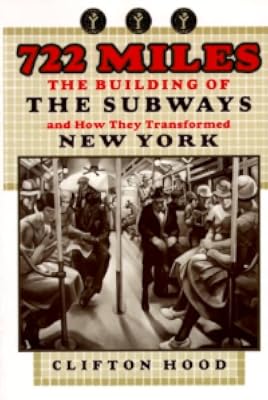

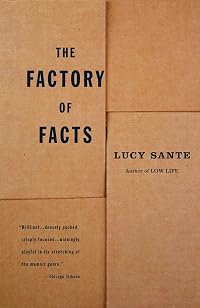
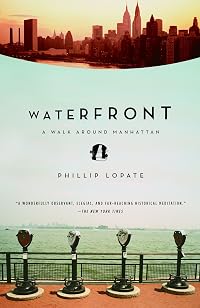
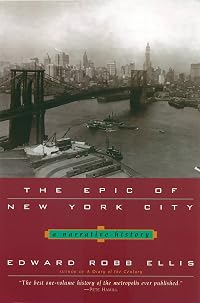




Member Reviews
Rating: 5* of five
The Publisher Says: Luc Sante's Low Life is a portrait of America's greatest city, the riotous and anarchic breeding ground of modernity. This is not the familiar saga of mansions, avenues, and robber barons, but the messy, turbulent, often murderous story of the city's slums; the teeming streets—scene of innumerable cons and crimes whose cramped and overcrowded housing is still a prominent feature of the cityscape.
Low Life voyages through Manhattan from four different directions. Part One examines the actual topography of Manhattan from 1840 to 1919; Part Two, the era's opportunities for vice and entertainment—theaters and saloons, opium and cocaine dens, gambling and prostitution; Part Three investigates the show more forces of law and order which did and didn't work to contain the illegalities; Part Four counterposes the city's tides of revolt and idealism against the city as it actually was.
Low Life provides an arresting and entertaining view of what New York was actually like in its salad days. But it's more than simpy a book about New York. It's one of the most provocative books about urban life ever written—an evocation of the mythology of the quintessential modern metropolis, which has much to say not only about New York's past but about the present and future of all cities.
I HAVE OWNED THIS BOOK FOR DECADES.
My Review: Yeah, this is a re-read; this is also a five-star Pearl-Rule read. It's here because Author Sante is now Lucy, not Luc. I wanted to re-read it with Lucy's transition in my mind, as a test of my hypothesis that the transition was not some giant, wrenching shift in the author's identity.
Job done.
Halfway through Part Three, the law'n'order bit that I always get boiling mad reading, I figured out that Lucy, as a person new to my conscious awareness, changed nothing in my idea of Author Sante as a prose stylist or a storyteller. I immersed myself into Author Sante's deep dive into my beloved home city without any slightest thought of how the story would be different had it been written by Lucy, not Luc...they're both Author Sante, albeit I'm sure age has wrought its usual changes on the idea factory within. That would be true no matter whose writing one is looking at.
Why transphobes think transitioning ruins anything at all says bad things about them, and only them.
FSG asks $12.99 for a Kindle version. This is a must-read for all Manhattanphiles, anyone interested in the evolution of cities, and any aspiring hipsters. show less
The Publisher Says: Luc Sante's Low Life is a portrait of America's greatest city, the riotous and anarchic breeding ground of modernity. This is not the familiar saga of mansions, avenues, and robber barons, but the messy, turbulent, often murderous story of the city's slums; the teeming streets—scene of innumerable cons and crimes whose cramped and overcrowded housing is still a prominent feature of the cityscape.
Low Life voyages through Manhattan from four different directions. Part One examines the actual topography of Manhattan from 1840 to 1919; Part Two, the era's opportunities for vice and entertainment—theaters and saloons, opium and cocaine dens, gambling and prostitution; Part Three investigates the show more forces of law and order which did and didn't work to contain the illegalities; Part Four counterposes the city's tides of revolt and idealism against the city as it actually was.
Low Life provides an arresting and entertaining view of what New York was actually like in its salad days. But it's more than simpy a book about New York. It's one of the most provocative books about urban life ever written—an evocation of the mythology of the quintessential modern metropolis, which has much to say not only about New York's past but about the present and future of all cities.
I HAVE OWNED THIS BOOK FOR DECADES.
My Review: Yeah, this is a re-read; this is also a five-star Pearl-Rule read. It's here because Author Sante is now Lucy, not Luc. I wanted to re-read it with Lucy's transition in my mind, as a test of my hypothesis that the transition was not some giant, wrenching shift in the author's identity.
Job done.
Halfway through Part Three, the law'n'order bit that I always get boiling mad reading, I figured out that Lucy, as a person new to my conscious awareness, changed nothing in my idea of Author Sante as a prose stylist or a storyteller. I immersed myself into Author Sante's deep dive into my beloved home city without any slightest thought of how the story would be different had it been written by Lucy, not Luc...they're both Author Sante, albeit I'm sure age has wrought its usual changes on the idea factory within. That would be true no matter whose writing one is looking at.
Why transphobes think transitioning ruins anything at all says bad things about them, and only them.
FSG asks $12.99 for a Kindle version. This is a must-read for all Manhattanphiles, anyone interested in the evolution of cities, and any aspiring hipsters. show less
It took me much longer than it should have to finish this book, because I was constantly putting it down to look up people on Wikipedia or to track down referenced books on Project Gutenberg or Archive.org. Or to look at locations on Google Maps to see what they look like now. Sante's book, published in 1992, may not seem quite as interesting now, since much of what he covered has been written about in other books or on various internet sites--but it remains a well-written, engaging look at the "low life" of New York City from Colonial times to World War I. The focus, more often than not, is on the Bowery and its memorable characters and crimes. At times, the parade of personalities gets to be a bit tedious and hard to keep track of. I show more think the book might have benefited from a more chronological order rather than thematic order--but this is a small quibble. Sante's treatment of his subjects and his sources is exemplary throughout. He presents everything, no matter how awful or peculiar, in an objective manner with only unobtrusive editorializing. After reading this book, you'll want to wander the backstreets of Lower Manhattan for hours on end. And you'll be happy you aren't doing it 125 years ago! show less
This is a lively, informative, and fun look at the underside of downtown New York City from approximately 1840 to 1920, chock full of gangs, corrupt politicians and policemen, bars, drugs, prostitutes, theaters of varying degrees of nonrespectablility, graft, crime, cons, would-be reformers, and more. Sante combines detailed research, including many quotes from writers and songs of the period, with compassion for the lack of choices facing poor people and a feeling for the continuity between then and now. Both the people and the gangs had fabulous nicknames: one of my favorites was the Dead Rabbits gang, "dead" being slang for "best" and "rabbit' for "tough guy." On the other hand, we continue to use a lot of the slang that originated show more then: Sante cites blarney, kicking the bucket, pal, and swag, among others.
I find New York City history endlessly fascinating, and one of the things that most intrigued me about this book was that the author and I both lived on the old lower east side (renamed by the real estate business as the East Village and Alphabet City and now hopelessly gentrified, largely by the expansion of NYU) in the late 70s and the 80s, a time when change was beginning there. He explains that living there, among the old tenements, got him interested in the less well known history of the area.
Sante doesn't dwell of the "plus ça change" aspects of the stories he tells, and in fact he is so immersed in the details of the period they aren't obvious, and yet . . . we still have poor people, criminals, corruption, theater, bars, drugs, prostitutes, gangs and would-be reformers. The form may change, technology may intervene, but human nature and social realities are still with us. show less
I find New York City history endlessly fascinating, and one of the things that most intrigued me about this book was that the author and I both lived on the old lower east side (renamed by the real estate business as the East Village and Alphabet City and now hopelessly gentrified, largely by the expansion of NYU) in the late 70s and the 80s, a time when change was beginning there. He explains that living there, among the old tenements, got him interested in the less well known history of the area.
Sante doesn't dwell of the "plus ça change" aspects of the stories he tells, and in fact he is so immersed in the details of the period they aren't obvious, and yet . . . we still have poor people, criminals, corruption, theater, bars, drugs, prostitutes, gangs and would-be reformers. The form may change, technology may intervene, but human nature and social realities are still with us. show less
I am a huge fan of historical writing, especially social history. I care about the broader political context that informs most history, but I also really want to know about the little things, too - what people ate, what they were wearing, what they did for fun, how they lived day-to-day. This book will give a sense of all of that (plus the politics) & more.
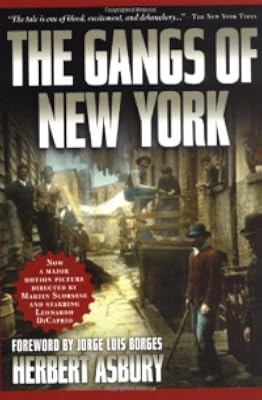
Luc Sante was an advisor on the movie, The Gangs of New York, & if you keep the way that movie looked in your head you might get a sense of the New York he is writing about. Sante explores Manhattan in four aspects from 1840 to 1919 - Topography, vice & entertainment, law & order, & revolt & idealism. Jammed into these four aspects are stories of classic New York characters like Boss show more Tweed & Butcher Poole, but also many less well-known people like Bald Jack Rose & Leftie Louie.
Sante argues that New York is all about the New & tends to ignore its history, but that its ghosts are drifting there - just below the surface. This book captures these ghosts & makes them visible to the reader through clear prose & fascinating stories. This is an excellent example of what good writing & interesting social history can be to a reader. Fascinating & wonderful & you should go read it right now. show less
Luc Sante was an advisor on the movie, The Gangs of New York, & if you keep the way that movie looked in your head you might get a sense of the New York he is writing about. Sante explores Manhattan in four aspects from 1840 to 1919 - Topography, vice & entertainment, law & order, & revolt & idealism. Jammed into these four aspects are stories of classic New York characters like Boss show more Tweed & Butcher Poole, but also many less well-known people like Bald Jack Rose & Leftie Louie.
Sante argues that New York is all about the New & tends to ignore its history, but that its ghosts are drifting there - just below the surface. This book captures these ghosts & makes them visible to the reader through clear prose & fascinating stories. This is an excellent example of what good writing & interesting social history can be to a reader. Fascinating & wonderful & you should go read it right now. show less
A generally good book, with a handful of flaws. Sante, in this volume, gives an oversight of what New York City was like from roughly the 1830s to the end of World War I, going through various aspects of life. A lot of this is familiar territory (see below), but it is written very engagingly, and is a pleasure to read. There's also a very good selection of illustrations, something that many books in this field ignore. I think one of the major flaws of the book (and why I don't give it five stars) is that Sante does a miserable job of citing his sources. For example, there's material in the book that I know was taken from "Great Riots of New York," but that book isn't even cited. The bibliography is something of a joke, as well. It's show more also fairly clear that Sante is leaning heavily on Herbert Asbury's famous "Gangs of New York." A very good book, and a fun read, but by no means groundbreaking. show less
Very densely packed story, lots of characters and places and events. Something of a difficult book that I chose to read in chunks so as to avoid being overwhelmed. Probably 3.5 stars for information. Recommended for those with an interest in NYC history and immigrant history
Quite good. It moves very quickly and contains a completely astonishing amount of information that will change your view of NYC forever. In places it's just too much.
Members
- Recently Added By
Published Reviews
ThingScore 25
And the compulsion to sensationalize undercuts Sante's civic passions; in place of desire and tragedy it serves up cartoon of urban "types." ... Sante sets out to deploy the term "lowlife" ironically with downtown chutzpah, but he ends up using it with the tone of an out-of-towner's jeer.
added by eromsted
Lists

The Hermenautic Bookshelf
111 works; 7 members

2024-2025 Ezra Klein Guest Recommendations
213 works; 6 members
Author Information

32+ Works 2,399 Members
Some Editions
Common Knowledge
- Alternate titles
- Low Life: Drinking, Drugging, Whoring, Murder, Corruption, Vice and Miscellaneous Mayhem in Old New York
- Original publication date
- 1991
- Important places
- New York, New York, USA
Classifications
- Genres
- History, Religion & Spirituality, Nonfiction, Music, Art & Design, Sociology, General Nonfiction, Food & Cooking, Business, Science & Nature, Philosophy, Biography & Memoir, Sports and Leisure, Technology
- DDC/MDS
- 307 — Society, government, & culture Social sciences, sociology & anthropology Communities
- LCC
- F128.47 .S23 — Local History of the United States, Canada and Latin America United States local history New York
- BISAC
Statistics
- Members
- 970
- Popularity
- 27,210
- Reviews
- 18
- Rating
- (4.06)
- Languages
- English, Italian, Spanish
- Media
- Paper, Ebook
- ISBNs
- 7
- ASINs
- 3