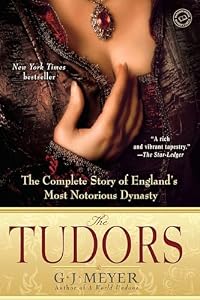
The Tudors: The Complete Story of England's Most Notorious Dynasty
by G. J. Meyer
On This Page
Description
Meyer's fresh storytelling ability breathes new life into the history of the Tudor family and Tudor England's precarious place in world politics, the critical role religion played in government, and the blossoming of English theater and literature.Tags
Recommendations











Member Reviews
Reading “The Tudors” by G. J. Meyer is like binge-watching a historical drama series, but with more beheadings and fewer commercial breaks. Meyer takes us on a rollercoaster ride through the lives of England’s most notorious dynasty, and trust me, it’s a wild one. From Henry VII’s improbable rise to power to Elizabeth I’s reign of intrigue, every page is packed with enough scandal and drama to make a soap opera blush. The Tudors were the original reality TV stars, and Meyer captures their larger-than-life personalities with flair. If you love history served with a side of juicy gossip, this book is your royal feast. Highly recommend for anyone who enjoys a good romp through the annals of history.
This is the first book I've read about the Tudors and even though I consider myself somewhat educated, my image of the Tudors has been surprisingly shaped by popular culture. I thought Henry VIII was a larger than life great king whose main problem was too many wives, and that the Elizabethian era a high point in English history. Turns out I've been duped by propaganda as old as the 16th century itself. The Tudors were awful for England and their self-aggrandizement has fooled generations of historians even up to the present. There is now a revisionism occurring in Tudor studies and how far the scales weigh to the other side remains to be seen. Overall, this book describes the Tudors as second-rate rulers, lacking in humanity and show more compassion, cold-blooded killers and otherwise unpleasant people. Meyer's says England had many stronger and better kings in the Plantagenets but Tudor image-making overshadowed them. G. J. Meyer has been accused of "bias" but that might be true if he took a position in the contemporary debates (eg. if he was pro-Catholic), but a history that re-evaluates the record is historical revisionism, a necessary process of cutting through the propaganda and finding the truth. show less
Unlike most biographies of the Tudors, G. J. Meyer's doesn't romanticize their reigns or give them undue credit for enlightened religious reform or bringing the Renaissance to England. Rather, he shows them to be despotic (and downright tyrannical in the case of Henry VIII) and documents how any genuine progress that came out of their reigns was at best accidental and usually in spite of rather than because of their policies.
The Tudors begins with Henry Tudor's challenge and defeat of Richard III, whereupon he is crowned King Henry VII. Meyer briefly chronicles his reign, concentrating on how he consolidated power and amassed wealth, the former by killing off his enemies and the latter by confiscatory policies aimed at his subjects. Of show more course, this kind of behavior was to some extent par for the course for royalty of the time.
Then a large part of the book is devoted to the reign of Henry VIII, who took such methods to whole new levels of excess, establishing a full-blown reign of terror and impoverishing his people. Meyer also covers in some depth Henry's efforts to have his marriage annulled, leading to the separation of the Anglican church from Roman Catholicism.
Finally, he traces the reigns of each of Henry's children in turn: Edward, Mary, and especially Elizabeth. The religious upheavals of the time provide the main narrative thread, as Edward attempts to push his father's reforms further toward Calvinist protestantism, Mary tries to reconcile the English church with Catholicism, and Elizabeth takes a similar line to her father and steers a middle course, opposing both sides and systematically persecuting especially the Catholics as traitors to the crown.
The main value I got out of the book was deepening my understanding of how far we've come in the intervening centuries. Meyer discusses the various famines and plagues throughout the fifteenth century that had decimated the British population many times over, and the abject poverty of the vast majority of the people under the Tudor dynasty is difficult for us to imagine. People are somewhat more aware of the shameful way the English were treating their Irish subjects in the eighteenth century, with most Irish peasants having next to nothing, living in the most primitive hovels, and being regularly subjected to wide-spread starvation. Well, those were the conditions of most of the English people only a couple of centuries earlier! It's also mind-blowing to see the extent to which all these power struggles and life in general were still based on an utterly primitive clan mentality, and this at a time when they're already speaking fairly modern English that we can understand as our own language that we still recognize today (this is the time of Shakespeare, after all). All this just adds to my appreciation of just how far we've come in the few intervening centuries, which is really the blink of an eye in historical terms.
The main drawback of the book is that Meyer occasionally goes off on digressions labelled "Background". Many of these do genuinely provide context necessary to understand some aspect of the Tudors' reigns, but some of them don't seem to have much direct bearing. Still, even those are usually of at least some interest in their own right, so this is a fairly minor distraction.
Robin Sachs's narration of the audio edition is excellent, his inflections easily matching and helping to bring out the nuances of the text. Definitely worth a listen.
http://www.amazon.com/review/R11ACBDBNWZXXW show less
The Tudors begins with Henry Tudor's challenge and defeat of Richard III, whereupon he is crowned King Henry VII. Meyer briefly chronicles his reign, concentrating on how he consolidated power and amassed wealth, the former by killing off his enemies and the latter by confiscatory policies aimed at his subjects. Of show more course, this kind of behavior was to some extent par for the course for royalty of the time.
Then a large part of the book is devoted to the reign of Henry VIII, who took such methods to whole new levels of excess, establishing a full-blown reign of terror and impoverishing his people. Meyer also covers in some depth Henry's efforts to have his marriage annulled, leading to the separation of the Anglican church from Roman Catholicism.
Finally, he traces the reigns of each of Henry's children in turn: Edward, Mary, and especially Elizabeth. The religious upheavals of the time provide the main narrative thread, as Edward attempts to push his father's reforms further toward Calvinist protestantism, Mary tries to reconcile the English church with Catholicism, and Elizabeth takes a similar line to her father and steers a middle course, opposing both sides and systematically persecuting especially the Catholics as traitors to the crown.
The main value I got out of the book was deepening my understanding of how far we've come in the intervening centuries. Meyer discusses the various famines and plagues throughout the fifteenth century that had decimated the British population many times over, and the abject poverty of the vast majority of the people under the Tudor dynasty is difficult for us to imagine. People are somewhat more aware of the shameful way the English were treating their Irish subjects in the eighteenth century, with most Irish peasants having next to nothing, living in the most primitive hovels, and being regularly subjected to wide-spread starvation. Well, those were the conditions of most of the English people only a couple of centuries earlier! It's also mind-blowing to see the extent to which all these power struggles and life in general were still based on an utterly primitive clan mentality, and this at a time when they're already speaking fairly modern English that we can understand as our own language that we still recognize today (this is the time of Shakespeare, after all). All this just adds to my appreciation of just how far we've come in the few intervening centuries, which is really the blink of an eye in historical terms.
The main drawback of the book is that Meyer occasionally goes off on digressions labelled "Background". Many of these do genuinely provide context necessary to understand some aspect of the Tudors' reigns, but some of them don't seem to have much direct bearing. Still, even those are usually of at least some interest in their own right, so this is a fairly minor distraction.
Robin Sachs's narration of the audio edition is excellent, his inflections easily matching and helping to bring out the nuances of the text. Definitely worth a listen.
http://www.amazon.com/review/R11ACBDBNWZXXW show less
I really enjoyed the writing and analysis on this one - I thought GJ Meyer did a superb job with those. Truly outstanding and worth the read as it gives wonderful explanation of the power struggles in the Henrician court. I took off a star because I thought Elizabeth deserved a little more than she got; she felt a bit like an afterthought. It almost read like a student taking a final and realizing after they'd written their answer that there was a part of the question they hadn't addressed and so they tacked on info...
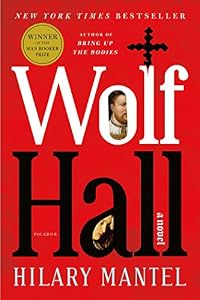
I picked up on this because after reading Mantell's Wolf Hall I had to get a background on the mayhem wreaked during the reign of Henry VIII. After finishing this book last night, the first thing I said to my wife was "I would never have wanted to have lived in England back then!" Not having read any history of the Tudors before I'm not sure how Meyer's work stacks up to theirs but I would highly suspect that his paints a much less rosy picture than do most previous histories and biographies of the times & characters encapsulated in his work. It's a fantastically told tale--Meyer's set up of one chapter explaining the events and the next providing background on specific personalities, events, ideas, etc. was a fantastic way to write show more their history.
And what a history it was . . . it seems like there was no way possible to live a contented life back then. If you weren't a noble, you were a dirt poor peasant. If you were a noble you would have to parlay in the highly dangerous world of court intrigues, which led to many an early downfall. If you were a Catholic you were persecuted; if you were a Protestant Queen Mary came along and demanded you revert to Catholicism. If you didn't strike the right balance between Catholic sacraments and Protestant ethics Henry VIII or Queen Elizabeth would have your head (and guts and genitals) for it. And we're not even talking about continental European politics. But Meyer makes it all easily accessible--and skimps on some of the history here and there--but he does it all so that you come away having learned something rather than having history dumped in your lap, waiting for you to make sense of it. show less
And what a history it was . . . it seems like there was no way possible to live a contented life back then. If you weren't a noble, you were a dirt poor peasant. If you were a noble you would have to parlay in the highly dangerous world of court intrigues, which led to many an early downfall. If you were a Catholic you were persecuted; if you were a Protestant Queen Mary came along and demanded you revert to Catholicism. If you didn't strike the right balance between Catholic sacraments and Protestant ethics Henry VIII or Queen Elizabeth would have your head (and guts and genitals) for it. And we're not even talking about continental European politics. But Meyer makes it all easily accessible--and skimps on some of the history here and there--but he does it all so that you come away having learned something rather than having history dumped in your lap, waiting for you to make sense of it. show less
I was surprised at how much I enjoyed reading this book. It’s not my usual historical focus and the Tudors are too much of Hollywood’s rock stars in bad costumes right now. But it is a great overview of the dynasty with side trips into interesting characters, themes and detailed backgrounds. It’s ambitious but very clear in its purpose and research, making it a good read for anyone even slightly interested in the Tudors.
Impressed with this one. You can see very clearly that the author takes the best information available and carefully discerns the most logical "truth" with the scant and aged information we have on the Tudors. I don't mean to imply that all "facts" are definitive facts but they are the most logical conclusions and you get a glimpse into why the author sees the events in particular ways. Some of the best detail I've come across when it comes to The Pilgrimage of Grace. I found one small contradiction that actually made me like the author more because it is obviously a product of the process of this kind of researched book, you state what you believe based on the facts you have and amend that belief as more is learned. Would not hesitate show more to buy any work by G.J Meyer based on this work. show less
Members
- Recently Added By
Lists

Best Nonfiction about Tudor England
25 works; 12 members

Books Read in 2024
4,623 works; 126 members
Author Information

12 Works 2,763 Members
Some Editions
Awards and Honors
Awards
Common Knowledge
- Original title
- The Tudors: The Complete Story of England's Most Notorious Dynasty
- Original publication date
- 2010-02-23
- People/Characters
- Henry VII, King of England; Henry VIII, King of England; Edward VI, King of England; Elizabeth I, Queen of England; Mary I, Queen of England
- Important places
- England, UK; France; Spain; English Channel
- Important events
- Tudor Era (1485 | 1603); Battle of Bosworth Field (1485-08-22); Spanish Armada (1588)
- Dedication
- For Rosie
- First words
- The Tudors ruled England for only three generations, an almost pathetically brief span of time in comparison with other dynasties before and since.
- Last words
- (Click to show. Warning: May contain spoilers.)Whether he possibly could have cared.
Classifications
- Genres
- History, Nonfiction, General Nonfiction, Biography & Memoir
- DDC/MDS
- 942.05 — History & geography History of Europe England and Wales England 1485-1603, Tudors
- LCC
- DA315 .M477 — History of Europe, Asia, Africa and Oceania Great Britain History of Great Britain England History By period Modern, 1485- Tudors, 1485-1603
- BISAC
Statistics
- Members
- 1,057
- Popularity
- 24,180
- Reviews
- 19
- Rating
- (3.95)
- Languages
- Danish, English, French
- Media
- Paper, Audiobook, Ebook
- ISBNs
- 9
- ASINs
- 8