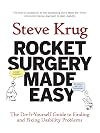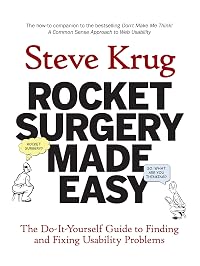
Rocket Surgery Made Easy: The Do-It-Yourself Guide to Finding and Fixing Usability Problems
by Steve Krug
On This Page
Description
In this how-to companion to Don't make me think : a common sense approach to web usability, Steve Krug spells out an approach to usability testing that anyone can easily apply to their own web site, application, or other product. --Tags
Recommendations




Member Recommendations
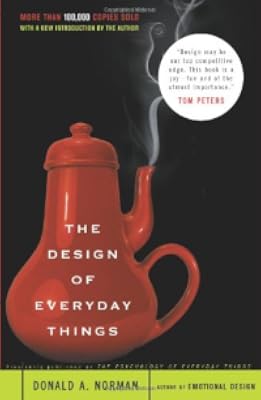
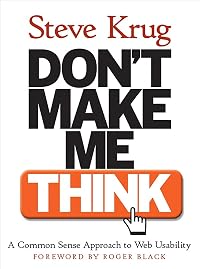
Neale These books go together.
Member Reviews
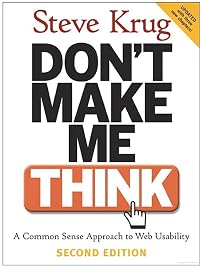
Steve Krug is the author of the bestselling book Don’t Make Me Think!, which has racked up worldwide sales of 250,000 since its publication in 2000.
That book based its approach to assessing and improving the usability of websites on the injunction in the title. If visitors to websites have to figure out what to do on a website, then the website is operating at a disadvantage.
Krug offered some very pertinent, uncomplicated advice on web usability, how to judge it and how to implement solutions to problems that are identified.
When updating that first book in 2005, Krug decided that Rocket Surgery Made Easy had become necessary: a handbook for putting usability principles into practice, focusing in particular on user testing.
The title show more refers to the phrase Krug coined (and trademarked) to summarise his view that all of this is just common sense: it’s not rocket science and it’s not brain surgery.
It also gives a clue that Krug, while determinedly practical and grounded in the day-to-day business of designing and building websites for paying clients, approaches the subject with considerable humour and playfulness. It’s apparent that this is partly out of a concern that usability might be a dry subject for some, but also because Krug is a very funny guy. I think we’d enjoy his workshops, if he ever brings them to Australia.
Rocket Surgery Made Easy is itself easy reading. Less than 160 pages, it is well laid out, charmingly illustrated by Mark Matcho and very, very well edited – big hat-tip to the people at New Riders.
The basis of the book is that it offers how-to advice on actually running user testing sessions. Krug is well aware that many designers and developers cannot afford the expansive, expensive and time-consuming approach to user testing that requires hiring rooms with two way mirrors and video equipment to observe and record user actions as they test a website under controlled conditions, so he has devised a budget approach based around the catchphrase of “A morning a month, that’s all we ask“. Catchy phrases are an identifiable part of the Krug approach.
Because it’s well-written, because Krug is witty, and because the subject material is based so much on common sense, it’s easy to whizz through the book. But how much will it change the way a web designer or developer works?
Frankly, while I agree with the need for it, and understand the benefits to be gained, user testing is unlikely to form a significant part of my day-to-day work scenario, at least while I remain a one man design band juggling a roster of new websites and long term clients. The logistical practicalities of even “a morning a month“, using three testers without a lot of complicated equipment, are prohibitive. I accept that this may give me and my clients headaches into the future.
However, Krug’s books – the first explaining why usability matters, the second explaining how to do it – do give me a platform for addressing usability issues. The way Krug explains stuff allows and encourages me to engage with usability issues. Walking through his approach to user testing tells me a great deal about how I think about usability and how I can improve it. This alone gives me a competitive edge over designers who don’t “get” usability
Perhaps both these books should be bundled under the collective title Make Web Designers Think! It’s what Krug does extremely well. He raises simple but devastatingly critical usability issues, explores his own way of thinking about them and then offers ways to deal with them.
Krug points out – and emphasises – that anyone can do this. But the fact is that many web designers do not give themselves over to critical thinking, and even when encouraged to do so, may not be sure how to analyse, document and translate their thoughts into design changes.
It is these people that will likely get the most out of Rocket Surgery Made Easy, but they may also be the last designers to actually buy it.
Still if it does anything to get even highly experienced web designers thinking about what they are doing in a critical, insightful and constructive way, it will help to shape a better web. show less
That book based its approach to assessing and improving the usability of websites on the injunction in the title. If visitors to websites have to figure out what to do on a website, then the website is operating at a disadvantage.
Krug offered some very pertinent, uncomplicated advice on web usability, how to judge it and how to implement solutions to problems that are identified.
When updating that first book in 2005, Krug decided that Rocket Surgery Made Easy had become necessary: a handbook for putting usability principles into practice, focusing in particular on user testing.
The title show more refers to the phrase Krug coined (and trademarked) to summarise his view that all of this is just common sense: it’s not rocket science and it’s not brain surgery.
It also gives a clue that Krug, while determinedly practical and grounded in the day-to-day business of designing and building websites for paying clients, approaches the subject with considerable humour and playfulness. It’s apparent that this is partly out of a concern that usability might be a dry subject for some, but also because Krug is a very funny guy. I think we’d enjoy his workshops, if he ever brings them to Australia.
Rocket Surgery Made Easy is itself easy reading. Less than 160 pages, it is well laid out, charmingly illustrated by Mark Matcho and very, very well edited – big hat-tip to the people at New Riders.
The basis of the book is that it offers how-to advice on actually running user testing sessions. Krug is well aware that many designers and developers cannot afford the expansive, expensive and time-consuming approach to user testing that requires hiring rooms with two way mirrors and video equipment to observe and record user actions as they test a website under controlled conditions, so he has devised a budget approach based around the catchphrase of “A morning a month, that’s all we ask“. Catchy phrases are an identifiable part of the Krug approach.
Because it’s well-written, because Krug is witty, and because the subject material is based so much on common sense, it’s easy to whizz through the book. But how much will it change the way a web designer or developer works?
Frankly, while I agree with the need for it, and understand the benefits to be gained, user testing is unlikely to form a significant part of my day-to-day work scenario, at least while I remain a one man design band juggling a roster of new websites and long term clients. The logistical practicalities of even “a morning a month“, using three testers without a lot of complicated equipment, are prohibitive. I accept that this may give me and my clients headaches into the future.
However, Krug’s books – the first explaining why usability matters, the second explaining how to do it – do give me a platform for addressing usability issues. The way Krug explains stuff allows and encourages me to engage with usability issues. Walking through his approach to user testing tells me a great deal about how I think about usability and how I can improve it. This alone gives me a competitive edge over designers who don’t “get” usability
Perhaps both these books should be bundled under the collective title Make Web Designers Think! It’s what Krug does extremely well. He raises simple but devastatingly critical usability issues, explores his own way of thinking about them and then offers ways to deal with them.
Krug points out – and emphasises – that anyone can do this. But the fact is that many web designers do not give themselves over to critical thinking, and even when encouraged to do so, may not be sure how to analyse, document and translate their thoughts into design changes.
It is these people that will likely get the most out of Rocket Surgery Made Easy, but they may also be the last designers to actually buy it.
Still if it does anything to get even highly experienced web designers thinking about what they are doing in a critical, insightful and constructive way, it will help to shape a better web. show less
In a past life (or, about 3 jobs ago) I read Don’t Make Me Think, and I loved its casual and humorous style. So when I needed to read up on usability testing, I knew Steve Krug wouldn’t let me down. Rocket Surgery has that same easy-going tone, and he breaks down usability testing into easy steps. Also very helpful are the demo and sample scripts available on the companion web site. Before I started, I was daunted by the thought of usability testing, and was fairly sure I would screw it up (or at least, the results wouldn’t be useful at all). Now, I feel a lot more comfortable about conducting my own initial tests in a couple of weeks. I won’t be following Krug’s path exactly, but he’s given me some good landmarks.
A highly usable book written by a knowledgeable and entertaining author. Offers concrete and practical suggestions for approaching integration of regular usability testing into the website development process. This, of course, assumes that your organization already has a systematic process for developing its website; perhaps a safe assumption in the corporate environments in which Krug typically works. Still, the book offers useful insights and is a quick and easy read. It fulfills its purpose of serving as a complement to Don't Make Me Think very nicely.
A great little book. Easy to read and understand. Uses humour and examples to get the points across.
A great introductory guide to user testing. The casual style and jokiness makes it a light read while still giving you everything you need to know to begin user testing.
I finished this one a while ago, and kept forgetting to mark it as Read! Oops. Anyways, this is a great book about low cost Usability Testing. This book was recommended to me as part of my internship with Hennepin County. It's a great, quick read about Usability testing and why companies should do some low cost, three people testing once a month. A definite recommended read for people interested in Usability testing as part of their careers. Maybe if Steve Kruger updates his book with a mobile testing section, I'll check it out again and update this book to a five!
A well written, neat and hands-on beginner's guide to qualitative usability testing. Highly recommended by this particular professional.
(I've written a real review > http://relaterat.wordpress.com/2010/11/11/recension-rocket-surgery-made-easy-av-..., but it's Swedish language only.)
(I've written a real review > http://relaterat.wordpress.com/2010/11/11/recension-rocket-surgery-made-easy-av-..., but it's Swedish language only.)
Members
- Recently Added By
Author Information

6 Works 4,587 Members
Steve Krug managed to labor happily in near-total obscurity as a highly respected usability consultant until the publication of the first edition of Don't Make Me Think. Ten years later, he finally gathered enough energy to write another book: the usability testing handbook Rocket Surgery Made Easy: The Do-It-Yourself Guide to Finding and Fixing show more Usability Problems. The books were based on the 20+years he's spent as a usability consultant for a wide variety of clients like Apple, Bloomberg.com, Lexus.com, NPR, the International Monetary Fund, and many others. His consulting firm, Advanced Common Sense, is based in Chestnut Hill, MA. Steve currently spends most of his time teaching usability workshops, consulting, and watching black-and-white movies from the '30s and '40s. To learn more about Steve and all his doings, please visit him at www.stevekrug.com or follow @skrug on the Twitter. show less
Series
Belongs to Publisher Series
Classifications
- Genres
- Nonfiction, Technology, Art & Design, General Nonfiction
- DDC/MDS
- 006.7019 — Computer science, information & general works Computer science, knowledge & systems Special computer methods (AI, barcoding, VR, web design, social media) Multimedia systems
- LCC
- TK5105.888 .K785 — Technology Electrical engineering. Electronics. Nuclear engineering Electrical engineering. Electronics. Nuclear Telecommunication
- BISAC
Statistics
- Members
- 467
- Popularity
- 65,563
- Reviews
- 10
- Rating
- (4.09)
- Languages
- 5 — Dutch, English, German, Italian, Spanish
- Media
- Paper, Ebook
- ISBNs
- 9
- ASINs
- 4