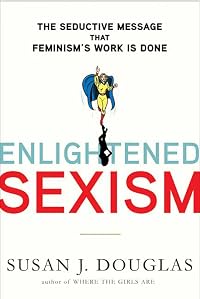
Enlightened Sexism: The Seductive Message that Feminism's Work Is Done
by Susan J. Douglas
On This Page
Description
Women today are inundated with conflicting messages from the mass media: they must either be strong leaders in complete command or sex kittens obsessed with finding and pleasing a man. Here, cultural critic Susan J. Douglas takes readers on a spirited journey through the television programs, popular songs, movies, and news coverage of recent years, telling a story that is the cultural biography of a new generation of American women. Revisiting cultural touchstones from Buffy the Vampire show more Slayer to Desperate Housewives, Douglas exposes these images of women as mere fantasies of female power, assuring women and girls that the battle for equality has been won, so there's nothing wrong with resurrecting sexist stereotypes--all in good fun, of course. She shows that these portrayals not only distract us from the real-world challenges facing women today but also drive a wedge between baby-boom women and their "millennial" daughters.--From publisher description. show lessTags
Recommendations



















Member Reviews
In this book, Douglas examines how girls and women are represented in the media. Popular culture says that full equality for women has been achieved. Of course, any reflective, thoughtful adult would recognize that this is a myth. But the media doesn’t recognize it, and instead perpetrates the idea that feminism is now pointless and even bad for you. This is part of what defines “enlightened sexism.” The definition also includes the idea that, because women are now equal, it is amusing to resurrect sexist stereotypes. TV shows and movies that show women in power—the judges, high-powered attorneys, police chiefs and surgeons—while very nice to see, do not reflect the reality of life for women in our society. One of Douglas’s show more main points is that these fantasies distract us from the ongoing status of women as second class citizens.
Douglas examines a vast array of shows and personalities to expose enlightened sexism. She cites others as good examples of feminist media. Just some that she discusses include: Murphy Brown, Beverly Hills 90210, Buffy the Vampire Slayer, Loreena Bobbit, Ally McBeal, Living Single, Grey’s Anatomy, Sex & the City, Cosmo and Vogue magazines, reality TV, Mean Girls, Clueless, celebrity culture (including the search for the ‘baby bump’), Hilary Clinton, Sarah Palin, Desperate Housewives and the dearth of lesbian characters and celebrities. This is a partial list, and she discusses many others.
Although I haven’t seen half of the shows she discusses, I still found Enlightened Sexism extremely interesting. At times it was so discouraging and depressing that I had to put it aside for a few days. However, Douglas has a great sense of humour, which helped to elevate the extreme bleakness of the material. She also writes in a conversational tone that makes for smooth reading.
This is a must-read for anyone interested in cultural studies, media studies or women’s studies. Also recommended for anyone who is female or knows anyone who is female. show less
Douglas examines a vast array of shows and personalities to expose enlightened sexism. She cites others as good examples of feminist media. Just some that she discusses include: Murphy Brown, Beverly Hills 90210, Buffy the Vampire Slayer, Loreena Bobbit, Ally McBeal, Living Single, Grey’s Anatomy, Sex & the City, Cosmo and Vogue magazines, reality TV, Mean Girls, Clueless, celebrity culture (including the search for the ‘baby bump’), Hilary Clinton, Sarah Palin, Desperate Housewives and the dearth of lesbian characters and celebrities. This is a partial list, and she discusses many others.
Although I haven’t seen half of the shows she discusses, I still found Enlightened Sexism extremely interesting. At times it was so discouraging and depressing that I had to put it aside for a few days. However, Douglas has a great sense of humour, which helped to elevate the extreme bleakness of the material. She also writes in a conversational tone that makes for smooth reading.
This is a must-read for anyone interested in cultural studies, media studies or women’s studies. Also recommended for anyone who is female or knows anyone who is female. show less
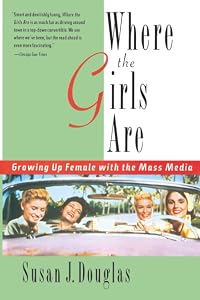
Susan J. Douglas is the author of the 1994 [Where the Girls Are: Growing up Female with the Mass Media], a deliciously insightful and witty book about how the mass media had portrayed women during the 1950s through the 1970s. As Publishers Weekly notes, she “considers the paradox of a generation of women raised to see themselves as bimbos becoming the very group that found its voice in feminism.” I loved this book and I never looked at television the same again. I think I may have even sent a note off to Ms. Douglas begging for a sequel.
While not exactly a sequel, [Enlightened Sexism: The Seductive Message that Feminism’s Work is Done] once again examines the mass media and the often conflicting images of women it presents – show more this time from roughly 1990 to the present. But instead of examining how the mass media may have contributed or reflected the feminist movement, this time she’s using the same kind of study as a wake-up call and call to arms, thus joining an increasing number of voices who are saying the same thing.
Douglas, with her characteristic wit, argues that the battle for equality has not been won and that many of the images of female power the mass media has been giving us over the last 15 or so years has been little more than fantasy.
"What the media have been giving us, then, are little more than fantasies of power. They assure girls and women, repeatedly, that women’s liberation is a fait accompli and that we are stronger, more successful, more sexually in control, more fearless, and more held in awe than we actually are… Of course women in fictional TV shows can be in the highest positions of authority, but in real life—maybe not such a good idea. Instead, the wheedling, seductive message to young women is that being decorative is the highest form of power—when, of course, if it were, Dick Cheney would have gone to work every day in a sequined tutu."
Douglas’s term “enlightened sexism” is a nod to an earlier book titled [Enlightened Racism]. “Enlightened sexism is feminist in its outward appearance (of course you can buy or be anything you want) but sexist in its intent (hold on, girls, only up to a certain point, and not in any way that discomfits men or pushes feminist goals one more centimeter forward). While enlightened sexism seems to support women’s equality, it is dedicated to the undoing of feminism.”
Examining the mass media, particularly television from 1990 onward, Douglas chronicles the rise in this enlightened sexism, and the examination is – like in her earlier book – fascinating. It’s a lot to digest and probably not a book one would want to read quickly. Let me give you the highlights using the chapter headings (rather oversimplified, I’m afraid):
-1990 and the show “Beverly Hills 90210” – one of the first programs successfully aimed at the teenage girl market.
- “Castration Anxiety” – images of dangerous women (remember Loreena Bobbitt, Amy Fisher?) and women who don’t play by the rules (Janet Reno) in the early 1990s.
- “Warrior Women in Thongs” examines shows like “Xena” and “Buffy” in the mid to late 1990s
- “A New Girliness” examines movies such as “Clueless,” “Legally Blonde,” and “Miss Congeniality“ and television shows like “Ally McBeal.”
- In “you Go, Girl”, she examines how African American women and other women of color are portrayed in the mass media during this period (including the success of Oprah, the rise of rap music..etc).
- “Sex “R” Us” looks at the mainstreaming of pornography beginning in the late 1990s. “…the rampant return to the often degrading sexual objectification of women, and the increasing sexualization of children, especially girls.”
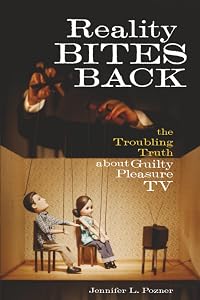
-“Reality Bites” looks at so-called reality television from “The Bachelor” to “Survivor” to “Wife Swap.”
-“Lean and Mean” looks at a possible connection between our culture’s pressure for women to fit into a size zero dress while still filling out a 38D bra and the rise of “queen bees” and “mean girls.” I found this a particularly provocative theory and although I’m not convinced entirely of the connection, the exploration of the topic was fascinating.
-“Red Carpet Mania” examines our cultural obsession with celebrity and what the celebrity industry is telling us.
In “Women on Top…Sort Of”, Douglas decodes the media coverage and examines how women are talked about in the last election (Clinton, Palin, Michelle Obama), and other prominent women (Martha Stewart, Katie Couric). She also discusses their television counterparts in shows like “ER,” “Law & Order,” “Commander in Chief,” and “Boston Legal.”
In her last chapter and, in my opinion, to her credit, Douglas takes up a call-to-arms, encouraging us to a new era of media consciousness, a redirection of our energies into a new era of activism that benefits all women, particularly the millions of women currently invisible in the mass media (most of us).
Unlike with the previous book, I hadn’t watched much of the television in the era Douglas covers in this book. I wondered whether my experience of this book would have been different if I had, but I think fundamentally not, although I might have thought some parts slightly less tedious, I suppose.What Douglas does that I find so valuable is to raise our consciousness around the conflicting images and subtle messages presented to us in the mass media, so that we are not just passive receptacles. I enjoyed this book, and found it encouraging that I am not alone in seeing that equality for women is still an illusion and there is indeed more work to do. show less
While not exactly a sequel, [Enlightened Sexism: The Seductive Message that Feminism’s Work is Done] once again examines the mass media and the often conflicting images of women it presents – show more this time from roughly 1990 to the present. But instead of examining how the mass media may have contributed or reflected the feminist movement, this time she’s using the same kind of study as a wake-up call and call to arms, thus joining an increasing number of voices who are saying the same thing.
Douglas, with her characteristic wit, argues that the battle for equality has not been won and that many of the images of female power the mass media has been giving us over the last 15 or so years has been little more than fantasy.
"What the media have been giving us, then, are little more than fantasies of power. They assure girls and women, repeatedly, that women’s liberation is a fait accompli and that we are stronger, more successful, more sexually in control, more fearless, and more held in awe than we actually are… Of course women in fictional TV shows can be in the highest positions of authority, but in real life—maybe not such a good idea. Instead, the wheedling, seductive message to young women is that being decorative is the highest form of power—when, of course, if it were, Dick Cheney would have gone to work every day in a sequined tutu."
Douglas’s term “enlightened sexism” is a nod to an earlier book titled [Enlightened Racism]. “Enlightened sexism is feminist in its outward appearance (of course you can buy or be anything you want) but sexist in its intent (hold on, girls, only up to a certain point, and not in any way that discomfits men or pushes feminist goals one more centimeter forward). While enlightened sexism seems to support women’s equality, it is dedicated to the undoing of feminism.”
Examining the mass media, particularly television from 1990 onward, Douglas chronicles the rise in this enlightened sexism, and the examination is – like in her earlier book – fascinating. It’s a lot to digest and probably not a book one would want to read quickly. Let me give you the highlights using the chapter headings (rather oversimplified, I’m afraid):
-1990 and the show “Beverly Hills 90210” – one of the first programs successfully aimed at the teenage girl market.
- “Castration Anxiety” – images of dangerous women (remember Loreena Bobbitt, Amy Fisher?) and women who don’t play by the rules (Janet Reno) in the early 1990s.
- “Warrior Women in Thongs” examines shows like “Xena” and “Buffy” in the mid to late 1990s
- “A New Girliness” examines movies such as “Clueless,” “Legally Blonde,” and “Miss Congeniality“ and television shows like “Ally McBeal.”
- In “you Go, Girl”, she examines how African American women and other women of color are portrayed in the mass media during this period (including the success of Oprah, the rise of rap music..etc).
- “Sex “R” Us” looks at the mainstreaming of pornography beginning in the late 1990s. “…the rampant return to the often degrading sexual objectification of women, and the increasing sexualization of children, especially girls.”
-“Reality Bites” looks at so-called reality television from “The Bachelor” to “Survivor” to “Wife Swap.”
-“Lean and Mean” looks at a possible connection between our culture’s pressure for women to fit into a size zero dress while still filling out a 38D bra and the rise of “queen bees” and “mean girls.” I found this a particularly provocative theory and although I’m not convinced entirely of the connection, the exploration of the topic was fascinating.
-“Red Carpet Mania” examines our cultural obsession with celebrity and what the celebrity industry is telling us.
In “Women on Top…Sort Of”, Douglas decodes the media coverage and examines how women are talked about in the last election (Clinton, Palin, Michelle Obama), and other prominent women (Martha Stewart, Katie Couric). She also discusses their television counterparts in shows like “ER,” “Law & Order,” “Commander in Chief,” and “Boston Legal.”
In her last chapter and, in my opinion, to her credit, Douglas takes up a call-to-arms, encouraging us to a new era of media consciousness, a redirection of our energies into a new era of activism that benefits all women, particularly the millions of women currently invisible in the mass media (most of us).
Unlike with the previous book, I hadn’t watched much of the television in the era Douglas covers in this book. I wondered whether my experience of this book would have been different if I had, but I think fundamentally not, although I might have thought some parts slightly less tedious, I suppose.What Douglas does that I find so valuable is to raise our consciousness around the conflicting images and subtle messages presented to us in the mass media, so that we are not just passive receptacles. I enjoyed this book, and found it encouraging that I am not alone in seeing that equality for women is still an illusion and there is indeed more work to do. show less
A smart, funny, and sobering analysis of sexism in the media and culture, and the utter necessity of real feminism. "But really, haven't we had enough? Isn't it time, Buffy-style, to take a giant stake and drive it right through the beastly heart of enlightened sexism? Because I think that, in our heart of hearts, we do miss feminism: its zeal, its audacity, its righteous justice. So let's have some fun, and get to work."
Well, this was interesting. It was. The thing is, first the author states her basic premise - that popular media, under the pretense that sexism is so last century, is perpetuating damaging sexist stereotypes and colonizing both male and female minds with female images that are not substantially different from those of the 1950s. And truly, Douglas makes a powerful case, and I have only minor differences with her. The only thing is...
...Oh, I feel bad even saying this. But it just gets kind of boring. She keeps saying the same thing over and over and over, using different media examples. Also, I found her chatty style a bit off-putting after a while. This is kind of a scholarly work - I guess I like to see a little more dignity in this show more kind of a read. But it IS interesting, really, and if you are a big fan of modern media, this is worth your time. show less
...Oh, I feel bad even saying this. But it just gets kind of boring. She keeps saying the same thing over and over and over, using different media examples. Also, I found her chatty style a bit off-putting after a while. This is kind of a scholarly work - I guess I like to see a little more dignity in this show more kind of a read. But it IS interesting, really, and if you are a big fan of modern media, this is worth your time. show less
In Enlightened Sexism, Susan J. Douglas argues that the through the combination of "enlightened sexism" and "embedded feminism," the media and popular culture conceal the very real need for continued feminism - the very idea of which having become almost a dirty word. In embedded feminism, tv shows and the media present women in power as fait accompli, leading women to believe that feminism is part of the cultural landscape and hiding the fact that there still exist many disparities between women and men in this country. Through enlightened sexism, women continue objectified and exploited in popular culture, but the viewer is meant to watch with irony.
Douglas writes in a conversational tone that immediately pulled me into her writing show more and kept me interested. I also enjoyed reading the examples she cites of movies, tv shows, and popular culture in which embedded feminism or enlightened sexism are at work. This book definitely got me thinking more about feminism, and the role that it plays in my life. It's not something I've really considered before, and I'm definitely watching tv shows and movies in a new light now. Overall, I'd say that this book is illuminating and well-written, but be wary before picking it up if you're not completely interested in the subject material.
You can find my full review at Rantings of a Bookworm Couch Potato. show less
Douglas writes in a conversational tone that immediately pulled me into her writing show more and kept me interested. I also enjoyed reading the examples she cites of movies, tv shows, and popular culture in which embedded feminism or enlightened sexism are at work. This book definitely got me thinking more about feminism, and the role that it plays in my life. It's not something I've really considered before, and I'm definitely watching tv shows and movies in a new light now. Overall, I'd say that this book is illuminating and well-written, but be wary before picking it up if you're not completely interested in the subject material.
You can find my full review at Rantings of a Bookworm Couch Potato. show less
One of the best books on feminism I've read in a long time (OK, so I don't read all that many books on feminism; if they were all this good, I might). The author doesn't set out to prove that women are superior, or to bash men, but instead to restore feminism to a role in our society that it's lost. She is no easier on those women who claim to be feminists but promote the idea that women somehow are unable to do math, science, etc, and that our role is to raise kids. I think everyone who goes around thinking sexism is dead should be given this to read.
Douglas defines “enlightened sexism” as a response to the “perceived threat of a new gender regime” following the gains made by feminists since the 1970s. Her premise is that, under the mistaken assumption that full gender equality has been achieved, it is now “OK” to resurrect sexist stereotypes because they will no longer undermine women’s equality. She explores the rise and evolution of media-created fantasies from the early 1990s to the present in TV, movies, popular songs, even network news, demonstrating how women have increasingly been reduced to stereotypes obsessed with their figures, clothes, shopping, and aging. From Beverly Hills 90210 and Buffy the Vampire Slayer to reality shows like The Bachelor and show more Survivor, women have been increasingly trivialized as overly emotional, unable to get along with each other, and constantly in competition for male approval. Douglas injects humor throughout, and notes the differences between her and her “millennial” daughter. She concludes with the hope that this new generation will not give up the fight. show less
Members
- Recently Added By
Author Information

7+ Works 1,750 Members
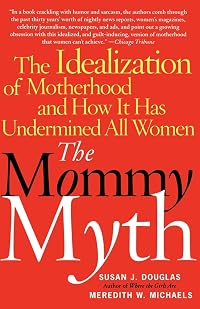
Susan J. Douglas is the author of Where the Girls Are, The Mommy Myth, and other works of cultural history and criticism. She is the Catherine Neafie Kellogg Professor of Communication Studies and chair of the department at the University of Michigan. Her work has appeared in The Nation, The Progressive, Ms., The Village Voice, and In These Times. show more She lives in Ann Arbor, Michigan. show less
Common Knowledge
- Original publication date
- 2010
Classifications
- Genres
- Nonfiction, Sexuality and Gender Studies, General Nonfiction, Sociology
- DDC/MDS
- 302.230820973 — Society, government, & culture Social sciences, sociology & anthropology Mass Communication & Media Communication Media (Means of communication) Groups of people Women
- LCC
- HQ1233 .D68 — Social sciences The family. Marriage, Women and Sexuality The Family. Marriage. Women Women. Feminism
- BISAC
Statistics
- Members
- 358
- Popularity
- 88,377
- Reviews
- 10
- Rating
- (3.90)
- Languages
- English
- Media
- Paper, Ebook
- ISBNs
- 3
- ASINs
- 3