Terror by the Numbers : Separating Facts from Fiction
by Loretta Napoleoni
On This Page
Description
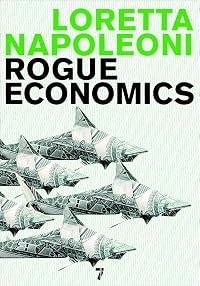
"Economist and best-selling author Loretta Napoleoni traces the link between the finances of the war on terror and the global economic crisis, finding connections from Dubai to London to Las Vegas that politicians and the media have at best ignored. In launching military and propaganda wars in the Middle East, America overlooked the war of economic independence waged by Al-Qaeda. The Patriot Act boosted the black market economy, and the war on terror prompted a rise in oil prices that led to show more food riots and distracted governments from the trillion-dollar machinations of Wall Street. Consumers and taxpayers, spurred by propaganda fears, were lured into crushing global debt. Napoleoni shows that if we do not face up to the many serious connections between our response to 9/11 and the financial crisis, we will never work our way out of the looming global recession that now threatens our way of life. hile we feared that Al-Qaeda might destroy our world, Wall Street ripped it apart." show lessTags
Recommendations






























Member Reviews
I feel that this book is right on target with it criticisms of the US response to 9/11. A great deal of the staggering debt that the country now is burdened by is a result of this response. One of Osama Bin Laden’s objectives in his terror campaign was to bankrupt the United States and the Bush administration did their best to help him meet that objective. This book does as good of a job of tracing the link between the finances of the war on terror and the global economic crisis as any information source that I have seen.
 This review was written for LibraryThing Early Reviewers.
The lack of footnotes and documentation may work against the credibility of the book but its outline and points are clear enough. Napoleoni is credible enough for her interview of the Italian Red Brigades. She blames Bush and Clinton for wrongly pursuing terrorists in the name of national security and she attempts to demonstrate that they have actually led the U.S. to its financial downfall.
Napoleoni’s major points are covered in the Preface and Introduction. In the Preface she asserts that the US is losing the war in Afghanistan just as the USSR did and with the same devastating consequences to its economy. The US is now a debtor nation, depending upon China, Japan, and Saudi Arabia to finance its war efforts. Ironically, these wars show more have not been about defeating terrorists, and they have been waged without understanding of Islamic economies. “The war on terror has nothing to do with defeating al-Qaeda. Rather, it has represented the causus belli needed to launch into an ambitious and phenomenally expensive nation-bullding project” – a nation-building project doomed to failure from the beginning.
In addition to her basic points, I quote some extracts:
"Money must be used as a productive means to create something tangible. According to this principle, speculation is synonymous with gambling and other unlawful activities. The Islamic economic system also incorporates elements that traditionally have nothing to do with finance or economics but represent the fundamental tenets of Islam: the zakat, the religious almsgiving requiring all Muslims to pay 2.5 percent of annual profits or disposable income, and the hajj, the pilgrimage to Mecca."
"[Islamic banks] were co-designed by sharia scholars and religious leaders together with Arab oil tycoons and bankers. It was an unusual, yet rock-solid, joint venture."
"The relationship between the client and the bank resembles a business partnership: the bank funds the purchase of real estate or buys products, commodities, and so on, and the client repays the loans through monthly payments and becomes the full owner."
"This unusual structure offers the Islamic banking system infinite flexibility. Potentially, Islamic finance can bankroll any activity, ranging from financing of real estate or infrastructure, to oil exploration, and even athletic sponsorships – providing they are not haram [usury]."
"In the shadow of the minarets, wealth comes from cooperation and joint ventures between banks and clients. The strength of this union represents the solid foundation of Islamic banks and, at the same time, the engine of its growth in the Muslim world."
As a result of these quotes, one reviewer asks:
Where do these banks get the funds? And how do their clients share income or profits with the banks if they pay no interest? So just exactly what is the Islamization of the banking process that has achieved such success after 9/11, that poses such a threat to the US leadership in the financial world?
The banks receive funding from physical agents who do no record or computerize records. Because of this process, Western regulations do not restrict Islamic financial practices. Funding flows unrestricted into the hands of insurgents and terrorists.
Transactions avoid interest through convoluted contracts developed by Shariah authorities based upon classical Islamic forms. It is probably advantageous that it is so difficult to increase profit through Islamic finance or it would be even more predominant.
As noted in a Blog Smith post (31 May 2008: accessed 23 May 2010):
Banks first emerged in the Middle Ages when people grew tired of carrying around all their gold and began leaving their money with the goldsmith. The Medici family, one of the most prominent banking families in Europe during this time, became quite wealthy from its banking and moneylending practices. This 14th-century painting depicts people depositing and withdrawing money in an Italian bank. Graphic source: Encarta, Hulton Deutsch
The Western system of finance, which emerged during the Renaissance,
is supplemented today with a new world-wide model, Islamic finance. Banker, a U.K. based trade publication, estimates that Islamic financial assets increased to US$500 billion. Although relatively small in worldwide financial terms, the amount far exceeds the $50 billion invested in U.S. companies by the four most financially active Muslim countries: the United Arab Emirates (UAE), Saudi Arabia, Singapore, and Kuwait. Perhaps more importantly, Islamic finance is expected to grow at about a 20% rate at least annually for the next few years.
The real impetus for growth, however, is that Middle Eastern financiers reacted negatively to Congress' nixing of DP World, the Dubai-based operative, which sought to manage U.S. ports. As a result, Islamic commerce emgerged, adhering to sharia, Islamic law based on the Koran. The restrictive measures of Islamic finance would prevent Islamic financiers from participating in typical Western banking practices, such as loaning money at interest. However, a team of sharia scholars issues rulings in order for Islamic finance to prosper.
Islamic profit is being invested. Arcapita Bank, based both in Bahrain and Atlanta, Ga, makes sharia compliant investments, primarily in the U.S.
They are not alone. Citigroup Inc. was one of the first Western banks to engage in Islamic finance. Since 1996 they have been operating in Bahrain. Most of the banks engaged in Islamic finance are in Europe but Citigroup is one of the few American banks to engage consistently in the practice. show less
Napoleoni’s major points are covered in the Preface and Introduction. In the Preface she asserts that the US is losing the war in Afghanistan just as the USSR did and with the same devastating consequences to its economy. The US is now a debtor nation, depending upon China, Japan, and Saudi Arabia to finance its war efforts. Ironically, these wars show more have not been about defeating terrorists, and they have been waged without understanding of Islamic economies. “The war on terror has nothing to do with defeating al-Qaeda. Rather, it has represented the causus belli needed to launch into an ambitious and phenomenally expensive nation-bullding project” – a nation-building project doomed to failure from the beginning.
In addition to her basic points, I quote some extracts:
"Money must be used as a productive means to create something tangible. According to this principle, speculation is synonymous with gambling and other unlawful activities. The Islamic economic system also incorporates elements that traditionally have nothing to do with finance or economics but represent the fundamental tenets of Islam: the zakat, the religious almsgiving requiring all Muslims to pay 2.5 percent of annual profits or disposable income, and the hajj, the pilgrimage to Mecca."
"[Islamic banks] were co-designed by sharia scholars and religious leaders together with Arab oil tycoons and bankers. It was an unusual, yet rock-solid, joint venture."
"The relationship between the client and the bank resembles a business partnership: the bank funds the purchase of real estate or buys products, commodities, and so on, and the client repays the loans through monthly payments and becomes the full owner."
"This unusual structure offers the Islamic banking system infinite flexibility. Potentially, Islamic finance can bankroll any activity, ranging from financing of real estate or infrastructure, to oil exploration, and even athletic sponsorships – providing they are not haram [usury]."
"In the shadow of the minarets, wealth comes from cooperation and joint ventures between banks and clients. The strength of this union represents the solid foundation of Islamic banks and, at the same time, the engine of its growth in the Muslim world."
As a result of these quotes, one reviewer asks:
Where do these banks get the funds? And how do their clients share income or profits with the banks if they pay no interest? So just exactly what is the Islamization of the banking process that has achieved such success after 9/11, that poses such a threat to the US leadership in the financial world?
The banks receive funding from physical agents who do no record or computerize records. Because of this process, Western regulations do not restrict Islamic financial practices. Funding flows unrestricted into the hands of insurgents and terrorists.
Transactions avoid interest through convoluted contracts developed by Shariah authorities based upon classical Islamic forms. It is probably advantageous that it is so difficult to increase profit through Islamic finance or it would be even more predominant.
As noted in a Blog Smith post (31 May 2008: accessed 23 May 2010):
Banks first emerged in the Middle Ages when people grew tired of carrying around all their gold and began leaving their money with the goldsmith. The Medici family, one of the most prominent banking families in Europe during this time, became quite wealthy from its banking and moneylending practices. This 14th-century painting depicts people depositing and withdrawing money in an Italian bank. Graphic source: Encarta, Hulton Deutsch
The Western system of finance, which emerged during the Renaissance,
is supplemented today with a new world-wide model, Islamic finance. Banker, a U.K. based trade publication, estimates that Islamic financial assets increased to US$500 billion. Although relatively small in worldwide financial terms, the amount far exceeds the $50 billion invested in U.S. companies by the four most financially active Muslim countries: the United Arab Emirates (UAE), Saudi Arabia, Singapore, and Kuwait. Perhaps more importantly, Islamic finance is expected to grow at about a 20% rate at least annually for the next few years.
The real impetus for growth, however, is that Middle Eastern financiers reacted negatively to Congress' nixing of DP World, the Dubai-based operative, which sought to manage U.S. ports. As a result, Islamic commerce emgerged, adhering to sharia, Islamic law based on the Koran. The restrictive measures of Islamic finance would prevent Islamic financiers from participating in typical Western banking practices, such as loaning money at interest. However, a team of sharia scholars issues rulings in order for Islamic finance to prosper.
Islamic profit is being invested. Arcapita Bank, based both in Bahrain and Atlanta, Ga, makes sharia compliant investments, primarily in the U.S.
They are not alone. Citigroup Inc. was one of the first Western banks to engage in Islamic finance. Since 1996 they have been operating in Bahrain. Most of the banks engaged in Islamic finance are in Europe but Citigroup is one of the few American banks to engage consistently in the practice. show less
This review was written for LibraryThing Early Reviewers.I like certain things about the author's writing style, and dislike others. And sometimes I like and dislike the same things. The greatest of these is the 'wide-ranging' feel of her prose, such as moving from one topic (The Great Depression) to another (oil) to another (home values and mortgage default rates) in the space of half a page. (Since this is a content issue as well as a stylistic one, I'm guessing the the quality of the translation isn't a factor here.) Napoleoni sweeps from topic to topic, synthesizing and drawing connections, with a confident, direct sort of tone, and quickly. There are brief bibliographic notes at the end, but sometimes only several titles per chapter and often relying on her own previous titles. So, as a show more reader, I want to be impressed by the scope of her knowledge and her ability to link vastly different subjects and conceptual spheres. But the confidence/brevity also creates a sense that there's a bit of a 'talking to herself/preaching to the choir' going on at times. show less
This review was written for LibraryThing Early Reviewers.Definitely a new argument in why the US economy has been struggling, the Global War on Terror. Although I have liked some of Napoleoni's past works this volume smacks of a theory pushing the limits of reality. While she makes some excellent points as a student of political economy and international affairs I would have liked to see where some of her material was coming from to do further research and to try and understand more thoroughly her argument. Overall, an interesting yet disappointingly argumentative rather than persuasive book.
This review was written for LibraryThing Early Reviewers.Napoleoni puts forth an interesting idea that all the current financial problems, the credit crunch, collapse of the sub-prime lending market, etc. is caused by the GWOT. She didn't convince me but she makes some good arguments. High finance is like a foreign language to me, all but indecipherable. Someone who understands it better might be able to poke a lot of holes in her arguments. The book got off to a poor start and I considered giving up on it but since it's an ER book I pressed on and it did get better. The biggest problem I had throughout the book was the lack of footnotes, in their place were bibliographic notes which consisted of a short list of sources broken down by chapter, however not every chapter was included . I found show more this problematic when I wanted to see where some of her information came from. I would guardedly recommend this to anyone interested in terrorism but definitely not as a starting point. If you don't have a strong interest in the subject matter I would pass on this one. show less
This review was written for LibraryThing Early Reviewers.Overall a fairly good book, Napoleoni’s arguments are well reasoned but they are pretty standard. “Islamic banking” was new to me and was by far the most intriguing part of the book. Well written and the bibliographic notes were numerous (the book is worth the price just for these notes), very liberal but it is nice to read a Europeans view of the “war on terror”. The book should have been expanded to make a better argument but it’s a nice introduction for people that don’t follow the news.
This review was written for LibraryThing Early Reviewers.Strangely disjointed and disappointing. I also would have liked to see footnotes (I hate books that just have the cited works at the end) as I agree with other comments that this book lacked a lot of evidence to go with the emotional appeal. Certain things bugged me about this book, such as the author referring to a "radical mosque" (what does that even mean?) or implying that average Americans somehow had a choice in the matter of getting into wars and a financial meltdown, but we decided to drink Bud Light and watch reruns of The Simpsons all day instead.
Members
- Recently Added By
Lists

Seven Stories Press
18 works; 1 member
Author Information

36+ Works 753 Members
Loretta Napoleoni, a former Fulbright scholar at Johns Hopkins University's Paul H. Nitze School of Advanced International Studies and Rotary Scholar at the London School of Economics, is an expert on international terrorism who has worked as an economist and foreign correspondent for Italy's financial papers
Common Knowledge
- Canonical title
- Terror by the Numbers : Separating Facts from Fiction
- Original title
- La Morsa: Distratti da al Qaeda, derubati da Wall Street. Come ne usciamo?
- Original publication date
- 2009
Classifications
Statistics
- Members
- 35
- Popularity
- 819,656
- Reviews
- 10
- Rating
- (2.83)
- Languages
- English, Italian
- Media
- Paper, Ebook
- ISBNs
- 5
- ASINs
- 1