On This Page
Description
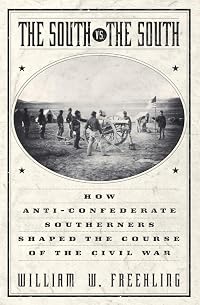
Far from a monolithic block of diehard slave states, the antebellum South was, in William Freehling's words, ""a world so lushly various as to be a storyteller's dream."" It was a world where Deep South cotton planters clashed with South Carolina rice growers, as Northern egalitarianism infiltrated border states already bitterly divided on key issues. It was the world of Jefferson Davis, John C. Calhoun, Andrew Jackson, and Thomas Jefferson, and also of Gullah Jack, Nat Turner, and Frederick show more Douglass. Now, in the first volume of his long awaited, monumental study of the South's road to disunio show lessTags
Recommendations











Member Reviews
I consider this a well written book that deals with an issue of American politics in a new way. The author looks in unusual places for significant factors in the growth of succession. He certainly provided me with some new ideas to think about. Freehling places great emphasis on the border south, the middle south and the deep south as separate regions that reacted differently to slavery. He begins with an interesting discussion of the death of slavery in the North. According to him there were slaves in New York and New Jersey until the 1830's.
Freehling focuses on the low country South Carolinians as the part of the south that never joined the Union and pushed secession. He has many interesting portrayals of the people involved who show more present a wide ranging cast of characters. The men behind secession included everyone from intellectuals to low country sugar growers who all saw the Southern way of life as alien to Northern culture.
As he describes the lessening of the ties between the sections you can hear the bands that hold the nation fly apart. Very specific factors, such as the death of the Whig party are chronicled as secession comes closer. One item, the Kansas-Nebraska Act is not given the prominence of other authors. Mr. Freehling draws his own picture of the national disintegration.
I recommend the book highly. It is written very intelligently and once you forget that this isn't the story you usually hear several good points are made. Some knowledge of the era is useful. My favorite on the breaking up has always been The Coming Fury by Bruce Catton. show less
Freehling focuses on the low country South Carolinians as the part of the south that never joined the Union and pushed secession. He has many interesting portrayals of the people involved who show more present a wide ranging cast of characters. The men behind secession included everyone from intellectuals to low country sugar growers who all saw the Southern way of life as alien to Northern culture.
As he describes the lessening of the ties between the sections you can hear the bands that hold the nation fly apart. Very specific factors, such as the death of the Whig party are chronicled as secession comes closer. One item, the Kansas-Nebraska Act is not given the prominence of other authors. Mr. Freehling draws his own picture of the national disintegration.
I recommend the book highly. It is written very intelligently and once you forget that this isn't the story you usually hear several good points are made. Some knowledge of the era is useful. My favorite on the breaking up has always been The Coming Fury by Bruce Catton. show less
Great Research!
The folks here are 100% right about the author's writing style. At times one is forced to reread a sentence to catch the meaning the prose is so obtuse.
I believe Mr. Freehling was attempting to develop a catchy rhythm and a "style" but it never quite gels. At times he takes what would be an easily understood, colloquially worded sentence and inverts it so that it almost seems foreign to an English oriented audience (imagine a prose constantly using wording such as "down he sat" as opposed to "he sat down").
He also has an annoying tendency of attempting to create catch phrases that he uses over an over again even when the situations described don't quite fit with the original usage of the word he coins. The style, show more mannerisms, and conventions he used in writing this tome slows down the pace, seems forced and detracts from the work. Mr. Freehling would do himself better to just write the narrative in a less "stylized" manner.
However, that being said, those who have said this is a book that shouldn't be missed are also correct. The research the author put into this book is voluminous and comprehensive. He brings quite a few things home well and leads the reader to a much better understanding of just how complicated the slavery issue really was in antebellum America.
His description of the various "Souths" that developed between 1780 and 1853 is fascinating and illuminating. His treatment of the Texas annexation issue was fantastic. With such wonderful research, I cannot wait for Vol. 2, but I hope Mr. Freehling jettisons his muddled writing style before he begins the next installment.
This is a highly recommended work. But don't imagine it is light reading. show less
The folks here are 100% right about the author's writing style. At times one is forced to reread a sentence to catch the meaning the prose is so obtuse.
I believe Mr. Freehling was attempting to develop a catchy rhythm and a "style" but it never quite gels. At times he takes what would be an easily understood, colloquially worded sentence and inverts it so that it almost seems foreign to an English oriented audience (imagine a prose constantly using wording such as "down he sat" as opposed to "he sat down").
He also has an annoying tendency of attempting to create catch phrases that he uses over an over again even when the situations described don't quite fit with the original usage of the word he coins. The style, show more mannerisms, and conventions he used in writing this tome slows down the pace, seems forced and detracts from the work. Mr. Freehling would do himself better to just write the narrative in a less "stylized" manner.
However, that being said, those who have said this is a book that shouldn't be missed are also correct. The research the author put into this book is voluminous and comprehensive. He brings quite a few things home well and leads the reader to a much better understanding of just how complicated the slavery issue really was in antebellum America.
His description of the various "Souths" that developed between 1780 and 1853 is fascinating and illuminating. His treatment of the Texas annexation issue was fantastic. With such wonderful research, I cannot wait for Vol. 2, but I hope Mr. Freehling jettisons his muddled writing style before he begins the next installment.
This is a highly recommended work. But don't imagine it is light reading. show less
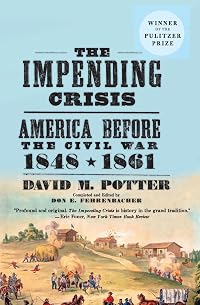
3736. The Road to Disunion Volume I: Secessionists at Bay 1776-1854, by William W. Freehling (read 26 Apr 2003) I have done a lot reading in pre-Civil War U.S. history, including the masterpieceful The Impending Crisis 1848-1861, by David M. Potter (read 15 May 1976), and thought this book would be good to read since it has been a while since I have read in the field. Freehling is not a lucid writer and the first 100 pages or so of this were hard to read, but the book gets steadily better and it covers the exciting and momentous events in the 1830s to 1854 period very well. Great subject matter, not so great writing.
A very good, yet very oddly written book. Certain topics relating to US history are examined as if under a microscope with mind-numbing detail, yet other seemingly important topics are just about ignored. As in, it would be just about impossible from this book to realize that the USA fought a war with Mexico in the 1840s or that one of the chief complaints of Southerners was Northern inspired tariffs. But what it does look at, it does a very good job with. The material on the demographics of South Carolina and other "black belts" alone makes this one worth the price of admission. I will go so far as to say that this one does not stand alone, nor that it is really for the general reader looking to plug some gaps in their knowledge of US show more history. show less
This is a must read for anyone interested in a deep dive of the underlying roadmap to the American Civil War. Hindsight is always 20/20 and William Freehling does a great job of showing that.
Members
- Recently Added By
Author Information
11+ Works 1,528 Members
William W. Freehling, Singletary Professor of the Humanities at the University of Kentucky, Lexington, has won the Nevins, Bancroft, and Owsley Prizes for his previous Oxford University Press books.
Series

Common Knowledge
- Canonical title
- Secessionists at Bay, 1776-1854
- Original publication date
- 1990
- People/Characters
- John Quincy Adams; John C. Calhoun; Henry Clay; Martin van Buren; Daniel Webster
- Important places
- Kansas, USA; Missouri, USA; Nebraska, USA; Texas, USA; USA
- Important events
- Constitutional Convention (1787); Nullification Crisis ; Compromise of 1850 [1850]; Missouri Compromise ; Kansas-Nebraska Act
- Dedication
- For Alison
- First words
- Rhett wore a black suit as he waited to surrender the revolution.
- Last words
- (Click to show. Warning: May contain spoilers.)With their last jarring demand that folks cease enjoying comfortable evasions and at last confront the uncomfortable choices, extremists approached their most potentially productive--and treacherous--stretch of the road to disunion.
Classifications
Statistics
- Members
- 533
- Popularity
- 55,783
- Reviews
- 7
- Rating
- (4.11)
- Languages
- English
- Media
- Paper, Ebook
- ISBNs
- 5
- ASINs
- 8