Nog
by Rudy Wurlitzer
On This Page
Description
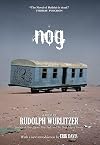
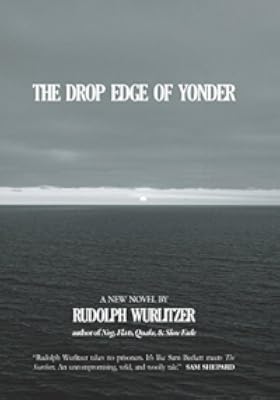
"Nog is to literature what Dylan is to lyrics."--Jack Newfield,The Village Voice "A new kind of American travelogue."--David Ulin,Los Angeles Times Book Review "Somewhere between Psychedelic Superman and Samuel Beckett."--Newsweek Originally published by Random House in 1969,Nog became a universally revered cult novel and a symbol of the countercultural movement. In Rudolph Wurlitzer's signature hypnotic and haunting voice,Nog tells the tale of a man adrift in the American West, armed with show more nothing more than his own three pencil-thin memories and an octopus in a bathysphere. This edition ofNog features a new introduction from noted critic and writer Erik Davis (TechGnosis). Yesterday afternoon a girl walked by the window and stopped for sea shells. I was wrenched out of two months of calm. Nothing more than that, certainly, nothing ecstatic or even interesting, but very silent and even, as those periods have become for me. Rudolph Wurlitzer is the author of the novelsThe Drop Edge of Yonder,Quake,Flats, andSlow Fade, as well as the nonfiction memoirHard Travel to Sacred Places. He wrote the screenplays for such classic films asPat Garrett and Billy the Kid,Two Lane Blacktop, andWalker, among others, and co-directed the filmCandy Mountain with Robert Frank. show lessTags
Recommendations



























Member Reviews
Nog unfurls as though Wurlitzer deliberately narrates everyday experience in a stridently alien tone. It seems the effect is achieved by selecting an ambivalent perspective from which to describe that experience, as though to force the reader to examine the mundane with greater attention, less preconception. (Naked lunch.) Example: the narrator makes no effort to employ a constant verb tense, not even within the same paragraph. It's unclear whether the changing tense is random, or follows some unidentified rule. Similarly, memory isn't demarcated from wish / vision / hallucination; events are tentatively sequenced; even the narrator's decisions and emotions shift (more than once, from sentence to sentence).
It's interesting that the very show more same prose serves at times as an absurdist novel, at other times as an existentialist prose poem. The repetitive phrasing and preoccupations of the narrator are in places reminiscent of Nausea.
One result is that the novel shows consciousness building (being built from) connected impressions, whether recollected or invented. So why select those specific impressions, discard others, and then consider the ensuing experience "awareness"? And who / what, precisely, is responsible for "selecting" at all?
Nog suggests the human need for narrative is such that we will invent one as readily as discern or uncover one.
How "fictional" is a novel, in light of this? How relevant authorial intent? show less
It's interesting that the very show more same prose serves at times as an absurdist novel, at other times as an existentialist prose poem. The repetitive phrasing and preoccupations of the narrator are in places reminiscent of Nausea.
One result is that the novel shows consciousness building (being built from) connected impressions, whether recollected or invented. So why select those specific impressions, discard others, and then consider the ensuing experience "awareness"? And who / what, precisely, is responsible for "selecting" at all?
Nog suggests the human need for narrative is such that we will invent one as readily as discern or uncover one.
How "fictional" is a novel, in light of this? How relevant authorial intent? show less
Wurlitzer’s writing elides your grasp for meaning or connection. Words appear, words you know and that have previously provided information, but in Wurlitzer’s sentences this information always slides away. It is a poetic style this writing. A style that parallels the thinking of his main character who works to avoid all connections and meaning built on memory and thought. It is as if his main character - who is not Nog and yet sometimes has Nog living within him - resides on the very edge of awareness. An awareness without memory to hold him down or planning to limit his experience. An awareness steadfastly (although that implies a desire much more intent than the character himself would ever own up to) living in the shifting now show more of experience. People and scenes and situations come and go around him without any sticking power or greater context. A room, an ankle, an octopus. But that is OK for a person with light coming out of a small hole in his chest. Or maybe that was someone else? A person trying to be Nog but not Nog. Some writing seems easy, if you only put the work in and had enough ideas. Wurlitzer’s writing seems something else. A style so stripped down and distilled, colorful yet intensely minimal, perfectly faceted in each instant and yet flowing softly as a breeze you aren’t quite sure you just felt…
I could try to coax meaning out of Nog's plot but that seems a disservice to its nature.
Much better to let its mood continue to wash over me as it slowly recedes from memory... show less
I could try to coax meaning out of Nog's plot but that seems a disservice to its nature.
Much better to let its mood continue to wash over me as it slowly recedes from memory... show less
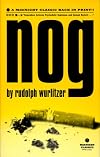
Me: I may have been one of the few people to read this book back then. God knows for years I would thrust my tattered copy at friends and insist they read it. My best friend and I still use phrases in conversation that we picked up from the book 20 years ago ("hasten a focus" comes to mind). For some reason I even remember the moment I purchased the book, in paperback, in a Woolworth's back in 1970, mostly because of its "psychedelic" cover art and the promise that "NOG is to literature what Dylan is to music." After a single, futile attempt at reading it, I found it on the shelf in my old bedroom at my parents' house one day in 1974, and noted that a glowing blurb from my favorite author, Thomas Pynchon, graced its back cover. If there show more is a message in "NOG", it may be: mental illness and hallucinogens are probably not a very good combination. Then again, there's more to "NOG" then meets the eye.
Leo: After being badgered by the Casa Marina Reading Club in the late '70's to read this (resulting in my subsequent slide into NOG-like obscurity), I can state with some experience that this book exerts an influence on its readers. Rumors abound that Wurlitzer was an itinerant goat herder who strived to simplify his life: to date these rumors are unsubstantiated. However, there is evidence that "NOG" is an influence in the writings of Thomas Pynchon and Christopher Moore. Chuck Norris has been known to quote significant passages from the book in some of his Westerns and credits the book with his zen-like approach to martial arts. A good read - and a way of life.
Me: Ditto on that Chuck Norris thing there. As a founding member of the CMRC, I can tell you that everyone who got past page 50 of NOG are now captains of industry, talk show hosts, and generally just fun people, although you wouldn't want them to, say, sleep over or even arrange a play date with your kids. In fact, forget what I just said. No one will ever recapture the special time/space continuum that those chosen few did when they mentioned, did I mention the effect on Chuck Norris? Truly inspirational stuff, Leo. But where are you? Trixie and Juanita were asking about you the other day, or was that...? show less
Leo: After being badgered by the Casa Marina Reading Club in the late '70's to read this (resulting in my subsequent slide into NOG-like obscurity), I can state with some experience that this book exerts an influence on its readers. Rumors abound that Wurlitzer was an itinerant goat herder who strived to simplify his life: to date these rumors are unsubstantiated. However, there is evidence that "NOG" is an influence in the writings of Thomas Pynchon and Christopher Moore. Chuck Norris has been known to quote significant passages from the book in some of his Westerns and credits the book with his zen-like approach to martial arts. A good read - and a way of life.
Me: Ditto on that Chuck Norris thing there. As a founding member of the CMRC, I can tell you that everyone who got past page 50 of NOG are now captains of industry, talk show hosts, and generally just fun people, although you wouldn't want them to, say, sleep over or even arrange a play date with your kids. In fact, forget what I just said. No one will ever recapture the special time/space continuum that those chosen few did when they mentioned, did I mention the effect on Chuck Norris? Truly inspirational stuff, Leo. But where are you? Trixie and Juanita were asking about you the other day, or was that...? show less
A crazy, strange, wonderful read! The protagonist ( is he Nod? Lockett? other?) sort of flows through life, from one strange trip to another. He starts on a beach, in a storm, with an octopus. Then he's on a mattress, in a hallway, in a house. Then on a ridge, above a commune/ghost town. Finally, on a ship. Often with Meredith. Maybe. Sometimes obsessed with a black bag. Just going with the flow. If the flow is really going.
Ratings
Members
- Recently Added By
Lists

Franklit
95 works; 1 member
Author Information

16+ Works 889 Members
Common Knowledge
- People/Characters
- Nog; Meridith; Lockett; Sarah; Colonel Green; Ollie (show all 8); An octopus; R.W. Bench
- Important places
- San Francisco, California, USA; Portland, Oregon, USA; American Southwest
Classifications
Statistics
- Members
- 199
- Popularity
- 165,429
- Reviews
- 4
- Rating
- (4.03)
- Languages
- English, Spanish
- Media
- Paper, Audiobook
- ISBNs
- 6
- ASINs
- 3