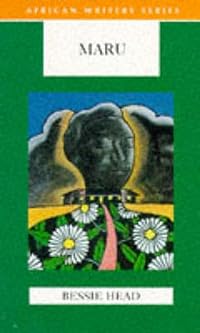
Maru
by Bessie Head
On This Page
Description
Margaret, an orphaned Masarwa girl, comes to Dilepe to teach, only to discover that in this Botswana village her people are treated as outcasts. In the love story and intrigue that follows, the book combines a portrait of loneliness with an affirmation of the mystery and spirituality of life.Tags
Recommendations



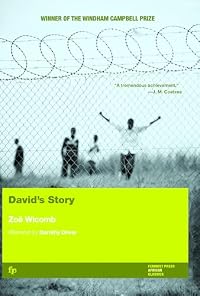
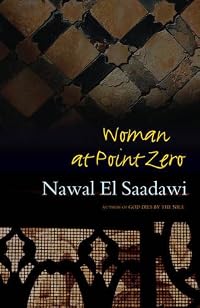
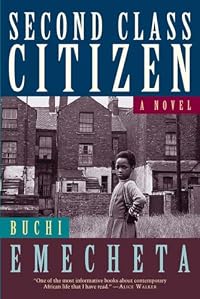
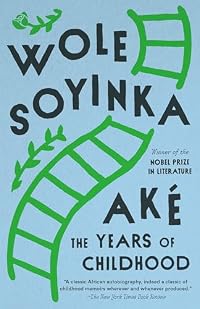
Member Recommendations

Member Reviews
I'm always fascinated with small books, by small I mean volume, that contain so much in them and Maru is one such book.
Maru, set in rural Botswana, is the tale of an orphaned girl Margaret, who belonging to the Masarwa tribe, a tribe mistreated, enslaved and considered subhuman, experiences life, love and art even at the face of discrimination.
There's a quote from the book that really struck home:
"How universal was the language of oppression! They had said of the Masarwa what every white man had said of every black man: 'They can't think for themselves. They don't know anything.' The matter never rested there. The stronger man caught hold of the weaker man and made a circus animal out of him, reducing him to a state of misery and show more subjection and non-humanity."
The capacity for human beings to oppress those they find different from them is limitless as it is stupid. And Bessie Head writes with an elegant hand. show less
Maru, set in rural Botswana, is the tale of an orphaned girl Margaret, who belonging to the Masarwa tribe, a tribe mistreated, enslaved and considered subhuman, experiences life, love and art even at the face of discrimination.
There's a quote from the book that really struck home:
"How universal was the language of oppression! They had said of the Masarwa what every white man had said of every black man: 'They can't think for themselves. They don't know anything.' The matter never rested there. The stronger man caught hold of the weaker man and made a circus animal out of him, reducing him to a state of misery and show more subjection and non-humanity."
The capacity for human beings to oppress those they find different from them is limitless as it is stupid. And Bessie Head writes with an elegant hand. show less
I read this book nearly twenty years ago and I still think of it. It strikes deeply, with its beauty and truthfulness. I am grateful still to the friend who forced me to read it way back when. ("You're always reading those white writers. Try reading this.")
After being quite impressed with The Collector of Treasures, I found this disappointing. The writing simply wasn’t very good (certainly nowhere near as good as in the above collection of short stories). The plot is almost hackneyed: Margaret is an orphan from an almost universally loathed ethnic group in Botswana is adopted and raised by a white woman, educated and given unusual privileges despite the colonial regime—not unlike the author (whose background is both sad and inspiring). She trains to be a teacher and is sent to a rural village where she becomes the love interest subject of a struggle between Maru, the future paramount chief, and Moleka, Maru’s best friend, and a lower-level chief. (Never mind her own thoughts or show more preferences.) Complicating this is that her best friend in the village, Dikeledi, is herself in love with Moleka. Curiously, none of these three powerful people is troubled or put off by Margaret’s deeply despised ethnicity. One could argue that the book is Head’s attempt to explore the interactions between race, gender, and class. Or Margaret’s struggle to overcome racism. Whether it is these or something else that I completely missed, I simply did not find the book successful or convincing in its treatment of larger issues. I look forward to reading more of Head’s work; she is perceptive and thoughtful. But I cannot recommend this particular volume. show less
This short novel takes the reader into the remote village of Dilepe in Botswana, where racial prejudice is rife and people have difficulty accepting a young Masarwa – considered the lowest group of black people – into their midst.
She is Margaret Cadmore. Her mother died at childbirth leaving her to be raised by the English wife of a missionary, Margaret Cadmore, who didn’t bother to name the child. So they share a name.
The little girl has grown into a distinguished young lady who has just obtained a teacher’s diploma, and enters the village of Dilepe to start teaching at the primary school. At first everyone is taken by the dignified young woman, but as soon as they learn she is a Masarwa, all hell breaks loose as racial show more prejudice sets in and threatens to divide the society.
Maru is the future paramount chief, revered by all. He has a deep, lifelong friendship with Moleka. Both these men are notorious in the Dilepe village for their love affairs, and both men are immediately and acutely drawn to the young Margaret. And so we’re drawn into a love triangle of dramatic proportions.
This is a beautifully written book with many light, magical moments strewn throughout the text. This is one I recommend, but I've been told that her “When Rain Clouds Gather” is better. show less
She is Margaret Cadmore. Her mother died at childbirth leaving her to be raised by the English wife of a missionary, Margaret Cadmore, who didn’t bother to name the child. So they share a name.
The little girl has grown into a distinguished young lady who has just obtained a teacher’s diploma, and enters the village of Dilepe to start teaching at the primary school. At first everyone is taken by the dignified young woman, but as soon as they learn she is a Masarwa, all hell breaks loose as racial show more prejudice sets in and threatens to divide the society.
Maru is the future paramount chief, revered by all. He has a deep, lifelong friendship with Moleka. Both these men are notorious in the Dilepe village for their love affairs, and both men are immediately and acutely drawn to the young Margaret. And so we’re drawn into a love triangle of dramatic proportions.
This is a beautifully written book with many light, magical moments strewn throughout the text. This is one I recommend, but I've been told that her “When Rain Clouds Gather” is better. show less
A young woman arrives in a Botswanan village to teach at the local school. She is a member of the Masarwa tribe, the lowest of the low as far as Black Botswanans are concerned, and her presence upsets the status quo and particularly the lives of the two men who fall in love with her.
On the back of the book Head is quoted as saying that she wanted to write 'an enduring novel of the hideousness of racial prejudice' and it is a refreshing change to be shown prejudice as a Black/Black, rather than a White/Black issue.
Unfortunately, for me this got lost as I didn't enjoy the book at all. If it had been any longer than 123 pages I don't think I would have finished it. The main problem was that three of the main characters fall in love with show more each other on sight, the kind of love that is immediately all encompassing. I just don't believe that. It doesn't matter the kind of story this appears in - Trollope, Tolstoy, whoever - it just seems totally unreal to me. Usually I can suspend my disbelief if the other parts of the story are interesting, but in Maru there isn't much more to the story. show less
On the back of the book Head is quoted as saying that she wanted to write 'an enduring novel of the hideousness of racial prejudice' and it is a refreshing change to be shown prejudice as a Black/Black, rather than a White/Black issue.
Unfortunately, for me this got lost as I didn't enjoy the book at all. If it had been any longer than 123 pages I don't think I would have finished it. The main problem was that three of the main characters fall in love with show more each other on sight, the kind of love that is immediately all encompassing. I just don't believe that. It doesn't matter the kind of story this appears in - Trollope, Tolstoy, whoever - it just seems totally unreal to me. Usually I can suspend my disbelief if the other parts of the story are interesting, but in Maru there isn't much more to the story. show less
A short novel with a gently unfolding punch. Its overriding theme is racism: how it is maintained and overcome, but it is also an exploration of conflicting personalities; their battles and resolutions.
Short but very important. Each character is dynamically complicated, nothing is easy and no one is a hero.
Members
- Recently Added By
Author Information

17+ Works 1,603 Members
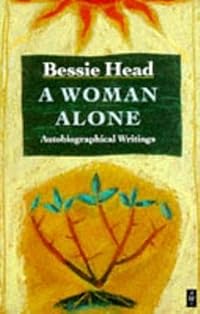
Bessie Head was born on July 6, 1937 in a mental hospital in South Africa. She was the child of a white mother and a black father. Head's mother had been judged insane for fraternizing with a colored man and committed to the mental hospital while pregnant. After her birth, Head was adopted by a coloured woman and raised in the mixed-raced show more community of Natal, South Africa. Head's birth mother died in the asylum in 1943. After receiving her teaching certificate, Head taught for a short while before taking a job as a newspaper reporter. In 1964, Head migrated to Botswana and began her career as a novelist. When Rain Clouds Gather, Head's first novel, was published in 1968. In the book, Head focuses on the racial hatred and political corruption of her time. Head's other novels include Maru, A Question of Power, and Serowe: Village of the Rain Wind, a story set in the village where Head lived. Head also wrote the collections Tales of Tenderness and Power, A Collection of Treasures, and A Woman Alone: Autobiographical Writings. Bessie Head died on April 17, 1986, at the age of 49. (Bowker Author Biography) show less
Awards and Honors
Notable Lists
Series
Belongs to Publisher Series
Work Relationships
Is contained in
Common Knowledge
- Canonical title
- Maru
- Original publication date
- 1971
- Important places
- Botswana
Classifications
Statistics
- Members
- 292
- Popularity
- 109,728
- Reviews
- 9
- Rating
- (3.80)
- Languages
- 7 — Danish, Dutch, English, Finnish, German, Japanese, Korean
- Media
- Paper
- ISBNs
- 15
- ASINs
- 3