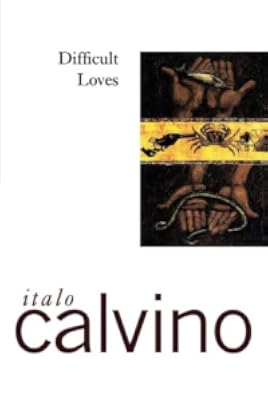
Difficult Loves
by Italo Calvino
On This Page
Description
"Intricate interior lives are brilliantly explored in these short stories, now presented in one definitive collection as Calvino intended them. In Difficult Loves, Italy's master storyteller weaves tales in which cherished deceptions and illusions of love--including self-love--are swept away in magical instants of recognition. A soldier is reduced to quivering fear by the presence of a full-figured woman in his train compartment; a young clerk leaves a lady's bed at dawn; a young woman is show more isolated from bathers on a beach by the loss of her bikini bottom. Each of them discovers hidden truths beneath the surface of everyday life. This is the first edition in English to present the collection as Calvino originally envisioned it, and includes two stories newly translated by Ann Goldstein"-- show lessTags
Recommendations













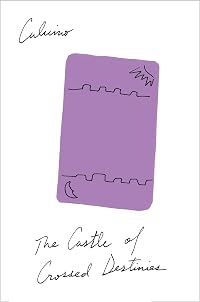
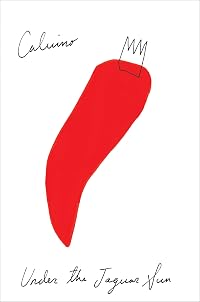
Member Reviews
Difficult Loves is eleven very short stories in which Calvino is like a biologist at a microscope: analysing the sensation of a few minutes or hours in minute detail, revealing the patterns, beauty, and secrets of the mundane. They reminded me a little of Nicholson Baker’s The Mezzanine, published 30 years later (see my review HERE). Realistic moments, rather than fantastical, and despite the titles, most are not really love stories, nor adventures.
Image: Woman looking in microscope (Source.)
Calvino wrote these in his mid 20s-30s, years before his more famous post-modern novels, including Invisible Cities and If on a winter's night a traveler (see my reviews HERE and HERE, respectively).
The Adventures of a Soldier, 1949
There is show more sexual tension for a young soldier sitting next to a 30-something wealthy widow in a train carriage. He’s unsure how much he can - or should - take the opportunity to enjoy accidental(?) contact as the train jolts them, “like two sharks grazing each other”. He struggles to read her signals: when she moves her jacket, is it “to offer him cover or to block his path?”
In the days of #MeToo, this takes on additional import, along with questions about how reliable the soldier’s thoughts are, or whether he’s wanting something to brag about in the barracks.
The Adventures of a Crook, 1949
A short bedroom farce featuring a married hooker, her husband, a client, and a cop. Weak.
The Adventures of a Bather, 1951
A comic dilemma transfigures into exploration of aging and body image. A woman swimming off a crowded beach realises she’s lost her swimsuit: “She stifled the anxiety rising inside her, and tried to think in a calm, orderly fashion.” There’s delicious detail of the sights and sounds of the beach, the intimacy of the water on her skin, and the type of people around, including a young woman judged “full of smugness and egotism” on her appearance.
As she ponders what to do, Signora Isotta Barbarino confronts the fact that “this body… had indeed been a glory of hers” but was now “a cause for shame” (even when clothed), but that life matters more than pride or shame in one’s body.
The Adventures of a Clerk, 1953
After a night with a woman, a clerk is struck by the air and colors and sounds all around, “as if he were walking to the sound of music”, liberated from his habitual routine, “as if on the crest of a wave”. He relishes reliving his memories, “to retain as far as possible the inheritance of that night”.
The exquisite paradox is the joy of such a secret makes him want to share it with someone, but that would change it.
The Adventures of a Photographer, 1955
“It is only when they have the photos before their eyes that they seem to take tangible possession of the day spent.”
Far and away the best of a good collection: it’s spot on for the Instagram generation, and enjoyably philosophical for thoughtful people of any age, even though it entails the delayed gratification of expensively developing film, rather than limitless free and instant digital pics.
Image: BizzaroComics “If a tree falls in a forest and no one puts it on Facebook, does it make a sound?” (Source.)
Antonino doesn’t see the attraction of photography. Instead of rejoicing in the spontaneity of the moment, people live in anticipation of nostalgia:
“In order to really live you must either live in the most photographic way possible, or else consider photographable every moment in your life. The first course leads to stupidity; the second, to madness.”
But as the only single man in his group of friends, is often asked to take photos of them and their families.
The logical conclusion is to photograph “everything in the world that restsist photography” - photographs themselves. At this point, JL Borges sprang happily to mind: see my review HERE.
“You cannot suffer the past or future because they do not exist. What you are suffering is your memory and your imagination.” - Sadhguru
The Adventures of a Traveler, 1958
“The train devoured its invisible road.”
A man gets the sleeper from northern Italy to Rome, where his girlfriend lives, as he regularly does. He relishes “the pleasure in confronting and overcoming” the various difficulties, aided by his honed tactics for tickets, seats, and privacy, balanced by scruples and etiquette. Commuters of all kinds will relate. The unanswered question is whether he enjoys the journey, including the train’s “amorous, caressing motion”, more than the destination.
The Adventures of a Reader, 1958
“Nothing equalled the savor of life found in books.”
A gently humorous look at the competing passions for books and sex. A man of wide literary tastes enjoys holiday reading in a quiet cove, interspersed with an occasional swim: one for the mind, the other for sensual, physical stimulation. When he sees a woman on the rocks below, “he evaluated the amount of lazy sensuality and of chronic frustration that was in her” and dismisses the possibility of a quick fling, in favour of reading. Nevertheless, he sits so her legs align with the edge of his book…
The Adventures of a Near-Sighted Man, 1958
This is about focus, in a broader sense than the title implies. As a child, I wanted to wear glasses, but didn’t dare pretend I couldn’t read the chart, as I assumed the optician would know. In my mid teens, I finally needed them, and I’ve never wanted contact lenses, nor do I take my glasses off when I relax. Clear vision, from behind a protective layer, is oddly important to me. Yet I can relate to Amilcare, perhaps because what he initially was is what I’ve strived to avoid. Life was losing savour, and he was bored of it - until he realised he was short-sighted, and got glasses. Suddenly, he sees the world in enriched detail. But it’s also distracting. He has to learn “what was pointless to look at and what was necessary” because “this indiscriminate covetousness of sensations was often punished”.
Another factor is that “he wears glasses” suddenly becomes the main descriptor of him. Is he the man he once was, and does that matter? Should he have ones that are barely visible and merge with his physiognomy, or bold black ones that are almost a mask?
The Adventures of a Wife, 1958
“I say unto you, That whosoever looketh on a woman to lust after her hath committed adultery with her already in his heart.” - Matthew 5:28 (KJV)
This is about a young woman, married for two years, pondering whether she has committed adultery. In a technical sense, it’s ambiguous, but there’s a buzz as she justifies to herself a night out with a young man, and then discovers the enjoyable frisson of flirty chat with men.
The Adventures of the Married Couple, 1958
Sweet but dull. The husband works a night shift, and his wife works daytime hours, yet they find snippets of intimacy, waiting for and helping each other.
The Adventures of a Poet, 1958
“Islands have a silence you can hear.”
But Calvino dissects that to a “network of minuscule sounds that enfold it”. This is a bit like The Adventure of a Reader: the conflicting pull of words and lust/love.
The poet has never written a poem about love, but paddling a canoe into a cave, with his girlfriend, “His mind used to translating sensations into words, was now helpless”. Then, from too few words, to too many:
“Into Usnelli’s mind came words and words, thick, woven one into the other, with no space between the lines, until little by little they could no longer be distinguished… and only the black remained, the most total black, impenetrable, desperate as a scream.”
What price love?
Other Quotes
• “Waiting, with sweet anxiety, to see the developed pictures (anxiety to which some add the subtle pleasure of alchemic manipulations in the dark-room).”
• “Her recognizing as acts of love these photographic rapes.” Strong words.
• “At this hour… people who are awake fall into two categories: the still and the already.”
• “The sun’s rays, reflected underwater, grazed her, making a kind of garment for her, or stripping her all over again.”
• “The gasping fish glinted in their pungent dress of scales.”
• “The nails of his shoes marking the friable crust of sand.”
Smog, 1958
At 50 pages, it’s longer than the previous stories, and sometimes published separately, so I’ve reviewed it on its own, HERE.
A Plunge into Real Estate, 1957 novella, 1*
“The Riviera was gripped by a fever of cement… All he could see these days was a geometrical arrangement of parallelepipeds and polyhedrons ranked one above the other.”
A twenty-something son persuades his mother and younger brother to sell the bottom of the garden for apartments, because they owe money after the father’s death. They go into partnership with a developer who everyone says is dodgy, and he duly strings them along very effectively. But very boringly.
Image: Unfinished concrete apartments (Source.)
This is nearly 100 pages, compared with fewer than 10 for most of the Difficult Loves stories, reviewed above. The characters and writing style are similar - except this covers many months (though it felt like years). A hugely disappointing end to this volume, but I’ll keep it listed at 4* overall. show less
Image: Woman looking in microscope (Source.)
Calvino wrote these in his mid 20s-30s, years before his more famous post-modern novels, including Invisible Cities and If on a winter's night a traveler (see my reviews HERE and HERE, respectively).
The Adventures of a Soldier, 1949
There is show more sexual tension for a young soldier sitting next to a 30-something wealthy widow in a train carriage. He’s unsure how much he can - or should - take the opportunity to enjoy accidental(?) contact as the train jolts them, “like two sharks grazing each other”. He struggles to read her signals: when she moves her jacket, is it “to offer him cover or to block his path?”
In the days of #MeToo, this takes on additional import, along with questions about how reliable the soldier’s thoughts are, or whether he’s wanting something to brag about in the barracks.
The Adventures of a Crook, 1949
A short bedroom farce featuring a married hooker, her husband, a client, and a cop. Weak.
The Adventures of a Bather, 1951
A comic dilemma transfigures into exploration of aging and body image. A woman swimming off a crowded beach realises she’s lost her swimsuit: “She stifled the anxiety rising inside her, and tried to think in a calm, orderly fashion.” There’s delicious detail of the sights and sounds of the beach, the intimacy of the water on her skin, and the type of people around, including a young woman judged “full of smugness and egotism” on her appearance.
As she ponders what to do, Signora Isotta Barbarino confronts the fact that “this body… had indeed been a glory of hers” but was now “a cause for shame” (even when clothed), but that life matters more than pride or shame in one’s body.
The Adventures of a Clerk, 1953
After a night with a woman, a clerk is struck by the air and colors and sounds all around, “as if he were walking to the sound of music”, liberated from his habitual routine, “as if on the crest of a wave”. He relishes reliving his memories, “to retain as far as possible the inheritance of that night”.
The exquisite paradox is the joy of such a secret makes him want to share it with someone, but that would change it.
The Adventures of a Photographer, 1955
“It is only when they have the photos before their eyes that they seem to take tangible possession of the day spent.”
Far and away the best of a good collection: it’s spot on for the Instagram generation, and enjoyably philosophical for thoughtful people of any age, even though it entails the delayed gratification of expensively developing film, rather than limitless free and instant digital pics.
Image: BizzaroComics “If a tree falls in a forest and no one puts it on Facebook, does it make a sound?” (Source.)
Antonino doesn’t see the attraction of photography. Instead of rejoicing in the spontaneity of the moment, people live in anticipation of nostalgia:
“In order to really live you must either live in the most photographic way possible, or else consider photographable every moment in your life. The first course leads to stupidity; the second, to madness.”
But as the only single man in his group of friends, is often asked to take photos of them and their families.
The logical conclusion is to photograph “everything in the world that restsist photography” - photographs themselves. At this point, JL Borges sprang happily to mind: see my review HERE.
“You cannot suffer the past or future because they do not exist. What you are suffering is your memory and your imagination.” - Sadhguru
The Adventures of a Traveler, 1958
“The train devoured its invisible road.”
A man gets the sleeper from northern Italy to Rome, where his girlfriend lives, as he regularly does. He relishes “the pleasure in confronting and overcoming” the various difficulties, aided by his honed tactics for tickets, seats, and privacy, balanced by scruples and etiquette. Commuters of all kinds will relate. The unanswered question is whether he enjoys the journey, including the train’s “amorous, caressing motion”, more than the destination.
The Adventures of a Reader, 1958
“Nothing equalled the savor of life found in books.”
A gently humorous look at the competing passions for books and sex. A man of wide literary tastes enjoys holiday reading in a quiet cove, interspersed with an occasional swim: one for the mind, the other for sensual, physical stimulation. When he sees a woman on the rocks below, “he evaluated the amount of lazy sensuality and of chronic frustration that was in her” and dismisses the possibility of a quick fling, in favour of reading. Nevertheless, he sits so her legs align with the edge of his book…
The Adventures of a Near-Sighted Man, 1958
This is about focus, in a broader sense than the title implies. As a child, I wanted to wear glasses, but didn’t dare pretend I couldn’t read the chart, as I assumed the optician would know. In my mid teens, I finally needed them, and I’ve never wanted contact lenses, nor do I take my glasses off when I relax. Clear vision, from behind a protective layer, is oddly important to me. Yet I can relate to Amilcare, perhaps because what he initially was is what I’ve strived to avoid. Life was losing savour, and he was bored of it - until he realised he was short-sighted, and got glasses. Suddenly, he sees the world in enriched detail. But it’s also distracting. He has to learn “what was pointless to look at and what was necessary” because “this indiscriminate covetousness of sensations was often punished”.
Another factor is that “he wears glasses” suddenly becomes the main descriptor of him. Is he the man he once was, and does that matter? Should he have ones that are barely visible and merge with his physiognomy, or bold black ones that are almost a mask?
The Adventures of a Wife, 1958
“I say unto you, That whosoever looketh on a woman to lust after her hath committed adultery with her already in his heart.” - Matthew 5:28 (KJV)
This is about a young woman, married for two years, pondering whether she has committed adultery. In a technical sense, it’s ambiguous, but there’s a buzz as she justifies to herself a night out with a young man, and then discovers the enjoyable frisson of flirty chat with men.
The Adventures of the Married Couple, 1958
Sweet but dull. The husband works a night shift, and his wife works daytime hours, yet they find snippets of intimacy, waiting for and helping each other.
The Adventures of a Poet, 1958
“Islands have a silence you can hear.”
But Calvino dissects that to a “network of minuscule sounds that enfold it”. This is a bit like The Adventure of a Reader: the conflicting pull of words and lust/love.
The poet has never written a poem about love, but paddling a canoe into a cave, with his girlfriend, “His mind used to translating sensations into words, was now helpless”. Then, from too few words, to too many:
“Into Usnelli’s mind came words and words, thick, woven one into the other, with no space between the lines, until little by little they could no longer be distinguished… and only the black remained, the most total black, impenetrable, desperate as a scream.”
What price love?
Other Quotes
• “Waiting, with sweet anxiety, to see the developed pictures (anxiety to which some add the subtle pleasure of alchemic manipulations in the dark-room).”
• “Her recognizing as acts of love these photographic rapes.” Strong words.
• “At this hour… people who are awake fall into two categories: the still and the already.”
• “The sun’s rays, reflected underwater, grazed her, making a kind of garment for her, or stripping her all over again.”
• “The gasping fish glinted in their pungent dress of scales.”
• “The nails of his shoes marking the friable crust of sand.”
Smog, 1958
At 50 pages, it’s longer than the previous stories, and sometimes published separately, so I’ve reviewed it on its own, HERE.
A Plunge into Real Estate, 1957 novella, 1*
“The Riviera was gripped by a fever of cement… All he could see these days was a geometrical arrangement of parallelepipeds and polyhedrons ranked one above the other.”
A twenty-something son persuades his mother and younger brother to sell the bottom of the garden for apartments, because they owe money after the father’s death. They go into partnership with a developer who everyone says is dodgy, and he duly strings them along very effectively. But very boringly.
Image: Unfinished concrete apartments (Source.)
This is nearly 100 pages, compared with fewer than 10 for most of the Difficult Loves stories, reviewed above. The characters and writing style are similar - except this covers many months (though it felt like years). A hugely disappointing end to this volume, but I’ll keep it listed at 4* overall. show less
Glimpses of exceptional ordinary lives...: Difficult Loves provides a comprehensive look at the art of storytelling, and its ability to expose the subtle emotions and personalities of everyday life. Calvino is particularly adept at honing in on a definitive moment, or succession of moments in the lives of his characters, and capturing the surprising shifts of relation and consciousness that occur suprisingly and spontaneously. The last section in the book, Stories of Love and Loneliness, shows Calvino at his most artful, examining the ways that certain types of people experience life and love. An earlier reviewer pointed out that everyone can find something to connect with in these stories. This is true in an even deeper sense, namely, show more that within the narration, sparkling moments of truth are revealed about the workings of the human mind, and they can only be read with a consistently deepening respect for the author and his art. There is a confessional quality to the work as well, and Calvino hints at his own obsessions and deviancies and shortcomings as a thinker. This authorial honesty conforms well with the subjects of the stories, all of which are betrayed in a state of almost disconcertingly fallible humanity. These are the anti-heros, the heros of everyday life and love. With Difficult Loves, Calvino maps out another essential area of human experience, and does it with a simple beauty that belies the complexity of his grand project. show less
Calvino scriveva davvero in maniera eccezionale! questo libro di racconti ne svela la incredibile capacità di scrittore. Come sa descrivere i dettagli che raffigurano i personaggi, le situazioni, i pensieri, gli stati d'animo è cosa davvero rara. E' uno di quei libri che ti fa apprezzare la bellezza della lingua italiana, senza ricorrere a neologismi; perchè la nostra lingua non necessita di questi.
I racconti non hanno a tema gli amori, nonostante il titolo, ma ogni racconto descrive una situazione dove c'è un uomo (il protagonista è sempre il maschio) che si rapporta a una donna; uomo identificato da un aggettivo che ne precisa la condizione (bandito, viaggiatore, lettore, fotografo, ecc..).
I racconti sono scarni, brevi, sembrano show more scritti come appunti messi in bella copia; e sono pure scritti, come detto, benissimo con una capacità di introspezione dei personaggi. Ma non entusiasmano, non trovo memorabili questi racconti.
La seconda parte poi riporta due racconti ben più lunghi di quelli della prima - racconti molto veloci - ma anche questi due non sono testi che mi hanno entusiasmato. Personalmente sono rimasto infastidito dalla volontà di vivere una vita misera che i personaggi dichiarano apertamente, il voler rinchiudersi in una banalità e in una routine vuota, volutamente vuota. Il racconto poi della formica argentina poi è angosciante, senza speranza.
Ma quando un libro è scritto così bene posso apprezzare a prescindere. Se avesse scritto un racconto sui movimenti di un lombrico sarebbe riuscito a farmelo leggere tutto fino alla fine.
Quindi le 4 stelle se le becca.
Poi, particolare basilare e imprescindibile, il libro mi è stato regalato dalla donna più spettacolare che io conosca. E solo per questo merita il mio più totale apprezzamento. show less
I racconti non hanno a tema gli amori, nonostante il titolo, ma ogni racconto descrive una situazione dove c'è un uomo (il protagonista è sempre il maschio) che si rapporta a una donna; uomo identificato da un aggettivo che ne precisa la condizione (bandito, viaggiatore, lettore, fotografo, ecc..).
I racconti sono scarni, brevi, sembrano show more scritti come appunti messi in bella copia; e sono pure scritti, come detto, benissimo con una capacità di introspezione dei personaggi. Ma non entusiasmano, non trovo memorabili questi racconti.
La seconda parte poi riporta due racconti ben più lunghi di quelli della prima - racconti molto veloci - ma anche questi due non sono testi che mi hanno entusiasmato. Personalmente sono rimasto infastidito dalla volontà di vivere una vita misera che i personaggi dichiarano apertamente, il voler rinchiudersi in una banalità e in una routine vuota, volutamente vuota. Il racconto poi della formica argentina poi è angosciante, senza speranza.
Ma quando un libro è scritto così bene posso apprezzare a prescindere. Se avesse scritto un racconto sui movimenti di un lombrico sarebbe riuscito a farmelo leggere tutto fino alla fine.
Quindi le 4 stelle se le becca.
Poi, particolare basilare e imprescindibile, il libro mi è stato regalato dalla donna più spettacolare che io conosca. E solo per questo merita il mio più totale apprezzamento. show less
Difficult Loves is a collection of short stories split into four sections: Riviera Stories, Wartime Stories, Post-war Stories, and Stories of Love and Loneliness. I’ve heard that each story is supposed to deal with some form of love, but I’m not sure this is true. Regardless, these stories are fine and unexpected. I’m particularly fond of the Riviera Stories section-- in one story, a gang of young boys explore a crab-infested ship; in another a young man tries to woo a girl by giving her a cornucopia of slimy animals. Not all stories are so carefree-- the Wartime section in particular. A man must navigate a mine field in one story, and in another a soldier must hide from a sharpshooting young boy. The Stories of Love and show more Loneliness are also excellent and emotionally rich.
This book’s writing is not as mature as If on a winter’s night a traveler or Invisible Cities, more in line with The Baron in the Trees perhaps, but there are still gems that predict what is to come in Calvino’s writings. It’s a good collection with some memorable stories, and some aren’t. But these stories still shine with Calvino’s talent; they are filled with love and truth. show less
This book’s writing is not as mature as If on a winter’s night a traveler or Invisible Cities, more in line with The Baron in the Trees perhaps, but there are still gems that predict what is to come in Calvino’s writings. It’s a good collection with some memorable stories, and some aren’t. But these stories still shine with Calvino’s talent; they are filled with love and truth. show less
This collection of short stories is broken up into several sections with loosely unified themes.
They are usually quirky adventures, slow-paced, but contemplative, largely outdoors, between few characters, who, in the usual fashion of this author, are not intricately described, but portrayed with a unique voice. You get the feeling that even when Calvino is not being metafictional, he's being metafictional. Even so, it is possible to enjoy this book for its soft tone alone. It has a subtle flavor, does not make great demands upon the reader, but also does not reward him with deep insights.
Calvino is remembered for his dashing experiments, but he can be appreciated for his charming storytelling. This is not his most memorable collection, show more but for completionists and casual members of the Calvino cult, it is quite readable. show less
They are usually quirky adventures, slow-paced, but contemplative, largely outdoors, between few characters, who, in the usual fashion of this author, are not intricately described, but portrayed with a unique voice. You get the feeling that even when Calvino is not being metafictional, he's being metafictional. Even so, it is possible to enjoy this book for its soft tone alone. It has a subtle flavor, does not make great demands upon the reader, but also does not reward him with deep insights.
Calvino is remembered for his dashing experiments, but he can be appreciated for his charming storytelling. This is not his most memorable collection, show more but for completionists and casual members of the Calvino cult, it is quite readable. show less
Now, I read Italo Calvino’s Difficult Loves several months ago, borrowed from friends in Marrakech, meaning I don’t remember excessive detail nor do I have an English copy available for reference. What I do recall, very clearly, is finding it painful to read. I love short stories, and I have a keen interest in all things Italian. Somehow, though, these stories dragged, and moving from one to the next couldn’t happen fast enough. I very vaguely remember preferring the stories toward the end over the stories at the beginning, and with a little research, Calvino’s timing and method became clearer. I distinctly remember only a couple specific stories: the young messenger who raced silently through the woods thinking someone was show more following him, and the man who would rather read than commit himself to fifteen minutes worth of sex with a strange woman on the beach. For whatever reason, I didn’t see a whole lot of Italian culture staring at me through those pages; I didn’t learn too much about the history or the way Italians relate to each other. Obviously, I was excited to read my first Calvino, but it turned out to disappoint. Perhaps it has something to do with the fact that Italy in March and April had so harshly disappointed me, especially compared to my fabulous first couple months in Morocco. Perhaps my particularly difficult relationships at that time also colored my reading; timing is everything, of course. Ultimately, I’ve yet to read any other highly-recommended Calvino novels or short stories; they’re on my list, of course, but I’m taking my time getting to them after such a disappointing introduction. show less
A great short story collection - I feel that Italo Calvino brilliantly describes those everyday parts of life that we don't pay enough attention to. At the same time, there were also stories that were hilariously out-of-the-ordinary, such as one about a man's quest to find enough prostitutes to save his wife.
Members
- Recently Added By
Lists

Italian Literature
558 works; 42 members
EU Fiction: 1950-2022
223 works; 70 members

Short Story Collections and Anthologies
261 works; 42 members

Love and Marriage
93 works; 10 members

Published in 1970
58 works; 7 members
Author Information

395+ Works 70,138 Members
Italo Calvino 1923-1984 Novelist and short story writer Italo Calvino was born in Cuba on October 15, 1923, and grew up in Italy, graduating from the University of Turin in 1947. He is remembered for his distinctive style of fables. Much of his first work was political, including Il Sentiero dei Nidi di Ragno (The Path of the Nest Spiders, 1947), show more considered one of the main novels of neorealism. In the 1950s, Calvino began to explore fantasy and myth as extensions of realism. Il Visconte Dimezzato (The Cloven Knight, 1952), concerns a knight split in two in combat who continues to live on as two separates, one good and one bad, deprived of the link which made them a moral whole. In Il Barone Rampante (Baron in the Trees, 1957), a boy takes to the trees to avoid eating snail soup and lives an entire, fulfilled life without ever coming back down. Calvino was awarded an honorary degree from Mount Holyoke College in 1984 and died in 1985, following a cerebral hemorrhage. At the time of his death, he was the most translated contemporary Italian writer and a contender for the Nobel Prize for Literature. (Bowker Author Biography) show less
Some Editions
Series
Belongs to Publisher Series
Work Relationships
Common Knowledge
- Canonical title*
- De moeilijke liefdes
- Original title
- Gli amori difficili
- Alternate titles*
- Moeilijke liefdes (rug- en omslagtitel) (rug- en omslagtitel)
- Original publication date
- 1970 (original Italian) (original Italian)
- Important places
- Italy
- Original language
- Italian
*Some information comes from Common Knowledge in other languages. Click "Edit" for more information.
Classifications
- Genres
- Fiction and Literature, General Fiction
- DDC/MDS
- 853.914 — Literature & rhetoric Italian, Romanian & related literatures Italian fiction 1900- 20th Century 1945-1999
- LCC
- PQ4809 .A45 .A813 — Language and Literature French, Italian, Spanish and Portuguese literatures Italian literature Individual authors, 1900-1960
- BISAC
Statistics
- Members
- 1,987
- Popularity
- 10,612
- Reviews
- 24
- Rating
- (3.84)
- Languages
- 13 — Catalan, Czech, Dutch, English, Finnish, Greek, Hebrew, Italian, Japanese, Polish, Portuguese, Spanish, Turkish
- Media
- Paper, Audiobook, Ebook
- ISBNs
- 45
- UPCs
- 1
- ASINs
- 18