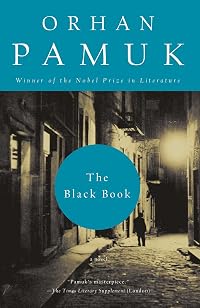
The Black Book
by Orhan Pamuk
On This Page
Description
Galip is a lawyer living in Istanbul. His wife, the detective-novel-loving Rüya, has disappeared. Could she have left him for her ex-husband, Celâl, a popular newspaper columnist? But Celâl, too, seems to have vanished. As Galip investigates, he finds himself assuming the enviable Celâl's identity, wearing his clothes, answering his phone calls, even writing his columns. Galip pursues every conceivable clue, but the nature of the mystery keeps changing, and when he receives a death show more threat, he begins to fear the worst. With its cascade of beguiling stories about Istanbul, The Black Book is a brilliantly unconventional mystery, and a provocative meditation on identity. For Turkish literary readers it is the cherished cult novel in which Orhan Pamuk found his original voice, but it has largely been neglected by English-language readers. Now, in Maureen Freely's beautiful new translation, they, too, may encounter all its riches.--Publisher description. show lessTags
Recommendations




Member Reviews
This book took me over a month to read, which contributes to the rating I finally gave it - 2.5 stars. It started with promise - Galip, a lawyer living in Istanbul, comes home one day to find that his wife has left him. She leaves him a 19-word note (we never find out what the note said). Galip thinks maybe she has gone back to her first husband, or maybe to his cousin, a very popular columnist who is his wife's half brother. He looks for clues all over Istanbul, and in the writings of his cousin, to try to find where his wife has gone.
The good things about the book are that I learned a lot about Istanbul and about the culture and history of Turkey. I found the structure of the book to be interesting - every other chapter was an essay show more written by his cousin the columnist.
It was a bit surreal - the things Galip does to ostensibly find clues to where his wife has gone are just crazy. Also, the writing was at times a bear to get through - it was a very dense book! I think I understood this a bit more when I read the translator's afterword - the Turkish language doesn't have the verb to be, there are many more tenses than in English, the passive voice seems to be preferred - all of this combines together to make for very long sentences.
I kept wondering if I would learn where Galip's wife was by the end of the novel and why she left him; I did understand what finally happened to her, and I think I understand the answer to the mystery (although it is ambiguous...), but I can't say that getting through this book was worth it! show less
The good things about the book are that I learned a lot about Istanbul and about the culture and history of Turkey. I found the structure of the book to be interesting - every other chapter was an essay show more written by his cousin the columnist.
It was a bit surreal - the things Galip does to ostensibly find clues to where his wife has gone are just crazy. Also, the writing was at times a bear to get through - it was a very dense book! I think I understood this a bit more when I read the translator's afterword - the Turkish language doesn't have the verb to be, there are many more tenses than in English, the passive voice seems to be preferred - all of this combines together to make for very long sentences.
I kept wondering if I would learn where Galip's wife was by the end of the novel and why she left him; I did understand what finally happened to her, and I think I understand the answer to the mystery (although it is ambiguous...), but I can't say that getting through this book was worth it! show less
I found myself challenged by this book. Whenever I read a book translated from another language I expect to feel cheated that I'm not actually hearing this story exactly as the author intended. I'm not suggesting this is a poor translation, indeed I believe it was well translated with the cooperation of the author. What was unusual about this book was the numerous references which I often missed. Many neighborhoods and locations in Istanbul were mentioned but meant almost nothing to me. Often when a book is about Paris there's a map to help the reader. I would have liked to have a map of Istanbul. And beyond locations there were many references to historical figures, some rulers, but also poets and writers. I was never sure if the show more person was real or imaginary. In a sense this book felt like Thomas Pynchon's Gravity's Rainbow, without the sex and drugs. In both books the author's command of the events and their imaginary voice are excellent. In both it was hard to tell whether what was being described was a dream or events that were part of the narrative. For Gravity's Rainbow there are annotated editions explaining all the references. I would have liked one for The Black Book.
The central character is a young lawyer whose wife has left him. He is in denial and hides the disappearance from his family. He turns to his uncle, a famous columnist, only to find his uncle has also disappeared. Are they together? Who knows? Central to this story is his wife's obsession with detective stories and his uncle's preoccupation with mysteries and clues. The central character begins his endless search trying to trace all the places his wife might have been. His wife is also his cousin who he grew up with so there's lots of possibilities from their past. He eventually turns to his uncle's columns seeking clues to their disappearance. Again there are lots of columns so many blind alleys. On page 260 we finally learn that the famous poet Rumi had a lover who disappears and Rumi searches endlessly everywhere in Damascus. The parallel is blatant. Rumi is believed to have murdered his lover, tossing him in a well before ever looking everywhere in Damascus. A negative omen. And omens are jclues that hopefully unravel mysteries. His uncle's columns are full of clues in people's faces and he was always predicting the coming of the messiah and military coups, not necessarily in that order.
Central to this quest is the search for identity. We learn about ancient rulers who gave up everything to figure out who they really are. Our central character reads so much of his uncle's columns that he begins to realize he can write these and readers will believe the columns had been written by the missing uncle. The uncle had been a recluse so the readers are unaware of his disappearance. Spoiler alert, we never meet the wife or the uncle and never know for certain whether they were together. Eventually they both turn up dead but not quite at the same place. Mysteries remain. show less
The central character is a young lawyer whose wife has left him. He is in denial and hides the disappearance from his family. He turns to his uncle, a famous columnist, only to find his uncle has also disappeared. Are they together? Who knows? Central to this story is his wife's obsession with detective stories and his uncle's preoccupation with mysteries and clues. The central character begins his endless search trying to trace all the places his wife might have been. His wife is also his cousin who he grew up with so there's lots of possibilities from their past. He eventually turns to his uncle's columns seeking clues to their disappearance. Again there are lots of columns so many blind alleys. On page 260 we finally learn that the famous poet Rumi had a lover who disappears and Rumi searches endlessly everywhere in Damascus. The parallel is blatant. Rumi is believed to have murdered his lover, tossing him in a well before ever looking everywhere in Damascus. A negative omen. And omens are jclues that hopefully unravel mysteries. His uncle's columns are full of clues in people's faces and he was always predicting the coming of the messiah and military coups, not necessarily in that order.
Central to this quest is the search for identity. We learn about ancient rulers who gave up everything to figure out who they really are. Our central character reads so much of his uncle's columns that he begins to realize he can write these and readers will believe the columns had been written by the missing uncle. The uncle had been a recluse so the readers are unaware of his disappearance. Spoiler alert, we never meet the wife or the uncle and never know for certain whether they were together. Eventually they both turn up dead but not quite at the same place. Mysteries remain. show less
My copy has Pamuk’s and Freely’s signature on the 2nd page and the year 2007, which must have been the year I listened to their conversation in Hay and also the year I read the book for the first time. But I have forgotten everything. Every sentence, every image evoked is as fresh now as if I imagine it for the first time. But perhaps I have never read it, perhaps I browsed some pages, found that the book demands time and attention, more than I was able or willing to give then, so I had put it aside for some future time.
The reader is emerged in a Wunderkammer, is lost like Alice in enchanted gardens where nothing is quite what it seems, where objects and encounters present and past are, or may be, signs revealing secret meanings to show more those who learn to read them, where the protagonists strive to gain, or fear to loose, the sense of themselves. Pamuk says of his writing (in an interview given 2006 to ‘Le Monde des livres’): „Mon style d’écriture, mon mode de composition, requièrent un imense esprit d’enfance. Et la responsabilité de l’écriture se limite, au fond de moi, au jeu démoniaque et magique avec les règles du monde.“
I had some difficulties at first getting into this strange and fascinating book but half-way through it grabbed me and did not let me go. (III-18) show less
The reader is emerged in a Wunderkammer, is lost like Alice in enchanted gardens where nothing is quite what it seems, where objects and encounters present and past are, or may be, signs revealing secret meanings to show more those who learn to read them, where the protagonists strive to gain, or fear to loose, the sense of themselves. Pamuk says of his writing (in an interview given 2006 to ‘Le Monde des livres’): „Mon style d’écriture, mon mode de composition, requièrent un imense esprit d’enfance. Et la responsabilité de l’écriture se limite, au fond de moi, au jeu démoniaque et magique avec les règles du monde.“
I had some difficulties at first getting into this strange and fascinating book but half-way through it grabbed me and did not let me go. (III-18) show less
Identity is what pervades this book. Perhaps it is more appropriate to say the difficulty in defining identity pervades this book. Galip suddenly finds his wife has gone missing. In his attempt to uncover where she is and why she has disappeared, the reader is provided story after story of the struggle to maintain, define, recapture, and reshape identity, whether personal, national, cultural or political. Through the writings and storytelling of Celal, who has also gone missing, and eventually Galip, one learns much about Istanbul and Turkey. This book requires concentration: it is not a light read. In the end, we have not waited for Godot - Galip's wife and Celal are found. The journey, however, provides the impact, not the outcome.
A complex novel with lots of vibrant details about Istanbul and the ordinary routines of its residents provide a sense of place. The plot unrolls slowly, turning back on itself, like a funhouse mirror. And then it picks up speed and barrels to the end.
This is one of the books that force you to take them slowly, or savor them - it almost appears as a collection of many books, dwelling on many different thoughts which rake the brain.
Like most of Pamuk's books, it is based in Istanbul. The protagonist's wife has left him, and in the process of trying to uncover her whereabouts, he stumbles upon a lot of facets of his city and his own mind.
I will strongly recommend the book to those who read "Zen and the art.." and liked it. And do read it slowly and chew over the ideas.
Like most of Pamuk's books, it is based in Istanbul. The protagonist's wife has left him, and in the process of trying to uncover her whereabouts, he stumbles upon a lot of facets of his city and his own mind.
I will strongly recommend the book to those who read "Zen and the art.." and liked it. And do read it slowly and chew over the ideas.
This is a most unusual novel that demonstrates clearly why Pamuk deserved to win the Nobel prize for literature. The story concerns an Istanbul lawyer whose wife leaves him. The lawyer sets out to look for her and finds out that his cousin, a famous newspaper columnist, is missing as well. The story deals with his search for his wife and is punctuated with columns from the columnist appearing every other chapter. The book starts very slow and in the beginning, these columns are more interesting than the actual story. Nevertheless, the book becomes more and more engrossing.
The mood of the book is both dark and melancholic. It is also full of references to classic Turkish culture. Googling many of these references helped with show more understanding of the story. The book is remarkable and strongly recommended. show less
The mood of the book is both dark and melancholic. It is also full of references to classic Turkish culture. Googling many of these references helped with show more understanding of the story. The book is remarkable and strongly recommended. show less
Members
- Recently Added By
Lists

Best books about books
209 works; 106 members

Best of World Literature
434 works; 51 members

1990s
309 works; 17 members

20th Century Literature
1,161 works; 54 members

Legal Stories
84 works; 12 members

Nobel Price Winners
222 works; 20 members

A Rainbow of Books: Colors in the Title
570 works; 24 members
Author Information

107+ Works 32,921 Members
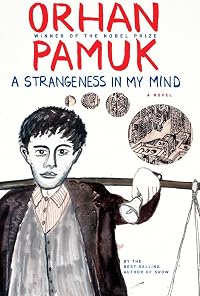
Orhan Pamuk was born in Istanbul, Turkey on June 7, 1952. After graduating from Robert College in Istanbul, he studied architecture at the Istanbul Technical University. After three years, he decided to become a writer and graduated from the Institute of Journalism at the University of Istanbul in 1976. In 1982, he published his first novel Cevdet show more Bey and His Sons, which received both the Orhan Kemal and Milliyet literary prizes. His novel, My Name Is Red, won the French Prix Du Meilleur Livre Etranger, the 2002 Italian Grinzane Cavour, and the 2003 International IMPAC Dublin Literary Award. He has received numerous Turkish and international literary awards for his works including the 2006 Nobel Prize in Literature. His recent work includes A Strangeness in My Mind. (Bowker Author Biography) Orhan Pamuk is the author of six previous novels, including "The White Castle" & "The New Life". He lives in Istanbul with his family. (Publisher Provided) show less
Some Editions
Awards and Honors
Series
Belongs to Publisher Series
L'eclèctica (186)
Work Relationships
Is contained in
Has as a study
Common Knowledge
- Canonical title
- The Black Book
- Original title
- Kara kitap
- Original publication date
- 1990
- Important places
- Istanbul, Turkey
- Epigraph
- Ibn' Arabi writes of a friend and dervish saint who, after his soul was elevated to the heavens, arrived on Mount Kaf, the magic mountain that encircles the world; gazing around him, he saw that the mountain itself was enc... (show all)ircled by a serpent. Now, it is a well-known fact that no such mountain encircles the world, nor is there a serpent.
-The Encyclopedia of Islam - Dedication
- For Eileen
To Aylin - First words
- Rüya was lying facedown on the bed, lost to the sweet warm darkness beneath the billowing folds of the blue-checked quilt.
There is no verb to be in Turkish, nor is there a verb to have. (Afterword) - Last words
- (Click to show. Warning: May contain spoilers.)Yes, of course, except for writing, the only consolation.
(Click to show. Warning: May contain spoilers.)It is a cold morning in January 1980, and the brutal coup that will end "the anarchy" is nine months away. (Afterword) - Original language*
- Turks
*Some information comes from Common Knowledge in other languages. Click "Edit" for more information.
Classifications
- Genres
- Fiction and Literature, General Fiction, Mystery
- DDC/MDS
- 894.3533 — Literature & rhetoric Literatures of other languages Literatures of Altaic, Uralic, Hyperborean, Dravidian languages; literatures of miscellaneous languages of south Asia Turkic languages Turkish Turkish fiction 1850–2000
- LCC
- PL248 .P34 .K3713 — Language and Literature Languages and literatures of Eastern Asia, Africa, Oceania Languages of Eastern Asia, Africa, Oceania Turkic languages
- BISAC
Statistics
- Members
- 2,400
- Popularity
- 8,147
- Reviews
- 36
- Rating
- (3.69)
- Languages
- 28 — Bosnian, Bulgarian, Catalan, Czech, Danish, Dutch, English, Estonian, Finnish, French, German, Greek, Hungarian, Italian, Korean, Lithuanian, Malayalam, Norwegian (Nynorsk), Norwegian (Bokmål), Norwegian, Polish, Portuguese, Romanian, Russian, Serbian, Spanish, Swedish, Turkish
- Media
- Paper, Audiobook, Ebook
- ISBNs
- 94
- ASINs
- 15