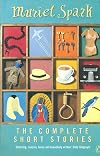
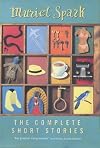
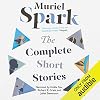
The Complete Short Stories
by Muriel Spark
On This Page
Description
This collection, which contains all Muriel Spark's published short stories together with some previously unpublished work, displays her humour and unique view of human nature.Tags
Recommendations


















Member Reviews
After reading all of Muriel Spark's novels, I was looking forward to her short stories. I borrowed this collection from the library just before the latest lockdown. Although the stories have her distinctive asperity, I did not enjoy them anywhere near as much as her longer work. Rather to my surprise, the two main themes were colonialism and ghosts. The snapshots of colonialist life all seemed to culminate in fatal shootings, which proved depressing. Many stories throw light on idiosyncrasies and hypocrisies of the class system, particularly in connection with racism. The ghost stories were more intriguing, although once I came to expect them they became less interesting. There seemed to be less of Spark's arch wit and more of her show more pitilessly sharp observation in these stories; I didn't find a single one of them funny.
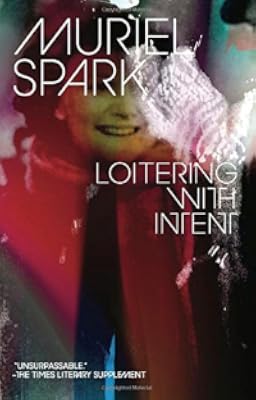
The quality of her writing is doubtless very high throughout, however (Borges aside) I am generally more fond of full novels than short stories. In her novels, Spark gives her characters enough space to pursue dramatic and farcical ends, revealing greater depths. Her short stories are inevitably vignettes rather than narratives. I found a few of them powerful enough to stick in my memory, while most slid by without great impact. 'Bang-Bang You're Dead' superimposed memory and film recording very tellingly. As she often does, Spark skewers British manners very skilfully there. 'The Fortune Teller' was spookier than the ghost stories, despite the twist at the end being easy to anticipate. 'The First Year of My Life' has the strange novelty of being told from a baby's perspective. Nonetheless, I much prefer Spark's novels, particularly [b:Not to Disturb|514627|Not to Disturb|Muriel Spark|https://i.gr-assets.com/images/S/compressed.photo.goodreads.com/books/1175444468l/514627._SY75_.jpg|502591], [b:Loitering with Intent|58677|Loitering with Intent|Muriel Spark|https://i.gr-assets.com/images/S/compressed.photo.goodreads.com/books/1430344701l/58677._SY75_.jpg|1725461], [b:The Prime of Miss Jean Brodie|517188|The Prime of Miss Jean Brodie|Muriel Spark|https://i.gr-assets.com/images/S/compressed.photo.goodreads.com/books/1379598918l/517188._SY75_.jpg|6132856], [b:Symposium|69511|Symposium|Muriel Spark|https://i.gr-assets.com/images/S/compressed.photo.goodreads.com/books/1348558088l/69511._SY75_.jpg|1038970], and [b:The Hothouse by the East River|1592911|The Hothouse by the East River|Muriel Spark|https://i.gr-assets.com/images/S/compressed.photo.goodreads.com/books/1429735756l/1592911._SY75_.jpg|830605]. Maybe I'll get on better with her non-fiction. show less
The quality of her writing is doubtless very high throughout, however (Borges aside) I am generally more fond of full novels than short stories. In her novels, Spark gives her characters enough space to pursue dramatic and farcical ends, revealing greater depths. Her short stories are inevitably vignettes rather than narratives. I found a few of them powerful enough to stick in my memory, while most slid by without great impact. 'Bang-Bang You're Dead' superimposed memory and film recording very tellingly. As she often does, Spark skewers British manners very skilfully there. 'The Fortune Teller' was spookier than the ghost stories, despite the twist at the end being easy to anticipate. 'The First Year of My Life' has the strange novelty of being told from a baby's perspective. Nonetheless, I much prefer Spark's novels, particularly [b:Not to Disturb|514627|Not to Disturb|Muriel Spark|https://i.gr-assets.com/images/S/compressed.photo.goodreads.com/books/1175444468l/514627._SY75_.jpg|502591], [b:Loitering with Intent|58677|Loitering with Intent|Muriel Spark|https://i.gr-assets.com/images/S/compressed.photo.goodreads.com/books/1430344701l/58677._SY75_.jpg|1725461], [b:The Prime of Miss Jean Brodie|517188|The Prime of Miss Jean Brodie|Muriel Spark|https://i.gr-assets.com/images/S/compressed.photo.goodreads.com/books/1379598918l/517188._SY75_.jpg|6132856], [b:Symposium|69511|Symposium|Muriel Spark|https://i.gr-assets.com/images/S/compressed.photo.goodreads.com/books/1348558088l/69511._SY75_.jpg|1038970], and [b:The Hothouse by the East River|1592911|The Hothouse by the East River|Muriel Spark|https://i.gr-assets.com/images/S/compressed.photo.goodreads.com/books/1429735756l/1592911._SY75_.jpg|830605]. Maybe I'll get on better with her non-fiction. show less
The topics of many of these stories will be familiar to Muriel Spark readers: life for White colonists in South Africa, the struggles of middle and upper-class young people with titles and refined manners but without much in the way of money or prospects, Spark's rather postmodern take on fantasy and the gothic, the lives of those staying in religious institutions and the tensions brought about by living in such close quarters, etc.
It's all told with Spark's caustic wit and an eye that penetrates the grimier motivations and emotions that we hide. I didn't grow to love many of these characters but I became accustomed to Spark's narrative style and presence in the stories. Sometimes I found it hard to sympathise with the problems of the show more White people living in Africa when they so plainly didn't consider the problems of those living around them, but the way the stories enter into their minds and their lives makes them always interesting, if rarely likeable. The stories hint at some of the usual attitudes you'd find in people writing about Africa in the '40s and '50s, but aside from that issue the stories are never predictable and are always surprising in the way that good short stories are. show less
It's all told with Spark's caustic wit and an eye that penetrates the grimier motivations and emotions that we hide. I didn't grow to love many of these characters but I became accustomed to Spark's narrative style and presence in the stories. Sometimes I found it hard to sympathise with the problems of the show more White people living in Africa when they so plainly didn't consider the problems of those living around them, but the way the stories enter into their minds and their lives makes them always interesting, if rarely likeable. The stories hint at some of the usual attitudes you'd find in people writing about Africa in the '40s and '50s, but aside from that issue the stories are never predictable and are always surprising in the way that good short stories are. show less
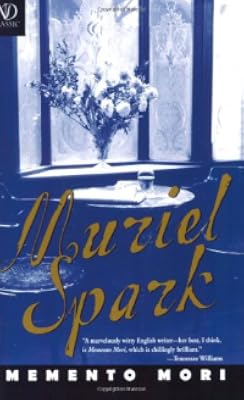
I'm not sure how one goes about reviewing a collection of short stories, especially one as comprehensive as this one, with over 40 stories which have no common theme or motif. What this book demonstrated most clearly to this recently minted Muriel Spark fan was just how creative and imaginative this writer was. Her novels are certainly brimming with unusual characters and circumstances, but in the short story format she also allowed herself to play around with different genres, throwing in plenty of fantastical and paranormal elements. I can't say those were my favourite kind of stories, as I tended to favour those stories which had more in common with the Muriel Spark I adopted after reading Memento Mori and Loitering with Intent, to show more name just those two. Quite a few of the stories took place in the African continent, and I supposed the author must have lived there at some point. A quick Google search and an article entitled The First Half of Muriel Spark by Roger Kimball yielded the following information:
Muriel Spark obviously used material from real life as creative fodder; the above true account was fictionalized by her in the first story in this collection, The Curtain Blown by the Breeze, one of my favourites because it demonstrates all the strengths which make me appreciate this writer so much: a sense of story with characters that are complex and interesting, an unflinching look at people at their worst, distinguished by a healthy dose of mordant humour.
In all, I'd say I probably fully enjoyed less than a third of the stories, but even those I didn't particularly take to overall had plenty of interesting elements that made them worthwhile. A must for Muriel Spark lovers and those interested in exploring a writer with plenty of range. show less
"Muriel Spark’s sojourn in Africa was the opposite of pleasant: a failed marriage, poverty, little prospect of leaving before the end of the war, few friends with literary interests. (Doris Lessing was living someplace in Rhodesia at the time, but the two writers did not meet until many years later.) Nevertheless, she continued to write, poems mostly, and collected material for some of her best-known stories. Africa, as much as Edinburgh, formed her as a writer. It also made her an adult. It was in Africa, she says, that she “learned to cope with life.” “It was there that I learned to keep in mind … the essentials of our human destiny, our responsibilities, and to put in a peripheral place the personal sorrows, frights and horrors that came my way.”
Horrors there were aplenty. The racial situation was barbaric. The Afrikaner women with whom Muriel mingled were full of smug stories about how uppity blacks had been “fixed.” There was, for example, the farmer who discovered a young black boy standing outside the window of his wife’s room, peeping in at her while she breast-fed her baby. For this violation, the farmer shot the boy dead. The woman who told Spark this story only lamented that the farmer had been sent to prison for three years for killing the boy. “I was unable to speak,” Spark reports. “I simply stared at the woman.”
Muriel Spark obviously used material from real life as creative fodder; the above true account was fictionalized by her in the first story in this collection, The Curtain Blown by the Breeze, one of my favourites because it demonstrates all the strengths which make me appreciate this writer so much: a sense of story with characters that are complex and interesting, an unflinching look at people at their worst, distinguished by a healthy dose of mordant humour.
In all, I'd say I probably fully enjoyed less than a third of the stories, but even those I didn't particularly take to overall had plenty of interesting elements that made them worthwhile. A must for Muriel Spark lovers and those interested in exploring a writer with plenty of range. show less
Ratings
Members
- Recently Added By
Lists

Short Story Collections and Anthologies
261 works; 42 members

Books Read in 2020
4,379 works; 124 members
Author Information

102+ Works 22,844 Members
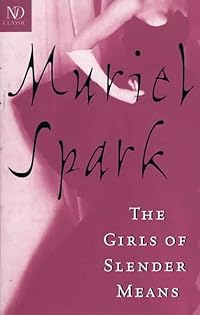
Muriel Spark has been called "our most chillingly comic writer since Evelyn Waugh" by the London Spectator, and the New Yorker praised her novel Memento Mori ri (1959) as "flawless." Her fiction is marked by its remarkable diversity, wit, and craftsmanship. "She happens to be, by some rare concatenation of grace and talent, an artist, a show more serious---and most accomplished---writer, a moralist engaged with the human predicament, wildly entertaining, and a joy to read" (SRSR). She became widely known in the United States when the New Yorker devoted almost an entire issue to The Prime of Miss Jean Brodie (1961). Set in Edinburgh in the 1930s, this is the story of a schoolteacher, her unorthodox approach to life, and its effect on her select group of adolescent girls. Though their idol turns out to have feet of clay, she leaves an indelible mark on their lives. The Girls of Slender Means (1963), also warmly praised, is a sardonic look at the vivacity of youth and the anxieties of young womanhood. Reviewing The Mandelbaum Gate (1965) for the New Republic, Honor Tracy wrote: "There is an abundance here of invention, humor, poetry, wit, perception, that all but takes the breath away. . . . The story, in fact, is pure adventure, with the suspense as artfully maintained as anywhere by Graham Greene, but this is only one ingredient. There are memorable descriptions of the Holy Land, fascinating insights into the jumble of intrigue and piety surrounding the Holy Places, and penetrating studies of Arabs. . . . In each of [Spark's] novels heretofore one of her qualities has tended to predominate over the others. Here for the first time they are all impressively marshaled side by side, resulting in her best work so far." The daughter of an Englishwoman and a Scottish-Jewish father, Spark was born and educated in Edinburgh. After her marriage in 1938, she lived for some years in Central Africa, a period rarely reflected in her work. During World War II, she returned to Britain, where she worked in the Political Intelligence Department of the Foreign Office after the breakup of her marriage. She has been a magazine editor and written poetry and literary criticism. Spark has lived in London's Camberwell section, the setting of The Ballad of Peckham Rye (1960), but now makes her home in New York. Her novels reflect her conversion to Roman Catholicism. (Bowker Author Biography) Writer Muriel Spark was born in Edinburgh on February 1, 1918. In 1934-1935 she took a course in commercial correspondence and précis writing at Heriot-Watt College. After her marriage in 1937, she lived for some years in Central Africa. During World War II, she returned to Britain, where she worked in the Political Intelligence Department of the Foreign Office after the breakup of her marriage. After the war, she began her literary career. She became General Secretary of the Poetry Society, worked as an editor and wrote studies of Mary Shelley, John Masefield and the Brontë sisters. Her first book of poetry, The Fanfarlo and Other Verse, was published in 1952 and her first novel, The Comforters, was published in 1957. She wrote over twenty books including The Prime of Miss Jean Brodie and The Finishing School. She won numerous awards and honors including the 1965 James Tait Black Memorial Prize for The Mandelbaum Gate, the 1992 U. S. Ingersoll Foundation T. S. Eliot Award, the 1997 David Cohen British Literature Prize for Lifetime Achievement, and in 1993 she became Dame Commander of the Order of the British Empire in recognition of her services to literature. The Scottish Arts Council created the Muriel Spark International Fellowship in 2004. She died on April 13, 2006. (Bowker Author Biography) show less
Some Editions
Series
Belongs to Publisher Series
The Canons (2)
Work Relationships
Contains
Common Knowledge
- Canonical title
- The Complete Short Stories
- Original publication date
- 2001
- Blurbers
- Mortimer, John; Parker, Peter; Turner, Jenny; Motion, Andrew
Classifications
Statistics
- Members
- 134
- Popularity
- 245,293
- Reviews
- 4
- Rating
- (3.79)
- Languages
- English
- Media
- Paper, Audiobook, Ebook
- ISBNs
- 9
- ASINs
- 3