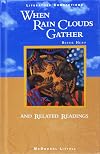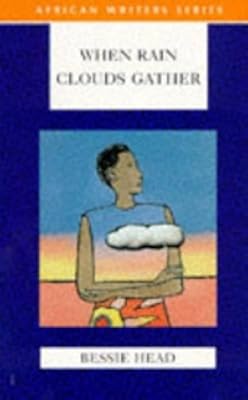
When Rain Clouds Gather
by Bessie Head
On This Page
Description
The poverty-striken village of Golema Mmidi, in the heart of rural Botswana, is a haven to the exiles gathered there. When a political refugee from South Africa joins forces with an English agricultural expert, the time-honoured subsistence farming is challenged.Tags
Recommendations









Member Reviews
The Publisher Says: The poverty-stricken village of Golema Mmidi, in the heart of rural Botswana, offers a haven to the exiles gathered there. Makhaya, a political refugee from South Africa, becomes involved with an English agricultural expert and the villagers as they struggle to upgrade their traditional farming methods with modern techniques. The pressures of tradition, the opposition of the local chief, and, above all, the harsh climate threaten to bring tragedy to the community, but strangely, there remains a hope for the future.
My Review: I read this in the middle 1970s. It came into the Old Quarry branch of the Austin Public Library one fine afternoon and I pounced upon it with glee. I was really interested in how white people show more who resisted apartheid rebuilt their lives elsewhere...I disliked my sister's recommended book, [book:The Grass Is Singing|130115], because it was tediously self-satisfied. This book focused on what the author's mouthpiece was going to do, not how her itty-pweshus "oh motherhood's a bore and men are only good for one thing and not all that good at it to boot and I'm so so Over It All" self felt.
I really dislike Doris Lessing. I really liked Bessie Head, though. I realize now that I'm *hack*ty-three I never read another book by her. Permaybehaps time to do so. show less
My Review: I read this in the middle 1970s. It came into the Old Quarry branch of the Austin Public Library one fine afternoon and I pounced upon it with glee. I was really interested in how white people show more who resisted apartheid rebuilt their lives elsewhere...I disliked my sister's recommended book, [book:The Grass Is Singing|130115], because it was tediously self-satisfied. This book focused on what the author's mouthpiece was going to do, not how her itty-pweshus "oh motherhood's a bore and men are only good for one thing and not all that good at it to boot and I'm so so Over It All" self felt.
I really dislike Doris Lessing. I really liked Bessie Head, though. I realize now that I'm *hack*ty-three I never read another book by her. Permaybehaps time to do so. show less
This book is too short. At 185 pages it’s the normal length for an African novel published in Europe in the 1960s but Head’s got more to say that she has space to say it. She constantly interrupts the narrative with exposition of local politics and the characters. I question the wisdom of this artistic choice. Allegory might have been the way to go.
That said, it’s not exactly a bad book, more a question of personal taste. I enjoyed those parts where she lets the story run and it hasn’t put me off reading A Question of Power, about which I have heard nothing but praise.
That said, it’s not exactly a bad book, more a question of personal taste. I enjoyed those parts where she lets the story run and it hasn’t put me off reading A Question of Power, about which I have heard nothing but praise.
For a small book, this has a lot to say about black vs white, rich vs poor, refugee vs native, man vs woman. I like the book a lot - it is understated, quiet, and rich in prose. The story is simple: a refugee from South Africa illegally immigrates to Botswana and meets an old man who hopes he will marry his daughter. In the village, the immigrant Makhaya quickly becomes the right hand man of an Englishman, Gilbert, who is trying to teach the villagers updated farming methods. In the background you have 2 rival chiefs trying to outdo each other and villagers struggling, successfully and unsuccessfully, to make something of their village and themselves.
A quote I really liked: "If there was anything he (Makhaya) liked on earth, it was show more human generosity. It made life seem whole and sane to him. It kept the world from shattering into tiny fragments. Only a few, quietly spoken words: 'I'll stick my neck out for you.' " show less
A quote I really liked: "If there was anything he (Makhaya) liked on earth, it was show more human generosity. It made life seem whole and sane to him. It kept the world from shattering into tiny fragments. Only a few, quietly spoken words: 'I'll stick my neck out for you.' " show less
Bessie Head manages to saturate “When Rain Clouds Gather” with a thoroughly winning concoction of generous bitterness. Though numerous antagonists, injustices and misfortunes beset the sympathetic characters of her book, they don’t sour the atmosphere or poison the narrative—this is refreshingly different from some of the continent’s unrepentantly sourpuss authors like Achebe and Coetzee.
The balance of discontent and gratitude that carries the novel also exists within some of the more nuanced characters, such as Makhaya and Paulina. Though a few stock characters of the African village drama (like gossipy clutches of socially hostile women or the fawning chief’s toady) still wander through “When Rain Clouds Gather,” Head show more has made an effort to fill her fictional village with misfits, thinkers and eccentrics: the sort of characters that add depth to their surroundings.
Considering that the book’s subject matter (the combination of human energy and ideas that are necessary to transform a traditional village’s attitude towards agriculture and subsistence farming) might seem a bit dry (complete with droughts), Head’s sense of humor (also dry) is quite an asset:
“Never mind if the rain was no longer what it used to be in the good old days when the rivers ran the whole year round and dams were always full. You just could not see beyond tradition and its safety to the amazing truth you were starving—and that tough little plants existed that were easy to grow and well able to stand up to rigorous conditions and could provide you with food.”
“Inside the fat, overstuffed body was a spirit that fiercely resisted intense, demanding, vicious people.”
Or, “It was as though a whole society had connived at producing a race of degenerate men by stressing their superiority in the law and overlooking how it affected them as individuals.”
I’ll be reading more of Bessie Head because of her ability to produce such precise and comical characterizations and because of her ability to keep social justice at the front of her mind without contracting a discouragement-induced attitude problem. show less
The balance of discontent and gratitude that carries the novel also exists within some of the more nuanced characters, such as Makhaya and Paulina. Though a few stock characters of the African village drama (like gossipy clutches of socially hostile women or the fawning chief’s toady) still wander through “When Rain Clouds Gather,” Head show more has made an effort to fill her fictional village with misfits, thinkers and eccentrics: the sort of characters that add depth to their surroundings.
Considering that the book’s subject matter (the combination of human energy and ideas that are necessary to transform a traditional village’s attitude towards agriculture and subsistence farming) might seem a bit dry (complete with droughts), Head’s sense of humor (also dry) is quite an asset:
“Never mind if the rain was no longer what it used to be in the good old days when the rivers ran the whole year round and dams were always full. You just could not see beyond tradition and its safety to the amazing truth you were starving—and that tough little plants existed that were easy to grow and well able to stand up to rigorous conditions and could provide you with food.”
“Inside the fat, overstuffed body was a spirit that fiercely resisted intense, demanding, vicious people.”
Or, “It was as though a whole society had connived at producing a race of degenerate men by stressing their superiority in the law and overlooking how it affected them as individuals.”
I’ll be reading more of Bessie Head because of her ability to produce such precise and comical characterizations and because of her ability to keep social justice at the front of her mind without contracting a discouragement-induced attitude problem. show less
In the most rural part of Botswana, untouched by western agricultural technologies, political refugee, Makhaya, and Englishman Gilbert Balfour try to revolutionize traditional farming methods. For the tribespeople of drought-ridden Golema Mmidi, this change is not always welcome, even if it means the end of entrenched poverty and the threat of starvation. Traditions run deep and when your tribal chief doesn't approve of the new ways, the battle is more uphill than ever. Set against the backdrop of farming is the subject of love. Despite unrelenting unfavorable climate, the tribespeople of Golema Mmidi are passionate people. Head drew details for When Rain Clouds Gather from her own experiences as a refugee, living at the Bamangwato show more Development farm. It is hard to tell if the romantic parts are autobiographical as well. show less
If I were to give a more definite rating to the book it would be a 3.5 which means it is a good book. An exile fleeing Apartheid South Africa seeks refuge in a small rural town in Botswana and finds himself in the middle of a tussle for power and plans for development.
Set in the 1960s, during Botswana's independence, Bessie Head who was a refugee in Botswana herself writes splendidly of rural Botswana. I liked the way Bessie Head writes romance, her ability to incorporate the landscape, climate and vegetation of Botswana and the customs and general way of life of the Batswana in her prose, even though it felt like it got in the way of the story at times.
Set in the 1960s, during Botswana's independence, Bessie Head who was a refugee in Botswana herself writes splendidly of rural Botswana. I liked the way Bessie Head writes romance, her ability to incorporate the landscape, climate and vegetation of Botswana and the customs and general way of life of the Batswana in her prose, even though it felt like it got in the way of the story at times.
This is a story of hope and progress. It takes place in Botswana in the late 1960’s. As in much of southern Africa, people live mainly in small villages, each generally occupied by members of a single tribe, of which there are many. The people are very traditional, preferring to do things the way they have always been done, as that gives a feeling of security in an insecure world, even when those things are linked with the never-ending cycle of drought and famine.
But the village of Golema Mmidi is different. It has been settled by outcasts and runaways, and by people sent there by the tribal or colonial administrators to get them out of the way, because they are “troublemakers” or threaten the status quo in some way. This means show more no one tribe is dominant, and people are constantly exposed to different ideas, so more open to them. There is even a white man living there, Gilbert, who has come idealistically to Africa to help develop agriculture and is running an experimental farm.
To this village comes Makhaya, an illegal immigrant from South Africa (at this time the border was closed between them). He has a political background, and initially believes the only way forward for southern Africa is through political upheaval and violence (this was the period when many African countries were fighting for and achieving independence). He doesn’t entirely give up this belief, but he does find other options – the slower way of individual and local change and progress. He starts working with Gilbert and finds friendship and love.
The story is positive, but also realistic. It’s clear the way will not be easy – minor tribal chiefs try to retain their grasp on power, colonial powers, and white people generally (even Gilbert) sometimes act in arbitrary ways, people’s back stories indicate the bad things that can happen, people die, and, at the end, a huge drought is underway, and famine is inevitable. But it’s ultimately an extremely hopeful picture of a time and place where it’s just possible some really good things might happen, and where the people will really deserve it if they do.
The story is great, and there are many well described characters. I would have given this book 5 stars, but the writing is occasionally just too clunky, particularly when Head goes off on religious/philosophical tangents. show less
But the village of Golema Mmidi is different. It has been settled by outcasts and runaways, and by people sent there by the tribal or colonial administrators to get them out of the way, because they are “troublemakers” or threaten the status quo in some way. This means show more no one tribe is dominant, and people are constantly exposed to different ideas, so more open to them. There is even a white man living there, Gilbert, who has come idealistically to Africa to help develop agriculture and is running an experimental farm.
To this village comes Makhaya, an illegal immigrant from South Africa (at this time the border was closed between them). He has a political background, and initially believes the only way forward for southern Africa is through political upheaval and violence (this was the period when many African countries were fighting for and achieving independence). He doesn’t entirely give up this belief, but he does find other options – the slower way of individual and local change and progress. He starts working with Gilbert and finds friendship and love.
The story is positive, but also realistic. It’s clear the way will not be easy – minor tribal chiefs try to retain their grasp on power, colonial powers, and white people generally (even Gilbert) sometimes act in arbitrary ways, people’s back stories indicate the bad things that can happen, people die, and, at the end, a huge drought is underway, and famine is inevitable. But it’s ultimately an extremely hopeful picture of a time and place where it’s just possible some really good things might happen, and where the people will really deserve it if they do.
The story is great, and there are many well described characters. I would have given this book 5 stars, but the writing is occasionally just too clunky, particularly when Head goes off on religious/philosophical tangents. show less
Members
- Recently Added By
Lists

Best African Books
126 works; 46 members

Black Authors
384 works; 32 members
Best African and African diaspora books
111 works; 4 members

Books Read in 2020
4,379 works; 123 members

Books We Discovered On LibraryThing
530 works; 130 members
Author Information

17+ Works 1,609 Members
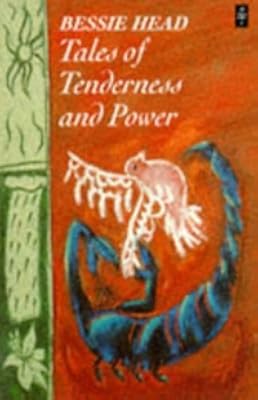
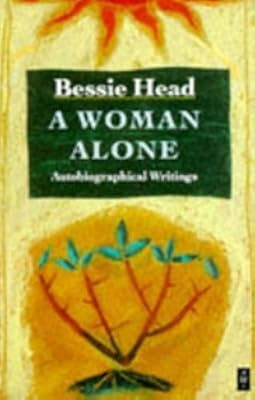
Bessie Head was born on July 6, 1937 in a mental hospital in South Africa. She was the child of a white mother and a black father. Head's mother had been judged insane for fraternizing with a colored man and committed to the mental hospital while pregnant. After her birth, Head was adopted by a coloured woman and raised in the mixed-raced show more community of Natal, South Africa. Head's birth mother died in the asylum in 1943. After receiving her teaching certificate, Head taught for a short while before taking a job as a newspaper reporter. In 1964, Head migrated to Botswana and began her career as a novelist. When Rain Clouds Gather, Head's first novel, was published in 1968. In the book, Head focuses on the racial hatred and political corruption of her time. Head's other novels include Maru, A Question of Power, and Serowe: Village of the Rain Wind, a story set in the village where Head lived. Head also wrote the collections Tales of Tenderness and Power, A Collection of Treasures, and A Woman Alone: Autobiographical Writings. Bessie Head died on April 17, 1986, at the age of 49. (Bowker Author Biography) show less
Some Editions
Awards and Honors
Series
Belongs to Publisher Series
Work Relationships
Is contained in
Has as a student's study guide
Common Knowledge
- Canonical title
- When Rain Clouds Gather
- Original publication date
- 1968
- Important places
- Botswana; South Africa
- Dedication
- For Pat and Wendy Cullinan, Pat and Liz Van Rensburg, 'HOORAY!' and U-Shaka, and for Naomi Mitchison, who lives in Botswana
- First words
- The little Barolong village swept right up to the border fence.
- Last words
- (Click to show. Warning: May contain spoilers.)As though everything was uncertain, new and strange and beginning from scratch.
- Original language
- English
Classifications
Statistics
- Members
- 389
- Popularity
- 80,207
- Reviews
- 7
- Rating
- (3.79)
- Languages
- Dutch, English, German
- Media
- Paper, Ebook
- ISBNs
- 19
- ASINs
- 9