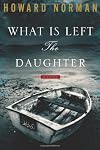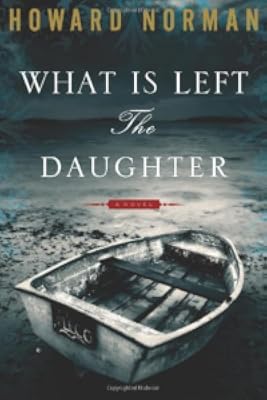
What Is Left the Daughter
by Howard Norman
On This Page
Description
Howard Norman, widely regarded as one of this country's finest novelists, returns to the mesmerizing fictional terrain of his major books--The Bird Artist, The Museum Guard, and The Haunting of L--in this erotically charged and morally complex story. Seventeen-year-old Wyatt Hillyer is suddenly orphaned when his parents, within hours of each other, jump off two different bridges--the result of their separate involvements with the same compelling neighbor, a Halifax switchboard operator and show more aspiring actress. The suicides cause Wyatt to move to small-town Middle Economy to live with his uncle, aunt, and ravishing cousin Tilda. Setting in motion the novel's chain of life-altering passions and the wartime perfidy at its core is the arrival of the German student Hans Mohring, carrying only a satchel. Actual historical incidents--including a German U-boat's sinking of the Nova Scotia-Newfoundland ferry Caribou, on which Aunt Constance Hillyer might or might not be traveling--lend intense narrative power to Norman's uncannily layered story. Wyatt's account of the astonishing--not least to him-- events leading up to his fathering of a beloved daughter spills out twenty-one years later. It's a confession that speaks profoundly of the mysteries of human character in wartime and is directed, with both despair and hope, to an audience of one. An utterly stirring novel. This is Howard Norman at his celebrated best. show lessTags
Recommendations














Member Reviews
Wyatt Hillyer was orphaned at 17 and went to live with his aunt and uncle and their adopted daughter Tilda in Middle Economy, Nova Scotia. Wyatt was instantly smitten with Tilda, but too inhibited for those feelings to develop into a relationship. Throughout his life Wyatt was more bystander than protagonist, his fate determined almost exclusively by the actions of others. The novel is in fact a long letter to his 20-year-old daughter, whom he has not seen in years. By sharing his life story Wyatt hopes to bridge a very large gap.
Wyatt was a young adult working in his uncle’s business at the start of World War II. His uncle became obsessed with German U-boats in Canadian waters, and developed a hatred of Germans who had immigrated to show more Nova Scotia before the war. This ultimately led to a horrific crime with consequences for Wyatt which will impact the rest of his life.
I’m not sure the epistolary nature of the novel worked for me. For the most part the story read more like a novel than a letter, and Wyatt’s relationship with his daughter felt more like a literary device than a real situation. But I enjoyed Wyatt’s story, its many interesting and quirky characters, and the way everything wrapped up at the end. show less
Wyatt was a young adult working in his uncle’s business at the start of World War II. His uncle became obsessed with German U-boats in Canadian waters, and developed a hatred of Germans who had immigrated to show more Nova Scotia before the war. This ultimately led to a horrific crime with consequences for Wyatt which will impact the rest of his life.
I’m not sure the epistolary nature of the novel worked for me. For the most part the story read more like a novel than a letter, and Wyatt’s relationship with his daughter felt more like a literary device than a real situation. But I enjoyed Wyatt’s story, its many interesting and quirky characters, and the way everything wrapped up at the end. show less
The Publisher Says: Howard Norman, widely regarded as one of this country's finest novelists, returns to the mesmerizing fictional terrain of his major books—The Bird Artist, The Museum Guard, and The Haunting of L—in this erotically charged and morally complex story.
Seventeen-year-old Wyatt Hillyer is suddenly orphaned when his parents, within hours of each other, jump off two different bridges—the result of their separate involvements with the same compelling neighbor, a Halifax switchboard operator and aspiring actress. The suicides cause Wyatt to move to small-town Middle Economy to live with his uncle, aunt, and ravishing cousin Tilda.
Setting in motion the novel's chain of life-altering passions and the wartime perfidy at its show more core is the arrival of the German student Hans Mohring, carrying only a satchel. Actual historical incidents—including a German U-boat's sinking of the Nova Scotia-Newfoundland ferry Caribou, on which Aunt Constance Hillyer might or might not be traveling—lend intense narrative power to Norman's uncannily layered story.
Wyatt's account of the astonishing—not least to him—events leading up to his fathering of a beloved daughter spills out twenty-one years later. It's a confession that speaks profoundly of the mysteries of human character in wartime and is directed, with both despair and hope, to an audience of one.
An utterly stirring novel. This is Howard Norman at his celebrated best.
I CHECKED THIS BOOK OUT FROM THE LIBRARY. USE THEM OFTEN, THEY LIVE AND DIE ON OUR PATRONAGE.
My Review: When an author of Howard Norman's stature uses the epistolary storytelling technique, the chances of disappointment...always higher when this difficult-to-master form is used...shrink back into insignificance. As expected, then, this read was a master class in what and how to make of the epistles in question.
Wyatt's parents aren't alive as we meet him. I got a strong intimation that he, looking back on a whole family's life pretty passionately (if unhappily) lived, didn't feel they were alive before they each committed suicide for mixed-up love of the same woman. If I had to guess (Author Norman doesn't over-explain anything, ever) I'd say Wyatt's life more complicated than most from the very beginning. His letter to his largely unseen daughter, however, is all about putting forward the facts of her paternal family's life as he recalls them. It felt to me as though Author Norman's telling of the tale was direct and honest; so Wyatt, then, wasn't aware even in retrospect of his life's peculiarly high levels of complexity.
With all the arousal hormones Wyatt's story begins with, and given the fact that he's writing to his twentyish daughter, this is a story pretty much guaranteed to be about the erotic charge that a messy life provides and more importantly about its costs. Wyatt's unrequited love for a person in his family circle who is not a relative is the stuff of life. I suspect it was deeply relatable to anyone who's ever been part of a blended or a found family. The object of his affections, herself an added person (one whose family isn't a birth family), falls madly in love with someone socially inconvenient: A German émigré, and this story's set during World War II. So there's another level of relatability, as what adult has made it this far without an unrequited love?
The problem this inability brings with it, or perhaps the character trait it points up, is that of passivity. Wyatt is not a doer but a done-to. Nothing that happens in his (passive, epistolary) account of his life to the daughter he doesn't know is as a result of his actions. The one truly, damningly awful thing he's involved in, and for which he is now seeking his daughter's forgiveness, is a result of his inaction, his inability to stand for something.
But what he does, this man of inaction, is write the young woman a letter. How typical of him...make an effort but make it ineffectually. What a letter does is enable him to remain inactive yet still offer, as if from behind a wall, an accounting of the young woman in question's heritage. What happens as a result? We never know; Author Norman's story is of Wyatt, not Marlais.
You'll have to decide if that's a deal-maker or -breaker for you. I fall on the line between those poles. I need to feel a story is complete, fulfilling its brief, to really lose myself in it. The musicality of Author Norman's line-by-line creation can draw one along for a good while but there's always that need to have some story pay-off for me. I was not all the way satisfied...I wasn't dissatisfied...there was a strange liminality in this tale of passive inaction's consequences. I would recommend you read the book. I wouldn't recommend it to you, however, of you're in the mood for a propulsive plot-driven thrillride. Does the read repay the effort? It did for me—mostly.
I think Author Norman turned me into Wyatt! show less
Seventeen-year-old Wyatt Hillyer is suddenly orphaned when his parents, within hours of each other, jump off two different bridges—the result of their separate involvements with the same compelling neighbor, a Halifax switchboard operator and aspiring actress. The suicides cause Wyatt to move to small-town Middle Economy to live with his uncle, aunt, and ravishing cousin Tilda.
Setting in motion the novel's chain of life-altering passions and the wartime perfidy at its show more core is the arrival of the German student Hans Mohring, carrying only a satchel. Actual historical incidents—including a German U-boat's sinking of the Nova Scotia-Newfoundland ferry Caribou, on which Aunt Constance Hillyer might or might not be traveling—lend intense narrative power to Norman's uncannily layered story.
Wyatt's account of the astonishing—not least to him—events leading up to his fathering of a beloved daughter spills out twenty-one years later. It's a confession that speaks profoundly of the mysteries of human character in wartime and is directed, with both despair and hope, to an audience of one.
An utterly stirring novel. This is Howard Norman at his celebrated best.
I CHECKED THIS BOOK OUT FROM THE LIBRARY. USE THEM OFTEN, THEY LIVE AND DIE ON OUR PATRONAGE.
My Review: When an author of Howard Norman's stature uses the epistolary storytelling technique, the chances of disappointment...always higher when this difficult-to-master form is used...shrink back into insignificance. As expected, then, this read was a master class in what and how to make of the epistles in question.
Wyatt's parents aren't alive as we meet him. I got a strong intimation that he, looking back on a whole family's life pretty passionately (if unhappily) lived, didn't feel they were alive before they each committed suicide for mixed-up love of the same woman. If I had to guess (Author Norman doesn't over-explain anything, ever) I'd say Wyatt's life more complicated than most from the very beginning. His letter to his largely unseen daughter, however, is all about putting forward the facts of her paternal family's life as he recalls them. It felt to me as though Author Norman's telling of the tale was direct and honest; so Wyatt, then, wasn't aware even in retrospect of his life's peculiarly high levels of complexity.
In The Highland Book of Platitudes, Marlais, there's an entry that reads, "Not all ghosts earn our memory in equal measure." I think about this sometimes. I think especially about the word "earn," because it implies an ongoing willful effort on the part of the dead, so that if you believe the platitude, you have to believe in the afterlife, don't you? Following that line of thought, there seem to be certain people—call them ghosts—with the ability to insinuate themselves into your life with more belligerence and exactitude than others—it's their employment and expertise.
With all the arousal hormones Wyatt's story begins with, and given the fact that he's writing to his twentyish daughter, this is a story pretty much guaranteed to be about the erotic charge that a messy life provides and more importantly about its costs. Wyatt's unrequited love for a person in his family circle who is not a relative is the stuff of life. I suspect it was deeply relatable to anyone who's ever been part of a blended or a found family. The object of his affections, herself an added person (one whose family isn't a birth family), falls madly in love with someone socially inconvenient: A German émigré, and this story's set during World War II. So there's another level of relatability, as what adult has made it this far without an unrequited love?
My whole life, Marlais, I've had difficulty coming up with the right word to use in a given situation, but at least I know what the right word would have been once I hear it.
The problem this inability brings with it, or perhaps the character trait it points up, is that of passivity. Wyatt is not a doer but a done-to. Nothing that happens in his (passive, epistolary) account of his life to the daughter he doesn't know is as a result of his actions. The one truly, damningly awful thing he's involved in, and for which he is now seeking his daughter's forgiveness, is a result of his inaction, his inability to stand for something.
I realize I've sometimes raced over the years like an ice skater fleeing the devil on a frozen river.
–and–
I refuse any longer to have my life defined by what I haven't told you.
But what he does, this man of inaction, is write the young woman a letter. How typical of him...make an effort but make it ineffectually. What a letter does is enable him to remain inactive yet still offer, as if from behind a wall, an accounting of the young woman in question's heritage. What happens as a result? We never know; Author Norman's story is of Wyatt, not Marlais.
You'll have to decide if that's a deal-maker or -breaker for you. I fall on the line between those poles. I need to feel a story is complete, fulfilling its brief, to really lose myself in it. The musicality of Author Norman's line-by-line creation can draw one along for a good while but there's always that need to have some story pay-off for me. I was not all the way satisfied...I wasn't dissatisfied...there was a strange liminality in this tale of passive inaction's consequences. I would recommend you read the book. I wouldn't recommend it to you, however, of you're in the mood for a propulsive plot-driven thrillride. Does the read repay the effort? It did for me—mostly.
I think Author Norman turned me into Wyatt! show less
Wow! This little book with the odd title packs one helluva punch. WHAT IS LEFT THE DAUGHTER was recommended by a writer friend whose wife is from Nova Scotia where this novel is set. They both enjoy books about that region. Me too - I'm a big fan of the fiction of Linden MacIntyre's Cape Breton trilogy. So now there's this Howard Norman guy, who it turns out isn't even Canadian, who writes just as compellingly about that area.
WILtD starts out with a double suicide, Halifax bridge jumpers - the parents of narrator, Wyatt Hillyer, who were both secretly involved with the beautiful next-door neighbor. Then 17 year-old Wyatt drops out of school and moves to Middle Economy, a small coastal village, to live with his aunt and uncle, accepting show more an apprenticeship with his uncle, a maker of sleds and toboggans. It is 1942 and Canada is at war. Wyatt falls in love with his cousin, Tilda (who is adopted), but she falls in love with a German student, Hans Mohring, setting the stage for a dark drama of crime and punishment. But probably not what you'd think. And there is a surprising amount of humor here too, something you don't normally expect in a tale of murder, savagery and retribution. But Norman pull it all off in a seemingly effortless, casual manner, as he spins out his dark take of wartime tragedy, told by Wyatt from a vantage point of some 25 years later. I could not believe how he kept me smiling and chuckling in unexpected places in the midst of all this tragedy. Quite a talent. And he kept me up way past my bedtime turning pages to the bitter - well, not really 'bitter,' actually quite satisfying - end.
I don't want to give any more away about what happens here, 'cause I wouldn't want to spoil it for other readers. But I'm certainly glad I heard about this book, and this Howard Norman guy, 'cause I love the way he writes. And I loved this book too. I've really gotta read some more of his stuff. I see he has written a memoir about what appears to be a very peripatetic sort of life. On my list. In the meantime will tell all my reader friends about him, and about this book - VERY highly recommended.
- Tim Bazzett, author of the memoir, BOOKLOVER show less
WILtD starts out with a double suicide, Halifax bridge jumpers - the parents of narrator, Wyatt Hillyer, who were both secretly involved with the beautiful next-door neighbor. Then 17 year-old Wyatt drops out of school and moves to Middle Economy, a small coastal village, to live with his aunt and uncle, accepting show more an apprenticeship with his uncle, a maker of sleds and toboggans. It is 1942 and Canada is at war. Wyatt falls in love with his cousin, Tilda (who is adopted), but she falls in love with a German student, Hans Mohring, setting the stage for a dark drama of crime and punishment. But probably not what you'd think. And there is a surprising amount of humor here too, something you don't normally expect in a tale of murder, savagery and retribution. But Norman pull it all off in a seemingly effortless, casual manner, as he spins out his dark take of wartime tragedy, told by Wyatt from a vantage point of some 25 years later. I could not believe how he kept me smiling and chuckling in unexpected places in the midst of all this tragedy. Quite a talent. And he kept me up way past my bedtime turning pages to the bitter - well, not really 'bitter,' actually quite satisfying - end.
I don't want to give any more away about what happens here, 'cause I wouldn't want to spoil it for other readers. But I'm certainly glad I heard about this book, and this Howard Norman guy, 'cause I love the way he writes. And I loved this book too. I've really gotta read some more of his stuff. I see he has written a memoir about what appears to be a very peripatetic sort of life. On my list. In the meantime will tell all my reader friends about him, and about this book - VERY highly recommended.
- Tim Bazzett, author of the memoir, BOOKLOVER show less
A quiet story about a man trying to live with the circumstances of his life; some he's responsible for and others he's not. The daughter referred to in the title is his own, as the entire narrative is a letter to her, but she's not the only daughter with a less than perfect relationship with her father. Wyatt's story starts when his parents commit suicide by leaping from different bridges within hours of each other. Old enough to live on his own, he instead chooses to live with his aunt and uncle in a remote village in Nova Scotia. There he meets his cousin Tilda and falls in love.
Over the next decades there is a lot of loss, but also moments of satisfaction and serenity for Wyatt. The sled and toboggan business is so quaint and such an show more acquired skill that I think it's an excellent stand in for Wyatt's temperament. Given that he never really gets the girl, is sent to prison, made so uncomfortable at home that he leaves town and is estranged from his daughter, you'd think that would make for a bitter, angry person. Wyatt is sanguine though; accepting what he's done himself and what happens at the hands of others. Maybe that's what kept this from being a really emotional book for me; that Wyatt seemed so utterly controlled and unaffected. The story was told skillfully and had many surprises so I will seek out more by this author. show less
Over the next decades there is a lot of loss, but also moments of satisfaction and serenity for Wyatt. The sled and toboggan business is so quaint and such an show more acquired skill that I think it's an excellent stand in for Wyatt's temperament. Given that he never really gets the girl, is sent to prison, made so uncomfortable at home that he leaves town and is estranged from his daughter, you'd think that would make for a bitter, angry person. Wyatt is sanguine though; accepting what he's done himself and what happens at the hands of others. Maybe that's what kept this from being a really emotional book for me; that Wyatt seemed so utterly controlled and unaffected. The story was told skillfully and had many surprises so I will seek out more by this author. show less
It’s a given—Howard Norman always reveals his substantial humanity, elegance, humor, and talent in his beautiful writing. With this novel, he also knows how to get your attention from the start. Our main character/narrator is Wyatt Hillyer, a seventeen-year-old who loses both his parents within hours of each other. They both jumped to their deaths from separate bridges, because of their love for the very same woman.
Wyatt then ended up living with his aunt and uncle in Middle Economy, Nova Scotia. Wyatt works diligently making toboggans and sleds with his uncle Donald, and becomes fixated on his adopted cousin, the ravishing Tilda. (I love the use of the language around the word “ravishing” in the book—it’s very seductive.) show more Unfortunately, for Wyatt, after he fell madly in love with her, Tilda meets, and quickly falls for and marries Hans, a young German student.
The story takes place during WWII and involves the death of a well-liked local woman who dies when a German U-boat sinks a coastal ferry. Because of the war, tensions and prejudices against Germans were already high, but it rose to the level of violence with the sinking. When Wyatt becomes involved as an accessory to a murder, he ends up in prison for a number of years. Norman’s writing depicts all these feelings of love and hate in a very believable way that runs throughout the book.
Norman never seems to misstep in his writing. I always feel for his characters and believe their actions make sense to them at the time. The entire book is narrated by Wyatt as a message to his 21-year-old daughter Marlais, a daughter that he hasn’t seen in almost twenty years.
This book came out about a decade ago, and while I love all his writing, his latest book, The Ghost Clause, was one my very favorite books that I’ve read this year. show less
Wyatt then ended up living with his aunt and uncle in Middle Economy, Nova Scotia. Wyatt works diligently making toboggans and sleds with his uncle Donald, and becomes fixated on his adopted cousin, the ravishing Tilda. (I love the use of the language around the word “ravishing” in the book—it’s very seductive.) show more Unfortunately, for Wyatt, after he fell madly in love with her, Tilda meets, and quickly falls for and marries Hans, a young German student.
The story takes place during WWII and involves the death of a well-liked local woman who dies when a German U-boat sinks a coastal ferry. Because of the war, tensions and prejudices against Germans were already high, but it rose to the level of violence with the sinking. When Wyatt becomes involved as an accessory to a murder, he ends up in prison for a number of years. Norman’s writing depicts all these feelings of love and hate in a very believable way that runs throughout the book.
Norman never seems to misstep in his writing. I always feel for his characters and believe their actions make sense to them at the time. The entire book is narrated by Wyatt as a message to his 21-year-old daughter Marlais, a daughter that he hasn’t seen in almost twenty years.
This book came out about a decade ago, and while I love all his writing, his latest book, The Ghost Clause, was one my very favorite books that I’ve read this year. show less
Simply stunning. Subtle, evocative, and filled with undercurrents so strong that at times you may feel like you're going to be pulled under, What is Left the Daughter is a beautiful meditation on family, unrequited love, prejudice and fear.
This epistolary novel does justice to its form. The narrator (and letter writer) is Wyatt whose story is bookended by two suicides and the detritus of a drowned U-boat. Set in Nova Scotia during WWII, Norman uses real life U-boat incidents off the coast of Canada to build dread. They are always there, hovering in the background, waiting to attack. The War is always there, too, adding to the dread and to the terrible events in the book.
Many terrible things happen in this book, yet Norman does not treat show more them melodramatically. His narrator's tone is always matter-of-fact and this makes these events more real. Just as in real life, you do what you have to in the moment, and afterward you learn to live with it (or not). Wyatt's is a life that is punctuated by great sadness and loss, and still he goes on - one foot in front of the other - just like the rest of us.
The book reminds me in some ways of Housekeeping by Marilynne Robinson. Both are haunting, lyrical, and filled with water, you can open either book to any page and find breathtaking sentences on each page. It was an abiding pleasure to be in the hands of such a skilled author. Highly recommended. show less
This epistolary novel does justice to its form. The narrator (and letter writer) is Wyatt whose story is bookended by two suicides and the detritus of a drowned U-boat. Set in Nova Scotia during WWII, Norman uses real life U-boat incidents off the coast of Canada to build dread. They are always there, hovering in the background, waiting to attack. The War is always there, too, adding to the dread and to the terrible events in the book.
Many terrible things happen in this book, yet Norman does not treat show more them melodramatically. His narrator's tone is always matter-of-fact and this makes these events more real. Just as in real life, you do what you have to in the moment, and afterward you learn to live with it (or not). Wyatt's is a life that is punctuated by great sadness and loss, and still he goes on - one foot in front of the other - just like the rest of us.
The book reminds me in some ways of Housekeeping by Marilynne Robinson. Both are haunting, lyrical, and filled with water, you can open either book to any page and find breathtaking sentences on each page. It was an abiding pleasure to be in the hands of such a skilled author. Highly recommended. show less
What is Left the Daughter is one, long letter written by Wyatt Hillyer to his daughter Marlais. He writes because "I refuse any longer to have my life defined by what I haven't told you." The story begins with his parents double suicide over their love for the same woman. It goes downhill from there.
I expect grief and horror from a book set during the war, but usually that is accompanied by great human courage and sacrifice. This story seemed to be all senseless acts of violence and grief inflicted on innocent people by their loved ones. There were no heroes here and I didn't find much redemption either. The characters had little depth and I never felt like I understood them. Not a book for me, but it has been well reviewed by others. show more Perhaps if you are interested in the history of this time then the perspective of the war from Nova Scotia could be unique. show less
I expect grief and horror from a book set during the war, but usually that is accompanied by great human courage and sacrifice. This story seemed to be all senseless acts of violence and grief inflicted on innocent people by their loved ones. There were no heroes here and I didn't find much redemption either. The characters had little depth and I never felt like I understood them. Not a book for me, but it has been well reviewed by others. show more Perhaps if you are interested in the history of this time then the perspective of the war from Nova Scotia could be unique. show less
Members
- Recently Added By
Lists

Books Set in Canada
57 works; 10 members

Books Read in 2015
3,299 works; 129 members

Canadian Historical Fiction 🇨🇦
157 works; 8 members
Author Information

31+ Works 3,856 Members
Howard Norman was born in Toledo, Ohio, in 1949 and grew up in Grand Rapids, Michigan. He attended Western Michigan University, the Folklore Institute of Indiana University, and the University of Michigan. His work with the Cree Indians created an interest and he then got a job as a translator of Native American poems and folktales. He put show more together a collection of his translations in the book, The Wishing Bone Cycle: Narrative Poems of the Swampy Cree Indians, which was named the co-winner of the Harold Morton Landon Translation Award by the Academy of American Poets. With the Help of a Whiting Award, he has also written The Northern Lights as well as Kiss in the Hotel, Joseph Conrad and Other Stories, and The Bird Artist, which was named one of Time Magazine's Best Five Books of 1994 and won the New England Booksellers Association Prize in Fiction. (Bowker Author Biography) show less
Awards and Honors
Common Knowledge
- Original publication date
- 2010-07-06
- People/Characters
- Wyatt Hillyer; Donald Hillyer; Constance Hillyer; Tilda Hillyer Mohring; Hans Mohring; Cornelia Tell (show all 7); Reese McNair
- Important places
- Halifax, Nova Scotia, Canada; Nova Scotia, Canada
- First words
- I refuse any longer to have my life defined by what I haven't told you.
Classifications
- Genres
- Fiction and Literature, General Fiction, Historical Fiction
- DDC/MDS
- 813.54 — Literature & rhetoric American literature in English American fiction in English 1900-1999 1945-1999
- LCC
- PR9199.3 .N564 .W47 — Language and Literature English English Literature English literature: Provincial, local, etc.
- BISAC
Statistics
- Members
- 488
- Popularity
- 62,169
- Reviews
- 33
- Rating
- (3.70)
- Languages
- English, German
- Media
- Paper, Audiobook, Ebook
- ISBNs
- 15
- UPCs
- 1
- ASINs
- 7