On This Page
Description
Tells the story of a young British convict transported to an Australian colony in the early nineteenth century.Tags
Recommendations


















Member Reviews
"Here in New South Wales...the real and the fabulous have not yet gone their separate ways. There is nothing to prevent our fables taking root here. And we have brought plenty of them with us."
What a revelation! Rodney Hall, a two-time Miles Franklin Winner (and seven-time nominee) has always been on my to-read list for that reason, but (in retrospect disappointingly) no-one has ever taken the time to recommend him to me. Indeed, his collective oeuvre has fewer than 400 ratings on Goodreads and around 60 reviews. Mr Hall, how the world has wronged you.
The Second Bridegroom is a sublime piece of literature, set in the 1830s as a convict escapes his dire conditions along the coast of Australia somewhere south of Sydney. In the bush, he show more finds himself part of a ceremony among local Indigenous people, whom he can barely comprehend even as people, let alone as practitioners of another culture. To say much more would be to spoil an exhilarating read, buoyed by Hall's delicate, exquisite prose and his ability to conjure a world lost to us (arguably two worlds). His narrator, apologetic for upsetting his reader with the mere idea that this other beings might be "men", is an authentic and engaging viewpoint into a mindset. Hall's work fuses the 1830s with the present day, raising questions about our shared past while exploring beyond individuals into the very essence of humanity, power, dignity, grief, and faith.
"Do you hear that as you read my words? Do you know the grief we know? Does life mean what you thought?"
Hall is clearly a writer's writer, but I believe that he could be engaging to all readers of quality Australian literature. I hope his reputation remains. show less
What a revelation! Rodney Hall, a two-time Miles Franklin Winner (and seven-time nominee) has always been on my to-read list for that reason, but (in retrospect disappointingly) no-one has ever taken the time to recommend him to me. Indeed, his collective oeuvre has fewer than 400 ratings on Goodreads and around 60 reviews. Mr Hall, how the world has wronged you.
The Second Bridegroom is a sublime piece of literature, set in the 1830s as a convict escapes his dire conditions along the coast of Australia somewhere south of Sydney. In the bush, he show more finds himself part of a ceremony among local Indigenous people, whom he can barely comprehend even as people, let alone as practitioners of another culture. To say much more would be to spoil an exhilarating read, buoyed by Hall's delicate, exquisite prose and his ability to conjure a world lost to us (arguably two worlds). His narrator, apologetic for upsetting his reader with the mere idea that this other beings might be "men", is an authentic and engaging viewpoint into a mindset. Hall's work fuses the 1830s with the present day, raising questions about our shared past while exploring beyond individuals into the very essence of humanity, power, dignity, grief, and faith.
"Do you hear that as you read my words? Do you know the grief we know? Does life mean what you thought?"
Hall is clearly a writer's writer, but I believe that he could be engaging to all readers of quality Australian literature. I hope his reputation remains. show less
I’m a bit hesitant to review this exquisite novel too enthusiastically, because I know it’s long out of print and will be hard for my readers to find. I’ve checked Library Link which harvests from all the libraries in Victoria and there are half a dozen libraries which hold it, but other than that, getting a copy is going to involve trawling through second-hand bookshops. Fishpond doesn’t even list it…
But the search is worth it. The Second Bridgegroom (1991) is Rodney Hall’s sixth novel and first in the Yandilli Trilogy, but it was written after Captivity Captive (1988) which is No #3 in the trilogy. Both of the novels were shortlisted for the Miles Franklin Award but it was No #2 in the trilogy, The Grisly Wife, published show more last of all in 1993, which won Hall his second Miles Franklin. (The first was Just Relations (1982) which is on my TBR too, and I will get to it one day soon!)
The other thing that’s special about this book, is that it’s published by McPhee Gribble (1975-1989), an innovative Australian publishing house founded by Hilary McPhee and Di Gribble (who also founded Text Publishing) McPhee Gribble was the initial publisher of many of our most significant writers, including Tim Winton, Murray Bail, Rod Jones, Helen Garner and Drusilla Modjeska. The book (hardback) is beautifully made, with cover art by Keith McEwan, and has quality paper, binding and boards. Reading the novel in this beautiful form seems fitting for such lush prose.
The story concerns an escaped convict known only as FJ, who is narrating events that took place in about 1820. In the process, he also relates his own back story as the son of a rebel from the Isle of Manx, who was hanged by the British for smuggling, under laws he doesn’t recognise any more than he speaks the English language. Ironically, FJ was transported for forgery to a place that is, he tells us, a counterfeit England, created by cutting down strange trees and digging out plants with no name. What is even more ironic is that he was originally charged with theft, because his excellent forgery was thought to be the long-sought-for 100th copy of a document attributed to William Caxton, the man who introduced the printing press to England in the 15th century and was the first retailer of printed books there.
On arrival in New South Wales, FJ is assigned to Edwin Atholl who takes him aboard the Fraternity to establish a new settlement somewhere along the coast. On board FJ is tormented by and eventually kills his fellow convict Gabriel Dean to whom he is chained at the wrist. On landing, when the convicts are brought up from below, these two, the living and the dead, are separated by a callous swipe of an axe so that FJ still has the manacle attached to his wrist when he takes advantage of a lapse in supervision and escapes into the bush.
To read the rest of my review please visit https://anzlitlovers.com/2017/07/21/the-second-bridegroom-by-rodney-hall/ show less
But the search is worth it. The Second Bridgegroom (1991) is Rodney Hall’s sixth novel and first in the Yandilli Trilogy, but it was written after Captivity Captive (1988) which is No #3 in the trilogy. Both of the novels were shortlisted for the Miles Franklin Award but it was No #2 in the trilogy, The Grisly Wife, published show more last of all in 1993, which won Hall his second Miles Franklin. (The first was Just Relations (1982) which is on my TBR too, and I will get to it one day soon!)
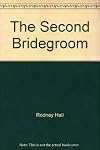
The other thing that’s special about this book, is that it’s published by McPhee Gribble (1975-1989), an innovative Australian publishing house founded by Hilary McPhee and Di Gribble (who also founded Text Publishing) McPhee Gribble was the initial publisher of many of our most significant writers, including Tim Winton, Murray Bail, Rod Jones, Helen Garner and Drusilla Modjeska. The book (hardback) is beautifully made, with cover art by Keith McEwan, and has quality paper, binding and boards. Reading the novel in this beautiful form seems fitting for such lush prose.
The story concerns an escaped convict known only as FJ, who is narrating events that took place in about 1820. In the process, he also relates his own back story as the son of a rebel from the Isle of Manx, who was hanged by the British for smuggling, under laws he doesn’t recognise any more than he speaks the English language. Ironically, FJ was transported for forgery to a place that is, he tells us, a counterfeit England, created by cutting down strange trees and digging out plants with no name. What is even more ironic is that he was originally charged with theft, because his excellent forgery was thought to be the long-sought-for 100th copy of a document attributed to William Caxton, the man who introduced the printing press to England in the 15th century and was the first retailer of printed books there.
On arrival in New South Wales, FJ is assigned to Edwin Atholl who takes him aboard the Fraternity to establish a new settlement somewhere along the coast. On board FJ is tormented by and eventually kills his fellow convict Gabriel Dean to whom he is chained at the wrist. On landing, when the convicts are brought up from below, these two, the living and the dead, are separated by a callous swipe of an axe so that FJ still has the manacle attached to his wrist when he takes advantage of a lapse in supervision and escapes into the bush.
To read the rest of my review please visit https://anzlitlovers.com/2017/07/21/the-second-bridegroom-by-rodney-hall/ show less
Will be my favourite of the year. Not sure why other ratings are so low. Maybe they didn't get it? Who knows. Very poetic and surreal. I loved every word.
Ratings
Members
- Recently Added By
Author Information

35+ Works 712 Members
Rodney Hall was born in England on November 18, 1935. After World War II, he migrated to Australia with his family. At the age of 16, he left school in Brisbane, but eventually graduated from the University of Queensland in 1971. He has written collections of poetry, biographies, novels, and scripts for both television and radio. His works include show more Penniless till Doomsday, Popeye Never Told You: Childhood Memories of the War, and The Day We Had Hitler Home. He has won numerous awards including the Grace Leven Poetry Prize for A Soapbox Omnibus, the Victorian Premier's Literary Award and the Vance Palmer Prize for Fiction for Captivity Captive, the Miles Franklin Award for Just Relations and for The Grisly Wife, and the Australian Literature Society Gold Medal for The Second Bridegroom and Love without Hope. In 1990, he was made a Member of the Order of Australia for services to literature. (Bowker Author Biography) show less
Awards and Honors
Awards
Series

Work Relationships
Is contained in
Classifications
Statistics
- Members
- 58
- Popularity
- 528,665
- Reviews
- 3
- Rating
- (3.55)
- Languages
- English, German
- Media
- Paper
- ISBNs
- 8
- ASINs
- 1