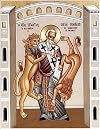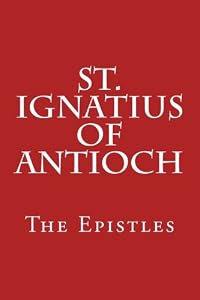
St. Ignatius of Antioch: The Epistles
by St. Ignatius of Antioch
On This Page
Description
The epistles of St. Ignatius are presented here in their entirety, their historical insights imparted in an excellent translation to English.Saint Ignatius of Antioch was one of the foremost early Christians, acceding to the role of Bishop of Antioch in circa 67 A.D. . During his tenure as bishop he wrote several Epistles - letters - to various figures of the time. These are treasured as some of the earliest surviving Christian texts. As a committed traveller, Ignatius made effort to spread show more Christianity's influence. He coined the term 'Catholic Church', popularly used to this day.This edition contains letters generally agreed as authentic for their reference by the Roman historian Eusebius in the 4th century. These are as follows: Epistle to the Ephesians; Epistle to the Magnesians; Epistle to the Trallians; Epistle of the Romans; Epistle to the Philadelphians; Epistle to the Smyrnaeans; Epistle to Polycarp; Bishop of Smyrna.For the sake of completeness, this edition also contains annotated epistles whose authenticity is disputed by historians and theologians: Epistle to the Tarsians; Epistle to the Antiochians; Epistle to Hero, a Deacon of Antioch; Epistle to the Philippians; The Epistle of Maria the Proselyte to Ignatius; Epistle to Mary at Neapolis, Zarbus; First and Second Epistles to St. John; The Epistle of Ignatius to the Virgin Mary. show lessTags
Recommendations









Member Reviews
Why don't evangelical Christians study these historical texts more? There seems to be something taboo about quoting the early church fathers, yet nothing taboo about quoting 20th century sources, Puritans, or whomever else after, say, Calvin. These epistles from Ignatius Bishop of Antioch to the churches at Ephesus, Magnesia, Rome, Smyrna, Philadelphia, Tralles, and to fellow bishop Polycarp are great history. If you've ever asked "what happened next?" while reading Paul and Peter's epistles, read Ignatius.
I believe these works also help in determining whether we're interpreting a New Testament text correctly. How does Ignatius quote from the gospels and epistles? He's writing to Ephesus and others after Paul, Peter, and John did, knew show more their strengths and weaknesses. Ignatius is writing from Syria (Antioch). He came to be Bishop of Antioch around 67 A.D. knew Polycarp, would have known John and was likely discipled by him. He died a martyr in 108 A.D. Ignatius was the first to use the word "catholic" for the universal church, which was later given a capital "C" and that makes Protestants today uncomfortable.
I find Ignatius continues the concern found in Peter and Paul's epistles for orthodoxy. Ignatius comments on the eucharist, the body and the blood, remind many of transubstantiation and makes them uncomfortable. Without a commentary, I see him referring more to the danger of gnostic influences who denied that God took on flesh. I also am reminded that the order of succession was important to the early church; if you didn't get your teaching from either the circulating gospels or epistles, or from someone who knew and got their commission from the Apostles, then it was in error. I think this sheds light on his exhortation not to take the eucharist or be baptised apart from an elder.
He has similarly strong Pauline and Johannine concern about the influence of Judaizers: "For Christianity did not believe in Judaism, but Judaism in Christianity."
Ignatius wrote these epistles rather hastily, likely on his way to martyrdom. For early Christians, that was just a given reality-- Jesus, his disciples, and the next generation expected and met that end with joy and peace. But Ignatius wanted them to meet it holding fast to the right gospel as well.
"I am God's wheat, and I am to be ground by the teeth of wild beasts, so that I may become the pure bread of Christ."
5 stars. show less
I believe these works also help in determining whether we're interpreting a New Testament text correctly. How does Ignatius quote from the gospels and epistles? He's writing to Ephesus and others after Paul, Peter, and John did, knew show more their strengths and weaknesses. Ignatius is writing from Syria (Antioch). He came to be Bishop of Antioch around 67 A.D. knew Polycarp, would have known John and was likely discipled by him. He died a martyr in 108 A.D. Ignatius was the first to use the word "catholic" for the universal church, which was later given a capital "C" and that makes Protestants today uncomfortable.
I find Ignatius continues the concern found in Peter and Paul's epistles for orthodoxy. Ignatius comments on the eucharist, the body and the blood, remind many of transubstantiation and makes them uncomfortable. Without a commentary, I see him referring more to the danger of gnostic influences who denied that God took on flesh. I also am reminded that the order of succession was important to the early church; if you didn't get your teaching from either the circulating gospels or epistles, or from someone who knew and got their commission from the Apostles, then it was in error. I think this sheds light on his exhortation not to take the eucharist or be baptised apart from an elder.
He has similarly strong Pauline and Johannine concern about the influence of Judaizers: "For Christianity did not believe in Judaism, but Judaism in Christianity."
Ignatius wrote these epistles rather hastily, likely on his way to martyrdom. For early Christians, that was just a given reality-- Jesus, his disciples, and the next generation expected and met that end with joy and peace. But Ignatius wanted them to meet it holding fast to the right gospel as well.
"I am God's wheat, and I am to be ground by the teeth of wild beasts, so that I may become the pure bread of Christ."
5 stars. show less
RB-8
Jul 13, 2021Catalan
Ratings
Members
- Recently Added By
Lists

Western Canon
206 works; 2 members
Author Information

37+ Works 489 Members
Work Relationships
Is contained in
Classifications
- Genres
- Nonfiction, Religion & Spirituality, History
- DDC/MDS
- 270.109 — Religion History of Christianity History, geographic treatment, biography of Christianity Apostolic; Nativity to Constantine
- LCC
- BR65 .I32 — Philosophy, Psychology and Religion Christianity Christianity Early Christian literature. Fathers of the Church, etc.
- BISAC
Statistics
- Members
- 63
- Popularity
- 490,395
- Reviews
- 2
- Rating
- (4.00)
- Languages
- 5 — Catalan, English, German, Greek (Ancient), Spanish
- Media
- Paper, Ebook
- ISBNs
- 14
- ASINs
- 5