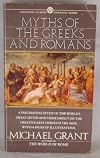
Myths of the Greeks and Romans
by Michael Grant
On This Page
Description
A fascinating study of the world's great myths and their impact on the creative arts through the ages, this insightful and absorbing book demonstrates the dynamic effect that ancient mythology has had on the creative efforts of succeeding centuries. Distinguished historian and classical scholar Michael Grant summarizes all the myths as well as the legends of the lesser gods and heroes, and traces their origins in historical fact or religious myth. He then shows how myths have continued to show more evolve throughout the ages. The author's brilliant investigations lead from Pericles to Picasso, Homer to Freud, Apuleius to Grimm--and prove that mythological themes have been continuously restated in art, science, and folklore, up to the present day. Lively and fascinating, this in-depth study is complemented by maps, genealogical tables, and 64 pages of photographs. Included, too, are an appendix on additional myths, chapter notes, and an updated bibliography and index. "The special value of the book lies in [its] studies of the earlier and later history of the myths . . . . The study of origins takes Mr. Grant into many different fields, including archaeology and psychology as well as classical philology. He is well read and sure footed in all of them."--London Times Literary Supplement show lessTags
Recommendations



















Member Reviews
Very old (1962, revised 1989) but well worth retaining in the library precisely because it is rather old-fashioned. It belongs to a world in which there was still some sense of a Western 'canon' and that makes its depth of coverage and contextualisation worth more than today's celebrity re-tellings.
Grant takes us through the mythology of the Ancients by linking the stories to the origin texts, starting most obviously with Homer's Iliad and Odyssey and ending with the Roman era tales of Apuleius (Cupid & Psyche) and Musaeus (Hero & Leander).
We have Hesiod, the Greek Hymns to Apollo and Demeter, Aeschylus, Sophocles, Euripides, Apollonius, Virgil, Livy and Ovid as markers along the way. Each chapter follows a similar pattern and there are show more very useful and extensive geneaologies of gods and heroes as well as maps.
We are systematically given the myth itself, then the literary, historical and anthropological context, some critique of the myth and what it may have meant to the culture that shared it and finally references to how the myth unfolded throughout Western cultural history.
It is not flawless. The interpretations are of the mid-twentieth century. The 'latest' references are very particular to the concerns of the educated post-war intellectual. On the other hand, it does mean that we are not stuck in the mud of our contemporary ideological nonsense.
Post-war existentialism and the canon may not represent all that might be said about myth and provide their own biaises but we are spared anti-colonialist, gender and ecological interpretations (stifled yawn!), let alone weird fashionable variants like eco-feminism. Be thankful for small mercies.
As a text, it provides a nice informative base-line that respects its source material. It is dated but still useful. It is also (mostly) well written. By the time you have finished it, you feel some sense of the distinctive nature of Graeco-Roman thought.
The net result of a read-through is a strong sense of a developing and eventually coherent literary response to mythic incoherence. We have here a primer on the pagan inheritance that sits alongside its Judaeo-Christian rival as one of the two great formative influences on Western culture. show less
Grant takes us through the mythology of the Ancients by linking the stories to the origin texts, starting most obviously with Homer's Iliad and Odyssey and ending with the Roman era tales of Apuleius (Cupid & Psyche) and Musaeus (Hero & Leander).
We have Hesiod, the Greek Hymns to Apollo and Demeter, Aeschylus, Sophocles, Euripides, Apollonius, Virgil, Livy and Ovid as markers along the way. Each chapter follows a similar pattern and there are show more very useful and extensive geneaologies of gods and heroes as well as maps.
We are systematically given the myth itself, then the literary, historical and anthropological context, some critique of the myth and what it may have meant to the culture that shared it and finally references to how the myth unfolded throughout Western cultural history.
It is not flawless. The interpretations are of the mid-twentieth century. The 'latest' references are very particular to the concerns of the educated post-war intellectual. On the other hand, it does mean that we are not stuck in the mud of our contemporary ideological nonsense.
Post-war existentialism and the canon may not represent all that might be said about myth and provide their own biaises but we are spared anti-colonialist, gender and ecological interpretations (stifled yawn!), let alone weird fashionable variants like eco-feminism. Be thankful for small mercies.
As a text, it provides a nice informative base-line that respects its source material. It is dated but still useful. It is also (mostly) well written. By the time you have finished it, you feel some sense of the distinctive nature of Graeco-Roman thought.
The net result of a read-through is a strong sense of a developing and eventually coherent literary response to mythic incoherence. We have here a primer on the pagan inheritance that sits alongside its Judaeo-Christian rival as one of the two great formative influences on Western culture. show less
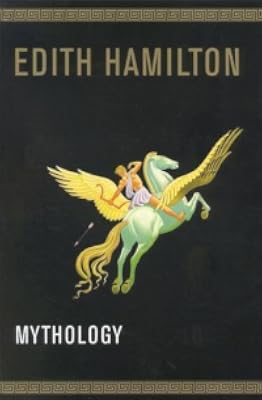
Michael Grant's "Myths of the Greeks and Romans" is a very informative and interesting collection of the ancient myths. I would say that Edith Hamilton's "Mythology" is for the novice reader of mythology, someone who knows very little about the myths and just wants a compendium of the stories and a who's who in the world of ancient Greek and Roman deities and their offspring. Michael Grant's book is for the intermediate reader of mythology who wants to delve deeper, maybe look at sources, history, later interpretations and transformations in other arts.
The book is divided into sections starting with the oldest written account which is, of course, the Iliad and the Odyssey, and then following the literary line, also divides them into show more families: Agamemnon and Prometheus, Oedipus and Antigone, Herakles and Dionysus, Heroic searchers: Jason, Orpheus, et al. and finally, ending with love stories: Baucis and Philomenon, Cupid and Psyche, Hero and Leander.
Each section begins with a synopsis of the story and variations. He then brings up various ways of interpreting the story, the history of the tale (both religious and social, psychological -when applicable), as well as how the story was reinterpreted by other writers through the years. The book also has many photographs showing the myths in ancient and modern art. I found this book dense at times, but always interesting and engaging.
My paperback copy of this book was published in 1962 and is falling apart and will probably go into the recycling bin, while I await a newer copy. Since it was published so long ago, there is probably much newer research that would contradict some of what Michael Grant presents (especially his use of Freud's interpretations of the myths), but nevertheless, I would highly recommend this book for someone interested in learning more than just which god slept with whom. show less
The book is divided into sections starting with the oldest written account which is, of course, the Iliad and the Odyssey, and then following the literary line, also divides them into show more families: Agamemnon and Prometheus, Oedipus and Antigone, Herakles and Dionysus, Heroic searchers: Jason, Orpheus, et al. and finally, ending with love stories: Baucis and Philomenon, Cupid and Psyche, Hero and Leander.
Each section begins with a synopsis of the story and variations. He then brings up various ways of interpreting the story, the history of the tale (both religious and social, psychological -when applicable), as well as how the story was reinterpreted by other writers through the years. The book also has many photographs showing the myths in ancient and modern art. I found this book dense at times, but always interesting and engaging.
My paperback copy of this book was published in 1962 and is falling apart and will probably go into the recycling bin, while I await a newer copy. Since it was published so long ago, there is probably much newer research that would contradict some of what Michael Grant presents (especially his use of Freud's interpretations of the myths), but nevertheless, I would highly recommend this book for someone interested in learning more than just which god slept with whom. show less
In this insightful and absorbing book, distinguished historian and classical scholar Michael Grant demonstrates the dynamic effect that ancient mythology has had on the creative efforts of succeding centuries. He summarizes all the myths as well as the legends of the lesser gods and heroes, and traces their origins in historical fact or religious myth. He then shows how myths have continued to evolve throughout the ages. The author's brilliant investigations lead from Pericles to Picasso, Homer to Freud, Apuleius to Grimm - and prove that mythological themes have been continuously restated in art, science, and folklore, up to the present day.
Source: World Pub. Co., 1962
Source: World Pub. Co., 1962
Great reveiw of all the myths that I dimly remember such as Orpheus, Jason, etc.
$8 to $20. Excellent Condition, lots of illustrations.
Ratings
Members
- Recently Added By
Author Information

105+ Works 13,970 Members
Common Knowledge
- Canonical title
- Myths of the Greeks and Romans
- Original title
- Myths of the Greeks and Romans
- Original publication date
- 1962
- People/Characters
- Achilles; Antigone; Apollo; Artemis; Cupid; Danaë (show all 21); Demeter; Dionysius, the Areopagite (Acts 17:34); Euridyce; Hercules; Leto; Oedipus; Odysseus; Orpheus; Perseus; Prometheus; Psyche; Zeus; Aeneas; Aeolus; Agenor
- Important places
- Ancient Greece; Greece; Troy
- Original language
- English
Classifications
- Genres
- Nonfiction, History, General Nonfiction, Religion & Spirituality
- DDC/MDS
- 292.13 — Religion Other religions Greek & Roman Mythology Religious mythology, general classes of religion, interreligious relations and attitudes, social theology Mythology and mythological foundations
- LCC
- BL722 .G7 — Philosophy, Psychology and Religion Religions. Mythology. Rationalism Religions. Mythology. Rationalism History and principles of religions European. Occidental Classical (Etruscan, Greek, Roman)
- BISAC
Statistics
- Members
- 708
- Popularity
- 40,437
- Reviews
- 5
- Rating
- (3.47)
- Languages
- English, German
- Media
- Paper, Ebook
- ISBNs
- 20
- ASINs
- 16