On This Page
Description
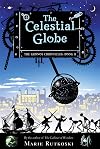
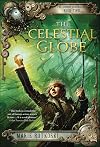
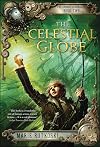
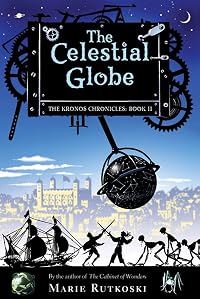
Thirteen-year-old Petra, her tin spider Astrophil, and their Roma friends Neel and Tomik are surprised by revelations about Dee, Kit, and Petra's father as they face Prince Rodolfo of Bohemia, who will do anything to possess a powerful object, the Celestial Globe.Tags
Recommendations







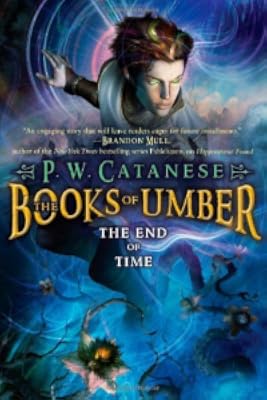
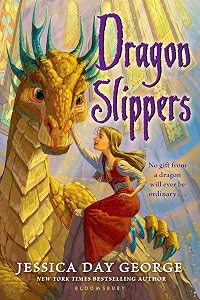
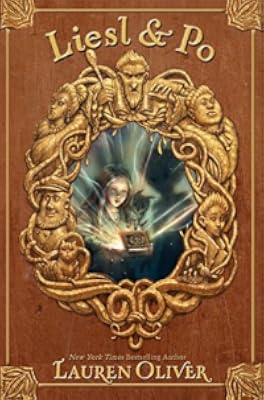
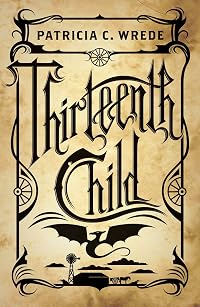






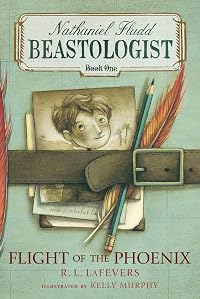

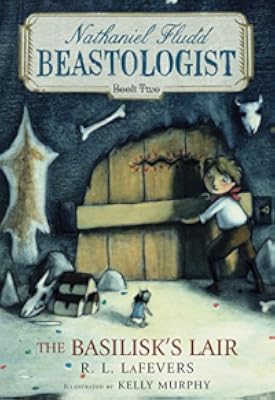
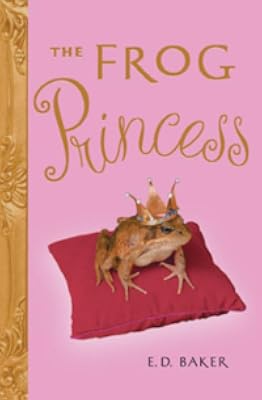
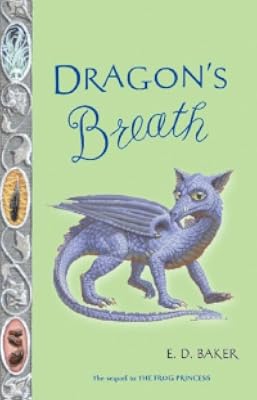

Member Recommendations
keeneam Same series, sets up this story nicely
Member Reviews
I wrote this review of the first and second books in this series on my Livejournal blog a while ago and forgot that I never copied it over, but now that I've received the third one for review, I thought I should, because I love this series and it doesn't get enough attention. My review was prompted by a post I read (back in 2010) about the lack of kick-butt female heroines for middle grade girls, and that made me want to put in a plug for this fantasy series, the Kronos Chronicles. This is one of those series that falls under the radar, at least at my library, but it is quality storytelling with a unique historical setting, mechanical steampunk elements and magic that is integrated well into the world, and very engaging protagonist, show more Petra Kronos. It's also a series that grew on me: I read the first one and liked it okay, and it didn't seem extra-special, but weeks after finishing it I would find myself thinking of it fondly and wanting to read it again. The second book, which I really liked, only cemented my love.
The series takes place in historical Bohemia at the end of the 16th century, so already the setting is different and very colorful. Magic has very specific, limited uses, often related to craftsmanship: Petra's father can manipulate metal and has created creatures such as Astrophil, Petra's highly-literate, talking tin spider; her friend Tomik works with glass and can do things such as trap/create lightening in a bottle. Petra's powers are more mysterious, and in fact the strangeness of her abilities is one of the focal points of The Celestial Globe.
In the first book, Petra's father goes to Prague to build the world's largest astrological clock; unfortunately, the Prince of Bohemia, who commissioned the work, steals her father's eyes so that he cannot ever repeat this amazing feat. Petra, being more than a little stubborn and proactive, decides to go to Prague herself, infiltrate the Prince's castle, and steal back her father's eyes. She is aided by the Roma people, in particular a boy named Neel, whose magic enables him to use phantom fingers to steal from people and pick locks. Her mission is complicated by the discovery that the Prince has enchanted her father's eyes and actually wears them, and a further discovery that the clock her father created is part of one of the Prince's nefarious schemes to rule the world. John Dee, the British spy, simultaneously aids Petra and uses her for his own purposes, but he is instrumental in her quest.
Petra does returns home at the end of the first book, but not before the Prince learns who she is, so the second book starts with him sending his Gray Men to either kill or kidnap her. With the unsolicited help of John Dee, she escapes again, but then he quite infuriatingly imprisons her in his home in England, for her own good, of course, with his two unusual daughters (one who can open rifts in order to travel through space, and one who can close the rifts), so that he can teach her magic and swordplay. And while this is all going on, Tomik and Neel end up together with the Roma to search for the two Celestial Globes, which enable whole groups of people to find all the rifts that already exist and travel among them (it makes more sense when you're reading the book, I promise). Of course, the Prince of Bohemia (who is evil mostly because he is almost childishly spoiled) is really keen to get these Celestial Globes as well.
Petra is a great character -- she's intelligent, determined, very stubborn, but also more than a little naive and impetuous. Her impatience and unwillingness to cooperate gets her into trouble a lot, especially with John Dee, who is always a step ahead. Her efforts to best him are entertaining, but when she finally outwits him, it may not be in her best interest. (We won't find that out until Book Three.) His delight over her scheming (and his scheming in return) is one of the highlights of this book for me. He is such a Machiavellian character, delicious with amusement but quite menacing when he chooses to be. He is in this one a lot, which is probably why I enjoyed it more than the first book.
This is a really unique series. Fantasy with such a strong female character for ages 8/9-11 are rarer than ones for ages 12-up. Also, in an age of fat fantasies, these book are short, making them far more accessible to young readers than those 400-500 page tomes they expect middle graders to read nowadays. (The second book, while being 300 pages, is published in a trim size with a larger typeface, so it's really more like 200 pages, and the first one is the same.) I think they fill an important niche that is only made better by the fact that they feature strong characters, lots of action, and even a touch of (very innocent) romance in this second one. show less
The series takes place in historical Bohemia at the end of the 16th century, so already the setting is different and very colorful. Magic has very specific, limited uses, often related to craftsmanship: Petra's father can manipulate metal and has created creatures such as Astrophil, Petra's highly-literate, talking tin spider; her friend Tomik works with glass and can do things such as trap/create lightening in a bottle. Petra's powers are more mysterious, and in fact the strangeness of her abilities is one of the focal points of The Celestial Globe.
In the first book, Petra's father goes to Prague to build the world's largest astrological clock; unfortunately, the Prince of Bohemia, who commissioned the work, steals her father's eyes so that he cannot ever repeat this amazing feat. Petra, being more than a little stubborn and proactive, decides to go to Prague herself, infiltrate the Prince's castle, and steal back her father's eyes. She is aided by the Roma people, in particular a boy named Neel, whose magic enables him to use phantom fingers to steal from people and pick locks. Her mission is complicated by the discovery that the Prince has enchanted her father's eyes and actually wears them, and a further discovery that the clock her father created is part of one of the Prince's nefarious schemes to rule the world. John Dee, the British spy, simultaneously aids Petra and uses her for his own purposes, but he is instrumental in her quest.
Petra does returns home at the end of the first book, but not before the Prince learns who she is, so the second book starts with him sending his Gray Men to either kill or kidnap her. With the unsolicited help of John Dee, she escapes again, but then he quite infuriatingly imprisons her in his home in England, for her own good, of course, with his two unusual daughters (one who can open rifts in order to travel through space, and one who can close the rifts), so that he can teach her magic and swordplay. And while this is all going on, Tomik and Neel end up together with the Roma to search for the two Celestial Globes, which enable whole groups of people to find all the rifts that already exist and travel among them (it makes more sense when you're reading the book, I promise). Of course, the Prince of Bohemia (who is evil mostly because he is almost childishly spoiled) is really keen to get these Celestial Globes as well.
Petra is a great character -- she's intelligent, determined, very stubborn, but also more than a little naive and impetuous. Her impatience and unwillingness to cooperate gets her into trouble a lot, especially with John Dee, who is always a step ahead. Her efforts to best him are entertaining, but when she finally outwits him, it may not be in her best interest. (We won't find that out until Book Three.) His delight over her scheming (and his scheming in return) is one of the highlights of this book for me. He is such a Machiavellian character, delicious with amusement but quite menacing when he chooses to be. He is in this one a lot, which is probably why I enjoyed it more than the first book.
This is a really unique series. Fantasy with such a strong female character for ages 8/9-11 are rarer than ones for ages 12-up. Also, in an age of fat fantasies, these book are short, making them far more accessible to young readers than those 400-500 page tomes they expect middle graders to read nowadays. (The second book, while being 300 pages, is published in a trim size with a larger typeface, so it's really more like 200 pages, and the first one is the same.) I think they fill an important niche that is only made better by the fact that they feature strong characters, lots of action, and even a touch of (very innocent) romance in this second one. show less
While still filled with wondrous ideas and a delicious dark tone, I just didn't find "The Celestial Globe" as engaging and well written as it's predecessor, "Cabinet of Wonders". For one thing, it seemed 'dumbed down' and written for a younger audience than the "Cabinet". For example, Ms. Rutkoski would do a great job 'showing us what happened' with action and dialog, but then would ruin it by summing up what we had witnessed; basically saying 'this is what all that you just read means." Now for younger readers this is a fine technique for making sure that nothing slipped beneath their radar, but for adults and more sophisticated Middle-grade readers this is going to grate in short order.
I also didn't think that following multiple show more characters -- with breaks within a chapter -- worked so well for this book. Following Tomik was probably necessary, but the brief breaks to see what her dad was up to, was not of enough consequence to warrant breaking the momentum that was developing elsewhere.
BUT that criticism aside, there is some marvelously good writing within these pages, and the further along you get the more consistent it is. Younger readers should definitely read the series despite my hesitation to suggest it for adults. The Kronos series has got innovative concepts, action and 'yuck'-appeal, and well developed, interesting characters.
Violence: some, but not graphic
Mood: possibly too dark for sensitive younger readers. This is a series where they steal people's eyes, after all.
Language: none
Pam T~
mom and blogger show less
I also didn't think that following multiple show more characters -- with breaks within a chapter -- worked so well for this book. Following Tomik was probably necessary, but the brief breaks to see what her dad was up to, was not of enough consequence to warrant breaking the momentum that was developing elsewhere.
BUT that criticism aside, there is some marvelously good writing within these pages, and the further along you get the more consistent it is. Younger readers should definitely read the series despite my hesitation to suggest it for adults. The Kronos series has got innovative concepts, action and 'yuck'-appeal, and well developed, interesting characters.
Violence: some, but not graphic
Mood: possibly too dark for sensitive younger readers. This is a series where they steal people's eyes, after all.
Language: none
Pam T~
mom and blogger show less
I found this to be a fun and fast-paced sequel to The Cabinet of Wonders, but somehow lacking in some of the charm of the earlier book. I missed the East European setting as most of this book takes place in London, the steampunk atmosphere seemed to be mostly missing, and a good deal of the appeal of the characters was lacking as well. Still it was an exciting adventure with Petra, Astrophil, Neel and Tomik, plus a few new characters to find the elusive Celestial Globe. I will probably keep reading the series as there were hints at the end of this book that the next one will be set in the Romany capital somewhere in India, and that sounds intriguing.
Schitterend vervolg op 'De ogen van Kronos'. Het is een boek dat je in één ruk wil uitlezen en dat verwachtingen schept voor een derde vervolg. Ik wacht alvast vol ongeduld !
Mar 24, 2011Dutch
Tweede deel van een trilogie die zich afspeelt in Tsjechië en Engeland.
Jan 10, 2011Dutch
Ratings
Members
- Recently Added By
Lists

Spirit of Place
46 works; 1 member
Author Information

19+ Works 6,736 Members
Marie Rutkoski received a bachelor's degree from the University of Iowa and studied Shakespeare at Harvard University. She is a professor of English literature at Brooklyn College, where she teaches Renaissance drama, children's literature, and fiction writing. She is the author of The Winner's Trilogy, The Shadow Society, and the Kronos show more Chronicles. (Bowker Author Biography) show less
Series

Common Knowledge
- Canonical title
- The Celestial Globe
- Original publication date
- 2010
- People/Characters
- Petra Kronos; Astrophil; John Dee; Mikal Kronos; Prince Rodolfo; Neel (show all 11); Tomas "Tomik" Stakan; Madinia Dee; Margaret Dee; Christopher "Kit" Rhymer; Sir Francis Walsingham
- Important places
- England, UK
- Dedication
- This book is dedicated to my rowsy sibs: Aimee, Andy, and Jonathon.
- First words
- Some days are just born bad.
- Last words
- (Click to show. Warning: May contain spoilers.)The next, it was gone.
Classifications
- Genres
- Kids, Tween, Fiction and Literature, Fantasy
- DDC/MDS
- 823.914 — Literature & rhetoric English & Old English literatures English fiction 1900- 1901-1999 1945-1999
- LCC
- PZ7 .R935 .C — Language and Literature Fiction and juvenile belles lettres Fiction and juvenile belles lettres Juvenile belles lettres
- BISAC
Statistics
- Members
- 184
- Popularity
- 178,032
- Reviews
- 5
- Rating
- (3.92)
- Languages
- Dutch, English, German
- Media
- Paper, Ebook
- ISBNs
- 8
- ASINs
- 3