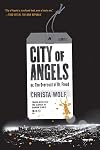
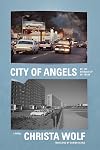
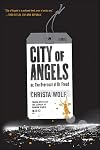
City of Angels: or, The Overcoat of Dr. Freud
by Christa Wolf
On This Page
Description
Three years after the fall of the Berlin Wall, the writer Christa Wolf was granted access to her newly declassified Stasi files. She was not surprised to discover forty-two volumes of documents produced by the East German secret police. But what was surprising was a thing green folder whos contents told an unfamiliar story: in the early 1960s, Wolf had been an informant for the Communist government. And yet, thirty years on, she had absolutely no recollection of it.Tags
Recommendations
























Member Reviews
Who would you be if your country disappeared? What would happen to your identity? The nameless narrator of [City of Angels] is faced with just such questions. Arriving in Los Angeles in 1992, not that long after the fall of the Berlin Wall and the reunification of Germany, she made her own small but defiant gesture of solidarity with her country of East Germany, wondering "... whether it was really worth it to travel to the United States with the still-valid passport of a no-longer extant country". The immigration officer asked "Are you sure this country still exists?" "Yes, I am" she replied.
This is a complex novel, told in layers like an archeological exploration of the narrator's life, shifting back and forth in time as all show more recollection does. The narration is done in the present tense about that era twenty odd years ago. The trip to Los Angeles was at the invitation of The Center, an organization which brought small groups of intellectuals and artists from outside the US together for several months at a time, supporting them while they pursued their individual projects. The narrator's project was to uncover yet another identity, that of a German woman who had fled to the US before WWII. This woman had written a series of letters over more than thirty years, from 1945-1979, to a woman in East Germany who had bequeathed them in turn to the narrator. The letters were signed only "L". There were no envelopes, only the date and Los Angeles, for sender and recipient were careful not to incriminate each other in the paranoid world of the GDR.
During the narrator's time in Los Angeles, the former East Germany was going through turmoil as police and party records were opened, informers were identified and files were made public. Families and friendships fell apart. Getting the news from Germany each day was troubling, but then one day the narrator's own name appeared in news reports. Can you forget things you did long ago that have unintended consequences? This question came to haunt her. Trying to unravel the chain of events took the narrator further back in time. Distance is required and is obtained for this painful process by shifting from "I" to "you" in the narration, separating the self into now and then. "When I woke up I remembered our drives in the country, when you held the road atlas on your knees and looked for the country you could find refuge in, and you never found it..." She recalled an even earlier time as a small child, fleeing for the West with her family, away from the advancing Russians, and not making it across the river that would become the boundary. In such ways are our fates decided.
Emigrés and exiles, past and present, fill her life on the far edge of the American continent, an odd place from which to reflect back, yet one filled with the ghosts of earlier voices of dissent: Brecht, Garbo, Feuchtwanger, Thomas Mann and others. Reflections on the US and its citizens echo the puzzled reactions so many have in discussions with Americans. She is struck by "This bottomless need Americans have for safety, certainty, security"; the morning ritual of "How are you today?" where the expected answer is a variant of "Fine", because nobody really wants to know, nothing is expected - it's just "elevator syndrome"; the inability to say "communist" like any other word. She came to dread the questions that assumed she would not go back home, had been lucky to escape, as if one's country could be shrugged off like its out of date clothes.
City of Angels or the Overcoat of Dr Freud is an autobiographical novel digging as far into the soul as possible without quite reaching ...the border that the innermost secret draws around itself, and to cross that line would mean self-destruction. Eventually Wolf comes to the conclusion "I want to live in a world where there are still secrets". In the end would it be too painful to find out who we really are? show less
This is a complex novel, told in layers like an archeological exploration of the narrator's life, shifting back and forth in time as all show more recollection does. The narration is done in the present tense about that era twenty odd years ago. The trip to Los Angeles was at the invitation of The Center, an organization which brought small groups of intellectuals and artists from outside the US together for several months at a time, supporting them while they pursued their individual projects. The narrator's project was to uncover yet another identity, that of a German woman who had fled to the US before WWII. This woman had written a series of letters over more than thirty years, from 1945-1979, to a woman in East Germany who had bequeathed them in turn to the narrator. The letters were signed only "L". There were no envelopes, only the date and Los Angeles, for sender and recipient were careful not to incriminate each other in the paranoid world of the GDR.
During the narrator's time in Los Angeles, the former East Germany was going through turmoil as police and party records were opened, informers were identified and files were made public. Families and friendships fell apart. Getting the news from Germany each day was troubling, but then one day the narrator's own name appeared in news reports. Can you forget things you did long ago that have unintended consequences? This question came to haunt her. Trying to unravel the chain of events took the narrator further back in time. Distance is required and is obtained for this painful process by shifting from "I" to "you" in the narration, separating the self into now and then. "When I woke up I remembered our drives in the country, when you held the road atlas on your knees and looked for the country you could find refuge in, and you never found it..." She recalled an even earlier time as a small child, fleeing for the West with her family, away from the advancing Russians, and not making it across the river that would become the boundary. In such ways are our fates decided.
Emigrés and exiles, past and present, fill her life on the far edge of the American continent, an odd place from which to reflect back, yet one filled with the ghosts of earlier voices of dissent: Brecht, Garbo, Feuchtwanger, Thomas Mann and others. Reflections on the US and its citizens echo the puzzled reactions so many have in discussions with Americans. She is struck by "This bottomless need Americans have for safety, certainty, security"; the morning ritual of "How are you today?" where the expected answer is a variant of "Fine", because nobody really wants to know, nothing is expected - it's just "elevator syndrome"; the inability to say "communist" like any other word. She came to dread the questions that assumed she would not go back home, had been lucky to escape, as if one's country could be shrugged off like its out of date clothes.
City of Angels or the Overcoat of Dr Freud is an autobiographical novel digging as far into the soul as possible without quite reaching ...the border that the innermost secret draws around itself, and to cross that line would mean self-destruction. Eventually Wolf comes to the conclusion "I want to live in a world where there are still secrets". In the end would it be too painful to find out who we really are? show less
Wolf's complicated last book, which reads more like a memoir and a travel book than a novel. The narrator is to all intents and purposes Wolf herself, looking back at her experiences in 1993-94 on a nine-month fellowship at the Getty Research Institute in Los Angeles.
There is a remarkably seamless mixture of tourist stuff about America, historical detail about the German intellectuals in exile in Los Angeles in the 30s and 40s, reflections on her own life and the history of the DDR which it is so tied up with, and a painful examination of the mental and physical collapse she goes through as a result of the revelations about her brief collaboration with the Stasi in the early sixties. There's a lot that we are left to work out for show more ourselves, and this probably isn't a book that it would make much sense to read unless you already know at least a bit about Wolf herself and the history of the DDR, but if you are ready for it, it is as rewarding (and demanding) as reading Wolf always is. show less
There is a remarkably seamless mixture of tourist stuff about America, historical detail about the German intellectuals in exile in Los Angeles in the 30s and 40s, reflections on her own life and the history of the DDR which it is so tied up with, and a painful examination of the mental and physical collapse she goes through as a result of the revelations about her brief collaboration with the Stasi in the early sixties. There's a lot that we are left to work out for show more ourselves, and this probably isn't a book that it would make much sense to read unless you already know at least a bit about Wolf herself and the history of the DDR, but if you are ready for it, it is as rewarding (and demanding) as reading Wolf always is. show less
The third Christa Wolf book I have read so far this year. Centered around observations and recalls of a German writer in Los Angeles.
Certain things in this book resemble life events in the writer's life. Like the protagonist, Christa Wolf had lived in East Germany and had been under surveillance for decades for her criticism of the government. The wall that separated East and West Germany falls, the old files emerge and the narrator is surprised that she too, for a short period of time, had taken part in surveillance of other writers before and forgotten and/or repressed the memory. With this unearthed information comes attacks as the writer is used symbolically by the press as an extension of a government's apparatus to keep citizens show more in check and suppress opposition. Instead of shirking away from the truth or meeting the attacks with counterattacks, she seeks to find the person that she was to have allowed herself to be used and why "she didn't send them away".
Away from Germany , in Los Angeles, in a community of academics and artists, the protagonist works to find answers. She meets with Jewish survivors of the Nazi regime, and visits the homes of other German intellectuals and writers that had been forced into exile in that city because of Hitler's government. Making observations of the city's divisions and inequalities based on class and race. All the while she remembers her childhood during Hitler's regime, life under occupation after the war, the promise of communism after reckoning with her country's fascist past under the new state of GDR, the souring of a utopian vision, the fall of the GDR and its promise, and the souring the promise yet again.
This was a book that was a result of a deep psychological crisis. It must have been a difficult one to write, it was difficult to read, and is also difficult to write a review on. It's a complex book that explores human experience, trying to understand cruelty and inhumanity and other questions of the human experience, whose honesty I admired. show less
Certain things in this book resemble life events in the writer's life. Like the protagonist, Christa Wolf had lived in East Germany and had been under surveillance for decades for her criticism of the government. The wall that separated East and West Germany falls, the old files emerge and the narrator is surprised that she too, for a short period of time, had taken part in surveillance of other writers before and forgotten and/or repressed the memory. With this unearthed information comes attacks as the writer is used symbolically by the press as an extension of a government's apparatus to keep citizens show more in check and suppress opposition. Instead of shirking away from the truth or meeting the attacks with counterattacks, she seeks to find the person that she was to have allowed herself to be used and why "she didn't send them away".
Away from Germany , in Los Angeles, in a community of academics and artists, the protagonist works to find answers. She meets with Jewish survivors of the Nazi regime, and visits the homes of other German intellectuals and writers that had been forced into exile in that city because of Hitler's government. Making observations of the city's divisions and inequalities based on class and race. All the while she remembers her childhood during Hitler's regime, life under occupation after the war, the promise of communism after reckoning with her country's fascist past under the new state of GDR, the souring of a utopian vision, the fall of the GDR and its promise, and the souring the promise yet again.
This was a book that was a result of a deep psychological crisis. It must have been a difficult one to write, it was difficult to read, and is also difficult to write a review on. It's a complex book that explores human experience, trying to understand cruelty and inhumanity and other questions of the human experience, whose honesty I admired. show less
The narrator, pretty much identical with Christa Wolf, flees Berlin to the edge of the world, in this case Los Angeles, and experiences a controlled nervous breakdown as she awaits the inevitable while enjoying a seemingly cushy fellowship at the Getty Museum. She knows that the Stasi file from her youth will be opened to scrutiny and her mild reporting on colleagues many years back will trigger an avalanche of negative publicity, hate mail, and possibly wipe out the previous appreciation of her life's work. She buries her anxiety in a study of the German emigres who came to Los Angeles as refugees from Nazi Germany, their troubles far worse than her own. She tracks down one woman refugee in particular with great tenacity. The past and show more present intertwine and intrude on each other. The narrator compulsively documents the bizarre local customs of the Angelinos and her fellow Getty scholars along with the fate of earlier emigres and watches helplessly as her own fate suffers at the hands of her compatriots back home. Her technique is to describe events and people in excruciating detail, while leaving out their well known names, that way the reader's preconceptions do not color her depictions and until she has finished a portrait. Most disengenuous is the note at the beginning claiming that the people in the book are not real.....This is all plenty real... show less
Boeiende en knap gestructureerde roman waarin een bekende Duitse schrijfster tijdens een studieverblijf in Los Angeles geconfronteerd wordt - en vooral zichzelf confronteert - met haar (kortstondige) Stasi-verleden. Het moderne en het antieke marika (Hopi), nazi- en DDR-tijd, Wende en Exilliteratuur, filosofie, geschiedenis en cultuur het passeert allemaal, via moeiteloze overgangen, de revue in het gewetensonderzoek dat de hoofdrolspeelster zichzelf oplegt.
Christa Wolf is op uitnodiging van het Getty Center een paar maanden in Los Angeles om de schrijfster van brieven aan een vriendin van haar te achterhalen. De schrijfster tekende de brieven slechts met een initiaal. Die zoektocht heeft resultaat. Intussen komt de IM-Stasiakte van Wolf in Duitsland in de pers. Dat is op zich al moeilijk genoeg, maar Wolf kan het niet van zichzelf accepteren dat ze zich niets van die periode kan herinneren. Hoe zit dat? Het duurt lang voor ze kan accepteren dat alles gegaan is zoals het gegaan is. Dat ze geloofde in de utopie. En dat ze zich daar niet voor hoeft te schamen.
Feb 21, 2011Dutch
Members
- Recently Added By
Lists

German Literature
518 works; 55 members

Writers at Risk
106 works; 17 members
Author Information

116+ Works 5,620 Members
Christa Wolf was born on March 18, 1929, in Landsberg, which is now Gorzow, Poland. Her father joined the Nazi Party and she became a member of the girls' version of the Hitler Youth. In 1949, she joined the Socialist Unity Party and studied German literature at universities in Jena and Leipzig. She wrote numerous novels during her lifetime show more including The Divided Heaven, The Quest for Christa T., A Model Childhood, and Cassandra. She won several awards including the Heinrich Mann Prize in 1963 and Thomas Mann Prize for literature in 2010. She died on December 1, 2011 at the age of 82. (Bowker Author Biography) show less
Some Editions
Awards and Honors
Common Knowledge
- Canonical title
- City of Angels: or, The Overcoat of Dr. Freud
- Original title
- Stadt der Engel oder The Overcoat of Dr. Freud
- Original publication date
- 2010
- Important places*
- Los Angeles, California, USA
- First words*
- Aus allen Himmeln stürzen
das war der Satz, der mir einfiel, als ich in L.A. landete und die Passagiere des Jet dem Piloten mit Beifall dankten, der die Maschine über den Ozean geflogen, von See her die Neue Welt angeste... (show all)uert, lange über den Lichtern der Riesenstadt gekreist hatte und nun sanft aufgesetzt hatte. - Quotations*
- Die Zeit tut, was sie kann. Sie vergeht.
- Original language
- German
*Some information comes from Common Knowledge in other languages. Click "Edit" for more information.
Classifications
Statistics
- Members
- 231
- Popularity
- 141,030
- Reviews
- 8
- Rating
- (3.70)
- Languages
- 10 — Danish, Dutch, English, French, German, Hebrew, Italian, Norwegian (Bokmål), Spanish, Swedish
- Media
- Paper, Audiobook, Ebook
- ISBNs
- 20
- UPCs
- 1
- ASINs
- 8