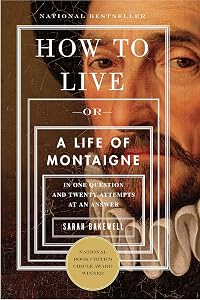
How to Live: Or A Life of Montaigne in One Question and Twenty Attempts at an Answer
by Sarah Bakewell
On This Page
Description
How to get on well with people, how to deal with violence, how to adjust to losing someone you love - such questions arise in most people's lives. They are all versions of a bigger question: how do you live? How do you do the good or honourable thing, while flourishing and feeling happy? This question obsessed Renaissance writers, none more than Michel Eyquem de Montaigne (1533-92), perhaps the first truly modern individual. A nobleman, public official and wine-grower, he wrote free-roaming show more explorations of his thought and experience, unlike anything written before. He called them 'essays', meaning 'attempts' or 'tries'. Into them, he put whatever was in his head: his tastes in wine and food, his childhood memories, the way his dog's ears twitched when it was dreaming, as well as the appalling events of the religious civil wars raging around him. "The Essays" was an instant bestseller, and over four hundred years later, Montaigne's honesty and charm still draw people to him. Readers come to him in search of companionship, wisdom and entertainment - and in search of themselves. This book, a spirited and singular biography (and the first full life of Montaigne in English for nearly fifty years), relates the story of his life by way of the questions he posed and the answers he explored. It traces his bizarre upbringing (made to speak only Latin), youthful career and sexual adventures, his travels, and his friendships with the scholar and poet Etienne de La Boetie and with his adopted 'daughter', Marie de Gournay. And as we read, we also meet his readers - who for centuries have found in Montaigne an inexhaustible source of answers to the haunting question, 'how to live?'. show lessTags
Recommendations


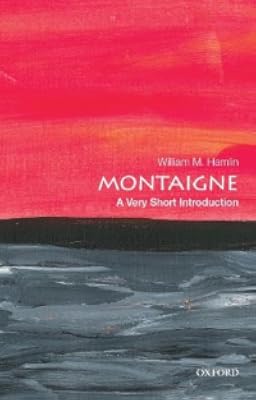
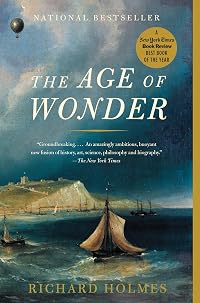

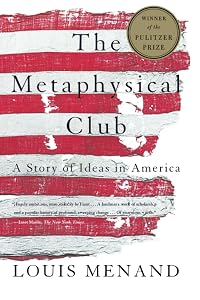

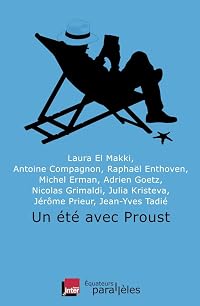
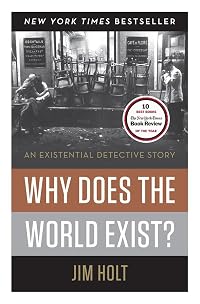
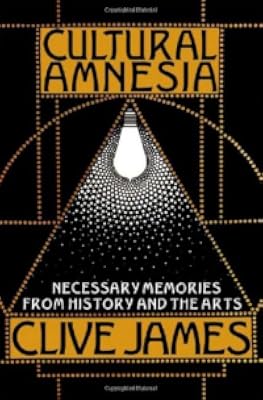


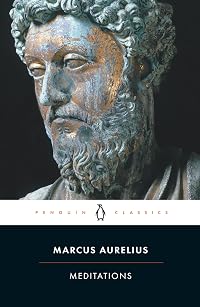







Member Recommendations
wandering_star Other memoirs by Athill also recommended - as she puts into practice the honest self-examination as recommended by Montaigne and Bakewell.
dajashby A similar technique of using biography to shed light on the subject's literature.
Member Reviews
Montaigne complained of books about books about books, but Sarah Bakewell’s How to Live demonstrates that sometimes, they are a good thing. Montaigne’s Essays always seemed daunting to me, and it was easier to approach them while having this book as a companion.
As the subtitle indicates, this is neither a standard life nor a traditional commentary. Fittingly, given their subject, these are short essays that explore how Montaigne, both through his life and writings, offers insight into how to live. Not how to live “well,” but how one life was lived. This is always done tentatively, sometimes even contradictorily (Montaigne, she notes, “never worries if he has said one thing on one page and the opposite overleaf, or, even in the show more next sentence”).
Counterintuitively, the first answer to the question of how to live that she draws from Montaigne is not to worry about death. She recounts how Montaigne’s attitude toward death changed once he’d passed through what we would now call a near-death experience. This helped sustain him through the loss of his father, a younger brother, all but one of his children, and (the death that affected him the most deeply) that of his best friend, Étienne de La Boétie.
In contrast, I got a good laugh out of another of the answers she finds: “Read a lot, forget most of what you read, and be slow-witted.”
Bakewell’s tone is by turns serious and light-hearted. She traces not only Montaigne’s life but also his afterlife, depicting the ways succeeding generations have found their own versions of the reclusive sage: the sceptic, the revolutionary, the romantic, and others. She readily admits that her own reading is likely conditioned by living after post-modernism. It is a testament to the power of Montaigne’s essays that they speak to a wide range of readers and historical situations. From beginning to end, Bakewell emphasizes that the essays represent a “centuries-long conversation between Montaigne and all those who have got to know him.” This is true of any book, but it seems particularly the case with this one.
Virginia Woolf was but one of the admiring readers. Bakewell tells of Woolf’s “beautiful vision of generations interlinked . . . . A chain of minds,” as Montaigne himself discovered in the pages of Cicero, Horace, Ovid, and other beloved writers he frequently quotes. He does so not as a pedant, but out of “the feeling of meeting a real person across the centuries.”
This is the second of Sarah Bakewell’s books that I’ve read and thoroughly enjoyed. I’m grateful for her taking me by the hand and leading me to the tower to which Montaigne withdrew, a moderate man in an immoderate time. show less
As the subtitle indicates, this is neither a standard life nor a traditional commentary. Fittingly, given their subject, these are short essays that explore how Montaigne, both through his life and writings, offers insight into how to live. Not how to live “well,” but how one life was lived. This is always done tentatively, sometimes even contradictorily (Montaigne, she notes, “never worries if he has said one thing on one page and the opposite overleaf, or, even in the show more next sentence”).
Counterintuitively, the first answer to the question of how to live that she draws from Montaigne is not to worry about death. She recounts how Montaigne’s attitude toward death changed once he’d passed through what we would now call a near-death experience. This helped sustain him through the loss of his father, a younger brother, all but one of his children, and (the death that affected him the most deeply) that of his best friend, Étienne de La Boétie.
In contrast, I got a good laugh out of another of the answers she finds: “Read a lot, forget most of what you read, and be slow-witted.”
Bakewell’s tone is by turns serious and light-hearted. She traces not only Montaigne’s life but also his afterlife, depicting the ways succeeding generations have found their own versions of the reclusive sage: the sceptic, the revolutionary, the romantic, and others. She readily admits that her own reading is likely conditioned by living after post-modernism. It is a testament to the power of Montaigne’s essays that they speak to a wide range of readers and historical situations. From beginning to end, Bakewell emphasizes that the essays represent a “centuries-long conversation between Montaigne and all those who have got to know him.” This is true of any book, but it seems particularly the case with this one.
Virginia Woolf was but one of the admiring readers. Bakewell tells of Woolf’s “beautiful vision of generations interlinked . . . . A chain of minds,” as Montaigne himself discovered in the pages of Cicero, Horace, Ovid, and other beloved writers he frequently quotes. He does so not as a pedant, but out of “the feeling of meeting a real person across the centuries.”
This is the second of Sarah Bakewell’s books that I’ve read and thoroughly enjoyed. I’m grateful for her taking me by the hand and leading me to the tower to which Montaigne withdrew, a moderate man in an immoderate time. show less
Apparently, Montaigne is hard to write about, because he is hard to read. I don't know how to evaluate Bakewell's success or lack of it in her book. It is certainly as meandering as Montaigne. Somehow, she does move forward -- if not in a straight line. I did like the way she included a history of the times and how Montaigne fit in, or didn't. I especially liked how she followed Montaigne's influence on other thinkers (Pascal, Rousseau, Nitzsche, many others) right up to the 21st century. She pays attention to the literary and even textual scholarship on Montaigne's Essays.
It was not her intention, but the result of reading her book for me was to make me much less interested in reading Montaigne himself. Although Montaigne may speak to show more everyone, she claims, what she cited and described left me gasping for intellectual breath, as in, no oxygen.
But I should probably get around to reading Montaigne. Or maybe not. Montaigne would say, "Whatever." show less
It was not her intention, but the result of reading her book for me was to make me much less interested in reading Montaigne himself. Although Montaigne may speak to show more everyone, she claims, what she cited and described left me gasping for intellectual breath, as in, no oxygen.
But I should probably get around to reading Montaigne. Or maybe not. Montaigne would say, "Whatever." show less
A well-written, very well-structured book--surprisingly so, given everything that Bakewell is trying to do: biography, reception history, philosophy, history... But I confess, her Montaigne gives me hives. In these pages, he is reliably contemporary; by far the most interesting thing about Montaigne is his untimeliness. The answer to how to live given here is, depressingly, "do what you, reader of books like this, already do: hedonism, moderation, liberalism, naturalism, centrism, agnosticism, Heracliteanism; be anti-philosophical, empathetic, unique, rebellious and, preferably, vegetarian. And, above all, seek therapy everywhere you look. "Modern readers," Bakewell writes, "who approach Montaigne asking what he can do for them are show more asking the same question he himself asked of Seneca, Sextus, and Lucretius...", which is both false--inasmuch as Montaigne seems to have been a notably disinterested reader, looking for other people, rather than trying to see how they can profit him--and obnoxious, because it implies that this just is how modern readers approach Montaigne. For Bakewell, and readers like her, Montaigne's only relation to his own time was to stand in opposition to it, while his only relation to our time is to conform to it. It would be nice if we could approach him in the opposite manner: a man deeply at odds with many of our own preconceptions about what it is to lead a good life. Montaigne spends most of his time writing about things other than himself, because he is interested in things other than himself. Predictably, but tiresomely, Bakewell tries to turn Montaigne into a kind of proto-deist: Montaigne commends his spirit to God on his death bed; for Bakewell, this is "a final act of Catholic convention: a brief acknowledgment to God in the life of this joyfully secular man"--as if our divisions of secular and religious can be read back into the sixteenth century, not to mention our divisions of convention and sincerity). But there's no reason to doubt that he was a genuinely devoted Catholic, as he understood that.
Also, any readers of Descartes are advised to stay well clear of his appearance in the book; Descartes, a man who famously died because he was told to get out of bed before noon, is here a Puritan who hated everything except mathematics.
I'm torn between genuine, gob-smacked admiration for Bakewell's ability to structure a book this complex, and rage at her inability to find in a sixteenth century Frenchman anything other than a twenty-first century American. show less
Also, any readers of Descartes are advised to stay well clear of his appearance in the book; Descartes, a man who famously died because he was told to get out of bed before noon, is here a Puritan who hated everything except mathematics.
I'm torn between genuine, gob-smacked admiration for Bakewell's ability to structure a book this complex, and rage at her inability to find in a sixteenth century Frenchman anything other than a twenty-first century American. show less
Biographies tend to follow a predictable format - birth, life, death; for most, this is a perfectly acceptable route to follow, and I'm put in mind here of the success that Selina Hastings had with 'The Secret Lives of Somerset Maugham.'
But there would be something almost perverse about offering the same treatment to the great French essayist Montaigne, given how his own writing looped and spiraled around, dodging the point when you most expected him to face it head-on, exploring tangents that shed new light on the main issue... and so Sarah Bakewell's 'Life', which takes the form of an ultra-literary self-help manual, is the perfect kind of biography for one of history's greatest, most unusual, deep thinkers.
But there would be something almost perverse about offering the same treatment to the great French essayist Montaigne, given how his own writing looped and spiraled around, dodging the point when you most expected him to face it head-on, exploring tangents that shed new light on the main issue... and so Sarah Bakewell's 'Life', which takes the form of an ultra-literary self-help manual, is the perfect kind of biography for one of history's greatest, most unusual, deep thinkers.
I enjoyed this book tremendously. It's really a history of Montaigne's Essays, rather than a life of Montaigne. Obviously Montaigne himself is a very important figure in that history, and Bakewell gives him ample space, but the ideas, reception, interpretation and use of the Essays also feature very prominently.
The structure of the book is brilliant, being organised in three dimensions at once: Montaigne's life, the history of the Essays before and after publication and Montaigne's philosophy. Incredibly, despite all that going on, it's easy to follow. The organisation is so neat that when I was reading about Montaigne's life I thought I was reading a biography, when I was reading about the book's reception I thought I was reading a show more history of the Essays and when I was reading about his thought I thought it was a Montaigne primer. And which of these modes the book is in can change from paragraph to paragraph, even sentence to sentence.
Bakewell achieves this complexity through a combination of meticulous organisation and crystal clear, engaging prose. I imagine Bakewell's planning documents for this book would look like the exploded diagram of a luxury car - it takes a lot of work to allow you to tap the accelerator and glide forward effortlessly and an incredible eye to also make it a beautiful experience.
I'm looking forward to reading some of the Essays and finding out what all the fuss was about. show less
The structure of the book is brilliant, being organised in three dimensions at once: Montaigne's life, the history of the Essays before and after publication and Montaigne's philosophy. Incredibly, despite all that going on, it's easy to follow. The organisation is so neat that when I was reading about Montaigne's life I thought I was reading a biography, when I was reading about the book's reception I thought I was reading a show more history of the Essays and when I was reading about his thought I thought it was a Montaigne primer. And which of these modes the book is in can change from paragraph to paragraph, even sentence to sentence.
Bakewell achieves this complexity through a combination of meticulous organisation and crystal clear, engaging prose. I imagine Bakewell's planning documents for this book would look like the exploded diagram of a luxury car - it takes a lot of work to allow you to tap the accelerator and glide forward effortlessly and an incredible eye to also make it a beautiful experience.
I'm looking forward to reading some of the Essays and finding out what all the fuss was about. show less
Bakewell tackles a ferociously complex existential question -- detailed in the title -- through the vehicle of the life of famed 16th Century essayist Michel de Montaigne and his famous "Essays".
The result: 20 attempts at an answer that are categorized under headings such as, "Wake from the sleep of habit", "Be ordinary and imperfect" and "Survive love and loss". This is no self-help book (a genre I loathe) but rather a thoughtful literary/historical examination of Montaigne, the time in which he lived and worked, and what lessons others have drawn from his unique combination of wit, attentiveness to small details, compassion and bluntness in the centuries that have elapsed since his death in 1592. (For all you Stefan Zweig fans out show more there, Bakewell devotes a few pages to how Zweig spent some of his final years before his suicide in examining and writing about Montaigne.)
It's a great introduction to some of the history of ideas in the late Renaissance and the centuries that followed. She links Montaigne to his classical predecessors, arguing that while he sought out the works of Seneca and Lucretius and drew on them for ideas about what it meant to live and to live well, so later generations have turned to Montaigne to ask that same question. (Bakewell cites Virginia Woolf's comments about a chain of scholarly minds, which she describes as "a series of self-interested individuals puzzling over their own lives, yet doing it cooperatively. All share a quality that can simply be thought of as 'humanity': the experience of being a thinking, feeling being who must get on with an ordinary human life".
I'd recommend this strongly to anyone with an interest in literary history, ideas, etc. etc. It can be readily picked up and put down, though I'd recommend reading the chapters sequentially, as Bakewell has structured them carefully to create a "flow" of ideas and avoid a jarring, episodic structure. show less
The result: 20 attempts at an answer that are categorized under headings such as, "Wake from the sleep of habit", "Be ordinary and imperfect" and "Survive love and loss". This is no self-help book (a genre I loathe) but rather a thoughtful literary/historical examination of Montaigne, the time in which he lived and worked, and what lessons others have drawn from his unique combination of wit, attentiveness to small details, compassion and bluntness in the centuries that have elapsed since his death in 1592. (For all you Stefan Zweig fans out show more there, Bakewell devotes a few pages to how Zweig spent some of his final years before his suicide in examining and writing about Montaigne.)
It's a great introduction to some of the history of ideas in the late Renaissance and the centuries that followed. She links Montaigne to his classical predecessors, arguing that while he sought out the works of Seneca and Lucretius and drew on them for ideas about what it meant to live and to live well, so later generations have turned to Montaigne to ask that same question. (Bakewell cites Virginia Woolf's comments about a chain of scholarly minds, which she describes as "a series of self-interested individuals puzzling over their own lives, yet doing it cooperatively. All share a quality that can simply be thought of as 'humanity': the experience of being a thinking, feeling being who must get on with an ordinary human life".
I'd recommend this strongly to anyone with an interest in literary history, ideas, etc. etc. It can be readily picked up and put down, though I'd recommend reading the chapters sequentially, as Bakewell has structured them carefully to create a "flow" of ideas and avoid a jarring, episodic structure. show less
Montaigne invented the modern essay by letting his thoughts run wild and following them with his pen. Only a truly engaging and interesting person can get away with this; fortunately Montaigne was such a person. Although this biography by Sarah Bakewell runs through Montaigne's life in more or less chronological order, it also imitates the great man's art by wandering all over the place and considering its subject from multiple angles. She tells us things that the man never much mentions in his vast self-examining work, such as his marriage, his high-profile work for kings, and the mad religious civil wars that raged all around his cherished, idylllic writing tower. Bakewell also explains why Montaigne has always driven certain show more philosophers crazy: by drawing his lessons from experience, and always attempting to refrain from judgement. (Rational idealists like Descartes prefer to arrive at ironclad conclusions while shutting out the world.) This lively book seems worthy of its subject, and achives its main object -- it makes the reader want to read Montaigne again. show less
Members
- Recently Added By
Published Reviews
ThingScore 75
It is hard to imagine a better introduction-or reintroduction- to Montaigne than Bakewell's book. It is easy to imagine small improvements, however.
added by Shortride
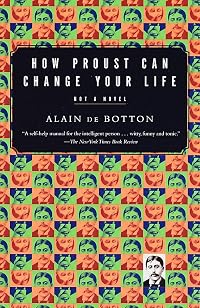
Bakewell, cleverly, has nonetheless managed to tap into the booming modern market for such “quick boosts” of wisdom (not all of them by any means as harmless as tips on eyebrow shaping), while actually writing a serious biography of a serious thinker from an age less like our own that we might solipsistically think. She’s not the first to take on such a task, of course. Superior literary show more lessons for life have become an established sub-genre of the self-help boom: How to Win Friends and Influence Readers of the Paris Review. Thus books such as Alain de Botton’s How Proust Can Change Your Life or John Armstrong’s Love, Life, Goethe have explored this territory in their different ways. Bakewell’s life of Montaigne combines some of the merits of de Botton’s knowing, entertaining intellectual squib and Armstrong’s thorough and absorbing biographical study. If her work enjoys a popular resonance greater than theirs—and I think it may—it’s most likely a tribute to its subject, Montaigne. show less
added by atbradley
Lists

Best Biographies, Autobiographies and Memoirs
465 works; 160 members

Best Biographies
216 works; 26 members

Top Five Books of 2013
1,562 works; 721 members

Books Read in 2013
1,630 works; 51 members

Books & Films Referenced by Cal Newport's Deep Work
43 works; 1 member

Books Read in 2023
5,547 works; 145 members

Ryan Holiday's Books To Base Your Life On
97 works; 2 members

Books Read in 2016
4,666 works; 199 members

Recommend the 20 best books you've read in the last five years
2,168 works; 606 members

On Books
70 works; 1 member

In Our Time books
4,934 works; 2 members
Author Information

6+ Works 4,704 Members
Sarah Bakewell was a curator of early printed books at the Wellcome Library before becoming a full-time writer, publishing her highly acclaimed biographies The Smart and The English Dane. She lives in London, where she teaches creative writing at City University.
All Editions
Some Editions
Awards and Honors
Common Knowledge
- Canonical title*
- Hoe te leven Een leven van Montaigne In één vraag en twintig pogingen tot een antwoord
- Original title
- How to live, or A life of Montaigne in one question and twenty attempts at an answer
- Alternate titles
- How to live; Life of Montaigne in one question and twenty attempts at an answer
- Original publication date
- 2010
- People/Characters
- Michel de Montaigne; Marie de Gournay; Ètienne de La Boétie; Jean de Léry; Roberto Fernández Retamar
- Important places
- Bordeaux, Gironde, Nouvelle-Aquitaine, France; France
- Important events
- St. Bartholomew's Day Massacre (1572);
- Dedication
- For Simo
- First words
- The twenty-first century is full of people who are full of themselves.
- Last words
- (Click to show. Warning: May contain spoilers.)The two of them can be left there, suspended in the midst of their lives with the Essays not yet fully written, while we go and get on with ours—with the Essays not yet fully read.
- Publisher's editor
- Cárdenas, Yvonne E. [Other Press]; Uglow, Jenny [Chatto & Windus]; Samuel, Alison [Chatto & Windus]; Ebrahimi, Parisa [Chatto & Windus]; Humphries, Beth [Chatto & Windus]; Amaradivakara, Sue [Chatto & Windus]
- Blurbers
- Lopate, Phillip
- Original language
- English
*Some information comes from Common Knowledge in other languages. Click "Edit" for more information.
Classifications
- Genres
- Biography & Memoir, Philosophy, Literature Studies and Criticism, Nonfiction
- DDC/MDS
- 848.3 — Literature & rhetoric French Literature French miscellaneous writings Renaissance 1500–1600
- LCC
- PQ1643 .B34 — Language and Literature French, Italian, Spanish and Portuguese literatures French literature Modern literature 16th century
- BISAC
Statistics
- Members
- 2,249
- Popularity
- 8,943
- Reviews
- 90
- Rating
- (4.12)
- Languages
- 9 — Chinese, Dutch, English, French, German, Italian, Portuguese, Spanish, Turkish
- Media
- Paper, Audiobook, Ebook
- ISBNs
- 32
- UPCs
- 2
- ASINs
- 15