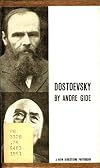
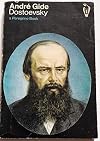
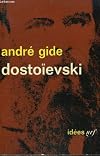
Dostoevsky
by André Gide
On This Page
Description
This was the first publication in English in its entirety of Gide's critical study of the Russian genius. Albert J. Guerard notes in his introduction, [This book] conveys . . . the excitement of intensely personal and sympathetic reading and the shock of recognition.Tags
Recommendations














Member Reviews
First published in 1923, at a time when Dostoevsky had yet to be rediscovered by the West, French author André Gide’s observations about the great writer are fascinating (and revealing about Gide as well). It’s far from a complete account, but there are plenty of gems to be found, such as Gide’s observation that Dostoevsky’s characters “group and arrange themselves always on one plane only, that of humility and pride.” Of special interest also were a sampling from Dostoevsky’s letters, including the one he wrote on December 22, 1849, the day his death sentence was stayed by the Tsar at the last minute, and another he wrote five years later which described in detail the journey he and his fellow prisoners took to Siberia, show more as well as the brutal conditions he found there.
Gide helps reveal the many bitter ironies about Dostoevsky’s life – the fact that despite his delicacy in childhood, he was drafted into the military, whereas his more robust brother Michael was rejected. That after his first four years in exile, when he wasn’t allowed to correspond with anyone, he spent six years pleading with his brother to write him, and to send him books – but never heard a word. “He wept when he bade me good-bye. Has his feeling towards me grown cold? Has his character changed? That would be a grief. Has he forgotten all the past?” he wrote a friend in 1856. That in the last year of his life, despite winning over public opinion, he was still struggling with attacks in the press, writing “For what I said in Moscow [his speech on ‘Pushkin,’ now revered], just look how I’ve been treated by almost the whole of the press: it is as if I were a thief or had embezzled from some bank or other. Ukhantsev [a notororious swindler of the time] is less foully abused than I.” It was during these final years, shortly before he died at just 59, that he would lament “the weakening of his memory and his imagination,” and yet it was at this time that he still produced his masterpiece, The Brothers Karamazov, which is as inspiring as it is humbling.
All of these aspects of his life seem to have fueled his self-doubt as a writer, his humility as a person, his awkwardness around others, and his submissiveness that seemed to channel Christ (e.g. still believing in the Emperor’s kindness after 10 years of exile). They were all facets of a genuinely vulnerable person. He was a man who knew pain, poverty, physical affliction (his epilepsy), and mental obsession (his gambling), and yet through it all he was generous to those around him and remained an optimist, both in Russia and in humanity. He resisted the Westernization of Russa, famously feuding with Turgenev, instead believing that Russia could help heal the party passions that were dividing Europe. And remarkably, during his exile, after having lived in frigid conditions with meager provisions for four years, he wrote, “Brother, there are very many noble natures in the world.”
There is such depth of feeling and authenticity in his work not because it is perfect precise and tidied up, but because it reflects the contradictions in people and remains gloriously messy. As Gide expresses it, he himself was a man of contradictions: “Conservative, but not hide-bound by traditions: monarchist, but of democratic opinions: Christian, but not a Roman Catholic: liberal, but not a progressive … he is of the stuff which displeases every party.” And yet Dostoevsky never tried to fit a mold, and said “The hardest thing on earth is to remain yourself.” He was raw, pure, natural. And thus, “with him there is no attempt to straighten or simplify lines; he is at his happiest in the complex; he fosters it.”
I liked how Gide rather poetically expressed the craft in Dostoevsky’s writing. “Balzac paints like David; Dostoevsky like Rembrandt,” he writes in the preface. In one of the lectures that were transcribed for the book, he says “In one of Stendhal’s novels, the light is constant, steady, and well-diffused. Every object is lit up in the same way, and is visible equally well from all angles; there are no shadow effects. But in Dostoevsky’s books, as in Rembrandt’s portrait, the shadows are the essential. Dostoevsky groups his characters and happenings, plays a brilliant light upon them, illuminating one aspect only.”
In a thought-provoking way, Gide also compares Nietzsche’s reaction to the Gospels as one of jealousy leading to the Superman, with Dostoevsky’s which is one of submission. In Dostoevsky, he writes, “the will to power leads inevitably to ruin,” whereas in Nietzsche it’s the opposite. In Dostoevsky, rationality and the mind are “demonic,” he says, and that “Dostoevsky’s heroes inherit the Kingdom of God only by the denial of mind and will and the surrender of personality.” That may sound antithetical to progress or what an atheist intellectual like me may buy into, but if I think of the “mind” in this context as ego, which in turns leads to competitiveness and internal suffering, I see the wisdom that I’ve always found in Dostoevsky.
There were many bits here and there that didn’t ring true e.g. Gide saying the influence of WWI upon literature was “nil,” or that jealousy might not be felt if people hadn’t read of it and expected themselves to feel that way, or subscribing to Mme. Hoffmann’s view that Russian mistrustfulness stemmed from “consciousness of his own insufficiency and proneness to sin,” or stating that “with physical well-being, mental activity is in abeyance.”
However, there is also wisdom in Gide’s anecdotes, such as this one from Walter Rathenau, who had been asking about Bolshevism and the Russian Revolution. “His answer was that naturally he had suffered at the horrible abominations practiced by the revolutionaries. ‘But believe me,’ he added, ‘a nation learns to know itself, as a man his own soul, only by passing through the depths of his suffering and the abyss of his sin…And America has not yet gained a soul because she refuses to accept sin and suffering.” I thought that was incredibly prescient, given America’s refusal to truly atone for its two original sins, slavery and genocide.
This is certainly not the final word on Dostoevsky, but it was a pleasure to read the insights from an aficionada in the literati nearly a century ago. show less
Gide helps reveal the many bitter ironies about Dostoevsky’s life – the fact that despite his delicacy in childhood, he was drafted into the military, whereas his more robust brother Michael was rejected. That after his first four years in exile, when he wasn’t allowed to correspond with anyone, he spent six years pleading with his brother to write him, and to send him books – but never heard a word. “He wept when he bade me good-bye. Has his feeling towards me grown cold? Has his character changed? That would be a grief. Has he forgotten all the past?” he wrote a friend in 1856. That in the last year of his life, despite winning over public opinion, he was still struggling with attacks in the press, writing “For what I said in Moscow [his speech on ‘Pushkin,’ now revered], just look how I’ve been treated by almost the whole of the press: it is as if I were a thief or had embezzled from some bank or other. Ukhantsev [a notororious swindler of the time] is less foully abused than I.” It was during these final years, shortly before he died at just 59, that he would lament “the weakening of his memory and his imagination,” and yet it was at this time that he still produced his masterpiece, The Brothers Karamazov, which is as inspiring as it is humbling.
All of these aspects of his life seem to have fueled his self-doubt as a writer, his humility as a person, his awkwardness around others, and his submissiveness that seemed to channel Christ (e.g. still believing in the Emperor’s kindness after 10 years of exile). They were all facets of a genuinely vulnerable person. He was a man who knew pain, poverty, physical affliction (his epilepsy), and mental obsession (his gambling), and yet through it all he was generous to those around him and remained an optimist, both in Russia and in humanity. He resisted the Westernization of Russa, famously feuding with Turgenev, instead believing that Russia could help heal the party passions that were dividing Europe. And remarkably, during his exile, after having lived in frigid conditions with meager provisions for four years, he wrote, “Brother, there are very many noble natures in the world.”
There is such depth of feeling and authenticity in his work not because it is perfect precise and tidied up, but because it reflects the contradictions in people and remains gloriously messy. As Gide expresses it, he himself was a man of contradictions: “Conservative, but not hide-bound by traditions: monarchist, but of democratic opinions: Christian, but not a Roman Catholic: liberal, but not a progressive … he is of the stuff which displeases every party.” And yet Dostoevsky never tried to fit a mold, and said “The hardest thing on earth is to remain yourself.” He was raw, pure, natural. And thus, “with him there is no attempt to straighten or simplify lines; he is at his happiest in the complex; he fosters it.”
I liked how Gide rather poetically expressed the craft in Dostoevsky’s writing. “Balzac paints like David; Dostoevsky like Rembrandt,” he writes in the preface. In one of the lectures that were transcribed for the book, he says “In one of Stendhal’s novels, the light is constant, steady, and well-diffused. Every object is lit up in the same way, and is visible equally well from all angles; there are no shadow effects. But in Dostoevsky’s books, as in Rembrandt’s portrait, the shadows are the essential. Dostoevsky groups his characters and happenings, plays a brilliant light upon them, illuminating one aspect only.”
In a thought-provoking way, Gide also compares Nietzsche’s reaction to the Gospels as one of jealousy leading to the Superman, with Dostoevsky’s which is one of submission. In Dostoevsky, he writes, “the will to power leads inevitably to ruin,” whereas in Nietzsche it’s the opposite. In Dostoevsky, rationality and the mind are “demonic,” he says, and that “Dostoevsky’s heroes inherit the Kingdom of God only by the denial of mind and will and the surrender of personality.” That may sound antithetical to progress or what an atheist intellectual like me may buy into, but if I think of the “mind” in this context as ego, which in turns leads to competitiveness and internal suffering, I see the wisdom that I’ve always found in Dostoevsky.
There were many bits here and there that didn’t ring true e.g. Gide saying the influence of WWI upon literature was “nil,” or that jealousy might not be felt if people hadn’t read of it and expected themselves to feel that way, or subscribing to Mme. Hoffmann’s view that Russian mistrustfulness stemmed from “consciousness of his own insufficiency and proneness to sin,” or stating that “with physical well-being, mental activity is in abeyance.”
However, there is also wisdom in Gide’s anecdotes, such as this one from Walter Rathenau, who had been asking about Bolshevism and the Russian Revolution. “His answer was that naturally he had suffered at the horrible abominations practiced by the revolutionaries. ‘But believe me,’ he added, ‘a nation learns to know itself, as a man his own soul, only by passing through the depths of his suffering and the abyss of his sin…And America has not yet gained a soul because she refuses to accept sin and suffering.” I thought that was incredibly prescient, given America’s refusal to truly atone for its two original sins, slavery and genocide.
This is certainly not the final word on Dostoevsky, but it was a pleasure to read the insights from an aficionada in the literati nearly a century ago. show less
A critical classic.
Ratings
Members
- Recently Added By
Author Information

Gide, the reflective rebel against bourgeois morality and one of the most important and controversial figures in modern European literature, published his first book anonymously at the age of 18. Gide was born in Paris, the only child of a law professor and a strict Calvinist mother. As a young man, he was an ardent member of the symbolist group, show more but the style of his later work is more in the tradition of classicism. Much of his work is autobiographical, and the story of his youth and early adult years and the discovery of his own sexual tendencies is related in Si le grain ne meurt (If it die . . .) (1926). Corydon (1923) deals with the question of homosexuality openly. Gide's reflections on life and literature are contained in his Journals (1954), which span the years 1889--1949. He was a founder of the influential Nouvelle Revue Francaise, in which the works of many prominent modern European authors appeared, and he remained a director until 1941. He resigned when the journal passed into the hands of the collaborationists. Gide's sympathies with communism prompted him to travel to Russia, where he found the realities of Soviet life less attractive than he had imagined. His accounts of his disillusionment were published as Return from the U.S.S.R. (1937) and Afterthoughts from the U.S.S.R. (1938). Always preoccupied with freedom, a champion of the oppressed and a skeptic, he remained an incredibly youthful spirit. Gide himself classified his fiction into three categories: satirical tales with elements of farce like Les Caves du Vatican (Lafcadio's Adventures) (1914), which he termed soties; ironic stories narrated in the first person like The Immoralist (1902) and Strait Is the Gate (1909), which he called recits; and a more complex narrative related from a multifaceted point of view, which he called a roman (novel). The only example of the last category that he published was The Counterfeiters (1926). Throughout his career, Gide maintained an extensive correspondence with such noted figures as Valery, Claudel, Rilke, and others. In 1947, he received the Nobel Prize for Literature. (Bowker Author Biography) show less
Some Editions
Series
Belongs to Publisher Series
Common Knowledge
- Canonical title
- Dostoevsky
- Original title
- Dostoïevski. Articles et causeries
- Original publication date
- 1923 (French edition) (French edition)
- People/Characters
- Fyodor Mikhailovich Dostoevsky
- Epigraph
- "Dostoevsky was the only psychologist from whom I had anything to learn: he belongs to the happiest windfalls of my life, happier even than the discovery of Stendhal."
NIETZSCHE - Dedication
- To M.A.G.
- First words*
- Dostoïevski d'après sa correspondance (1908)
A Pierre-Dominique Dupouey.
La masse énorme de Tolstoï encombre encore l'horizon mais ainsi qu'il advient en pays de montagnes où l'on voit, à mesure que l'on s... (show all)'en éloigne, par-dessus la plus proche cime, la plus haute, que la plus voisine cachait, reparaître quelques esprits avant-coureurs peut-être remarquent-ils déjà, derrière le géant Tolstoï, reparaître et grandir Dostoïevski. [..] - Original language*
- Français
- Canonical DDC/MDS
- 891.7332
- Disambiguation notice*
- En 1923, André Gide publie chez Plon le livre Dostoïevski qui rassemble un ensemble de textes consacrés à l’écrivain russe, écrits entre 1908 et 1923 :
- l’essai Dostoïevski d’après sa correspondance (d’abo... (show all)rd paru dans La Grande Revue le 25 mai 1908),
- l’article « Les Frères Karamazov » (initialement paru dans Le Figaro, à l’occasion de la mise en scène théâtrale des Frères Karamazov par Jacques Copeau en 1908),
- l’allocution prononcée au Vieux-Colombier pour la célébration du centenaire de l’écrivain russe le 24 décembre 1921 (d’abord parue dans La NRF en janvier 1922), enfin,
- un cycle de six conférences prononcées entre le 18 février et le 25 mars 1922 (et d’abord publiées dans La Revue hebdomadaire du 13 janvier au 17 février 1923).
*Some information comes from Common Knowledge in other languages. Click "Edit" for more information.
Classifications
- Genres
- Nonfiction, Literature Studies and Criticism, Biography & Memoir
- DDC/MDS
- 891.7332 — Literature & rhetoric Literatures of other languages East Indo-European and Celtic literatures Russian and East Slavic languages Russian fiction 1800–1917 Dostoevsky, Fyodor Mikhailovich (1821–1881)
- LCC
- PG3328 .Z6 .G483 — Language and Literature Slavic languages and literatures. Baltic languages. Albanian language Slavic. Baltic. Albanian Russian literature Individual authors and works 1800-1870 Dostoyevsky
- BISAC
Statistics
- Members
- 141
- Popularity
- 232,277
- Reviews
- 2
- Rating
- (3.50)
- Languages
- 6 — English, French, German, Polish, Spanish, Turkish
- Media
- Paper, Ebook
- ISBNs
- 11
- ASINs
- 21