On This Page
Description
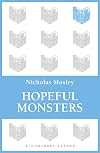
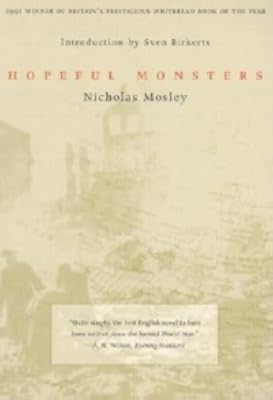
This Whitbread Book of The Year Award winner for 1990 is the final novel of the Catastrophe Practice series. Set in the 1920s and 30s it tells the story of two young radicals, Max and Eleanor, who meet, love, separate and come together again during the maelstrom of the Spanish Civil War.Tags
Recommendations









Member Recommendations
Member Reviews
First book I finished this year, and it really has taken me two years or so to get through it. There's nothing wrong with the book - it's amazing and I highly recommend it - it just requires a certain commitment and dedication on the reader's part. It isn't that it's a hard read. Maybe a bit like reading philosophy. Well, it is, I suppose. This book needs the right kind of readers, though, if that makes sense, so not everyone should expect to like it. At times, it's as if someone had an unbound textbook and an unbound novel and dropped them on the floor, not bothering to sort them after, and just publishing the juxtaposition together. And yet the writing somehow carries it all.
A fascinating novel of ideas, depicting the early lives of two characters, Max and Eleanor, in an almost epistolatory style, with each of them narrating alternate chapters, addressing the other as "you." The story takes place in Europe in the 1930s, a time of unrest (Nazi Germany, the development of the atomic bomb, the Spanish Civil War). Max and Eleanor make their way as best they can, exploring ideas and nurturing their love. The ideas are the main focus of the novel and it is through their ideas that the characters are built up and explored. This is not a novel for someone looking for a love story. I suspect that in order to like this novel, one must like ideas as much as one likes characters. Several times I put the book down to show more contemplate the ideas the book explores, not because it was difficult to understand, but because the ideas were so fascinating I wanted to give them room to breathe. show less
Nicholas Mosley writes:
Sometimes I walked with Peter Reece as he went about his business in the parish. He would go about on foot: he had a theory that people should normally go about on foot; then there might be time for things to sort themselves out.
I said ‘You believe things do sort themselves out? I mean you do what you have to do, and other people do what they do; and what happens is likely to be all right?’
Peter Reece said ‘What else is God?’
I Said ‘You mean “God” is a word for the fact that things sort themselves out, and not for the fact that there is a God.’
Peter Reece said ‘What is the difference?’
Sometimes I walked with Peter Reece as he went about his business in the parish. He would go about on foot: he had a theory that people should normally go about on foot; then there might be time for things to sort themselves out.
I said ‘You believe things do sort themselves out? I mean you do what you have to do, and other people do what they do; and what happens is likely to be all right?’
Peter Reece said ‘What else is God?’
I Said ‘You mean “God” is a word for the fact that things sort themselves out, and not for the fact that there is a God.’
Peter Reece said ‘What is the difference?’
I have tried, and tried, and tried, and tried to read and like this book. I can't; I hate it. I like the premise - organisms born a bit before their time which will succeed or fail, but don't, as they live, know whether they are monsters. I can't get by the artificial style.
My father said '----'
My mother said '----'
I thought - -----
or even worse,
I said '---'
I thought - ----
I guess I'll try again some day, but not this one.
My father said '----'
My mother said '----'
I thought - -----
or even worse,
I said '---'
I thought - ----
I guess I'll try again some day, but not this one.
A book written by the son of Oswald Moseley exploring the Wagnerian, Valkyrie period of Germany in the early 1930's - a time of change, great philosophy, literature and music that gave way to the Nazi monster set against a growing relationship between a German and a Brit; A chameleon time and world of change where the Bloomsbury set flourished in the sun and evil corruscated from below. A brilliant book that somehow never got the spotlight it deserved.
An eloquent and complex novel of ideas - I remember finding this stimulating and enjoyable but would need to read it again to review it properly.
Not an awful book, but maybe a bit too long and I lost the will to finish it. A lovely idea for a novel, that works to an extent and well constructed, just needs a bit more editing.
Members
- Recently Added By
Author Information

35+ Works 1,545 Members
Nicholas Mosley was born on June 25, 1923. During World War II, he joined the Rifle Brigade and won the Military Cross. He read philosophy for one year at Oxford University. His first novel, Spaces in the Dark, was published in 1951. His other novels included Accident, Impossible Object, and Hopeful Monsters, which won the Whitbread book of the show more year in 1990. He wrote biographies of poet Julian Grenfell, Russian leader Leon Trotsky, and Father Raymond Raynes. He was best known for his two-part biography on his father Sir Oswald Mosley, the founder of the British Union of Fascists, entitled The Rules of the Game and Beyond the Pale. He died on February 28, 2017 at the age of 93. (Bowker Author Biography) show less
Awards and Honors
Awards
Series

Common Knowledge
- Canonical title
- Hopeful Monsters
- Original publication date
- 1990
- Related movies
- Hopeful Monsters (1996 | IMDb)
- First words
- If we are to survive in the environment we have made for ourselves, may we have to be monstrous enough to greet our predicament?
Classifications
Statistics
- Members
- 500
- Popularity
- 60,589
- Reviews
- 10
- Rating
- (3.93)
- Languages
- English, Polish, Spanish
- Media
- Paper, Ebook
- ISBNs
- 10
- ASINs
- 3