On This Page
Description
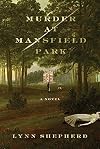
Shepherd puts a new twist on Austen's work. When Fanny Price is brutally killed on the grounds of Mansfield Park, Mary Crawford teams up with a thief-taker from London, to deal with romance, intrigue, and crimes of the heart.Tags
Recommendations









Member Reviews
This is the second literary spin-off I have read by this author, following her re-imagining of Dickens's Bleak House, Tom-All-Alone's. The early part follows the narrative of Jane Austen's novel very closely, but with some subtle differences in who is related to whom, and many of the characters have differing traits and driving forces, especially Fanny. The novel becomes a Georgian whodunnit when a body is found in the grounds of the Park and a thief-taker from London, Charles Maddox, who also appears in Tom-All-Alone's, is called to the scene. I won't give away any spoilers, but this is very well written, with a style similar to Austen's, which at times felt almost disconcerting to me, having read Austen's novel only two weeks earlier. show more The later scenes where Maddox investigates combine this Austen style with dramatic confrontations and quite shocking events in a very successful way. When I reviewed the earlier book, I said I thought that it had slightly besmirched my view of Bleak House, but I don't feel the same way about this one - the re-imagining is done in a different way that doesn't spring so directly from the themes of the original (though if I were to re-read Austen's novel now, I would surely have some new images in my mind). show less
The good news is, if you’re one of the people who've made a principled decision never to read a word written by Lynn Shepherd, you’re not missing a thing. Promise. Word of honor.
The reason you might have sworn off all things Shepherd is that she’s the woman who wrote that Huff Post column about how J.K. Rowling should stop writing and give other authors a chance. Her premise is that any book written by Rowling will routinely go bestseller, so readers will flock to her newest offering. If Rowling doesn’t write anything, people will be forced to look at other bookstore shelves for something amusing to read, and they’ll have the chance to see other writers they might otherwise have never heard of.
There’s one thing wrong with show more this piece of logic. (Other than the jerk-head factor of telling a talented writer to please shut up.) The flaw in Shepherd’s argument is that there are plenty of people who were non-readers who were drawn to books by Rowling. These are people who learned through reading Harry Potter that we book-lovers weren’t being pretentious showoffs when we carried a book with us every minute of every day. These people developed the habit of reading fiction thanks to Rowling. I know this, because I know some of these people.
There are also, sadly, plenty of people who read all the Harry Potter books and aren’t interested in reading anything else. If Rowling goes away, these people aren’t going to restlessly browse for other titles. They’re going to go back to whatever it is they do when they aren’t reading Harry Potter. I know some of these people, too.
This isn’t the part of Shepherd’s article that got people screaming, though. What really burned the collective biscuit of the reading community was Shepherd’s airy admission that she hasn’t actually read the Harry Potter books, but she thinks it’s a shame that so many adults have. They may be good – she wouldn’t know – but surely grownups would be better served with more intellectually stimulating works than (sniff) children’s books.
Shepherd may be laboring under the delusion that it’s true, as they say in Hollywood, that there’s no such thing as bad publicity. And it’s a fact that her deliberately provocative article brought her name to the attention of plenty of people who had never heard of her.
The problem is that their reaction was to solemnly swear that they would never, ever, under any circumstances read her books. If she thinks these people are either kidding or exaggerating, she should check the number of people who put her lone published title on a shelf marked “will never read.” She should also see how many people put her book on their “I’ll really have to check this out some time” list.
So far as I know, I was the only one who responded in that fashion. And even I knew enough to keep it to myself. I figured I’d sneak over to the library (it’s not as if she gets paid extra for the copy they already bought if I check it out), burn through her book in a day or two, and give her what she refused to give Rowling: a fair hearing.
Her book is an Austen sequel. I’m an Austen reader. How hard could it be?
Sorry, what did you just say? I couldn’t hear you over all those FAMOUS LAST WORDS.
It’s not just that this book sucks so hard I sustained permanent mental hickeys. It’s that the premise itself is so inexcusable it crosses the line into offensive.
The book is called Murder at Mansfield Park. Mansfield Park is one of Austen’s least-read, least-loved books.
I used to spend a lot of time on an Austen forum. Periodically, “Fanny wars” would break out, and we’d all be forced to choose sides.
It was brutal. Families were divided. Friendships were destroyed. Lives were ruined.
Okay, that last bit is an exaggeration. But the other ones are really, truly, true.
Fanny wars, to Janeites, are passionate battles over whether Fanny Price (the heroine of Mansfield Park) is sweet and lovable and all things good, or if she should be incarnated in the flesh by some latter-day Dr. Frankenstein so we can all have a good time slapping her.
I can see both sides. The first time I read Mansfield Park, I adored poor Fanny. The second time, I stopped loving freedom long enough to believe we ought to have laws against anyone being that annoying. Eventually, after many more readings, I shifted into a quiet, reasonable admiration for her, seasoned with an occasional sigh and a sometimes audible wish that she would for God’s sake cheer up, already.
Lynn Shepherd is one of the haters. Her book is, according to the back cover copy, “an irreverent new twist” on Mansfield Park.
I guess that’s one name for it.
Imagine overhearing the following conversation:
“Guess what? I’m writing one of those Jane Austen sequels! It’s going to be called Pride and Prejudice and Hotties!”
“That sounds fun. But don’t you think the title’s a little too close to Pride and Prejudice and Zombies?”
“What? No! Okay, so here’s what it’s going to be. There are two sisters, Elizabeth and Jane Bennet. Elizabeth’s the oldest. Jane’s the youngest.”
“Um, it’s actually the other way around.”
“In the original, yeah! But this is a rewrite! Obviously I have to make it different, right?”
“Well, sure. But most people do that by taking a new angle on the story. Maybe they write it from the point of view of the maid. Or they tell a story set in Pride and Predjudice’s future – like how the Darcys are getting along after their marriage or something.”
“Well, that’s not what I’m doing. I’m doing a whole new story!”
“But you’re calling it Pride and Prejudice.”
“Exactly! So there are two Bennet sisters, Elizabeth and Jane.”
“Wait. Just two? There are five in the original story.”
“Have you been listening? If I keep it just like in the original story, what’s the point?”
“Uh...”
“So. Elizabeth is the oldest. She’s kind of ugly and boring. Nobody likes her much. They just feel sorry for her. And Jane is this really flighty airhead. She’s not very pretty, either. She’s just boy-crazy.”
“But – how is this Pride and Prejudice?”
“Keep listening. So this hot guy shows up in town.”
“Mr. Wickham?”
“No, no. Mr. Collins.”
“Mr. Collins is HOT???”
“Totally! And both the Bennet sisters totally fall for him, but he gets this mad crush on Charlotte Lucas. ‘Cause she’s hot, too. And worldly and sophisticated. And rich.”
“Okay, HANG on.”
“But the Bennet sisters don’t feel too bad. Their dad has a lot of money, and he tells them if they don’t get married, they can have their dowries in cash instead and open up a business in London. I cut out that boring thing about how the Bennets need to have a son or their estate gets left to somebody else.”
(Sound of head exploding.)
What I just described does less violence to the story of Pride and Prejudice than Shepherd does to Mansfield Park. It would also undoubtedly be less painful to read.
Shepherd changes Fanny Price from the saintly, impoverished eldest sister of a large family to a spoiled-rotten only-child heiress. She makes Fanny’s rival in love, the arch-sophisticate Mary Crawford, into a sweet and impoverished young woman.
Here’s my question.
WHY?
What does it even MEAN to “rewrite” a story so much that the WHOLE ENTIRE POINT is lost?
In the real Mansfield Park, Fanny Price is an adopted child who starts off pitied and pushed about and ends up being the redeemer and moral compass of her little corner of the world. She’s seen as timid to a fault, but triumphs over the corruption around her with a moral strength and fortitude that even her enemies have to admire.
In the real Mansfield Park, Fanny’s mother defiantly runs off with a lowly man and had, like, a million kids with him. In this “telling,” Fanny Price is the child of a reasonably genteel woman and a really really rich man. The only child.
Is there a philosopher in the house? Doesn’t that make her not Fanny Price any more?
When I realized this book was utterly unreadable, I thought I had to bow out of reviewing it. Then I remembered something about the 25 pages I’d managed to get through.
Easily half the prose is lifted directly from Austen herself. It would be as if a P&P “sequel” started off with the famous line about a truth universally acknowledged, and then went on to quote the next line from P&P, and the next, and the next. So really, I've already read at least half of Shepherd's book. Which is more than she did for Rowling.
I promise you: if you see something you like in here, it’s a quote from Austen.
Did Shepherd think nobody would notice she was doing this? Or did she figure no one would care? It’s only Mansfield Park, after all.
I take it back. Not all of the writing in here is stolen from Austen. Some of it is stolen from Elizabeth Inchbald, the author of the play the characters from the real Mansfield Park decide to perform for fun. Shepherd keeps that part of the plot, probably in order to make it even easier for her to finish her self-allotted daily word-count goals while she was working on Murder at Mansfield Park. She could have been aiming for five thousand words a day and still have finished in under an hour.
I really did want to try to finish this, since the back cover mentions something about “a thief-taker from London” who comes to Mansfield Park in order to solve the titular murder. That might have been interesting. I could have learned something.
I tried. I failed. I’ll Google “thief-takers.”
And now I’m going to get a stiff drink and a good book and try to wash away the taste of this irredeemable piece of trash. show less
The reason you might have sworn off all things Shepherd is that she’s the woman who wrote that Huff Post column about how J.K. Rowling should stop writing and give other authors a chance. Her premise is that any book written by Rowling will routinely go bestseller, so readers will flock to her newest offering. If Rowling doesn’t write anything, people will be forced to look at other bookstore shelves for something amusing to read, and they’ll have the chance to see other writers they might otherwise have never heard of.
There’s one thing wrong with show more this piece of logic. (Other than the jerk-head factor of telling a talented writer to please shut up.) The flaw in Shepherd’s argument is that there are plenty of people who were non-readers who were drawn to books by Rowling. These are people who learned through reading Harry Potter that we book-lovers weren’t being pretentious showoffs when we carried a book with us every minute of every day. These people developed the habit of reading fiction thanks to Rowling. I know this, because I know some of these people.
There are also, sadly, plenty of people who read all the Harry Potter books and aren’t interested in reading anything else. If Rowling goes away, these people aren’t going to restlessly browse for other titles. They’re going to go back to whatever it is they do when they aren’t reading Harry Potter. I know some of these people, too.
This isn’t the part of Shepherd’s article that got people screaming, though. What really burned the collective biscuit of the reading community was Shepherd’s airy admission that she hasn’t actually read the Harry Potter books, but she thinks it’s a shame that so many adults have. They may be good – she wouldn’t know – but surely grownups would be better served with more intellectually stimulating works than (sniff) children’s books.
Shepherd may be laboring under the delusion that it’s true, as they say in Hollywood, that there’s no such thing as bad publicity. And it’s a fact that her deliberately provocative article brought her name to the attention of plenty of people who had never heard of her.
The problem is that their reaction was to solemnly swear that they would never, ever, under any circumstances read her books. If she thinks these people are either kidding or exaggerating, she should check the number of people who put her lone published title on a shelf marked “will never read.” She should also see how many people put her book on their “I’ll really have to check this out some time” list.
So far as I know, I was the only one who responded in that fashion. And even I knew enough to keep it to myself. I figured I’d sneak over to the library (it’s not as if she gets paid extra for the copy they already bought if I check it out), burn through her book in a day or two, and give her what she refused to give Rowling: a fair hearing.
Her book is an Austen sequel. I’m an Austen reader. How hard could it be?
Sorry, what did you just say? I couldn’t hear you over all those FAMOUS LAST WORDS.
It’s not just that this book sucks so hard I sustained permanent mental hickeys. It’s that the premise itself is so inexcusable it crosses the line into offensive.
The book is called Murder at Mansfield Park. Mansfield Park is one of Austen’s least-read, least-loved books.
I used to spend a lot of time on an Austen forum. Periodically, “Fanny wars” would break out, and we’d all be forced to choose sides.
It was brutal. Families were divided. Friendships were destroyed. Lives were ruined.
Okay, that last bit is an exaggeration. But the other ones are really, truly, true.
Fanny wars, to Janeites, are passionate battles over whether Fanny Price (the heroine of Mansfield Park) is sweet and lovable and all things good, or if she should be incarnated in the flesh by some latter-day Dr. Frankenstein so we can all have a good time slapping her.
I can see both sides. The first time I read Mansfield Park, I adored poor Fanny. The second time, I stopped loving freedom long enough to believe we ought to have laws against anyone being that annoying. Eventually, after many more readings, I shifted into a quiet, reasonable admiration for her, seasoned with an occasional sigh and a sometimes audible wish that she would for God’s sake cheer up, already.
Lynn Shepherd is one of the haters. Her book is, according to the back cover copy, “an irreverent new twist” on Mansfield Park.
I guess that’s one name for it.
Imagine overhearing the following conversation:
“Guess what? I’m writing one of those Jane Austen sequels! It’s going to be called Pride and Prejudice and Hotties!”
“That sounds fun. But don’t you think the title’s a little too close to Pride and Prejudice and Zombies?”
“What? No! Okay, so here’s what it’s going to be. There are two sisters, Elizabeth and Jane Bennet. Elizabeth’s the oldest. Jane’s the youngest.”
“Um, it’s actually the other way around.”
“In the original, yeah! But this is a rewrite! Obviously I have to make it different, right?”
“Well, sure. But most people do that by taking a new angle on the story. Maybe they write it from the point of view of the maid. Or they tell a story set in Pride and Predjudice’s future – like how the Darcys are getting along after their marriage or something.”
“Well, that’s not what I’m doing. I’m doing a whole new story!”
“But you’re calling it Pride and Prejudice.”
“Exactly! So there are two Bennet sisters, Elizabeth and Jane.”
“Wait. Just two? There are five in the original story.”
“Have you been listening? If I keep it just like in the original story, what’s the point?”
“Uh...”
“So. Elizabeth is the oldest. She’s kind of ugly and boring. Nobody likes her much. They just feel sorry for her. And Jane is this really flighty airhead. She’s not very pretty, either. She’s just boy-crazy.”
“But – how is this Pride and Prejudice?”
“Keep listening. So this hot guy shows up in town.”
“Mr. Wickham?”
“No, no. Mr. Collins.”
“Mr. Collins is HOT???”
“Totally! And both the Bennet sisters totally fall for him, but he gets this mad crush on Charlotte Lucas. ‘Cause she’s hot, too. And worldly and sophisticated. And rich.”
“Okay, HANG on.”
“But the Bennet sisters don’t feel too bad. Their dad has a lot of money, and he tells them if they don’t get married, they can have their dowries in cash instead and open up a business in London. I cut out that boring thing about how the Bennets need to have a son or their estate gets left to somebody else.”
(Sound of head exploding.)
What I just described does less violence to the story of Pride and Prejudice than Shepherd does to Mansfield Park. It would also undoubtedly be less painful to read.
Shepherd changes Fanny Price from the saintly, impoverished eldest sister of a large family to a spoiled-rotten only-child heiress. She makes Fanny’s rival in love, the arch-sophisticate Mary Crawford, into a sweet and impoverished young woman.
Here’s my question.
WHY?
What does it even MEAN to “rewrite” a story so much that the WHOLE ENTIRE POINT is lost?
In the real Mansfield Park, Fanny Price is an adopted child who starts off pitied and pushed about and ends up being the redeemer and moral compass of her little corner of the world. She’s seen as timid to a fault, but triumphs over the corruption around her with a moral strength and fortitude that even her enemies have to admire.
In the real Mansfield Park, Fanny’s mother defiantly runs off with a lowly man and had, like, a million kids with him. In this “telling,” Fanny Price is the child of a reasonably genteel woman and a really really rich man. The only child.
Is there a philosopher in the house? Doesn’t that make her not Fanny Price any more?
When I realized this book was utterly unreadable, I thought I had to bow out of reviewing it. Then I remembered something about the 25 pages I’d managed to get through.
Easily half the prose is lifted directly from Austen herself. It would be as if a P&P “sequel” started off with the famous line about a truth universally acknowledged, and then went on to quote the next line from P&P, and the next, and the next. So really, I've already read at least half of Shepherd's book. Which is more than she did for Rowling.
I promise you: if you see something you like in here, it’s a quote from Austen.
Did Shepherd think nobody would notice she was doing this? Or did she figure no one would care? It’s only Mansfield Park, after all.
I take it back. Not all of the writing in here is stolen from Austen. Some of it is stolen from Elizabeth Inchbald, the author of the play the characters from the real Mansfield Park decide to perform for fun. Shepherd keeps that part of the plot, probably in order to make it even easier for her to finish her self-allotted daily word-count goals while she was working on Murder at Mansfield Park. She could have been aiming for five thousand words a day and still have finished in under an hour.
I really did want to try to finish this, since the back cover mentions something about “a thief-taker from London” who comes to Mansfield Park in order to solve the titular murder. That might have been interesting. I could have learned something.
I tried. I failed. I’ll Google “thief-takers.”
And now I’m going to get a stiff drink and a good book and try to wash away the taste of this irredeemable piece of trash. show less
Attention, P.D. James: this is how to turn Austen into Agatha Christie.
After being disappointed by Death Comes To Pemberley, I was slightly wary of Lynn Shepherd's similar twist on Mansfield Park, but my doubts were quickly and pleasantly assuaged. Instead of clumsily trying to insert a murder mystery into an Austen novel, Shepherd cleverly manipulates the original characters to supply motive, means - and a victim - for a strangely appropriate violent crime. Fanny Price is no longer the priggish bore, modest and unassuming, of old - sorry, not my favourite heroine - but an orphan and an heiress, 'vain, insincere, and possessed of a quite excessive degree of self-consequence'! Boring Edmund is now Mrs Norris' step-son, Julia Bertram is show more more like Fanny, Henry Crawford is a landscape architect, and Mary Crawford is the heroine of the piece (although not half as much fun). Once the shifting personalities and relationships are established, then comes the murder at Mansfield Park.
'We were all perfectly happy before you came - I wish I had never seen you - I wish - I wish you were dead!'
I must confess to putting my money on the right horse, but only because the murderer seems to be the most likely candidate for an act of self-serving homicidal violence, in both Shepherd's universe and Austen's novel! However, Lynn Shepherd does throw in a couple of distracting red herrings, which made me think twice. And Charles Maddox, the 'thief taker' from London called in to investigate - no premature mention of 'the police' here - is a vivid addition to the cast, armed with determination and dubious morals!
Murder at Mansfield Park is a well-paced, intelligently constructed murder mystery, but also a playful take on Austen's work. Lynn Shepherd is at ease writing in the formal style of the original text, while making sly references to Pride and Prejudice, Sense and Sensibility, criminal procedure, and Heathrow ('it was unlikely much would ever be made of it'), among other topics! The author doesn't flaunt her knowledge, but the nods and winks are there for fellow Austen fans.
Thank you, Lynn Shepherd, for livening up Mansfield Park with a death or two! show less
After being disappointed by Death Comes To Pemberley, I was slightly wary of Lynn Shepherd's similar twist on Mansfield Park, but my doubts were quickly and pleasantly assuaged. Instead of clumsily trying to insert a murder mystery into an Austen novel, Shepherd cleverly manipulates the original characters to supply motive, means - and a victim - for a strangely appropriate violent crime. Fanny Price is no longer the priggish bore, modest and unassuming, of old - sorry, not my favourite heroine - but an orphan and an heiress, 'vain, insincere, and possessed of a quite excessive degree of self-consequence'! Boring Edmund is now Mrs Norris' step-son, Julia Bertram is show more more like Fanny, Henry Crawford is a landscape architect, and Mary Crawford is the heroine of the piece (although not half as much fun). Once the shifting personalities and relationships are established, then comes the murder at Mansfield Park.
'We were all perfectly happy before you came - I wish I had never seen you - I wish - I wish you were dead!'
I must confess to putting my money on the right horse, but only because the murderer seems to be the most likely candidate for an act of self-serving homicidal violence, in both Shepherd's universe and Austen's novel! However, Lynn Shepherd does throw in a couple of distracting red herrings, which made me think twice. And Charles Maddox, the 'thief taker' from London called in to investigate - no premature mention of 'the police' here - is a vivid addition to the cast, armed with determination and dubious morals!
Murder at Mansfield Park is a well-paced, intelligently constructed murder mystery, but also a playful take on Austen's work. Lynn Shepherd is at ease writing in the formal style of the original text, while making sly references to Pride and Prejudice, Sense and Sensibility, criminal procedure, and Heathrow ('it was unlikely much would ever be made of it'), among other topics! The author doesn't flaunt her knowledge, but the nods and winks are there for fellow Austen fans.
Thank you, Lynn Shepherd, for livening up Mansfield Park with a death or two! show less
This novel imagines an alternate-reality Mansfield Park where Mary Crawford is good, Fanny Price is bad, and plot elements of the original novel are depicted in a whole new light. In this version, Fanny is a privileged heiress who has grown up as the center of attention at Mansfield Park; as a result, she is insufferably arrogant and cruel to those who are beneath her. Mary Crawford, who immediately sees Fanny’s true nature, also observes the complicated family dynamics around her: the veneer of politeness in the Mansfield family cannot conceal its many rivalries and resentments. Tensions come to a horrifying climax when Fanny is found murdered on the grounds of the estate, and Mary uses her intelligence and deductive skills to help show more capture the killer.
The premise of this book intrigued me, but I honestly wasn’t sure whether I would end up enjoying this book or wanting to set it on fire. Fortunately, I really liked the way Shepherd re-imagined Mansfield Park, and it was fun for me to compare her changes with Austen’s original work. The mystery is interesting enough, but it’s not really the point of the book, and the killer wasn’t too difficult to guess. It bothered me a little that this book takes a lot of material from Austen’s novels and letters, but ultimately there’s a lot of original writing too. I would definitely recommend this book to people who have read Mansfield Park (it’s not a must, but you’ll definitely miss out on a lot of the fun if you haven’t!) and who find the concept interesting. show less
The premise of this book intrigued me, but I honestly wasn’t sure whether I would end up enjoying this book or wanting to set it on fire. Fortunately, I really liked the way Shepherd re-imagined Mansfield Park, and it was fun for me to compare her changes with Austen’s original work. The mystery is interesting enough, but it’s not really the point of the book, and the killer wasn’t too difficult to guess. It bothered me a little that this book takes a lot of material from Austen’s novels and letters, but ultimately there’s a lot of original writing too. I would definitely recommend this book to people who have read Mansfield Park (it’s not a must, but you’ll definitely miss out on a lot of the fun if you haven’t!) and who find the concept interesting. show less
 This review was written for LibraryThing Early Reviewers.
In Murder at Mansfield Park, Lynn Shepherd has taken Austen's notoriously least popular work and turned it on its head. Rather than take the typical approach and write a spin-off, where the story continues on or follows a minor character, Shepherd presents an alternate telling of the story, one in which downtrodden wet blanket Fanny is a pampered and officious heiress, and Julia Bertram seems to have more in common with the Fanny we know. Mary Crawford (one of my favorite characters in Austen, honestly) seems to share a backbone with Lizzie Bennet; she is a thinking woman, very aware of the follies and inconsistencies of the people around her. She is perhaps a bit more gentle than Lizzie, but she has something of the same spirit, and I show more think Shepherd succeeds in her goal of convincing the reader to just go with liking Mary and hating Fanny, which is something that creeps up on you when reading Mansfield Park.
But Murder at Mansfield Park isn't just a straight-forward alternate reality retelling of Austen's classic; it's also a full-blown whodunit murder mystery, with the country atmosphere and the self-absorbed people creating a sort of "Clue" atmosphere. I'm not sure that this book will be to the tastes of Jane purists (who would possibly gasp themselves into a swoon at some of the goings-on), but truly, the attention to detail in the language, and the character and world building are quite impressive. When I first sat down to review this, I started to say that this could have been it's own story independent of Jane, because so much is changed and wholly different than Jane's work. But I realized I didn't want to say that; it's not quite what I mean: the story does stand on its own, independent of Jane, however, I feel like having the known-Jane characters adds this fantastic layer that wouldn't be there otherwise. It's very clever and interesting, a neat little blending of Regency romance and murder most foul: as if Jane Austen and Sir Arthur Conan Doyle had a warped little lovechild. And if that doesn't have you intrigued, I have not done my job... show less
But Murder at Mansfield Park isn't just a straight-forward alternate reality retelling of Austen's classic; it's also a full-blown whodunit murder mystery, with the country atmosphere and the self-absorbed people creating a sort of "Clue" atmosphere. I'm not sure that this book will be to the tastes of Jane purists (who would possibly gasp themselves into a swoon at some of the goings-on), but truly, the attention to detail in the language, and the character and world building are quite impressive. When I first sat down to review this, I started to say that this could have been it's own story independent of Jane, because so much is changed and wholly different than Jane's work. But I realized I didn't want to say that; it's not quite what I mean: the story does stand on its own, independent of Jane, however, I feel like having the known-Jane characters adds this fantastic layer that wouldn't be there otherwise. It's very clever and interesting, a neat little blending of Regency romance and murder most foul: as if Jane Austen and Sir Arthur Conan Doyle had a warped little lovechild. And if that doesn't have you intrigued, I have not done my job... show less
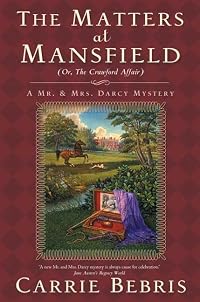
I had anticipated this latest Austen literary adaptation to be a bit like The Matters at Mansfield, by Carrie Bebris. I expected quite a bit of pastiche, mixed with an Austenesque moral regard for the characters. The fact is, the pastiche is there in full force - you get almost word-for-word passages from each of Austen's novels throughout the text, along with an undeniable nod at Charlotte Brontë's Jane Eyre towards the later chapters. But the moral regard is missing. Not just missing, but replaced.
You see, this isn't Jane Austen's Mansfield Park. This is quite another beast. The characters are all present, but they have different pasts, different presents, entirely different characteristics and, to top it all off, our heroine is not show more Jane Austen's pale, sickly, first-cousin-loving weakling Fanny Price, but her incorrigible Mary Crawford (who, in Ms. Shepherd's hands, takes on a very odd amalgamation of characteristics, making her at once Jane Eyre, Elizabeth Bennett and Elinor Dashwood!) It's a very strange feeling to have the characters alter as they do, here.
As its own novel (though there is a bit too much allusion for my taste) it stands pretty well. And though it bears the characters and even quotations of Jane Austen, it heavily relies on Charlotte Brontë's mood, structure, and even certain particular characters themselves. The end result, however, is not disappointing in the least. It's a pretty quick read, in part due to the inherent mystery of which character takes on which identity in the crosshairs of Ms. Shepherd's and Jane Austen's understanding.
Most interesting is Ms. Shepherd's take on Fanny Price. She sets the story up for us, almost in the reverse of the original characters' fortunes. Fanny's mother marries the best out of all the three sisters, instead of shaming her family by marrying an eventually-destitute sea captain. Fanny is an only child (instead of being the eldest girl out of 7 children...or 18 kids, whatever it was) who upon her parents' and grandparents' untimely demise (didn't happen in the original), is now an heiress, needing to be raised by her only living relatives, the Bertrams (and Mrs. Norris, of course).
Instead of being tossed about like a servant waif, she is exalted, afforded 2 ladies maids, given the best of everything, and - most importantly - put up with...desired, even. Ms. Shepherd's take on this new personality is haughty and really a mix of Maria Bertram, Emma Woodhouse and Caroline Bingley - not an attractive picture....like a very young Lady Catherine de Bourgh, but a picture, nonetheless, that sets up her environment sufficiently and allows the story to take the course it does, without feeling disrespectful of the original text.
I really enjoyed it, and would have preferred Austen's Fanny to be a bit more like Ms. Shepherd's Mary Crawford, but the beauty here lies in the difference. Enjoy!
Lauren Cartelli
www.theliterarygothamite.com show less
You see, this isn't Jane Austen's Mansfield Park. This is quite another beast. The characters are all present, but they have different pasts, different presents, entirely different characteristics and, to top it all off, our heroine is not show more Jane Austen's pale, sickly, first-cousin-loving weakling Fanny Price, but her incorrigible Mary Crawford (who, in Ms. Shepherd's hands, takes on a very odd amalgamation of characteristics, making her at once Jane Eyre, Elizabeth Bennett and Elinor Dashwood!) It's a very strange feeling to have the characters alter as they do, here.
As its own novel (though there is a bit too much allusion for my taste) it stands pretty well. And though it bears the characters and even quotations of Jane Austen, it heavily relies on Charlotte Brontë's mood, structure, and even certain particular characters themselves. The end result, however, is not disappointing in the least. It's a pretty quick read, in part due to the inherent mystery of which character takes on which identity in the crosshairs of Ms. Shepherd's and Jane Austen's understanding.
Most interesting is Ms. Shepherd's take on Fanny Price. She sets the story up for us, almost in the reverse of the original characters' fortunes. Fanny's mother marries the best out of all the three sisters, instead of shaming her family by marrying an eventually-destitute sea captain. Fanny is an only child (instead of being the eldest girl out of 7 children...or 18 kids, whatever it was) who upon her parents' and grandparents' untimely demise (didn't happen in the original), is now an heiress, needing to be raised by her only living relatives, the Bertrams (and Mrs. Norris, of course).
Instead of being tossed about like a servant waif, she is exalted, afforded 2 ladies maids, given the best of everything, and - most importantly - put up with...desired, even. Ms. Shepherd's take on this new personality is haughty and really a mix of Maria Bertram, Emma Woodhouse and Caroline Bingley - not an attractive picture....like a very young Lady Catherine de Bourgh, but a picture, nonetheless, that sets up her environment sufficiently and allows the story to take the course it does, without feeling disrespectful of the original text.
I really enjoyed it, and would have preferred Austen's Fanny to be a bit more like Ms. Shepherd's Mary Crawford, but the beauty here lies in the difference. Enjoy!
Lauren Cartelli
www.theliterarygothamite.com show less
This review was written for LibraryThing Early Reviewers.The author has done a really brilliant job of creating an alternate reality for Mary Crawford and Fanny Price. The action of the novel mirrors Austen's work, but with some wickedly clever twists. (Of course, Mrs. Norris remains Mrs. Norris, no matter what alternate universe you're residing in...) Shepherd is having some fun with her debut novel.Very nicely done albeit with a slightly convenient resolution, but far better than most Austen offshoots.
Members
- Recently Added By
Lists

Stories Inspired by Other Fiction
127 works; 24 members
Author Information

5 Works 1,112 Members
Awards and Honors
Distinctions
Series

Work Relationships
Was inspired by
Common Knowledge
- Canonical title
- Murder at Mansfield Park
- Original publication date
- 2010
- People/Characters
- Mary Crawford; Edmund Bertram; Henry Crawford; Charles Maddox
- Dedication
- For S & S who were there at the start.
- First words
- About thirty years ago Miss Maria Ward, of Huntingdon, with only seven thousand pounds, had the good luck to captivate Sir Thomas Bertram, of Mansfield Park, in the county of Northampton, and to be thereby raised to the rank ... (show all)of baronet's lady, with all the comforts and consequences of an handsome house and large income.
- Last words
- (Click to show. Warning: May contain spoilers.)With her husband's love, and her own rising fame to sustain her, the parsonage soon grew as dear to her heart, and as thoroughly perfect in her eyes, as every thing else, within the view and patronage of Mansfield park, had long been.
- Blurbers
- Shepherd, Lynn
Classifications
Statistics
- Members
- 363
- Popularity
- 86,325
- Reviews
- 33
- Rating
- (3.52)
- Languages
- English, Spanish
- Media
- Paper, Audiobook, Ebook
- ISBNs
- 19
- ASINs
- 6