Keeper
by Kathi Appelt
On This Page
Description
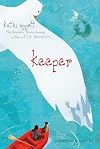
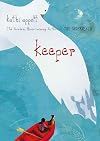
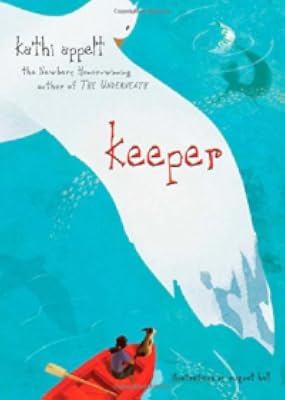
On the night of the blue moon when mermaids are said to gather on a sandbar in the Gulf of Mexico, ten-year-old Keeper sets out in a small boat, with her dog BD and a seagull named Captain, determined to find her mother, a mermaid, as Keeper has always believed, who left long ago to return to the sea.Tags
Recommendations














Member Recommendations
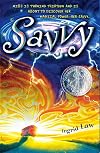
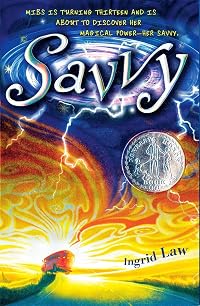
Savvy by Ingrid Law
by kaledrina

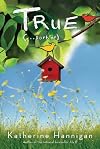
by kaledrina
Member Reviews
Ten crabs work magic on Keeper and turn what should be a perfect blue moon day into a perfect nightmare. Keeper creates the perfect plan for repairing damage. The key is finding her mermaid mother.
Somehow I missed reviewing this marvelous book last season! I love writing in which central metaphors are reinforced by the text structure—that perfect blend of form and style. In this book we have repeated phrases and images returning over and over and over again—just like the tides and the moons that are so central to this story: “Easy peasy,” “If you give a wish…,” “You stupid crabs,” “Questions for the universe.” See also the way the page is formatted on page 337 (or 130 or 173 or 275 or 337). Throughout this novel show more Appelt uses repetition and page layout to reinforce the meaning. Another astonishing notable aspect of this book is its love story between Mr. Beauchamp and Jack in a middle grade book. There is no problem, no repercussions, no judgment—just two boys and then later two old men holding hands. There is no need to justify, there is just a long overdue acknowledgement that love has many forms of expression that are appropriate for a children’s book. Likewise we have Doggie with his dreads (385) and no explanation from Appelt germane to his race. Appelt very subtly shows (without telling) many things in this book. Perhaps my favorite comes at the end. Doggie has been practicing and practicing his two word love song, which he can sing without hesitations, but cannot say. However, when he thinks Keeper may be lost at sea, he is able to shout, without stuttering, very clearly and very emphatically (pp. 371-373). Contrast this with Doggie’s attempt to say Keeper on page 152 and 154. And on page 376 Doggie says clearly and without thinking about talking, “Let’s just wait.” On page 157 we know that Doggie has trouble with words that begin with L. Appelt does not need to mention that on page 371 this is the first time Doggie has not stuttered when he speaks. He does not stutter for the rest of the book and I really appreciate the fact that Appelt does not feel the need to mention whether or not he is cured (because chances are that he stuttered saying his wedding vows). Doggie is Doggie, the man Signe and Keeper love—with his speech impediment, with his hair, with his skin color—just the way he is and it isn’t necessary to highlight these details because what is important is the love he has for Signe and Keeper, the love he has always had. The magical realism works with this story and allows the reader to accept the coincidences of the luck charm and of Jack. It allows space in Keeper’s heart for her mother without painting a rosy picture of the mother. This allows the central theme of “What is family?” to sail more freely. show less
Somehow I missed reviewing this marvelous book last season! I love writing in which central metaphors are reinforced by the text structure—that perfect blend of form and style. In this book we have repeated phrases and images returning over and over and over again—just like the tides and the moons that are so central to this story: “Easy peasy,” “If you give a wish…,” “You stupid crabs,” “Questions for the universe.” See also the way the page is formatted on page 337 (or 130 or 173 or 275 or 337). Throughout this novel show more Appelt uses repetition and page layout to reinforce the meaning. Another astonishing notable aspect of this book is its love story between Mr. Beauchamp and Jack in a middle grade book. There is no problem, no repercussions, no judgment—just two boys and then later two old men holding hands. There is no need to justify, there is just a long overdue acknowledgement that love has many forms of expression that are appropriate for a children’s book. Likewise we have Doggie with his dreads (385) and no explanation from Appelt germane to his race. Appelt very subtly shows (without telling) many things in this book. Perhaps my favorite comes at the end. Doggie has been practicing and practicing his two word love song, which he can sing without hesitations, but cannot say. However, when he thinks Keeper may be lost at sea, he is able to shout, without stuttering, very clearly and very emphatically (pp. 371-373). Contrast this with Doggie’s attempt to say Keeper on page 152 and 154. And on page 376 Doggie says clearly and without thinking about talking, “Let’s just wait.” On page 157 we know that Doggie has trouble with words that begin with L. Appelt does not need to mention that on page 371 this is the first time Doggie has not stuttered when he speaks. He does not stutter for the rest of the book and I really appreciate the fact that Appelt does not feel the need to mention whether or not he is cured (because chances are that he stuttered saying his wedding vows). Doggie is Doggie, the man Signe and Keeper love—with his speech impediment, with his hair, with his skin color—just the way he is and it isn’t necessary to highlight these details because what is important is the love he has for Signe and Keeper, the love he has always had. The magical realism works with this story and allows the reader to accept the coincidences of the luck charm and of Jack. It allows space in Keeper’s heart for her mother without painting a rosy picture of the mother. This allows the central theme of “What is family?” to sail more freely. show less
Before reading this book, I debated as to whether I should read it aloud to my children or if I should read it first to determine the age-appropriateness of the story. I opted for the latter option but knew within the first five chapters that I would be reading this to my daughter and that she would love every minute of it.
On the surface, Keeper has everything that will appeal to children. Animals speak. The main character is a little girl who just wants to find her mother. There is magic and mystery, some tension but nothing too scary. I found myself, at the end of each page, delighting in the charm, envisioning the delight my daughter will get at reading it together.
However, this is not just a story for adults. One of the most show more fascinating aspects of Keeper is the main story told from different points of view - at first the reader only gets Keeper's point of view. As the story progresses, the reader finally gleans the truth as the adults are allowed to tell parts of their stories. In addition, the dual nature of the book trickles down into the messages/lessons to be learned from the story. There is one for children to learn and one for adults to learn, neither of which are preachy or blatant. This cross-over appeal will allow parents and children to both appreciate the story.
In general, Keeper is simply charming. It solves the mystery of the worst day ever in a realistic manner, while keeping some of the mystery of the ocean alive. I cannot wait to read it to my daughter and share this delightful story with her! I anticipate her reactions, her enjoyment, her wonder and amazement at each aspect of the story. I suspect that my daughter will be among many to enjoy this fantastic story from Ms. Appelt. show less
On the surface, Keeper has everything that will appeal to children. Animals speak. The main character is a little girl who just wants to find her mother. There is magic and mystery, some tension but nothing too scary. I found myself, at the end of each page, delighting in the charm, envisioning the delight my daughter will get at reading it together.
However, this is not just a story for adults. One of the most show more fascinating aspects of Keeper is the main story told from different points of view - at first the reader only gets Keeper's point of view. As the story progresses, the reader finally gleans the truth as the adults are allowed to tell parts of their stories. In addition, the dual nature of the book trickles down into the messages/lessons to be learned from the story. There is one for children to learn and one for adults to learn, neither of which are preachy or blatant. This cross-over appeal will allow parents and children to both appreciate the story.
In general, Keeper is simply charming. It solves the mystery of the worst day ever in a realistic manner, while keeping some of the mystery of the ocean alive. I cannot wait to read it to my daughter and share this delightful story with her! I anticipate her reactions, her enjoyment, her wonder and amazement at each aspect of the story. I suspect that my daughter will be among many to enjoy this fantastic story from Ms. Appelt. show less
Keeper is a ten-year old girl living on the edge of the Gulf of Mexico in Texas. Keeper’s mother, Meggie Marie, left her when she was a child so she lives with a young woman named Signe, and her dog named BD (short for Best Dog). Signe tells Keeper that her mother was a mermaid and went back to the sea after Keeper was born. So Keeper grows up believing in mermaids and fairytales and that she’s a special girl with special mermaid abilities.
Next to Keeper and Signe lives Mr. Beauchamp, an old man with a one-eyed cat named Sinbad. Mr. Beauchamp is waiting and wishing and hoping that someday he’ll be reunited with the boy with blue eyes. The boy he met when he was so many years younger. The boy he ran from and could never find show more again.
Down the road from Mr. Beauchamp is Dogie. Dogie runs a surf-board rental shop and Keeper likes to work with him. Dogie is in love with Signe and on the day the book begins, he’s practiced a two-word song that he’s going to sing for Signe that night. Keeper can’t wait for Dogie’s two-word song.
Everything is supposed to go perfectly that night, the night of a blue moon. Signe will make her blue moon gumbo, Mr. Beauchamp’s night flowers will bloom and he’ll be done waiting, and Dogie will sing his two-word song. But Keeper messes it all up. Wracked with guilt Keeper turns to the only person who can help her, her mother, Meggie Marie the mermaid. Desperate to find her mother so she can fix everything, Keeper embarks on an ocean-bound journey and gets swept away into danger and desperation.
Keeper reads as a children’s book should read, simple language, pictures to enhance the imagination, a fun story with adventure and a little girl who doesn’t know better. But underneath the fairytale of talking crabs and seagulls who eat watermelon are adult topics. Unwed mothers who abandon their children, a scary birth scene in the middle of the ocean, age and death, a veteran traumatized from his experience in the war, and love that doesn’t necessarily meet everyone elses expectations. These are real-world scenarios placed in a children’s book and I can’t imagine an eight year old, no matter how mature, understanding some of the more difficult themes.
Another detail that makes Keeper more than a children’s book is the narrative. The storytelling isn’t linear; it doesn’t follow a set arc. We are with Keeper on her journey, and then we flashback to what happened to Signe when she ran away from home, and where Mr. Beauchamp lived when he was younger, and what happened to Dogie to make him stutter the way he does. Beautiful literary themes all of them, but I do caution anyone who wants to get this book for their child that they should expect some question-and-answer sessions to follow.
I loved Keeper for containing the topics it did, for being mature and expecting more from a child reader. For containing hints of Lewis Carroll’s Jabberwocky (Oh frabjous day, calloo callay!). And like Lewis Carroll’s works, I loved it for being a tad dark and ominous. It doesn’t patronize to the younger audience, it exposes the fact that the world we live in is not a fairytale and that’s okay. Through the childlike language is a story about a group of people who care for each other, individually unique humans, tragically brought together, but living happily in the “world unto itself.” show less
Next to Keeper and Signe lives Mr. Beauchamp, an old man with a one-eyed cat named Sinbad. Mr. Beauchamp is waiting and wishing and hoping that someday he’ll be reunited with the boy with blue eyes. The boy he met when he was so many years younger. The boy he ran from and could never find show more again.
Down the road from Mr. Beauchamp is Dogie. Dogie runs a surf-board rental shop and Keeper likes to work with him. Dogie is in love with Signe and on the day the book begins, he’s practiced a two-word song that he’s going to sing for Signe that night. Keeper can’t wait for Dogie’s two-word song.
Everything is supposed to go perfectly that night, the night of a blue moon. Signe will make her blue moon gumbo, Mr. Beauchamp’s night flowers will bloom and he’ll be done waiting, and Dogie will sing his two-word song. But Keeper messes it all up. Wracked with guilt Keeper turns to the only person who can help her, her mother, Meggie Marie the mermaid. Desperate to find her mother so she can fix everything, Keeper embarks on an ocean-bound journey and gets swept away into danger and desperation.
Keeper reads as a children’s book should read, simple language, pictures to enhance the imagination, a fun story with adventure and a little girl who doesn’t know better. But underneath the fairytale of talking crabs and seagulls who eat watermelon are adult topics. Unwed mothers who abandon their children, a scary birth scene in the middle of the ocean, age and death, a veteran traumatized from his experience in the war, and love that doesn’t necessarily meet everyone elses expectations. These are real-world scenarios placed in a children’s book and I can’t imagine an eight year old, no matter how mature, understanding some of the more difficult themes.
Another detail that makes Keeper more than a children’s book is the narrative. The storytelling isn’t linear; it doesn’t follow a set arc. We are with Keeper on her journey, and then we flashback to what happened to Signe when she ran away from home, and where Mr. Beauchamp lived when he was younger, and what happened to Dogie to make him stutter the way he does. Beautiful literary themes all of them, but I do caution anyone who wants to get this book for their child that they should expect some question-and-answer sessions to follow.
I loved Keeper for containing the topics it did, for being mature and expecting more from a child reader. For containing hints of Lewis Carroll’s Jabberwocky (Oh frabjous day, calloo callay!). And like Lewis Carroll’s works, I loved it for being a tad dark and ominous. It doesn’t patronize to the younger audience, it exposes the fact that the world we live in is not a fairytale and that’s okay. Through the childlike language is a story about a group of people who care for each other, individually unique humans, tragically brought together, but living happily in the “world unto itself.” show less
On the night of a blue moon, ten-year-old Keeper sets out to fix a day that should have been perfect but instead went terribly wrong. Set on a sleepy strip of beach on the Texas coast, Keeper is a charming story for younger readers. It is full of magic and mermaids and likable characters, including a couple of dogs, a mysterious cat and a seagull with a heart. It's a book that older elementary school kids will want to read "just one more chapter" on past their bedtime; there is just the right amount of tension to keep the pages turning. It is a lesson in love and families and the consequences of the choices we make in life.
My only complaint is a line on page 205 which states that one of the main characters "would smoke her cigarette, show more the one she allowed herself each night, even though she knew it was bad for her". Really?? It was a line that was unnecessary in a book for fourth or fifth graders. It added nothing to the plot or the character and removing it would have been the wiser course. I'm hoping it didn't make the final cut. If not, a discussion about cigarette usage, no matter how limited, may be warranted.
Other than that, Kathi Appelt's Keeper is a charming book that I truly enjoyed. In fact, I loved it. The copy I read was an arc kindly sent from Simon & Schuster. The release date is May 18. Physically, the arc, at least, was a satisfyingly chunky book, thick and slightly smaller than a trade paperback and, oddly, it just felt good to hold. The book also contains some illustrations and the cover art, especially, is lovely. show less
My only complaint is a line on page 205 which states that one of the main characters "would smoke her cigarette, show more the one she allowed herself each night, even though she knew it was bad for her". Really?? It was a line that was unnecessary in a book for fourth or fifth graders. It added nothing to the plot or the character and removing it would have been the wiser course. I'm hoping it didn't make the final cut. If not, a discussion about cigarette usage, no matter how limited, may be warranted.
Other than that, Kathi Appelt's Keeper is a charming book that I truly enjoyed. In fact, I loved it. The copy I read was an arc kindly sent from Simon & Schuster. The release date is May 18. Physically, the arc, at least, was a satisfyingly chunky book, thick and slightly smaller than a trade paperback and, oddly, it just felt good to hold. The book also contains some illustrations and the cover art, especially, is lovely. show less
I was very much looking forward to reading this book, and it was as wonderful as I had hoped it would be, though not in the way I expected.
I knew it was going to be a story with small events and quiet magic, but at first it looked as if maybe the magic was going to be that grown-up thing that I always hated as a kid: “Oh, the real magic is the beauty of ordinary life, my dear.” Grrr. Yes, okay, ordinary life has magic to it, but sometimes I want more magical magic. And I wanted it for this story, and I feared I wouldn’t get it.
Here’s the thing, though. First, as the author gradually worked in the stories of the people and animals surrounding Keeper (the ten-year-old protagonist), I found myself loving them so powerfully that I show more wasn’t even going to mind about the lack of magic.
And then, there was real magic, after all—magic, connected with love. Wonderful.
But back to those people and animals. What made me love this story with a powerful love was how it showed people and animals coming together to make a family. With the exception of Keeper, none of the people living on Oyster Ridge Road began there. Signe, who has been a mother to Keeper ever since Keeper’s own mother, a mermaid (so Keeper supposes), swam away, hails from Iowa. Dogie, who was left shaken and stuttering after a tour of duty, but who can sing without a catch, accompanying himself on the ukelele, comes from New Jersey. And old, old Mr. Beauchamp comes from France. But together they and their animals (the dogs BD and Too, the seagull Captain, and the one-eyed cat Sinbad) make a family.
So, when Keeper causes a hullabaloo one day, and treasures are broken and hopes dashed, and she feels she had better slip away at night and row to the sandbar to see if she can find her mermaid mother and get some advice on how to fix things—when all that happens—there are a legion of loving people and creatures who want to see her safely home.
I won’t spoil what happens for you. Let the story unfold and see what you think. show less
I knew it was going to be a story with small events and quiet magic, but at first it looked as if maybe the magic was going to be that grown-up thing that I always hated as a kid: “Oh, the real magic is the beauty of ordinary life, my dear.” Grrr. Yes, okay, ordinary life has magic to it, but sometimes I want more magical magic. And I wanted it for this story, and I feared I wouldn’t get it.
Here’s the thing, though. First, as the author gradually worked in the stories of the people and animals surrounding Keeper (the ten-year-old protagonist), I found myself loving them so powerfully that I show more wasn’t even going to mind about the lack of magic.
And then, there was real magic, after all—magic, connected with love. Wonderful.
But back to those people and animals. What made me love this story with a powerful love was how it showed people and animals coming together to make a family. With the exception of Keeper, none of the people living on Oyster Ridge Road began there. Signe, who has been a mother to Keeper ever since Keeper’s own mother, a mermaid (so Keeper supposes), swam away, hails from Iowa. Dogie, who was left shaken and stuttering after a tour of duty, but who can sing without a catch, accompanying himself on the ukelele, comes from New Jersey. And old, old Mr. Beauchamp comes from France. But together they and their animals (the dogs BD and Too, the seagull Captain, and the one-eyed cat Sinbad) make a family.
So, when Keeper causes a hullabaloo one day, and treasures are broken and hopes dashed, and she feels she had better slip away at night and row to the sandbar to see if she can find her mermaid mother and get some advice on how to fix things—when all that happens—there are a legion of loving people and creatures who want to see her safely home.
I won’t spoil what happens for you. Let the story unfold and see what you think. show less
I was very much looking forward to reading this book, and it was as wonderful as I had hoped it would be, though not in the way I expected.
I knew it was going to be a story with small events and quiet magic, but at first it looked as if maybe the magic was going to be that grown-up thing that I always hated as a kid: “Oh, the real magic is the beauty of ordinary life, my dear.” Grrr. Yes, okay, ordinary life has magic to it, but sometimes I want more magical magic. And I wanted it for this story, and I feared I wouldn’t get it.
Here’s the thing, though. First, as the author gradually worked in the stories of the people and animals surrounding Keeper (the ten-year-old protagonist), I found myself loving them so powerfully that I show more wasn’t even going to mind about the lack of magic.
And then, there was real magic, after all—magic, connected with love. Wonderful.
But back to those people and animals. What made me love this story with a powerful love was how it showed people and animals coming together to make a family. With the exception of Keeper, none of the people living on Oyster Ridge Road began there. Signe, who has been a mother to Keeper ever since Keeper’s own mother, a mermaid (so Keeper supposes), swam away, hails from Iowa. Dogie, who was left shaken and stuttering after a tour of duty, but who can sing without a catch, accompanying himself on the ukelele, comes from New Jersey. And old, old Mr. Beauchamp comes from France. But together they and their animals (the dogs BD and Too, the seagull Captain, and the one-eyed cat Sinbad) make a family.
So, when Keeper causes a hullabaloo one day, and treasures are broken and hopes dashed, and she feels she had better slip away at night and row to the sandbar to see if she can find her mermaid mother and get some advice on how to fix things—when all that happens—there are a legion of loving people and creatures who want to see her safely home.
I won’t spoil what happens for you. Let the story unfold and see what you think. show less
I knew it was going to be a story with small events and quiet magic, but at first it looked as if maybe the magic was going to be that grown-up thing that I always hated as a kid: “Oh, the real magic is the beauty of ordinary life, my dear.” Grrr. Yes, okay, ordinary life has magic to it, but sometimes I want more magical magic. And I wanted it for this story, and I feared I wouldn’t get it.
Here’s the thing, though. First, as the author gradually worked in the stories of the people and animals surrounding Keeper (the ten-year-old protagonist), I found myself loving them so powerfully that I show more wasn’t even going to mind about the lack of magic.
And then, there was real magic, after all—magic, connected with love. Wonderful.
But back to those people and animals. What made me love this story with a powerful love was how it showed people and animals coming together to make a family. With the exception of Keeper, none of the people living on Oyster Ridge Road began there. Signe, who has been a mother to Keeper ever since Keeper’s own mother, a mermaid (so Keeper supposes), swam away, hails from Iowa. Dogie, who was left shaken and stuttering after a tour of duty, but who can sing without a catch, accompanying himself on the ukelele, comes from New Jersey. And old, old Mr. Beauchamp comes from France. But together they and their animals (the dogs BD and Too, the seagull Captain, and the one-eyed cat Sinbad) make a family.
So, when Keeper causes a hullabaloo one day, and treasures are broken and hopes dashed, and she feels she had better slip away at night and row to the sandbar to see if she can find her mermaid mother and get some advice on how to fix things—when all that happens—there are a legion of loving people and creatures who want to see her safely home.
I won’t spoil what happens for you. Let the story unfold and see what you think. show less
It was supposed to be a Once in a Blue Moon day. Signe was going to make her famous crab gumbo. Dogie was going to sing his two word song, asking Signe to marry him, without stuttering even once. Mr. Beauchamp was going to sit on his porch with his one-eyed cat, Sinbad, in his lap waiting for his night-blooming cyrus to blossom, which it only did on a blue moon night. Everyone was going to be happy. But that was not to be.
Because, when 10 year old Keeper came into the kitchen and saw the pot of crabs waiting to be put into the gumbo, she swore she heard those crabs call out to her to save them. She could hear them because she knew her mother was part mermaid. Keeper did save the crabs, shuttling them to the pond using Signe’s pot, the show more only souvenir she had from her mother, her favorite pot. But BD, Keeper’s Best Dog, saw Sinbad and ran across the road to Mr. Beauchamp’s, tripping Keeper who dropped the pot, which broke. And in the animal melee the pots in which Mr. Beauchamp kept his flowers, his roses and night-blooming cyruses, were broken. And when Keeper went to tell Dogie that she freed the crabs he so laboriously caught, the ones he woke up at the crack of dawn to catch, his ukulele became another animal casualty, crushed.
So, there was no gumbo and no night-blooming cyruses and no two word song and no perfect once in a blue moon night. All because of the CRABS!!!!
Keeper is a marvelously told tale about a 10 year old girl who learns what family and love are all about. Appelt’s lovely use of words, her descriptive phrases, her poetic tone will make you want to read from start to finish, without putting the book down. Appelt has filled Keeper with wonderful characters: Dogie and Signe, Mr. Beauchamp and most of all, BD and Sinbad and Too (Dogie’s dog) and Captain (the seagull who crashed into Keeper’s kitchen window and became best friends with BD). It has mermaids and manatees and stingrays. The animals are smarter than the humans in this heartwarming story. It has adventure. And it has home.
Keeper is a story for children of all ages. It might even be a book you’ll read more than once. But you’ll have to read it once in order to read it a second time. There’s no time like the present to start Keeper. show less
Because, when 10 year old Keeper came into the kitchen and saw the pot of crabs waiting to be put into the gumbo, she swore she heard those crabs call out to her to save them. She could hear them because she knew her mother was part mermaid. Keeper did save the crabs, shuttling them to the pond using Signe’s pot, the show more only souvenir she had from her mother, her favorite pot. But BD, Keeper’s Best Dog, saw Sinbad and ran across the road to Mr. Beauchamp’s, tripping Keeper who dropped the pot, which broke. And in the animal melee the pots in which Mr. Beauchamp kept his flowers, his roses and night-blooming cyruses, were broken. And when Keeper went to tell Dogie that she freed the crabs he so laboriously caught, the ones he woke up at the crack of dawn to catch, his ukulele became another animal casualty, crushed.
So, there was no gumbo and no night-blooming cyruses and no two word song and no perfect once in a blue moon night. All because of the CRABS!!!!
Keeper is a marvelously told tale about a 10 year old girl who learns what family and love are all about. Appelt’s lovely use of words, her descriptive phrases, her poetic tone will make you want to read from start to finish, without putting the book down. Appelt has filled Keeper with wonderful characters: Dogie and Signe, Mr. Beauchamp and most of all, BD and Sinbad and Too (Dogie’s dog) and Captain (the seagull who crashed into Keeper’s kitchen window and became best friends with BD). It has mermaids and manatees and stingrays. The animals are smarter than the humans in this heartwarming story. It has adventure. And it has home.
Keeper is a story for children of all ages. It might even be a book you’ll read more than once. But you’ll have to read it once in order to read it a second time. There’s no time like the present to start Keeper. show less
Members
- Recently Added By
Lists

Mermen and mermaids -- children's/young adult fiction
16 works; 2 members

Satori Smiles Children's Book List
262 works; 7 members

KayStJ's to-read list
1,616 works; 11 members

Emily Windsnap Readalikes
10 works; 1 member
Author Information

53+ Works 8,381 Members
Kathi Appelt is the author of many picture books, as well as several books for older readers, including Kissing Tennessee: And Other Stories from the Stardust Dance, chosen as a Best Book for Young Adults by the American Library Association. A graduate of Texas A&M University, Kathi teaches writing to both children and adults. She lives in College show more Station, Texas, with her husband and their two sons show less
Awards and Honors
Common Knowledge
- People/Characters
- Keeper; Signe; Dogie; Henri Beauchamp; BD (Best Dog); Captain (show all 9); Sinbad; Too; Jacques de Mer
- Important places
- Tater, Texas, USA
- Epigraph
- "I have heard the mermaids singing, each to each
I do not think they will sing for me."
--T.S. Eliot
"The Love Song of J. Alfred Prufrock" - Dedication
- For Rose and TA, Merfolk
- First words
- Keeper leaned over the edge of the boat.
Classifications
- Genres
- Kids, Tween, Fiction and Literature
- DDC/MDS
- 820 — Literature & rhetoric English & Old English literatures English and Old English (Anglo-Saxon) literatures
- LCC
- PZ7 .A6455 .K — Language and Literature Fiction and juvenile belles lettres Fiction and juvenile belles lettres Juvenile belles lettres
- BISAC
Statistics
- Members
- 491
- Popularity
- 61,520
- Reviews
- 45
- Rating
- (3.84)
- Languages
- English
- Media
- Paper, Audiobook, Ebook
- ISBNs
- 11
- ASINs
- 4