On This Page
Description
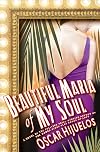
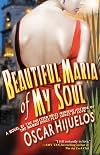
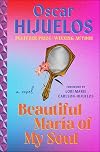
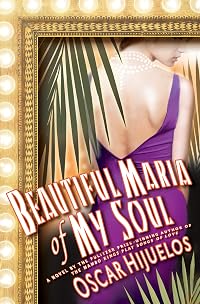
In a part sequel and part retelling of "The Mambo Kings Play Songs of Love," the inspiration for the Mambo King's biggest hit, Maria, now 60 years old, reminisces about her days and nights in Havana, offering a completely different perspective on the Mambo Kings' story.Tags
Recommendations














Member Reviews
In Oscar Hijuelos’ Pulitzer Prize winning novel [The Mambo Kings Play Songs of Love], Maria Garcia is a haunting obsession for Nestor Castillo. The loss of Maria’s love darkens his life near to the point of hopelessness. In his malaise, he compulsively writes and re-writes a bolero, or cancion, inspired by the torment and ecstasy that entered his life with Maria and the sadness of her final, bitter goodbye.
In the newest story from Hijuelos, [Beautiful Maria of My Soul], he returns to Cuba to give full voice to Maria and her story. The book begins with her journey out of a humble, rural valle for the bright lights and endless opportunities of Havana. With no money and no skills, Maria soon begins dancing in seedy clubs to trade on show more the only thing she thinks she possesses of any value, her beauty. After dancing and modeling her way to the top of the Havana night club scene, and falling in with a gangster boyfriend, she meets Nestor. Her love affair with Nestor, as told from her side this time, is more heart-breaking for its complexity of feeling. In the original story, Maria was a mysterious and maddening presence in Nestor’s life, unknowable and ruthless when she casting off a sweet, simple love. In her own re-telling of the story, Maria is confused and frightened. For all of her beauty and sexual power over men, she has great difficulty separating the look of true love in a man from obsession or manipulation, and even less of an understanding for her emotions.
The same over-the-top sexual escapades are on exhibit here, just as they were in the original [Mambo Kings]. But this time, Hijuelos softens his pulpish, unrealistic descriptions in the cast of characters. There are more naturally defined people here, more people who feel like they might exist somewhere outside of an alcohol-fueled, ego-puffed reminiscence. Maria’s daughter, Teresita, named for a sister she lost to epilepsy as a child, is the most real and interesting character of all of them. Without the pin-up-type looks and sensibilities of her mother, her earthy beauty is defined more by intelligence and character and natural appearance. With Teresita’s arrival in the last section of the book, Hijuelos gives rein to an honest realism that, for me, was the only missing ingredient in the Mambo Kings’ story.
Hijuelos success with [Beautiful Maria of My Soul] is that he was able to create a stand alone story while still elaborating on his earlier story in an interesting and creative way, much like a jazz song’s riffs are improvised from a central theme of a few notes.
4 bones!!!! show less
In the newest story from Hijuelos, [Beautiful Maria of My Soul], he returns to Cuba to give full voice to Maria and her story. The book begins with her journey out of a humble, rural valle for the bright lights and endless opportunities of Havana. With no money and no skills, Maria soon begins dancing in seedy clubs to trade on show more the only thing she thinks she possesses of any value, her beauty. After dancing and modeling her way to the top of the Havana night club scene, and falling in with a gangster boyfriend, she meets Nestor. Her love affair with Nestor, as told from her side this time, is more heart-breaking for its complexity of feeling. In the original story, Maria was a mysterious and maddening presence in Nestor’s life, unknowable and ruthless when she casting off a sweet, simple love. In her own re-telling of the story, Maria is confused and frightened. For all of her beauty and sexual power over men, she has great difficulty separating the look of true love in a man from obsession or manipulation, and even less of an understanding for her emotions.
The same over-the-top sexual escapades are on exhibit here, just as they were in the original [Mambo Kings]. But this time, Hijuelos softens his pulpish, unrealistic descriptions in the cast of characters. There are more naturally defined people here, more people who feel like they might exist somewhere outside of an alcohol-fueled, ego-puffed reminiscence. Maria’s daughter, Teresita, named for a sister she lost to epilepsy as a child, is the most real and interesting character of all of them. Without the pin-up-type looks and sensibilities of her mother, her earthy beauty is defined more by intelligence and character and natural appearance. With Teresita’s arrival in the last section of the book, Hijuelos gives rein to an honest realism that, for me, was the only missing ingredient in the Mambo Kings’ story.
Hijuelos success with [Beautiful Maria of My Soul] is that he was able to create a stand alone story while still elaborating on his earlier story in an interesting and creative way, much like a jazz song’s riffs are improvised from a central theme of a few notes.
4 bones!!!! show less
 This review was written for LibraryThing Early Reviewers.
God, this was dreadful. The only way this book could have been more a straight male fantasy is if it had been narrated by a penis—and believe me, there enough descriptions of improbably huge penises in Beautiful María of my Soul that such a narrative device wouldn't have been an enormous stretch. The protagonist, María, is a man's bland idea of a beautiful woman; I never believed in her as a real person. Her great love affair with Nestor seems to be based mostly on the fact that they're both good looking and he has an enormous penis—and this sexist pap carries on for 300 pages.
The prose is also pretty terrible. Hijuelos seems to think that peppering his prose with italicised words in Spanish every other sentence is a good show more alternative to actually creating atmosphere and texture. Some words are not translatable into English, true, but Hijuelos delights in things like having his characters say "Muy bien. Very good," when they are ostensibly speaking Spanish all the time.
The final straw was the ending, in which the author inserts himself as a character (polite and modest and self-effacing!) who helps to tie up the last few strands of the narrative. It read as obnoxious. Really, really not recommended. show less
The prose is also pretty terrible. Hijuelos seems to think that peppering his prose with italicised words in Spanish every other sentence is a good show more alternative to actually creating atmosphere and texture. Some words are not translatable into English, true, but Hijuelos delights in things like having his characters say "Muy bien. Very good," when they are ostensibly speaking Spanish all the time.
The final straw was the ending, in which the author inserts himself as a character (polite and modest and self-effacing!) who helps to tie up the last few strands of the narrative. It read as obnoxious. Really, really not recommended. show less
This review was written for LibraryThing Early Reviewers.Maria Garcia y Cifuentes, the muse who inspired so much passion, longing and music in The Mambo Kings Play Songs of Love, returns as the center of attention in Oscar Hijuelos’ extension and re-telling of the Mambo Kings story. Set in both pre-revolution Cuba and the United States, the novel traces Maria’s fifty-year journey from her humble origins in the Cuban countryside to her rise as a notable figure in Havana’s night club scene to her two trips—and eventual self-imposed exile—to America. Much of the story involves Maria’s attempt to find a balance between her passions and her need for comfort and security, an issue she struggles with throughout her life. In the process of telling her story, the author introduces the show more reader to a dizzying array of real and imagined supporting characters and some of the most lasciviously extravagant language I have come across in quite some time.
I am really torn in my feelings about this book. At its best, the novel does a wonderful job recreating the intoxicating atmosphere and rhythms of daily life in Havana during the years before Castro assumed control of the country. These descriptions were moving and very evocative; collectively, they amount to nothing short of a paean and love letter to the spirit and resilience of the Cuban people in that long-gone time and place. Also, the relatively brief section describing the period that Cesar and Nestor Castillo—Los Reyes del Mambo themselves—spent in New York and their rise to fame was engaging and a great reminder of what made their original story so deservedly popular in the first place.
On the other hand, what did not work nearly as well was the chronicle of Maria’s life, which, of course, is the main point of this book. Simply put, this woman is neither interesting nor particularly likeable. Hijuelos spends so much time convincing us that “Beautiful Maria” is really, truly beautiful—he seldom lets a page go by without reminding us of that fact—that her character becomes flat and one-dimensional. He seems to want us to believe that Maria is a complex, sympathetic person who has survived life in a heroic fashion, but what we ultimately get is a portrait of someone who merely learns to trade her looks in order to improve her economic status. Even her great on-again, off-again love affair with Nestor seems to have little basis other than their mutual obsession with her looks and the size of his “pinga” (which, by the way, is described in lurid detail throughout the book). That this brief, physically motivated affair could so profoundly influence the actions of the protagonists over the next forty years is implausible, to say the least.
This novel, then, is one of contrasts: it is at once a lovingly rendered portrait of an era that is rapidly receding from our memory as well as a rather pedestrian account of a woman the reader never learns to care much about. I can recommend reading it—Hijuelos is certainly a talented enough writer that it is unlikely you will be bored, even in the most repetitive passages—but unfortunately that recommendation is not without significant reservations. show less
I am really torn in my feelings about this book. At its best, the novel does a wonderful job recreating the intoxicating atmosphere and rhythms of daily life in Havana during the years before Castro assumed control of the country. These descriptions were moving and very evocative; collectively, they amount to nothing short of a paean and love letter to the spirit and resilience of the Cuban people in that long-gone time and place. Also, the relatively brief section describing the period that Cesar and Nestor Castillo—Los Reyes del Mambo themselves—spent in New York and their rise to fame was engaging and a great reminder of what made their original story so deservedly popular in the first place.
On the other hand, what did not work nearly as well was the chronicle of Maria’s life, which, of course, is the main point of this book. Simply put, this woman is neither interesting nor particularly likeable. Hijuelos spends so much time convincing us that “Beautiful Maria” is really, truly beautiful—he seldom lets a page go by without reminding us of that fact—that her character becomes flat and one-dimensional. He seems to want us to believe that Maria is a complex, sympathetic person who has survived life in a heroic fashion, but what we ultimately get is a portrait of someone who merely learns to trade her looks in order to improve her economic status. Even her great on-again, off-again love affair with Nestor seems to have little basis other than their mutual obsession with her looks and the size of his “pinga” (which, by the way, is described in lurid detail throughout the book). That this brief, physically motivated affair could so profoundly influence the actions of the protagonists over the next forty years is implausible, to say the least.
This novel, then, is one of contrasts: it is at once a lovingly rendered portrait of an era that is rapidly receding from our memory as well as a rather pedestrian account of a woman the reader never learns to care much about. I can recommend reading it—Hijuelos is certainly a talented enough writer that it is unlikely you will be bored, even in the most repetitive passages—but unfortunately that recommendation is not without significant reservations. show less
This review was written for LibraryThing Early Reviewers.Having heard about but not read Mambo Kings, I looked forward to reading this new novel by award-winning Hijuelos. Words cannot adequately describe my disappointment in and dislike for this novel. I disliked so much of it that only my obsessive compulsion to finish a task made throwing it under the bed impossible. What irritated me the most was the interminable, yet random, translations of Spanish words and phrases into English. Does the reader need "muy bien" translated? While some ideas may need the Spanish to enrich the English prose for the Spanish speaking reader, very rarely is this the case. The Spanish interspersed throughout every page seems awkward, unnecessary, superficial, an attempt to add international flair to a story show more without meaning.
Second in annoyance power is the continual mention of Maria's physical attributes. By the third page, I understood that Maria was beautiful, volupturous, unbelievably sexy. His repetitious descriptions of Maria's body parts irritated me to the point of distraction. How often must I read about huge breasts? How often must I read about how men stare, whistle, call out, stop her because of her overwhelming beauty in face and form? Has Maria no other value than as a sex object?
Should the reader be warned that Beautiful Maria of My Soul could have been titled more realistically? Where is the soul or the mind the focus? Hijuelos' graphic descriptions of Maria's sexual encounters made me extremely uncomfortable. Although I enjoy romantic scenes if done tastefully, these are as close to gutter pornography as a reader could find in literature.
Maybe his characterization could have saved the novel, but Ignacio, Nestor, Maria do not appear real or likeable. I might have liked Teresita, but she is so briefly sketched, I never knew enough about her. Actually, by the time Teresita enters, I no longer cared about any of them. Nestor's death, Ignacio's sudden disappearance, Gustavo's death made as little impression on me as they did on Maria.
Were I to sketch the plot's outline, it would seem to be the foundation for a good story. After all, the story takes place in Havana and moves on to Miami during politically exciting times, but Hijuelos decides to focus on Maria's beauty, her sexual exploits, her shallow soul and little else. The best part of the book was the last page, and I doubt I need to explain why. Life is too short to waste even a few hours reading this book. show less
Second in annoyance power is the continual mention of Maria's physical attributes. By the third page, I understood that Maria was beautiful, volupturous, unbelievably sexy. His repetitious descriptions of Maria's body parts irritated me to the point of distraction. How often must I read about huge breasts? How often must I read about how men stare, whistle, call out, stop her because of her overwhelming beauty in face and form? Has Maria no other value than as a sex object?
Should the reader be warned that Beautiful Maria of My Soul could have been titled more realistically? Where is the soul or the mind the focus? Hijuelos' graphic descriptions of Maria's sexual encounters made me extremely uncomfortable. Although I enjoy romantic scenes if done tastefully, these are as close to gutter pornography as a reader could find in literature.
Maybe his characterization could have saved the novel, but Ignacio, Nestor, Maria do not appear real or likeable. I might have liked Teresita, but she is so briefly sketched, I never knew enough about her. Actually, by the time Teresita enters, I no longer cared about any of them. Nestor's death, Ignacio's sudden disappearance, Gustavo's death made as little impression on me as they did on Maria.
Were I to sketch the plot's outline, it would seem to be the foundation for a good story. After all, the story takes place in Havana and moves on to Miami during politically exciting times, but Hijuelos decides to focus on Maria's beauty, her sexual exploits, her shallow soul and little else. The best part of the book was the last page, and I doubt I need to explain why. Life is too short to waste even a few hours reading this book. show less
This review was written for LibraryThing Early Reviewers.To readers of Oscar Hijeulos’s Pulitzer prize-winning book The Mambo Kings Play Songs of Love, Maria Garcia y Cifuentes is the beautiful, heartless Cuban woman who stole—then broke—Nestor Castillo’s heart, inspiring the band’s greatest hit, “Beautiful Maria of My Soul.” But Maria has her own story and her own heartbreaks as well. From the green hills of the Cuban countryside, to the hot and seedy glamour of Havana, and finally to life as an ex-pat in Miami, Maria’s life encompasses so much more than a song.
There is a power that comes with great beauty—but the beautiful person does not always control that power, or what it does to other people. Maria sees her looks as much a curse as a blessing: the sudden blossoming of show more her figure marked the end of the happy days of her girlhood—the days before her sister, Teresa, or her mother were ill, before men started paying the wrong kids of attention to her. Her beauty got in the way of her doing ordinary work (cleaning, sewing, wrapping cigars) “because.. those establishments were managed by men who wanted something more than her labors.” In her early days trying to work as a dancer, she fended off nightclub owners by crying, pleading piety, or even faking an epileptic seizure. Among the blessings of her beauty, though: her modeling jobs; Ignacio, who, of he wasn’t the man of her dreams, at least took care of her; and Nestor.
Nestor Castillo: the young, ardent musician. Maria Garcia: the beautiful, sensual woman. Did they love each other? They had an unstoppable chemistry, certainly: a level of physical attraction that strikes like lightning. But Nestor was infatuated with the *idea* of Maria more than the woman herself; and Maria was too pragmatic to lose herself in love at the time. Only in retrospect did she think she loved him; and their disastrous rendezvous in New York made it clear that she, too, was in love with an idea: the memory of their wild, youthful passion.
It is only her sister, Teresa, Maria truly loves, and there is so much pain in that love—the seizures, force-feeding her the medication to control them, administering the whipping for raising her skirts to a common worker, and Teresa’s subsequent death—that I don’t think Maria ever really recovers. Although Maria names her much longed-for daughter Teresita, the love between them is not the joyful bond Maria had hoped for: her daughter inherited Ignacio’s brains, but also his looks, so Maria is both proud of her daughter the doctor, and slightly ashamed of her daughter the spinster.
It is only later in life, in Miami, with Omar her cat, and Luis, her sweet and homely writing teacher, and her “versitos” of Cuba, that Maria finds the contentment that had so long eluded her: “mostly listening to each other’s verses, which, as it turned out, were nothing more than songs of love.” In a way, the songs of love they all write—Nestor, Luis, Maria, and Oscar Hijuelos himself—are love songs for Cuba.
“They write about street life in Havana, with it singing vendors, and of their small towns in the provinces, or some colorful fulano they knew…or the sea, the siren songs they heard as echoes in conch shells found on a beach…of el campo, with its blossomed air after a rainfall, of the mists rising along the ridged foothills of the Escambray mountains, and the stars that rose, one by one, like diamonds over that horizon…”
Yes: nothing more—or less—than songs of love. show less
There is a power that comes with great beauty—but the beautiful person does not always control that power, or what it does to other people. Maria sees her looks as much a curse as a blessing: the sudden blossoming of show more her figure marked the end of the happy days of her girlhood—the days before her sister, Teresa, or her mother were ill, before men started paying the wrong kids of attention to her. Her beauty got in the way of her doing ordinary work (cleaning, sewing, wrapping cigars) “because.. those establishments were managed by men who wanted something more than her labors.” In her early days trying to work as a dancer, she fended off nightclub owners by crying, pleading piety, or even faking an epileptic seizure. Among the blessings of her beauty, though: her modeling jobs; Ignacio, who, of he wasn’t the man of her dreams, at least took care of her; and Nestor.
Nestor Castillo: the young, ardent musician. Maria Garcia: the beautiful, sensual woman. Did they love each other? They had an unstoppable chemistry, certainly: a level of physical attraction that strikes like lightning. But Nestor was infatuated with the *idea* of Maria more than the woman herself; and Maria was too pragmatic to lose herself in love at the time. Only in retrospect did she think she loved him; and their disastrous rendezvous in New York made it clear that she, too, was in love with an idea: the memory of their wild, youthful passion.
It is only her sister, Teresa, Maria truly loves, and there is so much pain in that love—the seizures, force-feeding her the medication to control them, administering the whipping for raising her skirts to a common worker, and Teresa’s subsequent death—that I don’t think Maria ever really recovers. Although Maria names her much longed-for daughter Teresita, the love between them is not the joyful bond Maria had hoped for: her daughter inherited Ignacio’s brains, but also his looks, so Maria is both proud of her daughter the doctor, and slightly ashamed of her daughter the spinster.
It is only later in life, in Miami, with Omar her cat, and Luis, her sweet and homely writing teacher, and her “versitos” of Cuba, that Maria finds the contentment that had so long eluded her: “mostly listening to each other’s verses, which, as it turned out, were nothing more than songs of love.” In a way, the songs of love they all write—Nestor, Luis, Maria, and Oscar Hijuelos himself—are love songs for Cuba.
“They write about street life in Havana, with it singing vendors, and of their small towns in the provinces, or some colorful fulano they knew…or the sea, the siren songs they heard as echoes in conch shells found on a beach…of el campo, with its blossomed air after a rainfall, of the mists rising along the ridged foothills of the Escambray mountains, and the stars that rose, one by one, like diamonds over that horizon…”
Yes: nothing more—or less—than songs of love. show less
This review was written for LibraryThing Early Reviewers.Oscar Hijuelos’ 1988 novel, The Mambo Kings Play Songs of Love is understandably a critically acclaimed and award-winning work of breadth and depth; of passion, compassion and empathy; and of growth and maturing. Mambo Kings follows its characters through the multiple, interwoven arcs of their lives, with “cameo appearances” crafted from, and in tune with, those characters’ time and place. Within the context of its Cuban-American ethnicity – of whole families and friends moving to the U.S. for better lives, or to escape (or avoid) Castro’s Cuba, trying to build new “American Dream” lives together in a strange land – Mambo Kings reaches far and accomplishes much of its aim. Yet Mambo Kings also manages to develop each show more of its principal characters in individual portraits, each with his or her own hopes and dreams, and sadness, disappointments or regrets. The novel’s framework of flashbacks and recollections of one character lends coherence to the whole, with strong flavors of Cesar Castillo’s exuberant youth and melancholy old age.
Beautiful Maria of My Soul is Hijuelos’ 2010 follow-up to Mambo Kings, which ultimately succeeds in its own right, albeit with a very different framework and focus. In developing “the rest of the story,” Beautiful Maria tells of much the same communities, the same historic context, even some of the same characters. The later novel’s scope, however, is considerably smaller: where Mambo Kings gives us breadth and depth, in sweeping arcs, flashbacks and recall, Beautiful Maria offers a slow, steady progression of time and events, full of the hopes and fears, and recurring losses, worries and griefs, of a simple – at times, even shallow – country girl, making what she can of her life with limited resources and fewer prospects. In some ways, Maria’s path seems pedestrian or predictable; but therein lies a truth born of her story's realism. Despite the aura of mystery surrounding her in Mambo Kings, and her compelling presence (even in absence) throughout that earlier work, the Maria of Beautiful Maria is no Cinderella. Any reader who approaches her story with false expectations of more Mambo Kings will likely be disappointed.
These novels are bookends of sorts, each standing on its own, but each also inevitably, inherently and inextricably connected to the other, just as Maria’s and Nestor’s love and fates are intertwined. Between them, Hijuelos has given us not one, but two novels, which – for all their similarities and differences – together offer divergent, yet complimentary views of a larger tale.
And the final, post-modern twist at the end of Beautiful Maria (no spoilers!) ultimately has a feeling of fun, a light-hearted bonus or lagniappe, like dessert at the end of a feast. show less
Beautiful Maria of My Soul is Hijuelos’ 2010 follow-up to Mambo Kings, which ultimately succeeds in its own right, albeit with a very different framework and focus. In developing “the rest of the story,” Beautiful Maria tells of much the same communities, the same historic context, even some of the same characters. The later novel’s scope, however, is considerably smaller: where Mambo Kings gives us breadth and depth, in sweeping arcs, flashbacks and recall, Beautiful Maria offers a slow, steady progression of time and events, full of the hopes and fears, and recurring losses, worries and griefs, of a simple – at times, even shallow – country girl, making what she can of her life with limited resources and fewer prospects. In some ways, Maria’s path seems pedestrian or predictable; but therein lies a truth born of her story's realism. Despite the aura of mystery surrounding her in Mambo Kings, and her compelling presence (even in absence) throughout that earlier work, the Maria of Beautiful Maria is no Cinderella. Any reader who approaches her story with false expectations of more Mambo Kings will likely be disappointed.
These novels are bookends of sorts, each standing on its own, but each also inevitably, inherently and inextricably connected to the other, just as Maria’s and Nestor’s love and fates are intertwined. Between them, Hijuelos has given us not one, but two novels, which – for all their similarities and differences – together offer divergent, yet complimentary views of a larger tale.
And the final, post-modern twist at the end of Beautiful Maria (no spoilers!) ultimately has a feeling of fun, a light-hearted bonus or lagniappe, like dessert at the end of a feast. show less
This review was written for LibraryThing Early Reviewers.This book was quite a ride. I hesitate to write much here and risk giving anything away that might deny someone else the pleasure this work afforded me.
“Beautiful Maria” is eminently readable but will, I believe, be most fully appreciated by those who have already read "The Mambo Kings Play Songs of Love". (If you haven’t, what are you waiting for?)
This work is an examination of choices, regrets, and “what ifs”, but it's by no means a downer. Maria's take on life is pragmatic and earthy, and as much as she revisits her past, she is constantly looking toward the future.
The novel isn’t perfect, but it’s surprisingly endearing and so shockingly and enormously clever that it was ultimately a very satisfying read.
“Beautiful Maria” is eminently readable but will, I believe, be most fully appreciated by those who have already read "The Mambo Kings Play Songs of Love". (If you haven’t, what are you waiting for?)
This work is an examination of choices, regrets, and “what ifs”, but it's by no means a downer. Maria's take on life is pragmatic and earthy, and as much as she revisits her past, she is constantly looking toward the future.
The novel isn’t perfect, but it’s surprisingly endearing and so shockingly and enormously clever that it was ultimately a very satisfying read.
This review was written for LibraryThing Early Reviewers.Members
- Recently Added By
Author Information

16+ Works 4,863 Members
Óscar Jerome Hijuelos was born in Manhattan, New York on August 24, 1951 to Cuban immigrant parents. He received a bachelor's degree and a master of fine arts degree from City College. His first novel, Our House in the Last World, was published in 1983 and won the Rome Prize of the American Academy of Arts and Letters. His other works include The show more Fourteen Sisters of Emilio Montez O'Brien, Mr. Ives' Christmas, Empress of the Splendid Season, A Simple Habana Melody (From When the World was Good), Beautiful Maria of My Soul, Another Spaniard in the Works, and Twain and Stanley Enter Paradise. His novel, The Mambo Kings Play Songs of Love, won the 1990 Pulitzer Prize for fiction and was made into a 1992 movie starring Armand Assante and Antonio Banderas. He also wrote a young adult novel entitled Dark Dude and a memoir entitled Thoughts Without Cigarettes. In 2000, he received the Hispanic Heritage Award for Literature. He died after collapsing with a heart attack while playing tennis on October 12, 2013 at age 62. (Bowker Author Biography) show less
Some Editions
Awards and Honors
Series

Common Knowledge
- Original publication date
- 2010-06
- People/Characters
- Maria Garcia y Cifuentes; Nestor Castillo; Ignacio [Beautiful Maria]
- Important places
- Havana, Cuba; Miami, Florida, USA; New York, New York, USA; Cuba
- Important events
- Cuban Revolution
- Related movies
- The Mambo Kings (1992 | IMDb)
- Dedication
- in memory of August Wilson and Guillermo Cabrera Infante
- First words
- Over forty years before, when Nestor Castillo's future love, one Maria Garcia y Cifuentes, left her beloved valle in the far west of Cuba, she could have gone to the provincial capital of Pinar del Rio, where her prospects fo... (show all)r finding work might be as good-or bad- as in any place....
- Last words
- (Click to show. Warning: May contain spoilers.)She and Luis became a sacrosanct couple, fornicating occasionally and mostly listening to each other's verses, which, as it turned out, were nothing more than the songs of love.
Classifications
Statistics
- Members
- 322
- Popularity
- 99,367
- Reviews
- 73
- Rating
- (3.21)
- Languages
- 5 — Dutch, English, Finnish, Norwegian (Bokmål), Spanish
- Media
- Paper, Audiobook, Ebook
- ISBNs
- 18
- ASINs
- 8