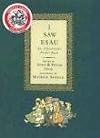
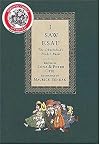
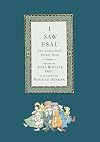
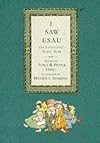
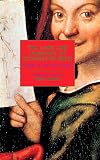
I Saw Esau: The Schoolchild's Pocket Book
by Iona Opie (Editor), Peter Opie (Editor), Maurice Sendak (Illustrator)
On This Page
Description
A collection of rhymes and riddles traditionally passed on orally from child to child.Tags
Recommendations















Member Recommendations
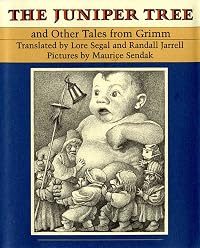
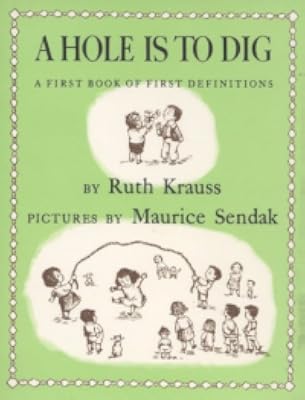
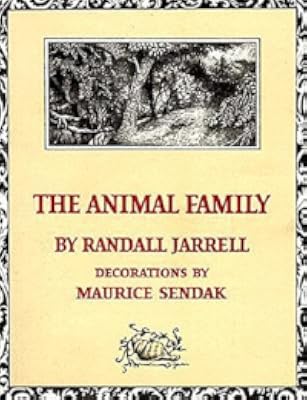
waltzmn The works of the Opies are largely devoted to the folklore of young people. I Saw Esau is one of their less formal collections. The Lore and Language... puts much of this information on a more scholarly footing.

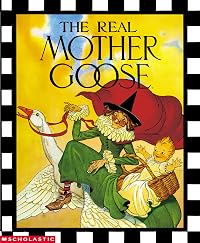
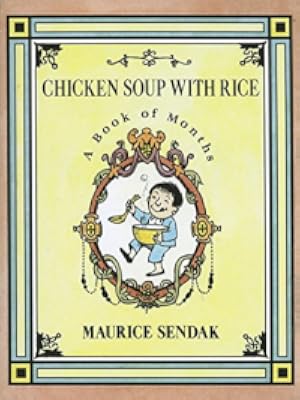
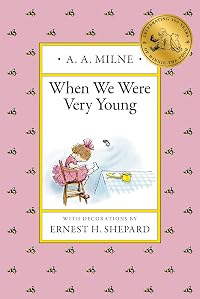
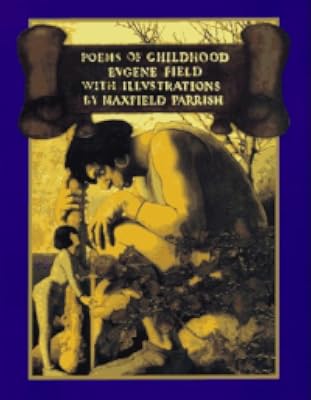
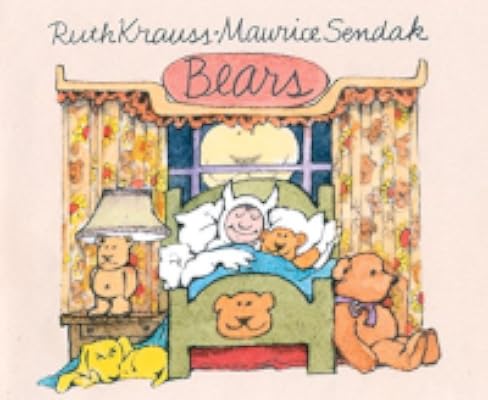
nessreader The verse in both these collections is more of the playground chant type, rhythmic and earthy, than the standard Mother Goose as-told-by-your-parent (I recognised only the janey mack rhyme, from Dublin, in tail feathers) Tail Feathers, by the way, has a different artist for each double page spread.
Member Reviews
A collection of children's rhymes, first collected in England in 1946, including things like taunts and insults, riddles, skipping rhymes, and mocking verses about schoolwork. Most of them probably aren't exactly the sort of thing you'd find in Mother Goose.
The rhymes themselves are mildly interesting, sometimes vaguely amusing, and often (from the perspective of a 21st century American) entertainingly quaint-feeling in their language. There are a few brief notes on a number of them in the back -- something I wish I'd realized while I was reading through them -- but not enough to make this feel more like a work of scholarship than a collection of amusements.
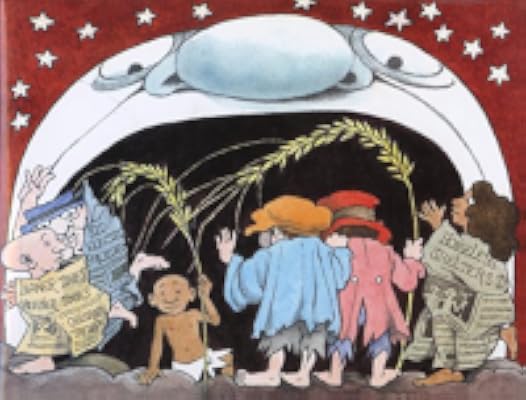
It would all be diverting for a few minutes and then pretty quickly forgettable, show more I think, except that this edition, from 1992, also includes some delightfully offbeat (indeed, sometimes charmingly grotesque) illustrations by Maurice Sendak. show less
The rhymes themselves are mildly interesting, sometimes vaguely amusing, and often (from the perspective of a 21st century American) entertainingly quaint-feeling in their language. There are a few brief notes on a number of them in the back -- something I wish I'd realized while I was reading through them -- but not enough to make this feel more like a work of scholarship than a collection of amusements.
It would all be diverting for a few minutes and then pretty quickly forgettable, show more I think, except that this edition, from 1992, also includes some delightfully offbeat (indeed, sometimes charmingly grotesque) illustrations by Maurice Sendak. show less
This is a lovely little book, full of lovely little illustrations!
It's based on a collection of rhymes first put together in the 1940s in England, though, and it's quite easy to tell - the rhymes are very British, and noticeably dated. And there's nothing wrong with that, but the book markets itself as universal rather than situating the rhymes in their context, as if mid-20th-century British *is* the universal, which bothers me a little.
On a similar tune, the notes in the back for each rhyme are nice, but I could wish for something more extensive, as many of these rhymes have a lot of regional variations, and a lot of interesting folk etymology, behind them. And I could wish for better indexing (or, actually, any indexing at all.) show more That's mostly me wishing this was a different book than it is, though. What it is, is a lovely little jewel of a pocket-book. show less
It's based on a collection of rhymes first put together in the 1940s in England, though, and it's quite easy to tell - the rhymes are very British, and noticeably dated. And there's nothing wrong with that, but the book markets itself as universal rather than situating the rhymes in their context, as if mid-20th-century British *is* the universal, which bothers me a little.
On a similar tune, the notes in the back for each rhyme are nice, but I could wish for something more extensive, as many of these rhymes have a lot of regional variations, and a lot of interesting folk etymology, behind them. And I could wish for better indexing (or, actually, any indexing at all.) show more That's mostly me wishing this was a different book than it is, though. What it is, is a lovely little jewel of a pocket-book. show less
I can't decide which I love more about this book, the rebellious creative rhymes that stay with you all day or the beautifully compatible illustrations. Either way, this is also an old favorite that I delighted in revisiting. What a wonderful way to introduce older children to the fact that poetry can be "cool".
Sendak's unique style brings these historical childhood rhymes to life through illustration. Peter and Iona Opie spent a lifetime studying and collecting such rhymes, and we all benefit from this carrying forward of this British oral tradition.
This hardcover, with notes, looks scholarly - and is. However, if it were presented in a cheap mm Scholastic pb, children could also appreciate it. It's actually quite fun!
I bought this in Halifax at one of the world's best kids book store just after my daughter was born. Her special Aunt Betty came out for a visit just after, and loved the book so much that we got a second copy. Sendak has a special magic that can always fix anything, whether you're 2, 22, or 102.
No collection of humorous children's verse would be complete without this anthology of amusingly-illustrated absurdity.
Members
- Recently Added By
Lists

Brilliant poetry collections for kids
51 works; 18 members

Banned Books Week 2014
268 works; 62 members

B-B to Get
131 works; 1 member
Author Information

Iona Margaret Opie was born on October 13, 1923. During World War II, she made meteorological maps in the Women's Auxiliary Air Force. She married Peter Opie in 1943. Together they collected children's rhymes, riddles, and street culture. Their books included I Saw Esau, The Oxford Dictionary of Nursery Rhymes, The Oxford Nursery Rhyme Book, The show more Lore and Language of Schoolchildren, Children's Games in Street and Playground, and The Classic Fairy Tales. After her husband's death in 1982, she continued the work alone. Her books included The People in the Playground, Tail Feathers from Mother Goose, Here Comes Mother Goose, A Dictionary of Superstitions, and Children's Games with Things. Her son Robert collaborated with her on The Treasures of Childhood. She was made CBE in 1999. She died on October 23, 2017 at the age of 94. (Bowker Author Biography) show less


Maurice Sendak was born on June 10, 1928 in Brooklyn, New York. While in high school, he worked part time as an illustrator for All-American Comics adapting the Mutt and Jeff newspaper comic strip to a comic book format. His first professional illustrations were for a physics textbook, Atomics for the Millions, published in 1947. He later worked show more as a window-display director for F.A.O. Schwartz while attending night school at the Art Students League. In 1950, he illustrated his first children's book The Wonderful Farm by Marcel Aymé. He wrote his first children's book Kenny's Window in 1956 and went on to become a prolific author-illustrator. His works include Chicken Soup with Rice; In the Night Kitchen; Outside Over There; Higglety Pigglety Pop; The Sign on Rosie's Door; We Are All in the Dumps with Jack and Guy; Brundibar; Bumble Ardy; and My Brother's Book. He received numerous awards including the Caldecott medal for Where The Wild Things Are in 1964, the Hans Christian Andersen International Medal in 1970, the Laura Ingalls Wilder Award, and the National Medal of Arts in 1996. Characters from two of his books were the basis of an animated television special, Really Rosie, which first aired in 1975. He was also the set designer and lyricist for a subsequent off-Broadway musical of the same title. He was the lyricist, as well as the set and costume designer, for the original production of an opera based on Where The Wild Things Are in 1980. In addition, he has designed sets and costumes for performances of operas by Mozart, Prokofiev, and other classical composers. He died due to complications from a recent stroke on May 8, 2012 at the age of 83. (Bowker Author Biography) show less
Awards and Honors
Awards
Notable Lists
Common Knowledge
- Original publication date
- 1992
- People/Characters
- Thomas a Didymus [Thomas the Apostle]
- Dedication
- To W. B.
for twenty-four
good reasons
=============
Iona Opie
For James Marshall
friend and
colleague
=============
Maurice Sendak - First words
- INTRODUCTION
In the summer of 1946, Peter and I forswore the pleasures of London and retired to a cottage in Surrey. - Last words
- (Click to show. Warning: May contain spoilers.)F is for Fanny, and I is for Jane,
N is for Nanny who lives up the lane,
I is for ink and S is for stink
FINIS to you I now explain.
Classifications
Statistics
- Members
- 916
- Popularity
- 29,133
- Reviews
- 14
- Rating
- (4.00)
- Languages
- English
- Media
- Paper
- ISBNs
- 13
- UPCs
- 1
- ASINs
- 5