On This Page
Description
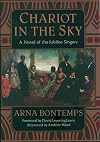
Eleven black students form a singing group and tour the world in an attempt to save their college from financial ruin. Includes a history of the Jubilee Singers, including photographs, song sheets, concert posters, and programs.Tags
Recommendations

















Member Reviews
Before reading this novel that was first published in the 1950s, I read a biographical sketch about the Jubilee Singers in We Sing America, a children's book written by Marion Cuthbert in the 1930s.
That book as a whole, and the Jubilee Singers sketch in particular, whet my appetite for Chariot in the Sky.
I found this novel to be quite inspiring, yes. But I was already expecting it to be. And in this and that chapter, when I came across songs that I knew, I slowed down my reading and sang along with the characters. That wasn't exactly unexpected either.
However, at no point before I started this book was I expecting to weep. Not only to get teary-eyed, but to actually weep. History you already know just hits you harder sometimes.
That is, show more I've known for a long time about past laws in America that prohibited teaching enslaved people to read. Also, yes, I've loved books ever since I was a little girl, and because reading and writing are my life, I like to think that I don't take them for granted.
Well, during my reading of this novel, I felt it when teenage Caleb began to teach himself to read while he was still enslaved. When the one beginner's book he'd borrowed became the major focus of his life, I understood. Then, soon after the Civil War, during Caleb's journey as a young man, my eyes fell on one of the novel's illustrations: a depiction of formerly enslaved people, young and old, gathered in a makeshift classroom, "learning their letters."
At the sight of that image inspired by history, an image of the newly emancipated determined that they would read, I broke down. Had to set the novel aside for a few minutes, I was weeping so hard.
And one of my favorite parts of the book came later, in a conversation: "General O. O. Howard, of the Freedmen's Bureau, told us recently how he had visited one such school and asked the young folk what message they'd like him to carry to their friends in the North. One little fellow stood up in the back and said, 'General, tell them we are rising.'"
That's what my reading experience here was like. Watching the story of a people, collectively on the rise.
My. Goodness.
Now, in general, the unfolding/flow of the plot and the character development could have been somewhat better. There's also a minor romantic theme that isn't developed well enough for its twist at the end not to feel like too abrupt and big of a switch-up.
Nevertheless, as I finished the novel (and immediately went to look up a little more about the real Jubilee Singers who appear in it), I must say—my very soul was singing.
Note:
• a few scenes include serious violence show less
That book as a whole, and the Jubilee Singers sketch in particular, whet my appetite for Chariot in the Sky.
I found this novel to be quite inspiring, yes. But I was already expecting it to be. And in this and that chapter, when I came across songs that I knew, I slowed down my reading and sang along with the characters. That wasn't exactly unexpected either.
However, at no point before I started this book was I expecting to weep. Not only to get teary-eyed, but to actually weep. History you already know just hits you harder sometimes.
That is, show more I've known for a long time about past laws in America that prohibited teaching enslaved people to read. Also, yes, I've loved books ever since I was a little girl, and because reading and writing are my life, I like to think that I don't take them for granted.
Well, during my reading of this novel, I felt it when teenage Caleb began to teach himself to read while he was still enslaved. When the one beginner's book he'd borrowed became the major focus of his life, I understood. Then, soon after the Civil War, during Caleb's journey as a young man, my eyes fell on one of the novel's illustrations: a depiction of formerly enslaved people, young and old, gathered in a makeshift classroom, "learning their letters."
At the sight of that image inspired by history, an image of the newly emancipated determined that they would read, I broke down. Had to set the novel aside for a few minutes, I was weeping so hard.
And one of my favorite parts of the book came later, in a conversation: "General O. O. Howard, of the Freedmen's Bureau, told us recently how he had visited one such school and asked the young folk what message they'd like him to carry to their friends in the North. One little fellow stood up in the back and said, 'General, tell them we are rising.'"
That's what my reading experience here was like. Watching the story of a people, collectively on the rise.
My. Goodness.
Now, in general, the unfolding/flow of the plot and the character development could have been somewhat better. There's also a minor romantic theme that isn't developed well enough for its twist at the end not to feel like too abrupt and big of a switch-up.
Nevertheless, as I finished the novel (and immediately went to look up a little more about the real Jubilee Singers who appear in it), I must say—my very soul was singing.
Note:
• a few scenes include serious violence show less
Ratings
Members
- Recently Added By
Author Information

51+ Works 1,524 Members
Arna Bontemps was one of many African American writers associated with Fisk University, where he taught for 20 years. He became a visiting professorship at Yale University and returned to Fisk to spend the last years of his life there. Bontemps grew up in the South and wrote of the condition and spirit of the southern black in memoirs and in show more fiction. His historical and topical novel Black Thunder (1936) is perhaps his best known, along with Drums at Dusk (1935). As an active leader in the Harlem Renaissance, however, Bontemps wrote prolifically in all genres and for children as well as adults. He produced several important collections of narratives about enslaved people and African American folk tales. Bontemps was a major anthologizer of Harlem Renaissance work and helped shape the new black writing as theoretician and critic. Bontemps died in 1973. (Bowker Author Biography) show less
Some Editions
Awards and Honors
Series

Belongs to Publisher Series
Common Knowledge
- Canonical title
- Chariot in the Sky: A Story of the Jubilee Singers
Classifications
- Genres
- Fiction and Literature, Kids, Tween
- DDC/MDS
- 813.54 — Literature & rhetoric American literature in English American fiction in English 1900-1999 1945-1999
- LCC
- PZ7 .B6443 .C — Language and Literature Fiction and juvenile belles lettres Fiction and juvenile belles lettres Juvenile belles lettres
- BISAC
Statistics
- Members
- 75
- Popularity
- 420,469
- Reviews
- 1
- Rating
- (3.83)
- Languages
- English
- Media
- Paper
- ISBNs
- 6
- ASINs
- 6