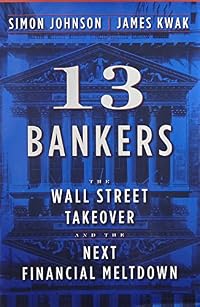
13 Bankers: The Wall Street Takeover and the Next Financial Meltdown
by Simon Johnson, James Kwak
On This Page
Description
Johnson and Kwak examine not only how Wall Street's ideology, wealth, and political power among policy makers in Washington led to the financial debacle of 2008, but also what the lessons learned portend for the future.Tags
Recommendations
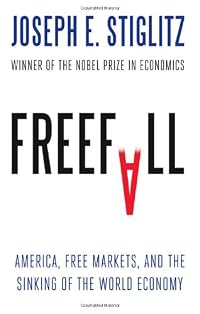
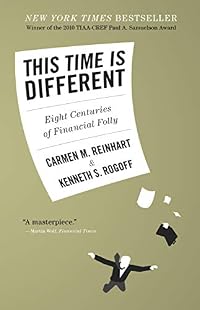


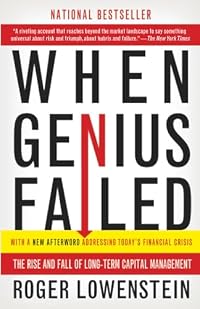
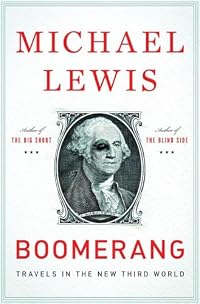
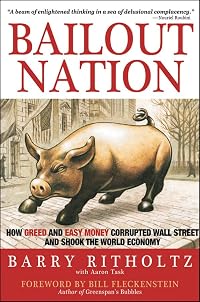

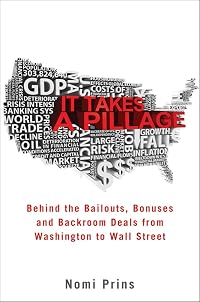


Member Recommendations
Member Reviews
This is one of the most enlightening books about the financial crisis that I have read. It focusses on the extent to which, in advance of the crisis, the financial services industry captured the regulatory apparatus designed to control it. This happened by direct deregulation, and by covert deregulation (e.g., understaffed regulatory agencies). It happened under Democrats as well as under Republicans, and it is no coincidence that it happened as the share of financial services in U.S. corporate profits rose from around 10% in the 1970's to over 30% in the mid-2000's. Financial power gave the bankers political power, and political power helped them to extend their financial power. It's not necessarily a conspiracy in the "let's all get show more together and take over Congress" sense, but it certainly worked like one. The author's evidence is compelling, and his arguments are strong. And now we seem to be doing it all over again --- show less
Another history of the financial crisis, this one reaching back to the Jefferson/Hamilton dispute about the role of banking versus manufacture in the economy. The focus is tightest on ideological/material capture: Washington is dominated by Wall Street money, regulators who revolve in and out of the private sector they’re supposed to regulate, and most significantly by Wall Street ideas. The failure of regulation and even reregulation after the crisis of 2008 wasn’t simple corruption, but something harder to fight: true belief (that just happened to correspond to large potential paychecks) in the importance of not hampering financial firms with pesky regulations, while also ensuring that they wouldn’t suffer from bad bets with a show more government backstop/bailout. The main takeaway: too big to fail is too big to exist. Amen to that; I just heard a paper where part of the argument was that size regulations are bad because there are theoretical circumstances under which big banks are efficient, and I didn’t get to ask my question, which was “Who cares? Even if big banks weren’t able to capture regulators, which they are and which means the ‘efficiency’ may just be that they can borrow money more cheaply than other banks because of the implicit government guarantee and distort markets, why does the possibility of greater efficiency justify ramping up the systemic risk?” Crony capitalism isn’t just something we can tut-tut at other countries about, though the most bitterly funny part of the book is people like Geithner describing why “nationalize the banks, make the shareholders eat the losses and the creditors take haircuts” was good medicine for other people’s economies but not for ours, that is, not for his friends. show less
Some things that I bookmarked while reading:
"the core function of finance is financial intermediation -- moving money from a place where it is currently not needed to a place where it is needed. The key questions for for any financial innovation are whether it increases financial intermediation and whether that is a good thing." (continues to talk about "innovations" in credit cards mostly being ways of making pricing more complex)
"much of the positive effect of homeownership is due not to ownership itself, but to other factors that differentiate owners and renters" (mostly looks like income and length of time in the home/apt)
"the founder of Daewood [...] also placed a big bet on cars" (in talking about the chaebol of Korea show more overextending. we briefly owned a Daewoo.)
Oh, so depressing, and yet, so useful in understanding how we got to this damn place over the last 30 years. In particular, what seems like a long digression about oligarchs & financial crises in Russia, Indonesia, South Korea, etc. turns out to be provide plenty of a-ha moments later, seeing some of those very things -- somewhat disguised -- in our own economics & politics over the last couple of years.
There's a LOTR quote (not sure if it's in the original books or just the movie) in which Galadriel says something to the effect of the quest being on the edge of a knife; stray but a little, and you shall fail (or fall, I can't remember which) and the end of this book feels that way to me. There's this moment that we're in -- and honestly, may have already passed through -- where the status quo of the 1990s & 2000s could have been overturned. It won't last forever, and maybe it's already gone. show less
"the core function of finance is financial intermediation -- moving money from a place where it is currently not needed to a place where it is needed. The key questions for for any financial innovation are whether it increases financial intermediation and whether that is a good thing." (continues to talk about "innovations" in credit cards mostly being ways of making pricing more complex)
"much of the positive effect of homeownership is due not to ownership itself, but to other factors that differentiate owners and renters" (mostly looks like income and length of time in the home/apt)
"the founder of Daewood [...] also placed a big bet on cars" (in talking about the chaebol of Korea show more overextending. we briefly owned a Daewoo.)
Oh, so depressing, and yet, so useful in understanding how we got to this damn place over the last 30 years. In particular, what seems like a long digression about oligarchs & financial crises in Russia, Indonesia, South Korea, etc. turns out to be provide plenty of a-ha moments later, seeing some of those very things -- somewhat disguised -- in our own economics & politics over the last couple of years.
There's a LOTR quote (not sure if it's in the original books or just the movie) in which Galadriel says something to the effect of the quest being on the edge of a knife; stray but a little, and you shall fail (or fall, I can't remember which) and the end of this book feels that way to me. There's this moment that we're in -- and honestly, may have already passed through -- where the status quo of the 1990s & 2000s could have been overturned. It won't last forever, and maybe it's already gone. show less
Johnson and Kwak's blog was essential reading during the financial crisis, and is still quite educational. This book is also required for Money & Banking in the fall. (I'm a bit sad because I went way over the Amazon clipping limit, so 314 of my highlights are invisible via the website.)
Johnson approaches the U.S. financial crisis from the point of view of a former Chief Economist of the IMF. That perspective allows him to see the irony of how the U.S. and the IMF advised East Asian countries through their financial crises in 1997-1998 compared to how the U.S. handled its own.
Related to my previous post, Johnson gives a history of banking and regulation in the U.S., from the first central bank charter of 1791 to Jacksonian populism, to show more the Panic of 1907 to the Great Recession. All of this is great, concise history.
Johnson comes down on the side of Thomas Jefferson--a distrust of centralized power of bankers as a threat to the Republic. He sees what the U.S. has now-- an oligarchy of a few large politically-influential financial institutions-- as little different from the cronyism of developing nations that the U.S. has been quite critical of. The U.S. advice to Asia in the 1990s was that no bank should be "too big to fail," and the big state-backed monopolies should be broken up. Johnson offers that same advice to the U.S. today-- find a way to break up the banks, just as Republican Teddy Roosevelt did with the Trusts of the early 1900s.
About 1/3 of this book is bibliography-- a treasure trove of sources and references. You always hear of the growth of finance, but it's nice to have specific data. The undeniable fact is that the deregulation of the financial sector in the 1970s and 80s did nothing to boost U.S. productivity and therefore did not result in an obvious better allocation of capital. The financial sector replaced manufacturing 1-for-1, and commercial & investment banking and insurance profits grew to be a much larger portion--almost 50%-- of all U.S. corporate profits by 2007. The amount of leverage taken on by financial sector firms became enormous over this time period:
"in 1978, all commercial banks together held $1.2 trillion of assets, equivalent to 53 percent of U.S. GDP. By the end of 2007, the commercial banking sector had grown to $11.8 trillion in assets, or 84 percent of U.S. GDP. But that was only a small part of the story. Securities broker-dealers (investment banks), including Salomon, grew from $33 billion in assets, or 1.4 percent of GDP, to $3.1 trillion in assets, or 22 percent of GDP. Asset-backed securities such as collateralized debt obligations (CDOs), which hardly existed in 1978, accounted for another $4.5 trillion in assets in 2007, or 32 percent of GDP.* All told, the debt held by the financial sector grew from $2.9 trillion, or 125 percent of GDP, in 1978 to over $36 trillion, or 259 percent of GDP, in 2007...In 1978, the financial sector borrowed $13 in the credit markets for every $100 borrowed by the real economy; by 2007, that had grown to $51.14 In other words, for the same amount of borrowing by households and nonfinancial companies, the amount of borrowing by financial institutions quadrupled....by the third quarter of 2009, financial sector profits were over six times their 1980 level, while nonfinancial sector profits were little more than double those of 1980."
The private sector began to wade where only the GSE's had tread before-- securitizing mortgages. Deregulation allowed the lines to blur between banks and non-banks, until the lines were at last removed in 1999. Greenspan and other regulators intentionally decided not to regulate various activities. For example, Greenspan declined to look at the books of mortgage brokers owned by bank holding companies-- even though it was in the Fed's realm to do so. If there were bad practices or "liar loans" piling up, he clearly said the problem would take care of itself (and later regretted his belief in market self-regulation).
The story is that of "bigger and better," following the textbook argument that this was well because insurance conglomerates merging with banking conglomerates merging with investment banks benefited from economies of scope and scale. Johnson, like Hayek, takes issue with this type of argument and offers some good rebuttal using various studies:
"The 2007 Geneva Report, 'International Financial Stability,'... found that the unprecedented consolidation in the financial sector...led to no significant efficiency gains, no economies of scale beyond a low threshold, and no evident economies of scope."
Basically, as banks got bigger they took on even more risk. As commercial banks and investment banks were increasing competition in the securitization game, firms began to engineer products in unique ways to differentiate their products. This caused problems of information asymmetries as very few people--including ratings agencies and the Federal Reserve-- understood the products being created. The banks could manipulate their creations to be rated well by certain risk models when actually they were quite risky. Ultimately, the taxpayer was put on the hook:
"(T)he special inspector general for TARP estimated a total potential support package of $23.7 trillion, or over 150 percent of U.S. GDP (as) theoretical potential liabilities of the government."
Johnson understands the difficulties of regulation, and while he advocated a Consumer Financial Protection Bureau, he understands regulations will do little good if banks know that they are too big to fail. He recommends that a commercial banks' assets be allowed to be no bigger than 2% of GDP, 4% for investment banks.
"Saying that we cannot break up our largest banks is saying that our economic futures depend on these six companies (some of which are in various states of ill health). That thought should frighten us into action."
I give this book 4 stars out of 5. Other reviewers have rightly noted that Wall Street isn't the only place where TBTF rules-- the government has been bailing out the auto industry for years, and various other industries ranging from steel to cotton are heavily subsidized and protected. But the sheer size of the banks, the growing percentage of U.S. GDP generated by finance, and the growing political influence of banks in our "revolving door" government is alarming.
While the book is pretty mistitled, Johnson does make it clear that we've not done much to ensure that a crisis like 2007 doesn't occur again. show less
Johnson approaches the U.S. financial crisis from the point of view of a former Chief Economist of the IMF. That perspective allows him to see the irony of how the U.S. and the IMF advised East Asian countries through their financial crises in 1997-1998 compared to how the U.S. handled its own.
Related to my previous post, Johnson gives a history of banking and regulation in the U.S., from the first central bank charter of 1791 to Jacksonian populism, to show more the Panic of 1907 to the Great Recession. All of this is great, concise history.
Johnson comes down on the side of Thomas Jefferson--a distrust of centralized power of bankers as a threat to the Republic. He sees what the U.S. has now-- an oligarchy of a few large politically-influential financial institutions-- as little different from the cronyism of developing nations that the U.S. has been quite critical of. The U.S. advice to Asia in the 1990s was that no bank should be "too big to fail," and the big state-backed monopolies should be broken up. Johnson offers that same advice to the U.S. today-- find a way to break up the banks, just as Republican Teddy Roosevelt did with the Trusts of the early 1900s.
About 1/3 of this book is bibliography-- a treasure trove of sources and references. You always hear of the growth of finance, but it's nice to have specific data. The undeniable fact is that the deregulation of the financial sector in the 1970s and 80s did nothing to boost U.S. productivity and therefore did not result in an obvious better allocation of capital. The financial sector replaced manufacturing 1-for-1, and commercial & investment banking and insurance profits grew to be a much larger portion--almost 50%-- of all U.S. corporate profits by 2007. The amount of leverage taken on by financial sector firms became enormous over this time period:
"in 1978, all commercial banks together held $1.2 trillion of assets, equivalent to 53 percent of U.S. GDP. By the end of 2007, the commercial banking sector had grown to $11.8 trillion in assets, or 84 percent of U.S. GDP. But that was only a small part of the story. Securities broker-dealers (investment banks), including Salomon, grew from $33 billion in assets, or 1.4 percent of GDP, to $3.1 trillion in assets, or 22 percent of GDP. Asset-backed securities such as collateralized debt obligations (CDOs), which hardly existed in 1978, accounted for another $4.5 trillion in assets in 2007, or 32 percent of GDP.* All told, the debt held by the financial sector grew from $2.9 trillion, or 125 percent of GDP, in 1978 to over $36 trillion, or 259 percent of GDP, in 2007...In 1978, the financial sector borrowed $13 in the credit markets for every $100 borrowed by the real economy; by 2007, that had grown to $51.14 In other words, for the same amount of borrowing by households and nonfinancial companies, the amount of borrowing by financial institutions quadrupled....by the third quarter of 2009, financial sector profits were over six times their 1980 level, while nonfinancial sector profits were little more than double those of 1980."
The private sector began to wade where only the GSE's had tread before-- securitizing mortgages. Deregulation allowed the lines to blur between banks and non-banks, until the lines were at last removed in 1999. Greenspan and other regulators intentionally decided not to regulate various activities. For example, Greenspan declined to look at the books of mortgage brokers owned by bank holding companies-- even though it was in the Fed's realm to do so. If there were bad practices or "liar loans" piling up, he clearly said the problem would take care of itself (and later regretted his belief in market self-regulation).
The story is that of "bigger and better," following the textbook argument that this was well because insurance conglomerates merging with banking conglomerates merging with investment banks benefited from economies of scope and scale. Johnson, like Hayek, takes issue with this type of argument and offers some good rebuttal using various studies:
"The 2007 Geneva Report, 'International Financial Stability,'... found that the unprecedented consolidation in the financial sector...led to no significant efficiency gains, no economies of scale beyond a low threshold, and no evident economies of scope."
Basically, as banks got bigger they took on even more risk. As commercial banks and investment banks were increasing competition in the securitization game, firms began to engineer products in unique ways to differentiate their products. This caused problems of information asymmetries as very few people--including ratings agencies and the Federal Reserve-- understood the products being created. The banks could manipulate their creations to be rated well by certain risk models when actually they were quite risky. Ultimately, the taxpayer was put on the hook:
"(T)he special inspector general for TARP estimated a total potential support package of $23.7 trillion, or over 150 percent of U.S. GDP (as) theoretical potential liabilities of the government."
Johnson understands the difficulties of regulation, and while he advocated a Consumer Financial Protection Bureau, he understands regulations will do little good if banks know that they are too big to fail. He recommends that a commercial banks' assets be allowed to be no bigger than 2% of GDP, 4% for investment banks.
"Saying that we cannot break up our largest banks is saying that our economic futures depend on these six companies (some of which are in various states of ill health). That thought should frighten us into action."
I give this book 4 stars out of 5. Other reviewers have rightly noted that Wall Street isn't the only place where TBTF rules-- the government has been bailing out the auto industry for years, and various other industries ranging from steel to cotton are heavily subsidized and protected. But the sheer size of the banks, the growing percentage of U.S. GDP generated by finance, and the growing political influence of banks in our "revolving door" government is alarming.
While the book is pretty mistitled, Johnson does make it clear that we've not done much to ensure that a crisis like 2007 doesn't occur again. show less
Those who read about the 2008 financial crises, know how the banks went all evil, and how the government and the regulatory bodies went deaf (and blind), how people across the globe lost savings and jobs. They would have read about the people betting on the system to fail and how economists "claimed" to have foresaw the failure. All good reading stuff.
This book is different. More than a book on finance or on financial breakdown, this book is about the historical events that led to the financial meltdown of 2008. All the way from the 19th century, the regulations, laws, the lobbying and governments involved in trying to hit two birds - make money and be safer, with one stone.
Though not a page turner, it is nevertheless interesting to show more finance and/or history buffs! show less
This book is different. More than a book on finance or on financial breakdown, this book is about the historical events that led to the financial meltdown of 2008. All the way from the 19th century, the regulations, laws, the lobbying and governments involved in trying to hit two birds - make money and be safer, with one stone.
Though not a page turner, it is nevertheless interesting to show more finance and/or history buffs! show less
I thought this was a great explanation of the causes and ideas to avoid this same thing happening again. Although, I'm betting it does happen again since greed knows no boundaries. It's a shame more people don't educate themselves on the society they live in because mass media does a really really poor job of informing.
As the title indicates, the book deals with the supply side of the current financial crisis. This is an good but not great book about the current financial crisis. The main flaw of the book is that it tries but only partially succeeds to mesh two stories. The first story is the rise of the financial oligarchy and its influence on Washington, DC. Wall Street has always had tremendous influence on and in Washington. A quick look at past treasury secretaries shows their Wall Street pedigrees. The authors' case is (not yet) backed up with sufficient data. I'd venture the idea that Wall Street's influence has grown mostly at the cost of other oligarchic industries (such as automotive, remember McNamara?). The dirty secret of US history is show more that the country has been run by an oligarchy since its inception. The foundling fathers were filthy rich (and didn't like to pay taxes for the common good). The poor and populist founding fathers like Thomas Paine and Samuel Adams were quickly pushed aside (and erased from history) by the planters, bankers and manufacturers. The control of Washington is the result of power struggles among different groups of oligarchies.
The authors are on firmer ground regarding the methods of influence which they divide into campaign contributions, lobbying/human capital and cultural capital/ideas. The last element is the most pernicious: Masquerading as free market capitalism, crony capitalism has been established in the public mind set as the only alternative. The health care and stimulus debates illustrate perfectly how the American media and public are trained to disregard other solutions. It is an interesting question if regime change and winning the intellectual battle can be achieved without displacing the dead-enders currently occupying all important positions.It took 30 years for them to establish their hegemony ...
Their second story is the evolution of banking in the United States from Jefferson/Hamilton to the robber barons to the Great Depression to today. While they provide some international context, I wonder how well the book will hold up against Reinhart's Eight Centuries of Financial Folly (which I have yet to read). Johnson and Kwak focus on the suppliers and the regulators. The buyers, however, play an important role too. From the Tulipmania onward, the presence of "dumb money" has been a key ingredient of financial bubbles and the crises that usually follow. Much of the dumb money of the current crisis was supplied by gullible European and Asian investors who stupidly believed that US rating agencies, US regulators and US investment banks cared about their integrity, their reputation and their long-term business prospects.
Every crooked derivative deal needs a counterparty blind(ed) to the risks involved. Buyers complicitely ignored the spirit of the investment grade asset allocation rules. Concentrating solely on the sellers results in an incomplete picture. Overall, it is a good survey of how the deregulation happened. An awful lot of dismantling existing and not providing new regulation happened under the Clinton administration. During the Bush years, the last vestige of integrity and feelings of responsibility were disposed off too.
Johnson and Kwak recommend better regulation (especially customer protection), stronger supervisors and breaking up the Too Big To Fail banks into smaller entities (which would still have been giants a few years ago. One key demonstration of this book is the concentration in the financial sector and its supporting industries such as auditing and rating). Proposals which should not be controversial in a sane world.
Even a casual reader of the authors' blog will encounter that most of the book's content and message have already been discussed there. Buying the book is thus more a way of saying thank-you for their efforts to create a better America. show less
The authors are on firmer ground regarding the methods of influence which they divide into campaign contributions, lobbying/human capital and cultural capital/ideas. The last element is the most pernicious: Masquerading as free market capitalism, crony capitalism has been established in the public mind set as the only alternative. The health care and stimulus debates illustrate perfectly how the American media and public are trained to disregard other solutions. It is an interesting question if regime change and winning the intellectual battle can be achieved without displacing the dead-enders currently occupying all important positions.It took 30 years for them to establish their hegemony ...
Their second story is the evolution of banking in the United States from Jefferson/Hamilton to the robber barons to the Great Depression to today. While they provide some international context, I wonder how well the book will hold up against Reinhart's Eight Centuries of Financial Folly (which I have yet to read). Johnson and Kwak focus on the suppliers and the regulators. The buyers, however, play an important role too. From the Tulipmania onward, the presence of "dumb money" has been a key ingredient of financial bubbles and the crises that usually follow. Much of the dumb money of the current crisis was supplied by gullible European and Asian investors who stupidly believed that US rating agencies, US regulators and US investment banks cared about their integrity, their reputation and their long-term business prospects.
Every crooked derivative deal needs a counterparty blind(ed) to the risks involved. Buyers complicitely ignored the spirit of the investment grade asset allocation rules. Concentrating solely on the sellers results in an incomplete picture. Overall, it is a good survey of how the deregulation happened. An awful lot of dismantling existing and not providing new regulation happened under the Clinton administration. During the Bush years, the last vestige of integrity and feelings of responsibility were disposed off too.
Johnson and Kwak recommend better regulation (especially customer protection), stronger supervisors and breaking up the Too Big To Fail banks into smaller entities (which would still have been giants a few years ago. One key demonstration of this book is the concentration in the financial sector and its supporting industries such as auditing and rating). Proposals which should not be controversial in a sane world.
Even a casual reader of the authors' blog will encounter that most of the book's content and message have already been discussed there. Buying the book is thus more a way of saying thank-you for their efforts to create a better America. show less
Members
- Recently Added By
Published Reviews
Though this blistering book identifies many causes of the recent financial crisis, from housing policy to minimum capital requirements for banks, the authors lay ultimate blame on a dominant deregulatory ideology and Wall Street's corresponding political influence. Johnson, professor at the MIT Sloan School of Management, and Kwak, a former consultant for McKinsey, follow American finance's show more rocky road from the debate between Jefferson and Hamilton over the first Bank of the United States through frequent friction between Big Finance and democracy to the Obama administration's responses to the crises. The authors take a highly critical stance toward recent palliative measures, arguing that nationalization of the banks would have been preferable to the bailouts, which have allowed the banks to further consolidate power and resources. Given the swelling size of the six megabanks, the authors make a persuasive case that the financial system cannot be secure until those banks that are too big to fail are somehow broken up. This intelligent, nuanced book might be too technical for general-interest readers, but it synthesizes a significant amount of research while advancing a coherent and compelling point of view. (Apr.)
Copyright © Reed Business Information, a division of Reed Elsevier Inc. All rights reserved. show less
Copyright © Reed Business Information, a division of Reed Elsevier Inc. All rights reserved. show less
added by TomWaitsTables
Lists

LT picks: Blue Books
197 works; 44 members
Author Information
4 Works 567 Members
6 Works 670 Members
Awards and Honors
Distinctions
Common Knowledge
- Original publication date
- 2010-03-30
- People/Characters
- the Bull (Merrill Lynch); Mithra (still casting)
- Important places
- Manhattan, New York, New York, USA; New York, New York, USA; Purgatory; Wall Street, New York, New York, USA; Washington, D.C., USA
- Important events
- Great Recession (2007 | 2010); Financial Crisis of 2007-2010 (2007 | 2010); America, Apogee & Decline; Communism, Decline and Renaissance
- Epigraph
- My administration is the only thing that stands between you and the pitchforks.
- Barack Obama, March 27, 2009
"Great corporations exists only because they are created and safeguarded by our institutions; and it is therefore our right and our duty to see that they work in harmony with these institutions.
- Theodore Roosevelt, ... (show all)State of the Union message, December 3, 1901 - First words
- Suspicion of large, powerful banks is as old as the United States, dating back at least to Thomas Jefferson---author of the Declaration of Independence, secretary of state under President George Washington, third president of... (show all) the United States, and staunch supporter of individual liberty.
- Quotations
- But there is another choice: the choice to finish the job that Roosevelt began a century ago, and to take a stand against concentrated financial power just as he took a stand against concentrated industrial power. . . . That ... (show all)is the choice the American people need to make . . .
- Last words
- (Click to show. Warning: May contain spoilers.)Even when it goes out of fashion, Thomas Jefferson's suspicion of concentrated power remains an essential thread in the fabric of American democracy. The financial crisis of 2007-2009 has made Jefferson a little less out of fashion. It is that tradition of skepticism that. if anything, can shift the weight of public opinion against our new financial oligarchy---the most law-abiding, hard-working, eloquent, well-dressed oligarchy in the history of politics. It is to help reinvigorate that spirit of Jefferson that we have written this book.
- Blurbers
- Warren, Elizabeth; Ferguson, Niall; Moyers, Bill; Roubini, Nouriel; Lessig, Lawrence; Allen, Herbert A., III (show all 19); Baker, Dean; Bergsten, C. Fred; Bradley, Bill; Bunning, Jim; Fish, Lawrence K.; Grayson, Alan; Greenberger, Michael; Huffington, Arianna; Kotlikoff, Laurence J.; Miller, Brad; Reich, Robert B.; Romer, Paul; Sherman, Brad
Classifications
Statistics
- Members
- 410
- Popularity
- 75,321
- Reviews
- 12
- Rating
- (3.86)
- Languages
- English
- Media
- Paper, Audiobook, Ebook
- ISBNs
- 8
- ASINs
- 5