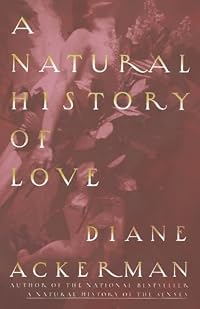
A Natural History Of Love
by Diane Ackerman
On This Page
Description
The bestselling author of A Natural History of the Senses now explores the allure of adultery, the appeal of aphrodisiacs, and the cult of the kiss. Enchantingly written and stunningly informed, this "audaciously brilliant romp through the world of romantic love" (Washington Post Book World) is the next best thing to love itself.Tags
Recommendations






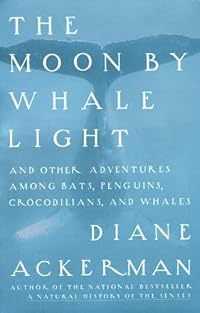


Member Reviews
This book is very flawed.
Ackerman contradicts herself about how the Old Testament god loved (in one passage it's unconditionally, a hundred pages later it's only if you've proven yourself worthy); she's only interested in heterosexual desire; her parental gender roles are set in stone (and in the 1950s); she gets the origin myth of the narcissus wrong; she messes up the chronology of the plot of Hamlet; she uses Pyramus and Thisbe as an example of a tragic romantic couple, when anyone who's ever seen a good production of Midsummer will go into a helpless giggling fit at the phrase "Ninus' tomb"; and she occasionally writes sentences like, "Why do we need a duvet cover for the warm, rich, feather comforter of sensuality?"
These are show more problems. The sloppy ones are especially problematic because they cast retrospective doubt on the research done for the first section, which is the history of love, sexuality, and marriage throughout the Western world, and which is really quite fascinating. I enjoyed this first third of the book very much, but later wondered about it once I'd seen that she couldn't even be bothered to glance back at Hamlet and find out if "Get thee to a nunnery" comes before or after "Lady, shall I lie in your lap?"
But it went off the rails for me entirely in the middle section, which she fills with:
1. Six pages about how a woman's hair is the only secondary sexual characteristic which matters, and that the longer and more wild the hair is (how much like Diane Ackerman's it is, in other words; this whole middle section is all about her personal experiences) the more sensual a woman is, that cutting off a woman's hair desexualizes her, and how women with children cut off their hair to signal that they are no longer sexually available. Ohhh-kay. Setting aside that this book was written in 1994, before the widespread development of the pixie haircut, some women (like me, showing my own bias here) have always looked better with shorter hair, and what about the exposure of the neck? Ackerman never once, in the entire book, mentions the neck as an erogenous zone. She's too busy talking about the times she's been considered dangerously erotic and womanly because of her hair.
2. Twenty-two pages (fully 7% of the book) about women and horses. Ackerman claims that all little girls not only go through a phase of being wild about horses but that all little girls have access to horses recreationally. Seriously. She looks back on her privileged Pennsylvania childhood and is incapable of thinking that a different type of childhood exists. And then we get 22 pages about having a big sweaty animal between one's legs (yeah, yeah, we've all read "Jane Austen and the Masturbating Girl", this is not news) and how every eight-year-old girl wants this (ewww) and how every eight-year-old girl can just buy jodhpurs and riding boots and head down to her local stable. I don't know, maybe it would be interesting to a woman who did have a passionate relationship with horses in her childhood. I have never cared about horses one way or the other. Ackerman does say that given her age, there were no sports really available for girls when she was growing up, so she turned to horses. But a better use of page space would have been a couple about horses and then a lot more about what exercise and sport in general means for girls coming into their sexuality and their bodies. The book at this point was rapidly turning into "Diane Ackerman's Personal History of Love and No One Else's".
3. Ten pages about the Indy 500, because all men love is cars. And only men love cars. Also, Diane Ackerman gets leered at by drunk men a lot, because her breasts are so amazing. After the horses, and because I adore my car and adore driving, I skimmed this part.
4. Four pages about flying in dreams and how wonderful it is and always about sex. Some of us are terrified of heights and only dream about falling, never flying, and I am just going to leave that in the hands of Freud.
...
These issues made me as angry as they did because the book really had potential. When Ackerman isn't going off the rails with duvet metaphors, she writes quite well, and like I said, the first third of the book was fascinating, until I started doubting the research. And it read quite quickly, and was often hard to put down. But she just comes at it far too much as if it were a memoir, instead of a piece of reportage. She tacks on a bit about pets at the end, and it's immediately obvious she's never had one in her life; after the pages and pages rhapsodizing about the bond between women and horses, the best she can say about a cat or dog is that its owner is holding it prisoner and what seems to be the pet's love is just Stockholm Syndrome. For heaven's sake.
So, alas, this book frustrated and irritated me, and yet it's not badly written, and the idea of a book on this topic pleases me. I imagine that there are probably better ones out there. show less
Ackerman contradicts herself about how the Old Testament god loved (in one passage it's unconditionally, a hundred pages later it's only if you've proven yourself worthy); she's only interested in heterosexual desire; her parental gender roles are set in stone (and in the 1950s); she gets the origin myth of the narcissus wrong; she messes up the chronology of the plot of Hamlet; she uses Pyramus and Thisbe as an example of a tragic romantic couple, when anyone who's ever seen a good production of Midsummer will go into a helpless giggling fit at the phrase "Ninus' tomb"; and she occasionally writes sentences like, "Why do we need a duvet cover for the warm, rich, feather comforter of sensuality?"
These are show more problems. The sloppy ones are especially problematic because they cast retrospective doubt on the research done for the first section, which is the history of love, sexuality, and marriage throughout the Western world, and which is really quite fascinating. I enjoyed this first third of the book very much, but later wondered about it once I'd seen that she couldn't even be bothered to glance back at Hamlet and find out if "Get thee to a nunnery" comes before or after "Lady, shall I lie in your lap?"
But it went off the rails for me entirely in the middle section, which she fills with:
1. Six pages about how a woman's hair is the only secondary sexual characteristic which matters, and that the longer and more wild the hair is (how much like Diane Ackerman's it is, in other words; this whole middle section is all about her personal experiences) the more sensual a woman is, that cutting off a woman's hair desexualizes her, and how women with children cut off their hair to signal that they are no longer sexually available. Ohhh-kay. Setting aside that this book was written in 1994, before the widespread development of the pixie haircut, some women (like me, showing my own bias here) have always looked better with shorter hair, and what about the exposure of the neck? Ackerman never once, in the entire book, mentions the neck as an erogenous zone. She's too busy talking about the times she's been considered dangerously erotic and womanly because of her hair.
2. Twenty-two pages (fully 7% of the book) about women and horses. Ackerman claims that all little girls not only go through a phase of being wild about horses but that all little girls have access to horses recreationally. Seriously. She looks back on her privileged Pennsylvania childhood and is incapable of thinking that a different type of childhood exists. And then we get 22 pages about having a big sweaty animal between one's legs (yeah, yeah, we've all read "Jane Austen and the Masturbating Girl", this is not news) and how every eight-year-old girl wants this (ewww) and how every eight-year-old girl can just buy jodhpurs and riding boots and head down to her local stable. I don't know, maybe it would be interesting to a woman who did have a passionate relationship with horses in her childhood. I have never cared about horses one way or the other. Ackerman does say that given her age, there were no sports really available for girls when she was growing up, so she turned to horses. But a better use of page space would have been a couple about horses and then a lot more about what exercise and sport in general means for girls coming into their sexuality and their bodies. The book at this point was rapidly turning into "Diane Ackerman's Personal History of Love and No One Else's".
3. Ten pages about the Indy 500, because all men love is cars. And only men love cars. Also, Diane Ackerman gets leered at by drunk men a lot, because her breasts are so amazing. After the horses, and because I adore my car and adore driving, I skimmed this part.
4. Four pages about flying in dreams and how wonderful it is and always about sex. Some of us are terrified of heights and only dream about falling, never flying, and I am just going to leave that in the hands of Freud.
...
These issues made me as angry as they did because the book really had potential. When Ackerman isn't going off the rails with duvet metaphors, she writes quite well, and like I said, the first third of the book was fascinating, until I started doubting the research. And it read quite quickly, and was often hard to put down. But she just comes at it far too much as if it were a memoir, instead of a piece of reportage. She tacks on a bit about pets at the end, and it's immediately obvious she's never had one in her life; after the pages and pages rhapsodizing about the bond between women and horses, the best she can say about a cat or dog is that its owner is holding it prisoner and what seems to be the pet's love is just Stockholm Syndrome. For heaven's sake.
So, alas, this book frustrated and irritated me, and yet it's not badly written, and the idea of a book on this topic pleases me. I imagine that there are probably better ones out there. show less
"Some random disconnected ruminations on my personal experience with love and other vaguely related topics" would be nearer the mark. Ackerman is apparently comfortable with homosexual love only at the safe distance of ancient Egypt or Greece; it's mentioned in both of those early sections, which I found encouraging, but not a word in the later sections (despite being written in the early 1990s.) The initial section about the history of love and marriage is actually pretty interesting, but when she gets into the "Here are some other things people love - girls love horses and men love cars, and people love children so let's talk about surgeons fixing cleft palates, and I love my hair!" midsection the book collapses.
In celebration of tomorrow’s International Quirkyalone Day (or Valentine’s Day for the red roses & chocolate lovers ), I am reading Diane Ackerman’s exposé on the nature of “the great intangible” that is Love. In the spirit of her previous bestseller, A Natural History of the Senses, the essayist endeavours to introduce the reader to a somewhat abridged, but passionate stroll down Love’s historical quarters.
Indeed, Ackerman eloquently bridges the gap between old and new; historical Egypt and Rome and modern America with her unique charm all the while marveling at the varieties of love that human beings embrace and neglect. It is a celebration of our ancestors (with noteworthy passages about the uses of various aphrodisiacs) show more and our perpetual search for that other sentiment, happiness, which is far too fleeting. show less
Indeed, Ackerman eloquently bridges the gap between old and new; historical Egypt and Rome and modern America with her unique charm all the while marveling at the varieties of love that human beings embrace and neglect. It is a celebration of our ancestors (with noteworthy passages about the uses of various aphrodisiacs) show more and our perpetual search for that other sentiment, happiness, which is far too fleeting. show less
diane ackerman takes on the subject of love, much as she has taken on other subjects as an author of creative non-fiction over the years, and explores the history, physiology and mythologies of this romantic subject. as always, ackerman proves that the world of nonfiction need not be non-literate or staid, as her writing carries a certain lyrical quality and poetic sensibility i always enjoy. this was not my favourite of her books, and it may be that the subject matter is just not that interesting to me (though bell hooks wrote a series on love i very much enjoyed - so i’m not sure this is true), but i much preferred a natural history of the senses to this.
Her prose- it is so... purple! So thickly, densely written, with lavish adjectives. Lavish adjectives? See, now it's happening to me too.
I need to reread this, because I don't remember specifics bits of love history and lore, only the sense of her prose being over the top.
I need to reread this, because I don't remember specifics bits of love history and lore, only the sense of her prose being over the top.
Actually a pretty good read. Some Diane Ackerman wears on me pretty quickly, but I liked this one. It may be relevant that I picked it up around the time I got married. :7)
Her prose- it is so... purple! So thickly, densely written, with lavish adjectives. Lavish adjectives? See, now it's happening to me too.
I need to reread this, because I don't remember specifics bits of love history and lore, only the sense of her prose being over the top.
I need to reread this, because I don't remember specifics bits of love history and lore, only the sense of her prose being over the top.
Members
- Recently Added By
Lists

Books mentioned in bell hooks' All About Love
70 works; 1 member
Author Information

39+ Works 13,442 Members
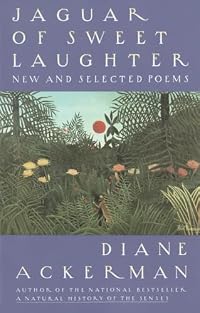
Diane Ackerman was born on October 7, 1948 in Waukegan, Illinois. She received a B.A. in English from Pennsylvania State University and her M.A., M.F.A., and Ph.D. in English from Cornell University. Poet, author, educator, adventurer, and naturalist, she tries to bridge science and art in her writing, exploring questions of who we are, where we show more come from, and how we fit into the fabric of the world. She has written many books of poetry including The Planets: A Cosmic Pastoral; Wife of Light; Jaguar of Sweet Laughter: New and Selected Poems; Origami Bridges: Poems of Psychoanalysis and Fire; and I Praise My Destroyer. Her nonfiction works include A Natural History of the Senses; A Natural History of Love; The Moon by Whale Light: And Other Adventures Among Bats, Crocodilians, Penguins, and Whales; An Alchemy of Mind; and On Extended Wings. She also writes nature books for children including Animal Sense; Monk Seal Hideaway; and Bats: Shadows in the Night. She is coeditor of a Norton anthology, The Book of Love. Her essays about nature and human nature have appeared in Parade, National Geographic, The New York Times, and The New Yorker magazines. She hosted a five-hour PBS television series inspired by A Natural History of the Senses. She received the Orion Book Award for The Zookeepers Wife. Her other awards include the Abbie Copps Poetry Prize, Black Warrior Poetry Prize, Pushcart Prize, Peter I. B. Lavan award, and the Wordsmith award. She has taught at a variety of universities, including Columbia and Cornell. (Bowker Author Biography) show less
Common Knowledge
- Original publication date
- 1994-05-31
- People/Characters
- Aeneas
Classifications
- Genres
- Nonfiction, Science & Nature, General Nonfiction
- DDC/MDS
- 306.7 — Society, Government, and Culture Social sciences, sociology & anthropology Social Behavior - Dating, Marriage, Divorce Sexual relations
- LCC
- HQ801 .A513 — Social sciences The family. Marriage, Women and Sexuality The Family. Marriage. Women The family. Marriage. Home Man-woman relationships. Courtship. Dating
- BISAC
Statistics
- Members
- 852
- Popularity
- 31,920
- Reviews
- 11
- Rating
- (3.68)
- Languages
- Dutch, English, French, Spanish
- Media
- Paper, Audiobook, Ebook
- ISBNs
- 9
- ASINs
- 1