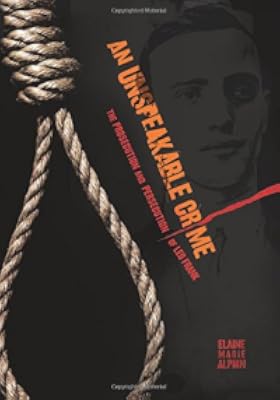
An Unspeakable Crime: The Prosecution and Persecution of Leo Frank
by Elaine Marie Alphin
On This Page
Description
Was an innocent man wrongly accused of murder? On April 26, 1913, thirteen-year-old Mary Phagan planned to meet friends at a parade in Atlanta, Georgia. But first she stopped at the pencil factory where she worked to pick up her paycheck. Mary never left the building alive. A black watchman found Mary's body brutally beaten and raped. Police arrested the watchman, but they weren't satisfied that he was the killer. Then they paid a visit to Leo Frank, the factory's superintendent, who was show more both a northerner and a Jew. Spurred on by the media frenzy and prejudices of the time, the detectives made Frank their prime suspect, one whose conviction would soothe the city's anger over the death of a young white girl. The prosecution of Leo Frank was front-page news for two years, and Frank's lynching is still one of the most controversial incidents of the twentieth century. It marks a turning point in the history of racial and religious hatred in America, leading directly to the founding of the Anti-Defamation League and to the rebirth of the modern Ku Klux Klan. Relying on primary source documents and painstaking research, award-winning novelist Elaine Alphin tells the true story of justice undone in America. show lessTags
Recommendations




















Member Reviews
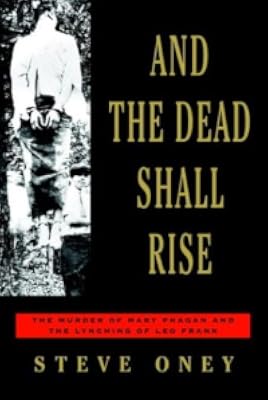
The case of Leo Frank—the Cornell-educated, Jewish supervisor of the Atlanta Pencil Factory who was convicted for the murder of 13-year-old Mary Phagan in 1913 and lynched for the same in 1915—has been with me much as of late. In the last three weeks, I have reviewed Steve Oney’s And the Dead Shall Rise: The Murder of Mary Phagan and the Lynching of Leo Frank (Pantheon, 2003); attended another performance of Alfred Uhry and Jason Robert Brown’s musical “Parade” (this time with my 13-year-old daughter); and shopped the Austin Jewish Book Fair where I bought a young adult book by Elaine Marie Alphin: An Unspeakable Crime: The Prosecution and Persecution of Leo Frank (CarolRhoda Books, 2010).
Would that for every superb work of show more adult nonfiction (such as Mr. Oney’s), there were another equally compelling, young adult version (such as Ms. Alphin’s). Let’s face it: We can’t all invest the time to read the definitive work on every topic of interest. And the Dead Shall Rise is over 700 pages long. An Unspeakable Crime is only 152.
If you want concise, yet substantial information on an important subject, look to the young adult section of your bookstore or library. You may even find, as I have, that reading the young adult version enhances your experience of the adult version. For instance, Alphin provides a timeline and a list of characters—something I had wished for while reading Oney. Most importantly, Alphin offers a trim storyline which is worth reading before the Oney book as a preview or after it as a review.
Alphin successfully presents her young readers with the social context in which this drama unfolded, explaining that not only was Frank a Jew, but also a northerner and an industrialist who was perceived as imposing a new and unwelcome order on the traditionally agrarian south. Just when the teen reader would feel overwhelmed by the failure of Frank’s appeals, Alphin explains: “. . . each court’s decision had to be based on points of law, not common sense.” There were also political scores to be settled and elections to be won—complicated motives that challenge how a teen understands justice and society.
Alphin does not shy away from grim details—the condition Mary’s strangled body was found in, the possibility that blood on her dress was the result of menstruation rather than rape, the knife-wielding inmate at the Georgia State Prison Farm who slashed Leo’s throat, or the grinding of Leo’s face in the dirt after he was cut down from the tree.
There are lurid details that Alphin thankfully left out (my daughter does not need to read about Jim Conley’s anal intercourse with Annie Maude Carter). But there’s one detail I wish Alphin had kept in: the shit in the shaft. When detectives escorted Frank to the factory to identify the body, they rode the elevator to the basement where they were met by a horrible stench as the elevator car landed on fresh feces. Jim Conley had moved his bowels on the basement floor in the elevator shaft while the elevator car was parked above; ergo, he could not have carried Mary’s body with Frank on the elevator to the basement—as he testified in court—without disturbing the feces. Interestingly, the logistics of the elevator car, shaft, basement, and trap door finally made sense to me because of an illustration in Alphin’s book.
Teenage workers in the pencil factory played a pivotal role in Frank’s trial, and Alphin uses their stories to pose important questions to her young readers: Why did so many people lie on the witness stand? Was it peer pressure or emotional mass hysteria? She concludes the book with the story of Alonzo Mann, Frank’s 14-year-old office boy, who, almost 70 years later in 1982, signed an affidavit stating that he saw Conley carrying Mary’s body, but failed to testify to this because he feared retaliation from Conley and because his parents told him not to get involved.
In 2011, An Unspeakable Crime received both IPPY (Independent Publishers) and NCSS (National Council for the Social Sciences) Carter G. Woodson awards for young adult nonfiction. I look forward to giving my daughter this book for Hanukkah. show less
Would that for every superb work of show more adult nonfiction (such as Mr. Oney’s), there were another equally compelling, young adult version (such as Ms. Alphin’s). Let’s face it: We can’t all invest the time to read the definitive work on every topic of interest. And the Dead Shall Rise is over 700 pages long. An Unspeakable Crime is only 152.
If you want concise, yet substantial information on an important subject, look to the young adult section of your bookstore or library. You may even find, as I have, that reading the young adult version enhances your experience of the adult version. For instance, Alphin provides a timeline and a list of characters—something I had wished for while reading Oney. Most importantly, Alphin offers a trim storyline which is worth reading before the Oney book as a preview or after it as a review.
Alphin successfully presents her young readers with the social context in which this drama unfolded, explaining that not only was Frank a Jew, but also a northerner and an industrialist who was perceived as imposing a new and unwelcome order on the traditionally agrarian south. Just when the teen reader would feel overwhelmed by the failure of Frank’s appeals, Alphin explains: “. . . each court’s decision had to be based on points of law, not common sense.” There were also political scores to be settled and elections to be won—complicated motives that challenge how a teen understands justice and society.
Alphin does not shy away from grim details—the condition Mary’s strangled body was found in, the possibility that blood on her dress was the result of menstruation rather than rape, the knife-wielding inmate at the Georgia State Prison Farm who slashed Leo’s throat, or the grinding of Leo’s face in the dirt after he was cut down from the tree.
There are lurid details that Alphin thankfully left out (my daughter does not need to read about Jim Conley’s anal intercourse with Annie Maude Carter). But there’s one detail I wish Alphin had kept in: the shit in the shaft. When detectives escorted Frank to the factory to identify the body, they rode the elevator to the basement where they were met by a horrible stench as the elevator car landed on fresh feces. Jim Conley had moved his bowels on the basement floor in the elevator shaft while the elevator car was parked above; ergo, he could not have carried Mary’s body with Frank on the elevator to the basement—as he testified in court—without disturbing the feces. Interestingly, the logistics of the elevator car, shaft, basement, and trap door finally made sense to me because of an illustration in Alphin’s book.
Teenage workers in the pencil factory played a pivotal role in Frank’s trial, and Alphin uses their stories to pose important questions to her young readers: Why did so many people lie on the witness stand? Was it peer pressure or emotional mass hysteria? She concludes the book with the story of Alonzo Mann, Frank’s 14-year-old office boy, who, almost 70 years later in 1982, signed an affidavit stating that he saw Conley carrying Mary’s body, but failed to testify to this because he feared retaliation from Conley and because his parents told him not to get involved.
In 2011, An Unspeakable Crime received both IPPY (Independent Publishers) and NCSS (National Council for the Social Sciences) Carter G. Woodson awards for young adult nonfiction. I look forward to giving my daughter this book for Hanukkah. show less
The last paragraph of this book succinctly summarizes this complete travesty of justice back in 1910s Atlanta. It is UNBELIEVABLE how willingly people submitted to their prejudices and ambitions and twisted the facts in order to send an innocent man to his death. The American justice system today is not entirely perfect either but I like to think we've made considerable thoughtful progress in the century since. Suspenseful, thoughtful, and thoroughly presented for teen readers, with a touch of tempered outrage. Lib notes: since this is a true crime book, there are some references to Mary Phagan being sexually assaulted. The book also includes photos of Leo Frank's lynching.
Controversy over of the lynching of Leo Frank was a passionate cause in its day, and is well known to history buffs, but has been losing visibility over the years.
Alphin's careful research and well-honed skills as an award-winning YA author come together in this riveting tale of a murder case that became a political football.
NOTE: I read a late draft but not yet the finished book, which was a gift from the author.
She wrote this book because she became passionately intent on defending Frank's memory from what she believes to be an unjust conviction and lynching.
Alphin's careful research and well-honed skills as an award-winning YA author come together in this riveting tale of a murder case that became a political football.
NOTE: I read a late draft but not yet the finished book, which was a gift from the author.
She wrote this book because she became passionately intent on defending Frank's memory from what she believes to be an unjust conviction and lynching.
Atlanta, Georgia: April, 1913. 13-year-old Mary Phagan went to pick up her week's pay at the National Pencil Company before she was to join her friends at a parade. She was murdered shortly after collecting her wages, and her badly beaten body was discovered in the factory basement the next morning. There were bloody handprints, some poorly written notes near her body, and very few suspects. The police virtually ignored the factory janitor, and instead focused their investigation on Leo Frank, the factory manager. This is a chronologically organized story of his arrest, prosecution and conviction, and eventual lynching for Mary Phagan's murder. Although the actual murderer confessed to his own lawyer, that information was suppressed. At show more the time, anti-Semitism and anti-Northern feelings were rampant in the South, and the effect these had on justice is chilling. There are photos of the crime scene, court documents, newspaper articles, letters, and images of events surrounding the case. This will be an outstanding addition to 8th grade reading lists -- it works very well with To Kill A Mockingbird. show less
In 1913, thirteen-year-old Mary Phagan went by the pencil factory where she worked to pick up her paycheck. She didn't make it out alive. Police searched for clues as to who had beaten and raped her, at first suspecting the African-American watchman. Eventually they arrested and prosecuted Leo Frank, the factory's Jewish superintendent. Leo Frank was lynched... for a crime he may not have committed.
Painstaking research obviously went into this book and it's a fascinating and important story. I think, though, that it almost goes into too much detail for its audience. I found my attention wandering and I have to admit that I skimmed much of it.
Read more on my blog: http://abbylibrarian.blogspot.com/2010/03/book-review-unspeakable-crime.html
Painstaking research obviously went into this book and it's a fascinating and important story. I think, though, that it almost goes into too much detail for its audience. I found my attention wandering and I have to admit that I skimmed much of it.
Read more on my blog: http://abbylibrarian.blogspot.com/2010/03/book-review-unspeakable-crime.html
2 if eligable
Utilizing primary sources such as newspaper articles, photographs and excerpts from letters, the author recounts the story of Leo Frank who was unjustly accused and tried for the murder of thirteen-year-old Mary Phagan in 1913 Atlanta, and was ultimately lynched. (Grades 7-12)
Members
- Recently Added By
Author Information

24 Works 1,759 Members
Elain Marie Alphin was born in 1955 in San Francisco, California. She attended Rice University and upon graduation she received a Watson Research Fellowship, a grant given to graduating college seniors to fund independent study and travel outside the United States. She spent the next year in England, doing research for a novel she was writing show more about Richard III and his murder of his nephews. She turned her research into a novel for middle-grade readers entitled, Tournament of Time. Her other novels includeded Ghost Cadet, Picture Perfect, The Perfect Shot, and Simon Says. She won the Edgar Award for Best Young Adult Mystery and was named a YALSA Quick Pick for Reluctant Young Adult Readers for the novel Counterfeit Son. She died on August 19, 2014 at age 58. (Bowker Author Biography) show less
Awards and Honors
Awards
Distinctions
Common Knowledge
- People/Characters
- Leo Frank
- Important places
- Atlanta, Georgia, USA
Classifications
- Genres
- Nonfiction, Teen, Tween
- DDC/MDS
- 364.152 — Society, government, & culture Social problems and social services Crime Criminal offenses Offenses against the person Homicide
- LCC
- HV6534 .A7 .A57 — Social sciences Social pathology. Social and public welfare. Criminology Social pathology. Social and public welfare. Criminology Crimes and offenses
- BISAC
Statistics
- Members
- 67
- Popularity
- 467,621
- Reviews
- 8
- Rating
- (4.05)
- Languages
- English
- Media
- Paper, Audiobook, Ebook
- ISBNs
- 6
- ASINs
- 1