On This Page
Description
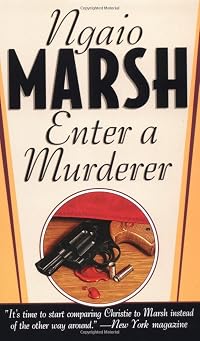
A policeman in the audience sees an all-too-real death scene on a London stage: "Good enough to satisfy the most critical reader of detective stories." —The New York TimesInspector Roderick Alleyn has been invited to an opening night, a new play in which two characters quarrel and then struggle for a gun, with predictably sad results. Even sadder, the gun was not, in fact, loaded with blanks. And when it comes to interviewing witnesses, actors can be a deceptive lot . . .
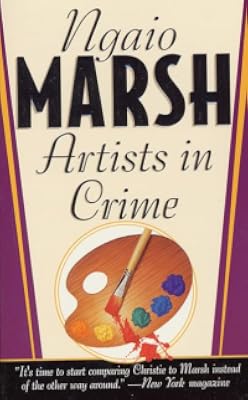
"It's time to show more start comparing Christie to Marsh instead of the other way around." —New York Magazine. show less
Tags
Recommendations















Member Reviews
A perfectly readable, diverting, Golden Age mystery. A thoroughly unlikable actor is shot on stage in the middle of a live performance—who could have swapped out the blanks in the gun for real bullets? There are the wobbles in here that you'd expect from an author's early work, and the occasional gestures towards romantic attraction between the detective Roderick Alleyn and one of the suspects is a bit cringey. Still, I was entertained, particularly since there was something about Alleyn's affect here—glibness over seriousness, polish and a certain bite to the patter—which meant I mentally pictured him as Cary Grant circa His Girl Friday throughout.
Ngaio Marsh’s Enter a Murderer is good fun.
Inspector Roderick Alleyn is off for a night out to the theatre. Appropriately enough, it’s a murder mystery. But artifice becomes bloody reality as the murder victim in the play becomes a real casualty.
Although this is a perfectly competent mystery in terms of structure and plot, the real joys here are the theatre setting and the actors who comprise the suspects. Who would be better at faking innocence than a group of accomplished thespians? Marsh brings this theme out beautifully through vivid characterizations and dialog.
Recommended.
Inspector Roderick Alleyn is off for a night out to the theatre. Appropriately enough, it’s a murder mystery. But artifice becomes bloody reality as the murder victim in the play becomes a real casualty.
Although this is a perfectly competent mystery in terms of structure and plot, the real joys here are the theatre setting and the actors who comprise the suspects. Who would be better at faking innocence than a group of accomplished thespians? Marsh brings this theme out beautifully through vivid characterizations and dialog.
Recommended.
This is one of Dame Ngaio Marsh's theatre mysteries, in which her career as a playwright translates into a deft re-creation of life behind the scenes at a theatre company. In this novel, the opening night of a play features an on-stage death that is all too real. Journalist Nigel Bathgate is involved as a Watson sort of figure to Inspector Alleyn's Holmes, as well as being a friend of one of the cast. The individual characters were amusing to read about, but I kind of slid along through the story, not really registering much about them. I thought I'd read this one before, but if I did, it was rather forgettable. To be fair, though, this is only the second book in the series. If you want something light and theatrical, this might do the job.
Originally published in 1935, Enter a Murderer by Ngaio Marsh is the second of her mysteries to feature Inspector Roderick Alleyn. This particular mystery is set in and about a theatre, a world in which the author knew well as she has spent time touring as an actress and had experience as a director.
This book delves into the theatre world and the personalities of the cast and crew. The murder took place on the stage and was viewed by many including Inspector Alleyn and his friend, Nigel Bathgate. The victim is an actor that no one liked and so there was no limit to the number of suspects. Inspector Alleyn needed to work his way through all the suspects and also look into past scandal and a drug connection. I did feel that during the show more course of the story, the author used too many red herrings so when the actual murderer was finally revealed at the end of the book, I felt a little blah about the whole thing.
This second book helps to develop the character of Inspector Alleyn and he holds his own against so many larger-than-life theatre personalities. The writing was lively with plenty of wit and charm and I will definitely be reading more from this series. show less
This book delves into the theatre world and the personalities of the cast and crew. The murder took place on the stage and was viewed by many including Inspector Alleyn and his friend, Nigel Bathgate. The victim is an actor that no one liked and so there was no limit to the number of suspects. Inspector Alleyn needed to work his way through all the suspects and also look into past scandal and a drug connection. I did feel that during the show more course of the story, the author used too many red herrings so when the actual murderer was finally revealed at the end of the book, I felt a little blah about the whole thing.
This second book helps to develop the character of Inspector Alleyn and he holds his own against so many larger-than-life theatre personalities. The writing was lively with plenty of wit and charm and I will definitely be reading more from this series. show less
A theater company run by a dubious sort, powerful & brash. A leading lady who is always "on stage". A leading man who is more than that to the leading lady. A disgruntled 2nd man, nephew to the theater owner, trying a spot of blackmail & still in love w/ the leading lady. Chief Detective-Inspector Alleyn on the scene and a witness to the murder. Nigel Bathgate, newspaper reporter & friend of CDI Alleyn, he too was at the scene.
During a performance of the West End hit, The Rat and the Beaver, CDI Alleyn & Nigel are witness to the murder of the 2nd man on stage.... Prior to the murder scene, someone has substituted real bullets for blanks and the 2nd man falls dead. Many people have a motive as the 2nd man was a scoundrel, causing show more problems amongst the cast & theater crew and not a few were happy to have him no longer causing problems.
Very interestingly written as Nigel is like a puppy following CDI Alleyn along most everywhere during the investigation and at times causing consternation with his over enthusiasm & jumping to conclusions (I did not like Nigel, he was too emotional over petty things). CDI Alleyn, definitely had a sense of humor, which is a pleasant move over from the traditional CDI's in most other British crime fiction.
Ngaio Marsh is considered to be one of the top British female mystery authors of her time, along with Agatha Christie, Margery Allingham, and Dorothy Sayers. Her career spanned half a century during which time she wrote 32 mystery novels. Her novels have been turned into a BBC series. show less
I usually dislike theatre-centric novels/storylines. This one shows the author has an excellent understanding of the theatre - both on stage and off. Her mystery moves a little slowly, and there were points wherein it felt both Nigel and Alleyn were annoying each other and themselves. However, there are some great quotes, witty moments, and overall its a lot better read than many, many novels.
Written in 1935, this was the second book for Ngaio Marsh, theater director and eventually one of the ‘greats’ in crime fiction writers. To write it, she drew upon her knowledge of theater and the many types that surround the performing arts. Her knowledge of setting and characters is evident, and I can’t say that I thought any of it felt unrealistic or poorly done.
It opens with an unpleasant scene between producer Joseph Saint (born Simes) and his nephew, Arthur Surbonadier (also born Simes), followed by an equally unpleasant scene with Surbonadier and leading lady Stephanie Vaughan. It primes the reader for the confrontation, and gives initial insight into further interactions of the three. The story continues with Nigel show more Bathgate, journalist, inviting his friend Detective Inspector Alleyn to a night at the theater and a chance to meet the crew before the show. It’s a fabulous set-up, allowing the reader a bit of insight Alleyn doesn’t know yet, but also priming the tension for what is to come. So many potential targets for so many reasons. The two men take their seats and production of The Rat and the Beaver.
I’m probably a gullible reader, because I was as surprised with the murder as the audience, expecting someone else to be a better candidate. Detective Alleyn gets to work, with the faithful yet equally gullible Nigel as his note-taking sidekick. The theater is examined, the company patted down, alibis checked. A significant portion of the story takes place within the theater, and this part works well. If the characters seem a bit daffy, it’s only because they are acting types, professionally inclined to perform:
“The players walked through the wings and stood quietly in a semi-circle. They looked attentive and businesslike. It was almost as though they had needed the stage and the lights to give them full solidity. They no longer seemed preposterous or even artificial. They were in their right environment and had become real.”
I enjoyed the writing style. I noted the occasional interesting vocabulary word and but didn’t take the time to write any of them down. ‘Het up’ sticks out in my mind, as I believe the savoir and polished Alleyn used it (settle down: I’ve since looked it up and discovered it’s Scottish origins in the mid-19th c.), but it was interesting, as at least one reviewer was bothered by it. I’m not a period reader, so I couldn’t say what’s appropriate or not, but the colloquialisms seemed less ‘proper’ than expected. Still, Marsh is great at setting a scene and creating a mood.
Characters were fun, with Marsh generally stressing the larger-than-life theater type personality. Alleyn still struggles a bit, and I find my 2o18 enculturation stressed by the concept of detection mid-century. Most of it I could likely have forgiven had I been able to understand Alleyn’s personality. I think Marsh was going for a sort of Cary Grant daffy charm crossed with a know-all copper, but it didn’t work. It just felt too inconsistent to have him seriously questioning a witness, telling Bathgate he must leave, allowing him to stay, challenging Bathgate’s incorrect assumptions, and merrily baiting Fox.
Too bad about the plot, though. She keeps suspense going until the very end (literally the last six pages of my book), and perhaps that explains why I found it only mildly satisfying. The beauty of good Christie is that when the hand is shown, I say, ‘oh yes, of course; that makes sense.’ When the denouement occurs, I thought, ‘what?’ and read the motive paragraph again, whereupon I was left with a different but equally unsatisfied feeling. It also failed to explain some of the red herrings and equally odd behavior by another character.
Still, up until that last bit, I enjoyed it. The first part of the book was quite riveting, so I’ll try to focus on that instead of the unsatisfying end. I’ll certainly continue to the next. show less
It opens with an unpleasant scene between producer Joseph Saint (born Simes) and his nephew, Arthur Surbonadier (also born Simes), followed by an equally unpleasant scene with Surbonadier and leading lady Stephanie Vaughan. It primes the reader for the confrontation, and gives initial insight into further interactions of the three. The story continues with Nigel show more Bathgate, journalist, inviting his friend Detective Inspector Alleyn to a night at the theater and a chance to meet the crew before the show. It’s a fabulous set-up, allowing the reader a bit of insight Alleyn doesn’t know yet, but also priming the tension for what is to come. So many potential targets for so many reasons. The two men take their seats and production of The Rat and the Beaver.
I’m probably a gullible reader, because I was as surprised with the murder as the audience, expecting someone else to be a better candidate. Detective Alleyn gets to work, with the faithful yet equally gullible Nigel as his note-taking sidekick. The theater is examined, the company patted down, alibis checked. A significant portion of the story takes place within the theater, and this part works well. If the characters seem a bit daffy, it’s only because they are acting types, professionally inclined to perform:
“The players walked through the wings and stood quietly in a semi-circle. They looked attentive and businesslike. It was almost as though they had needed the stage and the lights to give them full solidity. They no longer seemed preposterous or even artificial. They were in their right environment and had become real.”
I enjoyed the writing style. I noted the occasional interesting vocabulary word and but didn’t take the time to write any of them down. ‘Het up’ sticks out in my mind, as I believe the savoir and polished Alleyn used it (settle down: I’ve since looked it up and discovered it’s Scottish origins in the mid-19th c.), but it was interesting, as at least one reviewer was bothered by it. I’m not a period reader, so I couldn’t say what’s appropriate or not, but the colloquialisms seemed less ‘proper’ than expected. Still, Marsh is great at setting a scene and creating a mood.
Characters were fun, with Marsh generally stressing the larger-than-life theater type personality. Alleyn still struggles a bit, and I find my 2o18 enculturation stressed by the concept of detection mid-century. Most of it I could likely have forgiven had I been able to understand Alleyn’s personality. I think Marsh was going for a sort of Cary Grant daffy charm crossed with a know-all copper, but it didn’t work. It just felt too inconsistent to have him seriously questioning a witness, telling Bathgate he must leave, allowing him to stay, challenging Bathgate’s incorrect assumptions, and merrily baiting Fox.
Too bad about the plot, though. She keeps suspense going until the very end (literally the last six pages of my book), and perhaps that explains why I found it only mildly satisfying. The beauty of good Christie is that when the hand is shown, I say, ‘oh yes, of course; that makes sense.’ When the denouement occurs, I thought, ‘what?’ and read the motive paragraph again, whereupon I was left with a different but equally unsatisfied feeling. It also failed to explain some of the red herrings and equally odd behavior by another character.
Still, up until that last bit, I enjoyed it. The first part of the book was quite riveting, so I’ll try to focus on that instead of the unsatisfying end. I’ll certainly continue to the next. show less
Members
- Recently Added By
Lists

Crime and Mysteries to Read
746 works; 31 members

British Mystery
469 works; 14 members

Books With Complete Sentence Titles
501 works; 17 members

Books Read in 2020
4,379 works; 124 members

Canon de la narrativa universal del s. XX (cicutadry)
499 works; 3 members
Art Bourgeau's Favorites [Mystery Lovers Companion, 1986]
124 works; 2 members
Author Information

128+ Works 31,597 Members
Ngaio Marsh was born on April 23, 1895 in Christchurch, New Zealand. She attended St. Mary's College and Canterbury University. She worked in the theater acting, producing, and even painting scenery. She was a partner in an interior decorating business in England from 1928 to 1932. She later returned to New Zealand and produced plays for a show more Shakespearean repertory company. She also worked with the Drama Department of Canterbury University. During World War II, she served in the New Zealand Red Cross Transport Unit. She traveled to England frequently and founded the British Commonwealth Theatre Company in 1949. Her first novel, A Man Lay Dead, was published in 1934. She wrote more than 40 books including the Roderick Alleyn Mysteries series and Black Beech and Honeydew. She also wrote theatrical and television plays. She was named to the Order of the British Empire in 1949 and was made Dame Commander of the Order of the British Empire in 1966. The Mystery Writers of America named her a Grand Master in 1977. She died on February 18, 1982 at the age of 82. (Bowker Author Biography) show less
Some Editions
Series

Belongs to Publisher Series
Zephyr Books (32)
Goldmann (4046)
Prisma detectives (39)
Penguin Books (152)
Fontana (845)
Öölane (110)
Colecção Vampiro (477)
Work Relationships
Is contained in
The Ngaio Marsh Collection 01: A Man Lay Dead / Enter a Murderer / The Nursing Home Murder by Ngaio Marsh
Curtain Calls: Three Great Mysteries Enter A Murderer, Night at the Vulcan, Killer Dolphin by Ngaio Marsh
Common Knowledge
- Canonical title*
- Ein Schuss im Theater
- Original title
- Enter a Murderer
- Original publication date
- 1935
- People/Characters
- Roderick Alleyn; Nigel Bathgate; Felix Gardener; Arthur Surbonadier (born Arthur Simes); Jacob Saint (born Jacob Simes); Stephanie Vaughan (show all 12); Janet Emerald; George Simpson; Albert Hickson; Susan Max; Detective-Inspector Fox; Detective-Sergeant Bailey
- Important places
- London, England, UK
- First words
- On May 25th Arthur Subornadier, whose real name was Arthur Simes, went to visit his uncle, Jacob Saint, whose real name was Jacob Simes.
- Last words
- (Click to show. Warning: May contain spoilers.)He held up his stick to a taxi and they drove away in silence.
- Original language
- Englisch
- Canonical DDC/MDS
- 823.912
*Some information comes from Common Knowledge in other languages. Click "Edit" for more information.
Classifications
Statistics
- Members
- 1,170
- Popularity
- 21,487
- Reviews
- 28
- Rating
- (3.59)
- Languages
- 10 — Danish, English, Estonian, French, German, Italian, Norwegian (Bokmål), Portuguese, Spanish, Swedish
- Media
- Paper, Audiobook, Ebook
- ISBNs
- 49
- UPCs
- 1
- ASINs
- 42