On This Page
Description
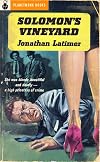
The job was supposed to be simple, but in this shady midwestern town, nothing is as it seems Hard-living private detective Karl Craven didn't ask for trouble when he arrived in Paulton, Missouri--but trouble found him anyway. First it was his partner, Oke Johnson, shot in the head by a silenced rifle. Then it was the femme fatale Ginger Bolton, who took him for a wild ride his first night in town. But it's Penelope Grayson--the sultry blonde whose uncle hired Craven to shake her loose from a show more local cult--who takes the prize. Penelope calls herself a Daughter of Solomon, a member of a group mixed up in everything from viticulture to gambling and prostitution. As Craven gets closer to the cult, he realizes that it isn't the town's only danger. To solve the case of Oke's murder and free Penelope from the grasp of Solomon, Craven must also tangle with a crooked police chief, a treacherous lawyer, and a ruthless gangster--all primed to bring him down unless he can outwit them first. show lessTags
Recommendations
































Member Reviews
This was an interesting one because I don't think I disliked it, but I don't think I was the right reader for it either.
The plot moves quickly, there is always another fight, another woman, another scheme, another revelation, and the book never stops throwing events at the reader. If you enjoy fast-moving pulp adventures with larger-than-life protagonists, there is a lot here to enjoy.
My problem was Karl.
The novel presents Karl as many things at once: killer, private investigator, hard drinker, expert marksman, manipulator, ladies' man, and ultimately the smartest person in the room. For me, I never quite believed in him as a character. The more extraordinary he became, the less convincing he felt. By the end I often felt that the story show more was telling me Karl was brilliant rather than showing me.
The mystery itself also didn't entirely work for me. The final reveal felt fairly obvious, and several of Karl's deductions seemed to arrive because the plot required them rather than because I could follow his reasoning. Readers who enjoy traditional detective stories may find this frustrating.
The women also feel very much of their era. Most are described through Karl's attraction to them, and I rarely felt they developed into fully realized characters in their own right.
That said, I think I may have been reading the book as a mystery when it works better as an adventure story. If Karl is accepted as a pulp hero who barrels through danger, outwits everyone, survives impossible situations, and walks away at the end, then much of the novel makes more sense. The book asks the reader to enjoy the ride rather than examine the logic too closely.
For me, that approach only worked part of the time. I wanted more consequences, more psychology, and more convincing motivations. Still, the novel is energetic, never boring, and certainly memorable.
Not a favorite, but an interesting example of mid-century pulp fiction and one that will likely appeal more to readers who enjoy adventure stories than detective mysteries. show less
The plot moves quickly, there is always another fight, another woman, another scheme, another revelation, and the book never stops throwing events at the reader. If you enjoy fast-moving pulp adventures with larger-than-life protagonists, there is a lot here to enjoy.
My problem was Karl.
The novel presents Karl as many things at once: killer, private investigator, hard drinker, expert marksman, manipulator, ladies' man, and ultimately the smartest person in the room. For me, I never quite believed in him as a character. The more extraordinary he became, the less convincing he felt. By the end I often felt that the story show more was telling me Karl was brilliant rather than showing me.
The mystery itself also didn't entirely work for me. The final reveal felt fairly obvious, and several of Karl's deductions seemed to arrive because the plot required them rather than because I could follow his reasoning. Readers who enjoy traditional detective stories may find this frustrating.
The women also feel very much of their era. Most are described through Karl's attraction to them, and I rarely felt they developed into fully realized characters in their own right.
That said, I think I may have been reading the book as a mystery when it works better as an adventure story. If Karl is accepted as a pulp hero who barrels through danger, outwits everyone, survives impossible situations, and walks away at the end, then much of the novel makes more sense. The book asks the reader to enjoy the ride rather than examine the logic too closely.
For me, that approach only worked part of the time. I wanted more consequences, more psychology, and more convincing motivations. Still, the novel is energetic, never boring, and certainly memorable.
Not a favorite, but an interesting example of mid-century pulp fiction and one that will likely appeal more to readers who enjoy adventure stories than detective mysteries. show less
Karl Craven believed there were two ways to approach the private detective business; underground or on top. The way he saw it, ”Underground you had the element of surprise on your side, but it was harder to move around. On top you went everywhere, taking cracks at everybody, and everybody taking cracks at you. You had to be tough to play it that way.” Craven was tough. He could stop a lousy moke’s fists with his face or scuff up a gangsters shoes with his ribs. He liked his men manly, his Negroes servile, and his sex rough. He was a man’s man with big appetites and I’m not just talking about the 4 lb. steaks and six double lamb chops he scarfed down regularly.
In other words, Karl Craven was not the kind of guy folks would show more describe as warm and fuzzy. Truth be told, he was an asshole.
But sometimes when you are reading hardboiled pulp fiction, warm and fuzzy just doesn’t cut it. You need someone who reminds you of the ripe odor of the locker room at the boxing gym. This is that kind of book. Written in 1941 and banned from publication until 1988, Solomon’s Vineyard has it all, grave-robbing, religious cults, kinky sex, and whorehouse violence. What more could a guy want? An affordable price? How does 99¢ on Kindle sound?
Bottom line: This book is what it is and what it is is entertaining gritty mid-century pulp fiction. Be warned, if my review so far hasn’t tipped you off that this book is far from politically correct, take it from me, this book is far from politically correct. Karl Craven is not someone whose actions I approve of. If you find misogyny, racism and homophobia in a fictional setting, you may wish to look elsewhere for your reading material.
FYI: On a 5-point scale I assign stars based on my assessment of what the book needs in the way of improvements:
• 5 Stars – Nothing at all. If it ain’t broke, don’t fix it.
• 4 Stars – It could stand for a few tweaks here and there but it’s pretty good as it is.
• 3 Stars – A solid C grade. Some serious rewriting would be needed in order for this book to be considered great or memorable.
• 2 Stars – This book needs a lot of work. A good start would be to change the plot, the character development, the writing style and the ending.
• 1 Star - The only thing that would improve this book is a good bonfire. show less
In other words, Karl Craven was not the kind of guy folks would show more describe as warm and fuzzy. Truth be told, he was an asshole.
But sometimes when you are reading hardboiled pulp fiction, warm and fuzzy just doesn’t cut it. You need someone who reminds you of the ripe odor of the locker room at the boxing gym. This is that kind of book. Written in 1941 and banned from publication until 1988, Solomon’s Vineyard has it all, grave-robbing, religious cults, kinky sex, and whorehouse violence. What more could a guy want? An affordable price? How does 99¢ on Kindle sound?
Bottom line: This book is what it is and what it is is entertaining gritty mid-century pulp fiction. Be warned, if my review so far hasn’t tipped you off that this book is far from politically correct, take it from me, this book is far from politically correct. Karl Craven is not someone whose actions I approve of. If you find misogyny, racism and homophobia in a fictional setting, you may wish to look elsewhere for your reading material.
FYI: On a 5-point scale I assign stars based on my assessment of what the book needs in the way of improvements:
• 5 Stars – Nothing at all. If it ain’t broke, don’t fix it.
• 4 Stars – It could stand for a few tweaks here and there but it’s pretty good as it is.
• 3 Stars – A solid C grade. Some serious rewriting would be needed in order for this book to be considered great or memorable.
• 2 Stars – This book needs a lot of work. A good start would be to change the plot, the character development, the writing style and the ending.
• 1 Star - The only thing that would improve this book is a good bonfire. show less
Solomon’s Vineyard is kind of a cult classic in the noir world. Its publication was suppressed in the United States when it was written in 1941, with only a cleaned-up version published.
This is the “complete and unexpurgated” version. I can’t say it contains especially scandalous or graphic scenes, or subject matter to be unusually squeamish about. But maybe I’m jaded. I’ve read noir novels that pushed against my limits much harder than this one — novels by Jim Thompson and James Elroy do that, for better or worse.
That said, it gets pretty gnarly.
The protagonist identifies himself as private detective Karl Craven, although that is probably not his “real” name, just one of the bits of guise he uses to maintain a show more slippery presence. He will not be nailed down, and “Craven” isn’t an accidental name choice.
Craven has been hired by the wealthy Mr. Grayson to find his niece, Penelope Grayson, and return her to her family. But he is also looking to solve, and maybe revenge, the apparent murder of his partner Oke Johnson, killed in the same town of Paulton. The town’s Police Chief, Piper, appears not especially interested in investigating Johnson’s death. Nor is he helpful in . . . . anything.
Penelope, it turns out, is a “Daughter of Solomon,” a member of Solomon’s Vineyard, a religious cult that dominates Paulton in ways that Craven discovers layer by layer throughout the story.
Craven arrives in Paulton with all the subtlety of a grenade. In fact, that pretty well describes his modus operandi. Explode things, survey the pieces, and pick it all up from there. He doesn’t have a master plan — he’s a master of throwing things into dangerous chaos and then Hail Marying his way out of it.
Solomon’s Vineyard is an especially nasty piece of business. It’s not just a cult, it’s a disingenuous masquerade tied up in a web of deception and crime, protected by local gangster Pug Banta.
Craven and Pug make a great pair — both speak violence as their first language, and they are drawn together not only by Craven’s pursuits of Penelope and of Oke Johnson’s murderer, but also by their not altogether virtuous attraction to Ginger, local potential femme fatale.
There are more characters with various coatings of slime on them. “The Princess” appears to be in charge of the cult, but not really, and she certainly doesn’t believe in it as much as she sees profit in it. Another potential femme fatale.
And there’s Thomas McGee, local lawyer. You’ll have to read the story to figure out McGee. He’s not hard to find — he’s lurking around every corner of the story.
The whole thing is fun, but only if you’re willing to take on the genre. There’s “action” on just about every page, and most of it has a kind of matter-of-fact violence about it that is certainly common in the noir world, but maybe not yours or mine. It’s hard to like anybody, including Craven — he’s about as blasé about beating people up as they come. It’s almost comical that he has qualms about committing murder at a critical point in the story.
Maybe we could like Penelope — she at least has the innocence of youth, brainwashing, and other types of control.
Then there’s the thing that probably was behind the suppression of the book’s initial publication. There’s sex, there’s misogyny — again, you have to know you stood a good chance of getting that when you walked into the genre. But there’s also masochistic sex, although thankfully without much if any graphical description — just words of dialogue.
So, no, it’s not for the squeamish. And it does fall into that category of story where you wonder if we should be normalizing this kind of behavior and these types of characters. Artistic distance is my own response as a reader, and it worked this time. But be warned.
As for the writing, this is worthy of its status as a “classic” noir novel. The dialogue is thick and chewy tough. And the world that Latimer conjures doesn’t have a clean and healthy spot on it. Again, don’t go here if you’re not very genre-friendly. show less
This is the “complete and unexpurgated” version. I can’t say it contains especially scandalous or graphic scenes, or subject matter to be unusually squeamish about. But maybe I’m jaded. I’ve read noir novels that pushed against my limits much harder than this one — novels by Jim Thompson and James Elroy do that, for better or worse.
That said, it gets pretty gnarly.
The protagonist identifies himself as private detective Karl Craven, although that is probably not his “real” name, just one of the bits of guise he uses to maintain a show more slippery presence. He will not be nailed down, and “Craven” isn’t an accidental name choice.
Craven has been hired by the wealthy Mr. Grayson to find his niece, Penelope Grayson, and return her to her family. But he is also looking to solve, and maybe revenge, the apparent murder of his partner Oke Johnson, killed in the same town of Paulton. The town’s Police Chief, Piper, appears not especially interested in investigating Johnson’s death. Nor is he helpful in . . . . anything.
Penelope, it turns out, is a “Daughter of Solomon,” a member of Solomon’s Vineyard, a religious cult that dominates Paulton in ways that Craven discovers layer by layer throughout the story.
Craven arrives in Paulton with all the subtlety of a grenade. In fact, that pretty well describes his modus operandi. Explode things, survey the pieces, and pick it all up from there. He doesn’t have a master plan — he’s a master of throwing things into dangerous chaos and then Hail Marying his way out of it.
Solomon’s Vineyard is an especially nasty piece of business. It’s not just a cult, it’s a disingenuous masquerade tied up in a web of deception and crime, protected by local gangster Pug Banta.
Craven and Pug make a great pair — both speak violence as their first language, and they are drawn together not only by Craven’s pursuits of Penelope and of Oke Johnson’s murderer, but also by their not altogether virtuous attraction to Ginger, local potential femme fatale.
There are more characters with various coatings of slime on them. “The Princess” appears to be in charge of the cult, but not really, and she certainly doesn’t believe in it as much as she sees profit in it. Another potential femme fatale.
And there’s Thomas McGee, local lawyer. You’ll have to read the story to figure out McGee. He’s not hard to find — he’s lurking around every corner of the story.
The whole thing is fun, but only if you’re willing to take on the genre. There’s “action” on just about every page, and most of it has a kind of matter-of-fact violence about it that is certainly common in the noir world, but maybe not yours or mine. It’s hard to like anybody, including Craven — he’s about as blasé about beating people up as they come. It’s almost comical that he has qualms about committing murder at a critical point in the story.
Maybe we could like Penelope — she at least has the innocence of youth, brainwashing, and other types of control.
Then there’s the thing that probably was behind the suppression of the book’s initial publication. There’s sex, there’s misogyny — again, you have to know you stood a good chance of getting that when you walked into the genre. But there’s also masochistic sex, although thankfully without much if any graphical description — just words of dialogue.
So, no, it’s not for the squeamish. And it does fall into that category of story where you wonder if we should be normalizing this kind of behavior and these types of characters. Artistic distance is my own response as a reader, and it worked this time. But be warned.
As for the writing, this is worthy of its status as a “classic” noir novel. The dialogue is thick and chewy tough. And the world that Latimer conjures doesn’t have a clean and healthy spot on it. Again, don’t go here if you’re not very genre-friendly. show less
Solomon’s Vineyard by Jonathan Latimer is a short, violent, hard boiled crime story that was written in 1941. Although known for more humorous noir stories, Solomon’s Vineyard takes a dark turn and was considered too violent and too risque to be published and was held up for a number a years in America. Of course, by today’s standards, there isn’t much shock value in this story about a private investigator trying to rescue a young girl from a strange religious cult, but this story of murder, violence, perverse sexuality and twisted religion was considered extremely disturbing.
I found myself being reminded for the gritty crime novels of John D. MacDonald. The writing isn’t up to the standards of Raymond Chandler or Dashiell show more Hammett, although Jonathan Latimer was a crony of both these authors. There were definite cringe moments from the main characters treatment of Negroes to his thoughts on women but overall this is a fine example of a pulp novel that takes it’s readers on a wild ride. show less
I found myself being reminded for the gritty crime novels of John D. MacDonald. The writing isn’t up to the standards of Raymond Chandler or Dashiell show more Hammett, although Jonathan Latimer was a crony of both these authors. There were definite cringe moments from the main characters treatment of Negroes to his thoughts on women but overall this is a fine example of a pulp novel that takes it’s readers on a wild ride. show less
A private detective is hired to bring a rich man's niece home. But the niece is being held captive by a religious cult with a sinister plan for the girl, and the cult is led by a beautiful blonde. There's also a local mob boss, who has the prettiest girl in town.
This book was written in 1941 but banned from publication in the U.S. until 1988, though I can't figure out why. The "kinky" sex scenes are brief and almost laughable, but no more graphic than any other pulp writing at the time.
The writing can be flat as a pancake for a few paragraphs here and there but Latimer is good at action, with gangland shoot outs and fistfights being plentiful. So are double-crosses and deaths; this detective gets everybody involved in his problems.
My show more beef is with the publisher, Black Mask. This book takes sloppy editing to new lows. Paragraph structures are often wrong, dialogue is attached to previous dialogue so that the reader has to guess which character is speaking and the spelling mistakes are too numerous to count. For some reason, the word "off" is replaced with "oil" in almost every instance.
However, I really enjoyed the exciting story with all its intrigue and it's a a true example of hardboiled pulp. show less
This book was written in 1941 but banned from publication in the U.S. until 1988, though I can't figure out why. The "kinky" sex scenes are brief and almost laughable, but no more graphic than any other pulp writing at the time.
The writing can be flat as a pancake for a few paragraphs here and there but Latimer is good at action, with gangland shoot outs and fistfights being plentiful. So are double-crosses and deaths; this detective gets everybody involved in his problems.
My show more beef is with the publisher, Black Mask. This book takes sloppy editing to new lows. Paragraph structures are often wrong, dialogue is attached to previous dialogue so that the reader has to guess which character is speaking and the spelling mistakes are too numerous to count. For some reason, the word "off" is replaced with "oil" in almost every instance.
However, I really enjoyed the exciting story with all its intrigue and it's a a true example of hardboiled pulp. show less
You can't get much more hard-core pulp fiction that this one. Apparently, although this book was written in 1941, it was considered too risque to be published in the U.S. When it was first published, it was highly expurgated. I presume Munseys.com (oops, it seems Munsey's has gone down the toilet. Bummer that) provided me with a more-or-less original version. It certainly wasn't tame.
So, we have a private detective, Karl Craven, who is to "rescue" a young woman from a religious cult, known as Solomon's Vineyard. When he shows up at the town where he is to do his work, he finds his partner has been murdered. The religious cult appears to be part mystical and part racket, i.e. they seem to be into drugs, illegal booze and other things. show more While in the process of skirt chasing a red-headed hottie, named Ginger, and gambling (presumably in his spare time, when he's not doing his job), Craven falls afoul the local mob boss. He also becomes involved with "Princess", the woman who oversees the lives of the women at the religious cult center. So anyway, we have lots of womanizing, amazing feats of hard drinking, drugs, gambling, prostitution, and even human sacrifice. What could be more fun?
Actually, it's not a badly written book, so one could do worse than sink into its scenes of general degradation. We all need that once in a while, right? show less
So, we have a private detective, Karl Craven, who is to "rescue" a young woman from a religious cult, known as Solomon's Vineyard. When he shows up at the town where he is to do his work, he finds his partner has been murdered. The religious cult appears to be part mystical and part racket, i.e. they seem to be into drugs, illegal booze and other things. show more While in the process of skirt chasing a red-headed hottie, named Ginger, and gambling (presumably in his spare time, when he's not doing his job), Craven falls afoul the local mob boss. He also becomes involved with "Princess", the woman who oversees the lives of the women at the religious cult center. So anyway, we have lots of womanizing, amazing feats of hard drinking, drugs, gambling, prostitution, and even human sacrifice. What could be more fun?
Actually, it's not a badly written book, so one could do worse than sink into its scenes of general degradation. We all need that once in a while, right? show less
Lots of fun but a little too reminiscent of Hammett's Red Harvest, except with a good tongue in cheek sense of humor that livens up an otherwise grim tale. The protagonist is completely cold blooded, as he proves in the closing pages--but then, what else could he do?
Members
- Recently Added By
Lists

Books mentioned in Julian Symons’ Bloody Murder
438 works; 6 members
Author Information

18+ Works 741 Members
Series

Belongs to Publisher Series
Common Knowledge
- Canonical title
- Solomon's Vineyard
- Original title
- Solomon's Vineyard
- Original publication date
- 1941
- People/Characters
- Karl Craven
- Original language
- English US
- Disambiguation notice
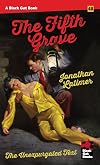
- The Fifth Grave is a heavily edited/censored version of Solomon's Vineyard.
Classifications
Statistics
- Members
- 139
- Popularity
- 236,290
- Reviews
- 10
- Rating
- (3.72)
- Languages
- 6 — Catalan, English, French, German, Italian, Spanish
- Media
- Paper, Audiobook, Ebook
- ISBNs
- 14
- ASINs
- 7