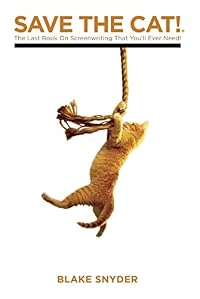
Save the Cat! The Last Book on Screenwriting That You'll Ever Need
by Blake Snyder
On This Page
Description
Here's what started the phenomenon: the bestseller, for over fifteen years, that's been used by screenwriters around the world! Blake Snyder tells all in this fast, funny, and candid look inside the movie business. Save the Cat is just one of many ironclad rules for making your ideas more marketable and your script more satisfying, others include these: -The four elements of every winning logline -The seven immutable laws of screenplay physics -The ten genres that every movie ever made can show more be categorized by-and why they're important to your script -Why your hero must serve your idea -Mastering the fifteen beats -Creating the Perfect Beast by using The Board to map forty scenes with conflict and emotional change -How to get back on track with proven rules for script repair This ultimate insider's guide reveals the secrets that none dare admit, told by a showbiz veteran who's proven that you can sell your script if you can save the cat. show lessTags
Recommendations
Member Reviews
First, I listened to the audiobook, which was very well read indeed. However, if you actually plan to write screenplays, you should certainly get the actual book. Snyder's step-by-step method may take the wind out of your sails, but it rings true at every point. As he discusses what makes a screenplay work or not (and by "work" he means it will sell), the truth is pretty self-evident, whether we want to admit it or not. It is hard work putting together a story that hits all the "beats" and doesn't have gaping holes. And the only way to have a chance at getting it right is to follow some basic rules such as he outlines here. One of the great things about this book is that it doesn't prat on endlessly about each rule. Snyder's writing is show more to the point, often very funny, and he acknowledges and answers criticisms along the way. He seems like a great guy, which makes his sudden death at age 51 in 2009 so sad. This is a book mostly about the mechanics of screenwriting, but he also gives a few pointers on marketing your screenplay and provides some interesting anecdotes. There is nothing radical or maverick about any of this, of course. It is written by an insider who understands how Hollywood works and has no problems with the system. But no matter how much of an individual you are or how unique you think your story is, you should benefit from such a clear description of a structure that works. Or, if you're like me and just enjoy movies, it is an entertaining look at why so many movies are so much the same and why so many of them don't work. show less
Wow, oh, wow! I learned SO much about story structure from this book. I devoured it on the beach in Mexico, then read it a second time on the plane home, highlighting and furiously taking notes. I've never had so many "aha!" moments when reading anything before. I don't think I'll ever watch movies without trying to break them down into Snyder's "beats" -- and that's a good thing! There's so much here I can apply to structuring my work. A truly inspirational book that I'll be reading again and again. (A )
I sought this book to learn more about the monomyth and a "formula" for a winning story. This book has that, but it's important to be a filter and not a sponge when reading it.
I heard of this book from an Imgur post when Blake Snyder died. It laid out the steps of every top-grossing Hollywood movie. (This poster applied it to Frozen.) I'm always up for anything that makes writing easier so I kept it favorited until I had a chance to really break it down.
But there's more to this book than just "the formula". It's also making sure that you have everything needed to sell a script. Like log lines, a catchy title, and things that don't matter so much in the book-writing world.
And the biggest reason you need to be a filter is that this guy show more makes claims that he's made hundreds of thousands in residuals, been in the industry long enough to know the keys failures and successes, like he's Ron Popeil selling a juicemaster. He's been called "Hollywood's most successful spec screenwriter". The problem? Check out this guy's IMDb page. His claim to fame is Blank Check which was harshly lampooned by The Nostalgia Critic. Second place? Stop! Or My Mom Will Shoot. Occasionally he uses, as examples, older movies and movies I've never heard of. I would think if you want to be successful, you want to keep your case studies as current and outstanding as possible.
So this makes you think "why should we listen?" The answer is because, sometimes, people are better at teaching than doing. And while there are flaws in the technique, the content is solid. Well, I don't know if it works or not, but if you're wise, there's things inside that I believe can help you with writing. show less
I heard of this book from an Imgur post when Blake Snyder died. It laid out the steps of every top-grossing Hollywood movie. (This poster applied it to Frozen.) I'm always up for anything that makes writing easier so I kept it favorited until I had a chance to really break it down.
But there's more to this book than just "the formula". It's also making sure that you have everything needed to sell a script. Like log lines, a catchy title, and things that don't matter so much in the book-writing world.
And the biggest reason you need to be a filter is that this guy show more makes claims that he's made hundreds of thousands in residuals, been in the industry long enough to know the keys failures and successes, like he's Ron Popeil selling a juicemaster. He's been called "Hollywood's most successful spec screenwriter". The problem? Check out this guy's IMDb page. His claim to fame is Blank Check which was harshly lampooned by The Nostalgia Critic. Second place? Stop! Or My Mom Will Shoot. Occasionally he uses, as examples, older movies and movies I've never heard of. I would think if you want to be successful, you want to keep your case studies as current and outstanding as possible.
So this makes you think "why should we listen?" The answer is because, sometimes, people are better at teaching than doing. And while there are flaws in the technique, the content is solid. Well, I don't know if it works or not, but if you're wise, there's things inside that I believe can help you with writing. show less
I love his approach to story structure, and plan to employ it in all my writing.
It didn't age well, especially on gender and other diversity issues. No wonder the comedies of the late 90s all seem really meh now.
It didn't age well, especially on gender and other diversity issues. No wonder the comedies of the late 90s all seem really meh now.
Save the Cat!: The Last Book on Screenwriting You'll Ever Need by Blake Snyder provides a guide to screenwriting from an industry perspective, focusing on what a writer needs to do to prep for the act of writing. These techniques include creating a logline (or one-line), watching and analyzing movies in your chosen genre, creating a beat sheet, and building a board to layout scenes as a form of outlining. Skipping over actually writing process, he then reveals some screenplay "rules" and somethings to look for during edits if the finished draft isn't working.
The Importance of Structure
I've heard a lot of praise for this book, both from screenwriters and from novelists, and a lot of this praise is in regards to Snyder's discussion of show more structure. As both a novelist and a screenwriter, I found this valuable. Understanding the beat points of a story helps a lot in the actual writing process. The beats* let the writer know where important points of action should fall within the story, such as the catalyst that leads the heroine into adventure. (The Save the Cat! website includes a breakdown of the beats in a variety of popular movies, along with other valuable tools, which is awesome.)
Structure is especially vital to screenwriting, where space (i.e. movie length) is limited. Snyder talks about specific page numbers where certain plot points should fall (midpoint on page 55, for example). In the movie industry, these specific plot points are the kinds of things executives and decision makers are looking for, especially from new writers.
For the novelist, this strict structure seems less relevant, but there's oodles of more leeway. Though it can help create a framework around which to build the giant story that is a novel.
Simple Tools
Another great piece of advice Snyder gives for both kinds of writing is being able to sum up the story in a single sentence or two, called a logline. The logline should state the heroine's objective, highlight obstacles, and have a hook. For example:
Legally Blonde – When a blonde sorority queen is dumped by her boyfriend, she decides to follow him to law school to get him back and, once there, learns she has more legal savvy than she ever imagined. (from IMDB)
The simple summary helps the writer (screenwriter or novelist) get clear on their story before writing, provides an anchor as they work through actually writing, and gives them an easy, simply summary to use if they get the chance to pitch to an agent. Kristen Lamb has a great discussion of this bit of advice on her blog.
The book is full of simple to follow advice like this (if not always easy to execute).
What Drove Me Bananas
Save the Cat! is written in a snappy, conversational tone, which is great because it makes it an easy read. But it also came off sounding pompous, like I could see his smug smile reverberating through the text, and sometimes grated on my nerves. It's clear Snyder had a preference, he wrote and mostly enjoyed family and romantic comedies. So, it's when he talks about the genres he's not into and is less comfortable with that I found myself wanting to rage and beat him over the head with his own book.
Clearly, this was a bias on Snyder's part. He doesn't get these kinds of flicks and seems to not be hot on ind flicks. That's fine, but it annoys the frack out of me that he's including this bias as part of his "rules" and it distracted me from focusing on the valuable tools he was teaching.
I've put the ranty bits on my blog, for those who are interested.
Taking Action
Ultimately, none of these annoyances detract from the core tools and the value of any writing or advice book is whether it inspires the reader to actually take action and get to work. After reading Save the Cat!, I immediately jumped to work. I started creating loglines for all the novel ideas I've been working on and planning and I bought a board to lay out the scenes and acts in a tactile manner (I've been needed a new way to approach my current novel). The book also has me thinking about all the screenplay ideas I have on hold. I've learned oodles of valuable tools and my creative juices are flowing, so this book is a win. show less
The Importance of Structure
I've heard a lot of praise for this book, both from screenwriters and from novelists, and a lot of this praise is in regards to Snyder's discussion of show more structure. As both a novelist and a screenwriter, I found this valuable. Understanding the beat points of a story helps a lot in the actual writing process. The beats* let the writer know where important points of action should fall within the story, such as the catalyst that leads the heroine into adventure. (The Save the Cat! website includes a breakdown of the beats in a variety of popular movies, along with other valuable tools, which is awesome.)
Structure is especially vital to screenwriting, where space (i.e. movie length) is limited. Snyder talks about specific page numbers where certain plot points should fall (midpoint on page 55, for example). In the movie industry, these specific plot points are the kinds of things executives and decision makers are looking for, especially from new writers.
For the novelist, this strict structure seems less relevant, but there's oodles of more leeway. Though it can help create a framework around which to build the giant story that is a novel.
Simple Tools
Another great piece of advice Snyder gives for both kinds of writing is being able to sum up the story in a single sentence or two, called a logline. The logline should state the heroine's objective, highlight obstacles, and have a hook. For example:
Legally Blonde – When a blonde sorority queen is dumped by her boyfriend, she decides to follow him to law school to get him back and, once there, learns she has more legal savvy than she ever imagined. (from IMDB)
The simple summary helps the writer (screenwriter or novelist) get clear on their story before writing, provides an anchor as they work through actually writing, and gives them an easy, simply summary to use if they get the chance to pitch to an agent. Kristen Lamb has a great discussion of this bit of advice on her blog.
The book is full of simple to follow advice like this (if not always easy to execute).
What Drove Me Bananas
Save the Cat! is written in a snappy, conversational tone, which is great because it makes it an easy read. But it also came off sounding pompous, like I could see his smug smile reverberating through the text, and sometimes grated on my nerves. It's clear Snyder had a preference, he wrote and mostly enjoyed family and romantic comedies. So, it's when he talks about the genres he's not into and is less comfortable with that I found myself wanting to rage and beat him over the head with his own book.
Clearly, this was a bias on Snyder's part. He doesn't get these kinds of flicks and seems to not be hot on ind flicks. That's fine, but it annoys the frack out of me that he's including this bias as part of his "rules" and it distracted me from focusing on the valuable tools he was teaching.
I've put the ranty bits on my blog, for those who are interested.
Taking Action
Ultimately, none of these annoyances detract from the core tools and the value of any writing or advice book is whether it inspires the reader to actually take action and get to work. After reading Save the Cat!, I immediately jumped to work. I started creating loglines for all the novel ideas I've been working on and planning and I bought a board to lay out the scenes and acts in a tactile manner (I've been needed a new way to approach my current novel). The book also has me thinking about all the screenplay ideas I have on hold. I've learned oodles of valuable tools and my creative juices are flowing, so this book is a win. show less
THE book to read if you're just considering screenwriting. And not a bad book to read if you're already well into it. Snyder has been in the business his entire life, and he KNOWS what it takes to make it. His explanation of beats and how to use them is the best I've ever come across, and he's very readable and funny.
This book is aimed specifically at screenwriters, and that focus is clear on every page. It is also useful for novelists (which I aspire to be), because it talks very clearly about story structure - what needs to happen when, who the characters need to be to keep the audience engaged, and so on.
He starts with encapsulating and sharpening the essentials of the story - for screenwriters, this is the log line. What that log line needs to communicate in a sentence or two provides clarity for the writer as well as for the audience.
He is explicit about the basic genres for stories (not genres like Romantic Comedy or Horror, but rather things like "Rites of Passage" or "Monster in the House"). Then, no matter what genre your story is, how to show more figure out the "beats" of the story. Why does it pull you forward? because this happens, then that, and so on. I particularly found the discussion of the explicit purpose for each beat to be helpful for plotting out a story.
Then he talks about how to look at a story and figure out what went wrong - are the stakes high enough? Has the main character changed enough? and so on.
The book is short and to the point. He knows what he wants to say, and gets it out on the page clearly, succinctly, and with examples from movies you have probably seen - dramas, comedies, horror, whatever.
Fascinating to see the essentials of telling a story so explicitly and clearly stated. Absolutely recommended for anyone writing a story, whether wholly fiction, or based in fact. show less
He starts with encapsulating and sharpening the essentials of the story - for screenwriters, this is the log line. What that log line needs to communicate in a sentence or two provides clarity for the writer as well as for the audience.
He is explicit about the basic genres for stories (not genres like Romantic Comedy or Horror, but rather things like "Rites of Passage" or "Monster in the House"). Then, no matter what genre your story is, how to show more figure out the "beats" of the story. Why does it pull you forward? because this happens, then that, and so on. I particularly found the discussion of the explicit purpose for each beat to be helpful for plotting out a story.
Then he talks about how to look at a story and figure out what went wrong - are the stakes high enough? Has the main character changed enough? and so on.
The book is short and to the point. He knows what he wants to say, and gets it out on the page clearly, succinctly, and with examples from movies you have probably seen - dramas, comedies, horror, whatever.
Fascinating to see the essentials of telling a story so explicitly and clearly stated. Absolutely recommended for anyone writing a story, whether wholly fiction, or based in fact. show less
Members
- Recently Added By
Lists

Books Read in 2023
5,547 works; 145 members

Creativity Books
4 works; 1 member
Author Information

7 Works 1,883 Members
Series
Belongs to Publisher Series
Common Knowledge
- Canonical title
- Save the Cat! The Last Book on Screenwriting That You'll Ever Need
- Original title
- Save the Cat! The Last Book on Screenwriting That You'll Ever Need
- Original publication date
- 2005
- First words
- We've all had this experience...
It's Saturday night.
You and your friends have decided to see a movie.
One of you is picked to read the choices from the newspaper while the others listen and decide. A... (show all)nd if you are an inspiring spec screenwriter, you're about to learn a very important lesson.
If you've ever had the honor, if you've ever been the one elected to read the film choices for a group of gathered friends... - Last words
- (Click to show. Warning: May contain spoilers.)Because having fun lets you know you're on the right track. So that when you write those two dazzling words, FADE IN:, the hundredth time, you're as excited as you were when you wrote them the first.
- Canonical DDC/MDS
- 808.2'3-dc22
- Canonical LCC
- PN1996.S65
Classifications
Statistics
- Members
- 1,523
- Popularity
- 15,014
- Reviews
- 35
- Rating
- (3.92)
- Languages
- 5 — English, German, Italian, Korean, Spanish
- Media
- Paper, Audiobook, Ebook
- ISBNs
- 15
- ASINs
- 5