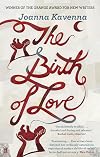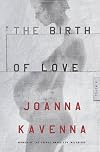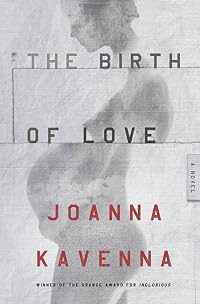
The Birth of Love
by Joanna Kavenna
On This Page
Description
Vienna1865: Dr Ignaz Semmelweis has been hounded into a lunatic asylum, ridiculed for his claim that doctors' unwashed hands are the root cause of childbed fever. The deaths of thousands of mothers are on his conscience and his dreams are filled with blood. 2153: humans are birthed and raised in breeding centres, nurtured by strangers and deprived of familial love. Miraculously, a woman conceives, and Prisoner 730004 stands trial for concealing it. London in 2009: Michael Stone's novel about show more Semmelweis has been published, after years of rejection. But while Michael absorbs his disconcerting success, his estranged mother is dying and asks to see him again. As Michael vacillates, Brigid Hayes, exhausted and uncertain whether she can endure the trials ahead, begins the labour of her second child. A beautifully constructed and immensely powerful work about motherhood that is also a story of rebellion, isolation and the damage done by rigid ideologies. show lessTags
Recommendations




































Member Reviews
An intriguing and original novel of ideas, with childbirth at its centre. There are four strands to this story, and the first two thirds of the book tells them in alternate long chapters.
The first is based on the true story of Ignaz Semmelweis, a nineteenth century Hungarian doctor who discovered that the deadly epidemics of puerperal sepsis ("childbed fever") in the maternity wards of the day were transmitted by doctors' hands, and could be prevented by handwashing. His ideas were rejected by colleagues and he eventually died in a lunatic asylum. This part of the story is narrated by a benevolent visitor to the asylum.
The second focuses on the birth of a modern child and specifically the mother's experiences in labour, as she show more attempts a home birth while looking after her first child.
The third is the story of the writer of the Semmelweis story, a failing single novelist in his fifties who is suddenly confronted with the media after his book is recognised - this section is initially more comic in tone, but becomes darker once it starts focusing on his relationship with his ailing mother.
The fourth is set in a dystopian authoritarian future with echoes of Huxley's Brave New World in which natural childbirth is forbidden, and tells the story of a group of escapees who recolonise the Lofoten islands to escape from a strictly regulated city after one of the sterilised women mysteriously becomes pregnant.
The final third of the book mixes these strands and to some extent brings them together, though I'm not sure this is entirely successful.
The novel's central themes are the way modern society conflicts with primal human instincts and natural processes, and also the way in which visionary thinkers are rejected by the cultures they challenge.
A flawed book perhaps, but a very readable one, which I found very stimulating. show less
The first is based on the true story of Ignaz Semmelweis, a nineteenth century Hungarian doctor who discovered that the deadly epidemics of puerperal sepsis ("childbed fever") in the maternity wards of the day were transmitted by doctors' hands, and could be prevented by handwashing. His ideas were rejected by colleagues and he eventually died in a lunatic asylum. This part of the story is narrated by a benevolent visitor to the asylum.
The second focuses on the birth of a modern child and specifically the mother's experiences in labour, as she show more attempts a home birth while looking after her first child.
The third is the story of the writer of the Semmelweis story, a failing single novelist in his fifties who is suddenly confronted with the media after his book is recognised - this section is initially more comic in tone, but becomes darker once it starts focusing on his relationship with his ailing mother.
The fourth is set in a dystopian authoritarian future with echoes of Huxley's Brave New World in which natural childbirth is forbidden, and tells the story of a group of escapees who recolonise the Lofoten islands to escape from a strictly regulated city after one of the sterilised women mysteriously becomes pregnant.
The final third of the book mixes these strands and to some extent brings them together, though I'm not sure this is entirely successful.
The novel's central themes are the way modern society conflicts with primal human instincts and natural processes, and also the way in which visionary thinkers are rejected by the cultures they challenge.
A flawed book perhaps, but a very readable one, which I found very stimulating. show less
One of the characters in The Birth of Love says, "'Men are unlikely to read a book about childbirth. It's unfortunate, but there's not much to be done.'" And by the time I had finished the book I wondered if that sentence shouldn't also apply to women.
This novel contains four interrelated and alternating stories: one set in Vienna in 1865, two set in the present (one about a pregnant woman giving birth and one about the writer of the first story), and finally a story set in 2153, which we learn is about a decedent of the mother in the second story. All of them are about birth in various forms, three about giving birth to a baby and one about the labor that goes into writing a book.
The different threads are reasonably well tied together, show more each interesting in its own right, but none enough to sustain an entire novel or even novella by itself.
Some of the psychological perspectives, mostly from the mother's perspective but also from the father's, seemed strikingly accurate.
Main complaint is that some of it is a bit hokey or obvious or bludgeoning of the same theme. But that doesn't detract from the good writing and originality. show less
This novel contains four interrelated and alternating stories: one set in Vienna in 1865, two set in the present (one about a pregnant woman giving birth and one about the writer of the first story), and finally a story set in 2153, which we learn is about a decedent of the mother in the second story. All of them are about birth in various forms, three about giving birth to a baby and one about the labor that goes into writing a book.
The different threads are reasonably well tied together, show more each interesting in its own right, but none enough to sustain an entire novel or even novella by itself.
Some of the psychological perspectives, mostly from the mother's perspective but also from the father's, seemed strikingly accurate.
Main complaint is that some of it is a bit hokey or obvious or bludgeoning of the same theme. But that doesn't detract from the good writing and originality. show less
One of the characters in The Birth of Love says, "'Men are unlikely to read a book about childbirth. It's unfortunate, but there's not much to be done.'" And by the time I had finished the book I wondered if that sentence shouldn't also apply to women.
This novel contains four interrelated and alternating stories: one set in Vienna in 1865, two set in the present (one about a pregnant woman giving birth and one about the writer of the first story), and finally a story set in 2153, which we learn is about a decedent of the mother in the second story. All of them are about birth in various forms, three about giving birth to a baby and one about the labor that goes into writing a book.
The different threads are reasonably well tied together, show more each interesting in its own right, but none enough to sustain an entire novel or even novella by itself.
Some of the psychological perspectives, mostly from the mother's perspective but also from the father's, seemed strikingly accurate.
Main complaint is that some of it is a bit hokey or obvious or bludgeoning of the same theme. But that doesn't detract from the good writing and originality. show less
This novel contains four interrelated and alternating stories: one set in Vienna in 1865, two set in the present (one about a pregnant woman giving birth and one about the writer of the first story), and finally a story set in 2153, which we learn is about a decedent of the mother in the second story. All of them are about birth in various forms, three about giving birth to a baby and one about the labor that goes into writing a book.
The different threads are reasonably well tied together, show more each interesting in its own right, but none enough to sustain an entire novel or even novella by itself.
Some of the psychological perspectives, mostly from the mother's perspective but also from the father's, seemed strikingly accurate.
Main complaint is that some of it is a bit hokey or obvious or bludgeoning of the same theme. But that doesn't detract from the good writing and originality. show less
The Birth of Love opens with a glimpse of three of the four characters whose perspectives fill the chambers of this second novel. In a single page, readers peek into Ignaz Semmelweis’ beating, Prisoner 730004’s confinement, and Brigid’s labour pain, before being launched into the narrative proper.
It’s gripping stuff, and the novel’s first segment is atmospheric; its strong pacing pulls readers into the present-day elements, just as the 1865 visitor to the Lazarettgasse asylum is pulled into the story of Ignaz Semmelweis.
More here if you're keen...
It’s gripping stuff, and the novel’s first segment is atmospheric; its strong pacing pulls readers into the present-day elements, just as the 1865 visitor to the Lazarettgasse asylum is pulled into the story of Ignaz Semmelweis.
More here if you're keen...
A disappointment. I was so intrigued by the description of this book, but the three strands didn't really tie together well, and nothing wowed me.
A disappointment. I was so intrigued by the description of this book, but the three strands didn't really tie together well, and nothing wowed me.
Members
- Recently Added By
Lists

Dystopian and Apocalyptic Literature
350 works; 74 members

A Novel Cure
742 works; 23 members

Historical Figures in Fiction
51 works; 5 members
Author Information

9+ Works 776 Members
Joanna Kavenna has recently been the Alistair Horne Fellow at St. Anthony's College, Oxford.
Awards and Honors
Awards
Common Knowledge
- Canonical title
- The Birth of Love
- Original publication date
- 2010
Classifications
Statistics
- Members
- 87
- Popularity
- 368,491
- Reviews
- 7
- Rating
- (3.57)
- Languages
- English
- Media
- Paper, Ebook
- ISBNs
- 5
- ASINs
- 3