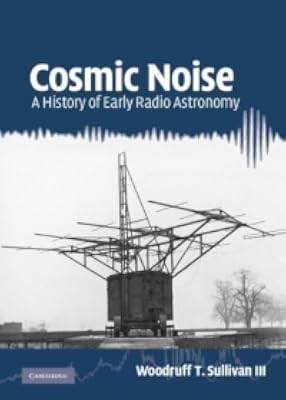
Cosmic Noise: A History of Early Radio Astronomy
by Woodruff T. Sullivan, III
On This Page
Description
"Providing a definitive history of the formative years of radio astronomy, this book is invaluable for historians of science, scientists and engineers. The whole of worldwide radio and radar astronomy is covered, beginning with the discoveries by Jansky and Reber of cosmic noise before World War II, through the wartime detections of solar noise, the discovery of radio stars, lunar and meteor radiation experiments, the detection of the hydrogen spectral line, to the discoveries of Hey, Ryle, show more Lovell and Pawsey in the decade following the war, revealing an entirely different sky from that of visual astronomy. Using contemporary literature, correspondence and photographs, the book tells the story of the people who shaped the intellectual, technical, and social aspects of the field now known as radio astronomy. The book features quotes from over a hundred interviews with pioneering radio astronomers, giving fascinating insights into the development of radio astronomy. - Includes an annotated table of contents as well as a chronological list of references to help the reader trace the history of the subject through key publications - Features quotes from over 100 interviews with pioneering radio astronomers - Uses literature, correspondence and over 180 photographs and illustrations from many sources to tell the fascinating story of radio astronomy"--Provided by publisher. show lessTags
Member Reviews
This is a long haul, but eminently worth it if knowing lots and lots about the beginnings of an important scientific discipline is your bag. It is definitely my bag.
Radio astronomy was the beast that opened up the bits of the electromagnetic spectrum that didn't happen to be visible light (which bits = MOST of the electromagnetic spectrum) for astronomical study. After radio astronomy was accepted and settled -- which took time, and you find out why in this book -- the other wavebands followed suit. It was both easier and harder for them to do so: easier because radio had paved the way, harder because only visible light, radio and selected pieces of the infrared make it to the ground -- X-ray observatories like Chandra have to be placed show more in orbit.
Sullivan writes well, and engagingly, and the book is well structured and informed. It's the product of a gigantic amount of interviewing and original research. It gets off to a slow start, with Sullivan explaining his rationale (and his curious citation form) -- but once the stories get going, they do not stop until many pages later. Highly recommended. show less
Radio astronomy was the beast that opened up the bits of the electromagnetic spectrum that didn't happen to be visible light (which bits = MOST of the electromagnetic spectrum) for astronomical study. After radio astronomy was accepted and settled -- which took time, and you find out why in this book -- the other wavebands followed suit. It was both easier and harder for them to do so: easier because radio had paved the way, harder because only visible light, radio and selected pieces of the infrared make it to the ground -- X-ray observatories like Chandra have to be placed show more in orbit.
Sullivan writes well, and engagingly, and the book is well structured and informed. It's the product of a gigantic amount of interviewing and original research. It gets off to a slow start, with Sullivan explaining his rationale (and his curious citation form) -- but once the stories get going, they do not stop until many pages later. Highly recommended. show less
Members
- Recently Added By
Author Information

5 Works 35 Members
Classifications
Statistics
- Members
- 6
- Popularity
- 3,040,916
- Reviews
- 1
- Rating
- (4.50)
- Languages
- English
- Media
- Paper
- ISBNs
- 1