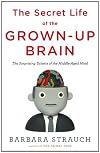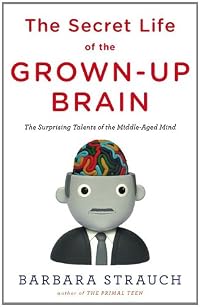
The Secret Life of the Grown-up Brain: The Surprising Talents of the Middle-Aged Mind
by Barbara Strauch
On This Page
Description
In her impeccably researched book, science writer Barbara Strauch explores the latest findings that demonstrate, through the use of technology such as brain scans, that the middle-aged brain is more flexible and more capable than previously thought. By detailing exactly the normal, healthy brain functions over time, Strauch also explains how its optimal processes can be maintained.Tags
Recommendations




Member Reviews
Barbara Strauch, examining the scientific research currently being done on understanding human brains as they age, concludes that the news is, in general, surprisingly good. Middle-aged brains may be a little slower than younger ones, she says, and subject to problems such as lapses of memory, but in other areas we actually improve with age, becoming calmer, more competent, more optimistic, and better at big-picture thinking. Better still, the psychological difficulties of middle age, such as the infamous mid-life crisis or the empty nest syndrome, are more myth than science. And while the possibility of dementia always haunts us as we age, there may well be things we can do to help keep our brains young and fit.
The science she cites show more here, it should be noted, is mostly very preliminary and speculative. After all, as Strauch points out, it hasn't been very long that we've even thought of middle age as a separate stage of life, let alone made a special study of it. So I'm inclined to take her optimistic thoughts on the subject with a small grain of salt. But it is interesting, and some of it sounds very promising.
As someone currently hovering on the cusp of 40 -- roughly the age at which the middle years are said to begin -- I'm not sure I really find it all quite as reassuring as she means it to be, though. The examples she offers of people who feel better and smarter and happier in middle age than they did in their youth all seem to be the kind of ambitious, successful folks with challenging jobs and busy social lives who already make me feel slightly inferior. The niggling thought that just possibly their lifestyle also makes their brains fitter and less likely to deteriorate with age than mine isn't helping my mild fear of facing the big four-oh. And as for the kind of lapses that she describes as hallmarks of normal middle age -- distractibility, a tendency to drift off into daydreaming, forgetting names on the tip of your tongue or what you came into a room to do -- well, those are all things I've been subject to my entire life. The thought that I can expect them to get worse is somewhat alarming.
Still, that's probably just me. And maybe next year when that middle-aged optimism kicks in, I'll feel differently about it, anyway. show less
The science she cites show more here, it should be noted, is mostly very preliminary and speculative. After all, as Strauch points out, it hasn't been very long that we've even thought of middle age as a separate stage of life, let alone made a special study of it. So I'm inclined to take her optimistic thoughts on the subject with a small grain of salt. But it is interesting, and some of it sounds very promising.
As someone currently hovering on the cusp of 40 -- roughly the age at which the middle years are said to begin -- I'm not sure I really find it all quite as reassuring as she means it to be, though. The examples she offers of people who feel better and smarter and happier in middle age than they did in their youth all seem to be the kind of ambitious, successful folks with challenging jobs and busy social lives who already make me feel slightly inferior. The niggling thought that just possibly their lifestyle also makes their brains fitter and less likely to deteriorate with age than mine isn't helping my mild fear of facing the big four-oh. And as for the kind of lapses that she describes as hallmarks of normal middle age -- distractibility, a tendency to drift off into daydreaming, forgetting names on the tip of your tongue or what you came into a room to do -- well, those are all things I've been subject to my entire life. The thought that I can expect them to get worse is somewhat alarming.
Still, that's probably just me. And maybe next year when that middle-aged optimism kicks in, I'll feel differently about it, anyway. show less
Strauch discusses all sorts of interesting studies of the middle-aged brain without losing the reader in too much specialized vocabulary (although I found myself wanting a pronunciation guide for "dentate gyrus"). Her message is generally positive: although the brain does show some wear and tear by your forties and later, it's more efficient, continues to grow and adapt, and while you'll lose some names, you'll gain some wisdom and emotional equilibrium. I was somewhat disappointed by the third section (about what you can do to keep your brain healthy as long as possible), mostly because it's almost all guesswork at this point, and I'm an impatient soul who wants definitive answers. Aerobic exercise: good. Blueberries: maybe they help. show more Socializing? Learning to play piano? Maybe. Probably. Really, it's too soon to know. It's not Strauch's fault that this research is only in the beginning stages, but it was frustrating. Basically, this is a quick and informative read that's likely to leave you feeling at least somewhat reassured about middle age. show less
(Reprinted from the Chicago Center for Literature and Photography [cclapcenter.com]. I am the original author of this essay, as well as the owner of CCLaP; it is not being reprinted illegally.)
I'm about to turn 43, so I'm particularly interested these days in learning more about how the middle-aged brain works, and especially if there is any proven advice yet about ways to stave off the dementia and Alzheimer's that might come later in life, here now in my forties when I can still do something about it; and now we have this entertaining and informative book, which looks at all the recent developments in this field to show us that just within the last ten years, the scientific world has started profoundly reassessing what it knows about show more the way the brain actually works. Written as a series of magazine-style profiles of both industry leaders and experimenters, journalist Barbara Strauch shows for example how recent studies have shown that the human body in fact keeps growing new neural cells over the entire course of its life, directly countering the assumption the medical world has had for over a century; that physical exercise is hands-down the number-one way to stimulate brain cells into more and more efficiency; that taking on a challenging new mental activity in one's fifties, like learning a new language, may have an actual physical effect on your chances of getting Alzheimer's; and that our brain literally starts rewiring itself biochemically starting in our early forties, much like going through a second puberty, the negative effects long ago turned into cliches (like the increasing frequency of forgetting names, which actually does have a biological basis), but with this also being the biological cause of a lot of new good things too, most of which we've mistakenly attributed over history to the cultural process of "gaining wisdom" (like being more patient, having the ability to look at the world in a complex new way, and even just a general proclivity for being happier, possibly as a literal chemical response to such typically overwhelming experiences in those years like losing our parents or developing cancer). Not really a quick-fix how-to book, although containing a bit of that kind of advice (for example, fish really does turn out to be "brain food," as do grapes, olive oil, asparagus tips, and many of the other items in the so-called "Mediterranean diet"), this is instead a smart, plain-written look at all the new actual scientific theories being proposed by the medical community these days, neither pollyannish nor cynical but simply presenting the findings for what they are. Balanced and sensible, this is a great read for my fellow middle-agers who are in the mood for a little good news about their rapidly crumbling bodies, and it comes strongly recommended to that particular audience segment.
Out of 10: 9.3 show less
I'm about to turn 43, so I'm particularly interested these days in learning more about how the middle-aged brain works, and especially if there is any proven advice yet about ways to stave off the dementia and Alzheimer's that might come later in life, here now in my forties when I can still do something about it; and now we have this entertaining and informative book, which looks at all the recent developments in this field to show us that just within the last ten years, the scientific world has started profoundly reassessing what it knows about show more the way the brain actually works. Written as a series of magazine-style profiles of both industry leaders and experimenters, journalist Barbara Strauch shows for example how recent studies have shown that the human body in fact keeps growing new neural cells over the entire course of its life, directly countering the assumption the medical world has had for over a century; that physical exercise is hands-down the number-one way to stimulate brain cells into more and more efficiency; that taking on a challenging new mental activity in one's fifties, like learning a new language, may have an actual physical effect on your chances of getting Alzheimer's; and that our brain literally starts rewiring itself biochemically starting in our early forties, much like going through a second puberty, the negative effects long ago turned into cliches (like the increasing frequency of forgetting names, which actually does have a biological basis), but with this also being the biological cause of a lot of new good things too, most of which we've mistakenly attributed over history to the cultural process of "gaining wisdom" (like being more patient, having the ability to look at the world in a complex new way, and even just a general proclivity for being happier, possibly as a literal chemical response to such typically overwhelming experiences in those years like losing our parents or developing cancer). Not really a quick-fix how-to book, although containing a bit of that kind of advice (for example, fish really does turn out to be "brain food," as do grapes, olive oil, asparagus tips, and many of the other items in the so-called "Mediterranean diet"), this is instead a smart, plain-written look at all the new actual scientific theories being proposed by the medical community these days, neither pollyannish nor cynical but simply presenting the findings for what they are. Balanced and sensible, this is a great read for my fellow middle-agers who are in the mood for a little good news about their rapidly crumbling bodies, and it comes strongly recommended to that particular audience segment.
Out of 10: 9.3 show less
As I approached my seventieth birthday, I had many concerns about the effects of aging on my brain. I feel much better about my future thought processes after reading Barbara Strauch's book. The book is very readable and encouraging, particularly because it is based on scientific research. As we age we lose some brain cells and gain others. We have better judgment and often are more creative. Strauch explains the strengths of experienced people in their 50s (men and women continue to improve mentally through their 50s and into their 60s). She also debunks such myths as the "midlife crisis," and the "empty nest." I highly recommend this book, for people of all ages. It is encouraging to hear something positive about aging, rather than show more the constant harping on age-reversal. show less
After hearing the author interviewed on the NPR show, Fresh Air, I was glad my middle-aged mind remembered enough of it when I got home to buy this book. Unfortunately, it didn't add enough to what I heard on the car radio. In a breezy style, Strauch, a science writer for the New York Times, covers the talents of the middle-aged brain (able to see the big picture and handle multiple complex problems at the same time without stressing out, calmer and happier, etc.), discusses some of the research that shows what's going on in our brains, and identifies some techniques that may help us retain brain power as we age. A quick, reassuring read, but nothing earth-shattering.
I heard an NPR interview with the author on Terry Gross's "Fresh Air" program while sitting in my car eating an ice cream. It was absolutely fascinating interview and i promptly went out and bought the book.
The book is a wonderful summary of the scientific evidence around the middle-aged brain (roughly age 40-65). With the now extended human life span, we have a middle age where one really did not much exist before and much effort has been made to study the brain during this period - many of these studies are now bearing fruit and surprise! it turns out that the gains outweigh the losses and the middle-aged brain is now considered the peak of our cognitive and intellectual powers.
The book is more than a little comforting to those of us show more who sometimes, as the author put it, puts "the bananas in the laundry" or descends the basement stairs only to find when we get to the bottom that we've forgotten what it is we were after. We lose a little gray matter but gain a lot of the "white stuff". The book, which is about 200 pages long, is written in an easy, understandable prose. Strauch pulls out much scientific study but keeps the jargon digestible for all of us non-scientists. Her chapters highlight the various different areas of brain study and what the studies have found.
The book offers more detail than the interview, of course, but not enough to justify my running out and buying it. Still, it was a quick and painless read, enlightening and comforting, and I'll pass it on to a friend. Both the interview and the book on this topic intrigued me enough to make me consider the author's previous book about the adolescent brain... show less
The book is a wonderful summary of the scientific evidence around the middle-aged brain (roughly age 40-65). With the now extended human life span, we have a middle age where one really did not much exist before and much effort has been made to study the brain during this period - many of these studies are now bearing fruit and surprise! it turns out that the gains outweigh the losses and the middle-aged brain is now considered the peak of our cognitive and intellectual powers.
The book is more than a little comforting to those of us show more who sometimes, as the author put it, puts "the bananas in the laundry" or descends the basement stairs only to find when we get to the bottom that we've forgotten what it is we were after. We lose a little gray matter but gain a lot of the "white stuff". The book, which is about 200 pages long, is written in an easy, understandable prose. Strauch pulls out much scientific study but keeps the jargon digestible for all of us non-scientists. Her chapters highlight the various different areas of brain study and what the studies have found.
The book offers more detail than the interview, of course, but not enough to justify my running out and buying it. Still, it was a quick and painless read, enlightening and comforting, and I'll pass it on to a friend. Both the interview and the book on this topic intrigued me enough to make me consider the author's previous book about the adolescent brain... show less
A look at the science of the brain to determine what happens to the brain as we get older. Much of it is better news than we thought, though of course not all rosy. The author writes with an easy style, and doesn't load the work down with a lot of highly technical jargon, so it will be accessible to most readers of high school level or beyond. There are some things that make the book a bit questionable from a science standpoint, however. When discussing what to do to increase our own ability to move toward old age without showing signs of dementia, she picks up on every possible concept, throwing around ideas about antioxidants and free radicals, and attributing powers to food that have not been demonstrated to work. Although she does show more make a point of stating that much of this is in its infancy, she gives short shrift to a growing body of literature that actually conflicts with the findings, and doesn't do a good job of discussing the critical side of the story. Oh, and on a purely style issue: there are a number of cringe-inducing places where the author will say something along the line of: "the brain also.....as well." Ouch. Call an editor. show less
Members
- Recently Added By
Published Reviews
ThingScore 88
added by atbradley
Strauch spotlights a cornucopia of research studies indicating that, contrary to popular belief, the human brain’s ability to function may very well reach its peak between the ages of 40 and 65. HC. 256pp. 2010.
added by shieldwolf
Author Information

5+ Works 542 Members
Barbara Ellen Strauch was born in Evanston, Illinois on May 10, 1951. She received a bachelor's degree in English from the University of California, Berkeley. She worked for newspapers in New England, Venezuela, and Houston before becoming a senior editor at New York Newsday. She ran the Newsday team that won the 1992 Pulitzer Prize for its show more coverage of a midnight subway derailment in Manhattan that left five passengers dead and more than 200 injured. After New York Newsday ceased publication in 1995, she was hired by The New York Times. She worked on the national desk, edited business coverage of the New York metropolitan area, and was media editor. She joined the paper's science department as an assistant editor in 2000. She became health editor in 2004 and science editor in 2011. She wrote two books about the brain entitled The Primal Teen: What the New Discoveries about the Teenage Brain Tell Us about Our Kids and The Secret Life of the Grown-up Brain: The Surprising Talents of the Middle-Aged Mind. She died of breast cancer on April 15, 2015 at the age of 63. (Bowker Author Biography) show less
Common Knowledge
- Original publication date
- 2010-04-15
- First words
- For most of human history, middle age has been largely ignored.
- Last words
- (Click to show. Warning: May contain spoilers.)After all, thanks to her middle-aged brain, my friend got to enjoy the first wonderful whiff of those tall wonderful roses not just once, but twice.
Classifications
- Genres
- Nonfiction, General Nonfiction, Science & Nature
- DDC/MDS
- 616.8900844 — Applied science & technology Medicine & health Diseases, Allergies, Skin Conditions Nervous Disorders: Autism, Anorexia, OCD Mental disorders: bi-polar/schizophrenia
- LCC
- RC451.4 .M54 .S77 — Medicine Internal medicine Internal medicine Neurosciences. Biological psychiatry. Neuropsychiatry Psychiatry
- BISAC
Statistics
- Members
- 365
- Popularity
- 85,241
- Reviews
- 17
- Rating
- (3.62)
- Languages
- English, German, Italian, Portuguese
- Media
- Paper, Audiobook, Ebook
- ISBNs
- 12
- ASINs
- 6