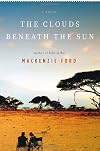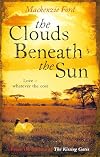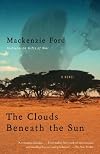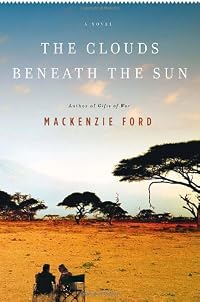
The Clouds Beneath the Sun
by Mackenzie Ford
On This Page
Description
"Kenya, 1961. As a small plane carrying Natalie Nelson lands at a remote airstrip in the Serengeti, Natalie knows she's run just about as far as she can from home. Trained as an archaeologist, she has accepted an invitation to be part of a famous excavating team, her first opportunity to escape England and the painful memories of her past. But before she can get her bearings, the dig is surrounded by controversy involving the local Maasai people--and murder. Compounding the tension, Eleanor show more Deacon, a friend of the Maasai who is leading the excavating mission, watches a rift grow between her two handsome sons. Natalie's growing attraction to one of them soon becomes a passionate affair that turns dangerous when she must give evidence in a trial that could spark even more violence and turmoil"--Cover, p. 2. show lessTags
Recommendations














Member Reviews
This was a VERY frustrating novel, because the plot and the ideas underlying it are extremely compelling, while the writing is blah and the execution uneven.
The story unfolds at a paleontological research camp in a Kenyan gorge, on the eve of independence in 1961/62, and the plot begins with a discovery and a murder and climaxes in a trial and its consequences. (The main characters seem to be very loosely based on the Leakey family, who excavated in Olduvai Gorge, in the sense that there's a family dynasty in charge of the dig.) The main character is Natalie Nelson, who has just received her doctorate at the same time her mother dies and her married lover leaves her, so Kenya is a great refuge. But it soon proves more than that, as she show more becomes the key witness in the murder trial, one which pits Kenya's white community against the Maasai, Kikuyu and other native inhabitants and highlights rival views of what the country's future may hold. But while the ideas are fascinating, the execution is flawed. Natalie spends a lot of time in repetitive agonizing over what the consequences of her testimony will be, and the love triangle at the heart of the book isn't always convincing (or well executed, in the sense of well written.) Few of the characters come alive. Had a very good editor gotten his or her hands on this and cut and shaped the narrative, it could have been a very good book. As it is, it's written in a rather pedestrian way, and while I'd recommend it, it would only be with some caution as it's a bumpy narrative. Still, if you're looking for something set in Kenya in this era, it's lively and it grabbed me. The problem, I think, is that despite all his books, Peter Watson (the author behind the nom de plume) simply isn't a natural storyteller. He has the instincts (i.e. can identify a great plot) but can't follow through. 3.5 stars; I've been generous overall, I think, because I was so fascinated by the setting and the ideas. (I also deducted about half a star for a couple of small but obvious and easily-avoided bloopers, such as the fact that the author has Natalie in attendance at Jesus College, Cambridge, nearly two decades before that institution admitted its first female undergraduates. Tsk, tsk.) show less
The story unfolds at a paleontological research camp in a Kenyan gorge, on the eve of independence in 1961/62, and the plot begins with a discovery and a murder and climaxes in a trial and its consequences. (The main characters seem to be very loosely based on the Leakey family, who excavated in Olduvai Gorge, in the sense that there's a family dynasty in charge of the dig.) The main character is Natalie Nelson, who has just received her doctorate at the same time her mother dies and her married lover leaves her, so Kenya is a great refuge. But it soon proves more than that, as she show more becomes the key witness in the murder trial, one which pits Kenya's white community against the Maasai, Kikuyu and other native inhabitants and highlights rival views of what the country's future may hold. But while the ideas are fascinating, the execution is flawed. Natalie spends a lot of time in repetitive agonizing over what the consequences of her testimony will be, and the love triangle at the heart of the book isn't always convincing (or well executed, in the sense of well written.) Few of the characters come alive. Had a very good editor gotten his or her hands on this and cut and shaped the narrative, it could have been a very good book. As it is, it's written in a rather pedestrian way, and while I'd recommend it, it would only be with some caution as it's a bumpy narrative. Still, if you're looking for something set in Kenya in this era, it's lively and it grabbed me. The problem, I think, is that despite all his books, Peter Watson (the author behind the nom de plume) simply isn't a natural storyteller. He has the instincts (i.e. can identify a great plot) but can't follow through. 3.5 stars; I've been generous overall, I think, because I was so fascinated by the setting and the ideas. (I also deducted about half a star for a couple of small but obvious and easily-avoided bloopers, such as the fact that the author has Natalie in attendance at Jesus College, Cambridge, nearly two decades before that institution admitted its first female undergraduates. Tsk, tsk.) show less
 This review was written for LibraryThing Early Reviewers.
When Dr. Natalie Nelson arrives in Kenya at the archealogical dig of her dreams, little does she know how much her world will change. It's 1961 and against a backdrop of quite a bit of political and social strife as Kenya begins its' journey to independence, the very existence of the Deacon's Kihara dig is jeopardized by murder. The tribal customs of the Masai are well presented as are many of the dig protocols. I found this methodical pace to be daunting at times, but I suppose the pace echoes the care and slowness carried out on a dig.
This review was written for LibraryThing Early Reviewers.Books don't often shock me. I read so much that I seem to be in tune with the narrative flow, I see plot twists coming from miles away, and I'm good at spotting foreshadowing. However, in his second novel, Mackenzie Ford has created a story of such surprising richness that I closed it on the last page, then promptly began thinking if the surprises were fair, if they had been foreshadowed. I had to conclude that I had fair warning of the plot developments all the way through, which makes The Clouds Beneath the Sun all the more extraordinary. In fact, some events were foreshadowed, but I discounted them as impossible to pull off in a realistic fashion. How delighted I was to have been mistaken.
The book opens with Natalie Nelson taking her show more newly minted Cambridge Ph.D and broken heart to her first dig, in Kenya. Ford (a nom de plume for historian Peter Watson) eases us into the setting with Natalie passing elephants involved in a mourning ritual on the way to the remote camp. I actually had trouble getting into the book at first. An archaeological dig in 1961 Kenya is not an easy setting to evoke, and the "Attention: You Are Now In the 1960s!" details did not feel as effortlessly part of the story as the history and political climate of Kenya. (Examples: that newfangled birth control pill, friends of Natalie's who (gasp) live with men instead of marrying, Natalie's parents utter shock at her disastrous affair with a married man, the publication of Lolita, talk of men going to the moon.) And Natalie's mooning about Dom, her lover, is a bit overdone. However, once I'd made it through the set-up, I could not put this book down. Ford's Kenya is beautiful, vibrant, and complex, so well-drawn that I had no difficulty visualizing it. He lays out the political climate neatly. The moral complexity of the story means that I'm still thinking about the implications.
As Natalie and the others on the dig begin to make extraordinary discoveries in the gorge, she develops relationships with her colleagues. Eleanor, the widow of a celebrated paleontologist, wants to take Natalie under her wing, forcing a confidence that Natalie isn't sure she wants. Eleanor's two sons, Jack and Christopher, vie for her attention, as does Russell, an Australian on the dig. When Richard Sutton, Jr. is found murdered after he and Russell commit an unforgivable act against the Maasai, Natalie is thrust into the center of a political minefield, as the only witness who can implicate one of the Maasai. The tensions between the Maasai and the colonial paleontologists, between blacks and whites (some want a system of apartheid for Kenya, while other groups seek an integrated society, and still others want all the whites ejected), between English law and tribal custom, are absolutely riveting. Jack, having grown up in Africa, is an honorary Maasai, so his insights are invaluable. These are not easy questions posed by Ford, and he doesn't offer easy answers. The pressure on Natalie to refuse to testify in order to diffuse the political situation is not unwarranted, and she herself wavers between doing what is morally right to her, and doing what may be politically and culturally appropriate.
This is a morally complex novel that evokes a realistic picture of 1961 Kenya, of a country divided by race on the brink of independence, and of an impossible choice. I highly recommend it.
FTC Source Disclosure: I received an advanced copy of this book from the publisher through LibraryThing's Early Reviewers program. show less
The book opens with Natalie Nelson taking her show more newly minted Cambridge Ph.D and broken heart to her first dig, in Kenya. Ford (a nom de plume for historian Peter Watson) eases us into the setting with Natalie passing elephants involved in a mourning ritual on the way to the remote camp. I actually had trouble getting into the book at first. An archaeological dig in 1961 Kenya is not an easy setting to evoke, and the "Attention: You Are Now In the 1960s!" details did not feel as effortlessly part of the story as the history and political climate of Kenya. (Examples: that newfangled birth control pill, friends of Natalie's who (gasp) live with men instead of marrying, Natalie's parents utter shock at her disastrous affair with a married man, the publication of Lolita, talk of men going to the moon.) And Natalie's mooning about Dom, her lover, is a bit overdone. However, once I'd made it through the set-up, I could not put this book down. Ford's Kenya is beautiful, vibrant, and complex, so well-drawn that I had no difficulty visualizing it. He lays out the political climate neatly. The moral complexity of the story means that I'm still thinking about the implications.
As Natalie and the others on the dig begin to make extraordinary discoveries in the gorge, she develops relationships with her colleagues. Eleanor, the widow of a celebrated paleontologist, wants to take Natalie under her wing, forcing a confidence that Natalie isn't sure she wants. Eleanor's two sons, Jack and Christopher, vie for her attention, as does Russell, an Australian on the dig. When Richard Sutton, Jr. is found murdered after he and Russell commit an unforgivable act against the Maasai, Natalie is thrust into the center of a political minefield, as the only witness who can implicate one of the Maasai. The tensions between the Maasai and the colonial paleontologists, between blacks and whites (some want a system of apartheid for Kenya, while other groups seek an integrated society, and still others want all the whites ejected), between English law and tribal custom, are absolutely riveting. Jack, having grown up in Africa, is an honorary Maasai, so his insights are invaluable. These are not easy questions posed by Ford, and he doesn't offer easy answers. The pressure on Natalie to refuse to testify in order to diffuse the political situation is not unwarranted, and she herself wavers between doing what is morally right to her, and doing what may be politically and culturally appropriate.
This is a morally complex novel that evokes a realistic picture of 1961 Kenya, of a country divided by race on the brink of independence, and of an impossible choice. I highly recommend it.
FTC Source Disclosure: I received an advanced copy of this book from the publisher through LibraryThing's Early Reviewers program. show less
This review was written for LibraryThing Early Reviewers.Newly minted paleontologist Dr. Natalie Nelson is thrilled to be joining a prestigious excavation team in the Kenyan desert. She hopes that devoting herself to scientific inquiry will help distract her from her mother’s tragic death and her doomed love affair with a married man. However, she soon faces a new set of problems at the Kihara gorge: she’s butting heads with the team’s opinionated leader, Eleanor Deacon, and she has to fend off the advances of fellow scientist Russell North. Then one member of the team is murdered by a local African tribesman, and the resulting personal, social, and political consequences are dire. Natalie’s struggles and doubts are set against the larger struggle for Kenyan independence in the early show more 1960s.
I really wanted to like this book, but it left me disappointed. My biggest complaint is the writing style, which honestly did nothing for me: a lot of words and phrases are repeated, supposedly for dramatic emphasis, but I thought the device was awkward and overused. Then there’s the fact that Natalie is one of those women with whom every man in sight falls in love. That drives me crazy, especially in this type of situation, where Natalie is a perfectly ordinary woman, and a somewhat annoying one at that. I found the characters in general unrealistic, and the “shocking” ending was actually quite predictable; I for one saw it coming a mile away. I did very much like the postscript of the novel, which ties up some loose threads in a very convincing and interesting way; but that’s about the only positive thing I have to say about this book. I don’t think I will be reading any more by Ford. show less
I really wanted to like this book, but it left me disappointed. My biggest complaint is the writing style, which honestly did nothing for me: a lot of words and phrases are repeated, supposedly for dramatic emphasis, but I thought the device was awkward and overused. Then there’s the fact that Natalie is one of those women with whom every man in sight falls in love. That drives me crazy, especially in this type of situation, where Natalie is a perfectly ordinary woman, and a somewhat annoying one at that. I found the characters in general unrealistic, and the “shocking” ending was actually quite predictable; I for one saw it coming a mile away. I did very much like the postscript of the novel, which ties up some loose threads in a very convincing and interesting way; but that’s about the only positive thing I have to say about this book. I don’t think I will be reading any more by Ford. show less
This review was written for LibraryThing Early Reviewers.You know, I think until the last chapter of this book I was almost considering giving it 5 stars, and after the last chapter I was going to downgrade it to 2, such was the difference the last chapter made in how I felt about it. Against my better judgement I'm going to split the difference even though the final chapter really ruined my over-all impression of the book. I don't know how your tagline can be 'Love-whatever the cost' and end it the way it ended.
Ignoring the final chapter, there was lots about this book I liked. The setting at an archaeological dig in Kenya was fascinating, as was the history of the local Masai tribe and the politics between tribal law and 'white' law in the time period. It basically ticked a lot of boxes in show more terms of my own interests lie.
The main character is Natalie - a 20 something who joins the dig in Kenya of a renowned archaeologist Eleanor Deacon. Natalie is nursing her wounds after the death of her mother, estrangement from her father and the abandonment of her married lover and goes to the gorge to work.
An important discover is made almost immediately on her arrival and she suggests that before the scientists who made the discovery can jump the gun and publish their findings, that they compare the bones they found with more recent bones. The two doctors, unwilling to wait for proper procedure then go and raid a Masai grave, stealing bones in order to verify their findings.
The grave robbing is what sets the rest of the events of the book into motion as one of the doctors is murdered by a Masai man and Natalie is the only one who can identify that the man was in the vicinity of the murder scene.
The book for me is at its most successful when it is dealing with the cultural complexities between what is acceptable under different rules of law. There is a political under-current in the book, where you see scientists trying to broker ways in which to protect their findings, while placating two very different sides in a country on the brink of independence as both sides are attempting to get a foothold in the new Kenya and see the trial as a way to make it happen.
The characters were generally well rounded and complex. Natalie could have perhaps been a little less self-involved (I was almost at the stage of wanting to throttle her at times in the book for mentioning Dominic) and perhaps a little too rigid in her thinking regarding the multiple marriages acceptable in Masai society considering she, herself, had been quite happy to engaged in a relationship with a married lover. I would say that her appeal to the men around the camp was a little ridiculous, but they were in the middle of nowhere and she was an attractive, intelligent woman so I suppose options were limited considering the only other woman available was Eleanor who was in her 60's. ;)
The dynamics between Natalie and the Deacons - both with Eleanor and Eleanor's sons (Christopher and Jack) was pretty fascinating. Eleanor, the older matriarch of the archaeological world who ran her digs with an iron fist was actually extremely likeable for me, even as she riled Natalie up. Christopher, a quiet and introverted guy seemed almost fascinated with Natalie, but he was slow to act until his brother arrived and then it almost became more about his own jealous nature than anything else. Jack was charming, and intelligent and passionate and a very easy character to like and it was easy to see why Natalie was drawn to him (even if at times it wasn't always easy to see why he was drawn to Natalie.)
As I said, the book does a lot right and if it hadn't been for the ending then I think I would have really loved it.As it was, as a woman for me, it was extremely upsetting to see Jack's feelings so reliant on whether or not Natalie would give him an opportunity to procreate. Perhaps it's just me, but it really upset me a lot to not only read that she had lost her father and her unborn child, but that because, through no fault of her own, she had also lost the ability to have children that Jack would then take back his marriage proposal, leaving her on her own. Nothing like unconditional love. show less
Ignoring the final chapter, there was lots about this book I liked. The setting at an archaeological dig in Kenya was fascinating, as was the history of the local Masai tribe and the politics between tribal law and 'white' law in the time period. It basically ticked a lot of boxes in show more terms of my own interests lie.
The main character is Natalie - a 20 something who joins the dig in Kenya of a renowned archaeologist Eleanor Deacon. Natalie is nursing her wounds after the death of her mother, estrangement from her father and the abandonment of her married lover and goes to the gorge to work.
An important discover is made almost immediately on her arrival and she suggests that before the scientists who made the discovery can jump the gun and publish their findings, that they compare the bones they found with more recent bones. The two doctors, unwilling to wait for proper procedure then go and raid a Masai grave, stealing bones in order to verify their findings.
The grave robbing is what sets the rest of the events of the book into motion as one of the doctors is murdered by a Masai man and Natalie is the only one who can identify that the man was in the vicinity of the murder scene.
The book for me is at its most successful when it is dealing with the cultural complexities between what is acceptable under different rules of law. There is a political under-current in the book, where you see scientists trying to broker ways in which to protect their findings, while placating two very different sides in a country on the brink of independence as both sides are attempting to get a foothold in the new Kenya and see the trial as a way to make it happen.
The characters were generally well rounded and complex. Natalie could have perhaps been a little less self-involved (I was almost at the stage of wanting to throttle her at times in the book for mentioning Dominic) and perhaps a little too rigid in her thinking regarding the multiple marriages acceptable in Masai society considering she, herself, had been quite happy to engaged in a relationship with a married lover. I would say that her appeal to the men around the camp was a little ridiculous, but they were in the middle of nowhere and she was an attractive, intelligent woman so I suppose options were limited considering the only other woman available was Eleanor who was in her 60's. ;)
The dynamics between Natalie and the Deacons - both with Eleanor and Eleanor's sons (Christopher and Jack) was pretty fascinating. Eleanor, the older matriarch of the archaeological world who ran her digs with an iron fist was actually extremely likeable for me, even as she riled Natalie up. Christopher, a quiet and introverted guy seemed almost fascinated with Natalie, but he was slow to act until his brother arrived and then it almost became more about his own jealous nature than anything else. Jack was charming, and intelligent and passionate and a very easy character to like and it was easy to see why Natalie was drawn to him (even if at times it wasn't always easy to see why he was drawn to Natalie.)
As I said, the book does a lot right and if it hadn't been for the ending then I think I would have really loved it.
I love most any book that can transport me to a place and a time other than my own; a book that I can get lost in. The Clouds Beneath the Sun is such a book. From the very first page I liked Natalie’s character and was interested in and intrigued by the excavation project she was joining as a team archaeologist. From the initial premise the book expanded to deal with social customs of the Masai, local politics, romance, history, mystery, adventure and more. It may seem like an ambitious undertaking but Mackenzie Ford was definitely capable of dealing with every challenge. I was completely enthralled by the events of the story and think most everyone I know would enjoy this book. It would definitely make a good book club selection show more because of the variety of topics that could be discussed. The only negative: it ended too soon. show less
While the story in this novel is interesting and engaging and the setting in Africa intriguing; the characters and plot left a lot to be desired. I didn't find the characters to be credibly portrayed or particularly likable. Regarding the plot, it was absurd to me that professional archeologists would knowingly desecrate a sacred burial ground especially knowing that ongoing access to the site and their professional reputations were on the line. Cultural sensitivity would I think be part of the ethics and politics essential for archeologists to perform their work and covered in Anthropology 101. Also the romanic relationships and dialogue were childishly portrayed and not believeable. I think this book had great potential but didn't show more deliver in several key areas that would prohibit me from recommending it. show less
This review was written for LibraryThing Early Reviewers.Members
- Recently Added By
Published Reviews
ThingScore 50
The romance and personal relationships are interesting, but the characters never seem to overcome their historical baggage to fully come to life.
added by bell7
Author Information
4 Works 408 Members
Common Knowledge
- Canonical title
- The Clouds Beneath the Sun
- Original publication date
- 2010-27-07
- People/Characters
- Natalie Nelson; Eleanor Deacon
- Important places
- Kenya; Africa
- Dedication
- For Sarah, Mark, Isabelle, Sienna, and Henry. In gratitude for endless hours of happiness in the Karoo.
- First words
- The Land Rover juddered to a halt.
Classifications
Statistics
- Members
- 188
- Popularity
- 173,563
- Reviews
- 37
- Rating
- (3.06)
- Languages
- English
- Media
- Paper, Audiobook, Ebook
- ISBNs
- 8
- ASINs
- 1