
Sam Barone
Author of Dawn of Empire
About the Author
Series
Works by Sam Barone
Tagged
Common Knowledge
- Other names
- Barone, Saverio N.
- Birthdate
- 1943
- Gender
- male
- Education
- Manhattan College (B.S.|Psychology|1965)
- Occupations
- computer software designer
- Agent
- Dominick Abel
- Nationality
- USA
- Places of residence
- Queens, New York, USA
Scottsdale, Arizona, USA - Associated Place (for map)
- USA
Members
Reviews
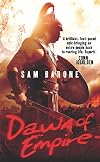
The thing I loved about this book is that is both Epic in scale but also highly detailed.
The author paints a vivid scene of despair and hopelessness, with the 'dirt-eaters' (the early farmers of bronze age mesopotamia) who live in rudimentary settlements, accepting their role as sword-fodder for the warbands who still roam the country hunting for food and pillaging for treasure.
I felt engaged really quickly with the protagonist, Eskkar, as he struggled against his own demons and against show more the stubborn townsfolk who resisted his pleas to make a stand against the raiders. But Eskkar is not alone, he has a slave girl, Trella, who is as cunning and calm as Eskkar is bold and aggressive. The pair dovetail really nicely without ever coming across as infallible.
The story builds neatly, taking you on the adventure and builds towards a hectic and unforgettable ending.
A must for hist fic fans. show less
The author paints a vivid scene of despair and hopelessness, with the 'dirt-eaters' (the early farmers of bronze age mesopotamia) who live in rudimentary settlements, accepting their role as sword-fodder for the warbands who still roam the country hunting for food and pillaging for treasure.
I felt engaged really quickly with the protagonist, Eskkar, as he struggled against his own demons and against show more the stubborn townsfolk who resisted his pleas to make a stand against the raiders. But Eskkar is not alone, he has a slave girl, Trella, who is as cunning and calm as Eskkar is bold and aggressive. The pair dovetail really nicely without ever coming across as infallible.
The story builds neatly, taking you on the adventure and builds towards a hectic and unforgettable ending.
A must for hist fic fans. show less
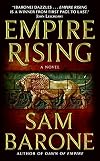
Empire Rising is Part 2 of the Eskkar Trilogy abut the early days of civilization when people stopped their nomad way of life in favor of gathering together, growing crops, and setting up trade. The first village and cities started to appear. Eskkar and his wife Trella, rule over one of the larger cities to spring up between the two great rivers, the Tigris and the Euphrates. Of course, this rich city eventually draws the attention of barbarians who desire to pillage and loot.
The first book show more dealt with how they decided to built walls around their city, stand their ground and fight off the barbarian horde that attacked them. This book deals with Eskkar’s desire to spread his territory to other villages and farms, but while he is away expanding his kingdom, his wife must deal with a new kind of invader. Korthac, an Egyptian, realizes that the way to take control is from inside the walls. And so sets himself and his men up as jewel traders while working all the while to take over the city with plans to enslave the population and become it’s ruler.
This was a fun read, with lots of fighting and swordplay to keep the readers attention. Is it history? Probably not, more speculative than accurate, but nevertheless, a good action story, with strong characters and plenty of excitement. show less
The first book show more dealt with how they decided to built walls around their city, stand their ground and fight off the barbarian horde that attacked them. This book deals with Eskkar’s desire to spread his territory to other villages and farms, but while he is away expanding his kingdom, his wife must deal with a new kind of invader. Korthac, an Egyptian, realizes that the way to take control is from inside the walls. And so sets himself and his men up as jewel traders while working all the while to take over the city with plans to enslave the population and become it’s ruler.
This was a fun read, with lots of fighting and swordplay to keep the readers attention. Is it history? Probably not, more speculative than accurate, but nevertheless, a good action story, with strong characters and plenty of excitement. show less
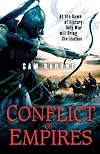
This is a very long book about not very much. It all basically leads up to the final, albeit huge, extremely well-written, effective and exciting battle. Not a lot more.
From the start, it's blindingly obvious what's going to happen here, who is going to emerge triumphant, so nothing I say below will 'spoil' it for anyone.
I had no idea this was the third of a series 'The Eskkar Saga', when I started it. But it feels like he thought he would write a trilogy before he started. Then thought of show more an idea. That might have made a short story. Then had to pad it out. And pad out the padding. Length doesn't necessarily give depth, as this proves. It's only creating the feeling of "Yes, yes. Get on with it!"
It is set around Summeria, some 3,500-odd years ago, concentrating on the conflict between the cities of Summeria and Akkad. Akkad? No, me neither. The main character is Eskkar, the 'King' of Akkad, his cartoon wife who handles the spying and the treachery and is beautiful and all the other cliches you can think of. And the equally cartoon-like "boo, hiss! Oh my goodness, they're brother and sister, eww!" leaders of Summeria. So you can guess whose side we're on here.
And at that distance, with all but surely the most serious of scholars having absolutely no idea of what went on then, it might as well be science fiction about life on another planet. Ok, the rivers Euphrates and Tigris might well ring a bell with some, but not a lot more will as this is set before what most people know of as Greek, Roman or many other historical periods. However, he doesn't even use this to perhaps suggest that here is the beginnings of modern civilisation and here is from where and how the ideas that became modern civilisation developed. Right at the in very end, outside the story, in the afterword, there is a little about the tactics used in the final battle not being so outrageous, given that Alexander used, to similar effect, similar, even more outrageous, tactics later on in history. But this is the only attempt to put the events in any kind of context and it is after the story is finished. Otherwise, even given the fact that it is a thousand years or more (I have no idea of dates for the Greek and Roman periods) before the Greeks and Romans were anywhere near their peak - these are very cultured, very sophisticated, very efficient, very modern and mature military societies. Doesn't fully ring true, though I have very little idea of what level Summerian culture was at at this point, I would have thought that as it is represented here, is a little over ambitious, shall we say.
And saying it is set in and around Summeria, is also a little misleading. As it actually is about competing cities to the north of Summeria. And Summeria is the hated, overbearing enemy here. Odd.
The main body of the book, and it takes a very long time, going into totally - for the sake of a good story - unnecessary length - is more or less the build up to the final battle. Nothing that could have been skipped over, written more concisely and still had the desired effect, or left out entirely. Training, spying, trying to create tension is fine, but length dilutes its effect. I'm sure that a more casual reader will either give up before half way, or just skip through to the last section. And not miss anything.
As i say, the final, epic, battle is worth the price of entry on its own. Clear, precise, tense and very well done indeed. It almost makes up for having to wade through a lot of nonsense to get there. Though, the book really should have ended there, have let us imagine what might have happened in the period afterwards - I thought it would be that the Akkadians became the civilisation we know now as the Summerians, but he doesn't say. He goes on a bit longer, tidying up, as though our imaginations aren't up to it. Diluting the effect of the battle.
I can only rate it as mildly interesting, though I'm going to give it three stars. The battle on its own, is excellently done and should be worth four, but all the preceding guff drags it back to a three. The good bits aren't long enough and the long bits aren't good enough. It's clear he set about wanting to write an epic. And writing endlessly about nothing in particular was how he thought it should be done. show less
From the start, it's blindingly obvious what's going to happen here, who is going to emerge triumphant, so nothing I say below will 'spoil' it for anyone.
I had no idea this was the third of a series 'The Eskkar Saga', when I started it. But it feels like he thought he would write a trilogy before he started. Then thought of show more an idea. That might have made a short story. Then had to pad it out. And pad out the padding. Length doesn't necessarily give depth, as this proves. It's only creating the feeling of "Yes, yes. Get on with it!"
It is set around Summeria, some 3,500-odd years ago, concentrating on the conflict between the cities of Summeria and Akkad. Akkad? No, me neither. The main character is Eskkar, the 'King' of Akkad, his cartoon wife who handles the spying and the treachery and is beautiful and all the other cliches you can think of. And the equally cartoon-like "boo, hiss! Oh my goodness, they're brother and sister, eww!" leaders of Summeria. So you can guess whose side we're on here.
And at that distance, with all but surely the most serious of scholars having absolutely no idea of what went on then, it might as well be science fiction about life on another planet. Ok, the rivers Euphrates and Tigris might well ring a bell with some, but not a lot more will as this is set before what most people know of as Greek, Roman or many other historical periods. However, he doesn't even use this to perhaps suggest that here is the beginnings of modern civilisation and here is from where and how the ideas that became modern civilisation developed. Right at the in very end, outside the story, in the afterword, there is a little about the tactics used in the final battle not being so outrageous, given that Alexander used, to similar effect, similar, even more outrageous, tactics later on in history. But this is the only attempt to put the events in any kind of context and it is after the story is finished. Otherwise, even given the fact that it is a thousand years or more (I have no idea of dates for the Greek and Roman periods) before the Greeks and Romans were anywhere near their peak - these are very cultured, very sophisticated, very efficient, very modern and mature military societies. Doesn't fully ring true, though I have very little idea of what level Summerian culture was at at this point, I would have thought that as it is represented here, is a little over ambitious, shall we say.
And saying it is set in and around Summeria, is also a little misleading. As it actually is about competing cities to the north of Summeria. And Summeria is the hated, overbearing enemy here. Odd.
The main body of the book, and it takes a very long time, going into totally - for the sake of a good story - unnecessary length - is more or less the build up to the final battle. Nothing that could have been skipped over, written more concisely and still had the desired effect, or left out entirely. Training, spying, trying to create tension is fine, but length dilutes its effect. I'm sure that a more casual reader will either give up before half way, or just skip through to the last section. And not miss anything.
As i say, the final, epic, battle is worth the price of entry on its own. Clear, precise, tense and very well done indeed. It almost makes up for having to wade through a lot of nonsense to get there. Though, the book really should have ended there, have let us imagine what might have happened in the period afterwards - I thought it would be that the Akkadians became the civilisation we know now as the Summerians, but he doesn't say. He goes on a bit longer, tidying up, as though our imaginations aren't up to it. Diluting the effect of the battle.
I can only rate it as mildly interesting, though I'm going to give it three stars. The battle on its own, is excellently done and should be worth four, but all the preceding guff drags it back to a three. The good bits aren't long enough and the long bits aren't good enough. It's clear he set about wanting to write an epic. And writing endlessly about nothing in particular was how he thought it should be done. show less
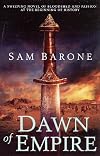
The book was okay. As pointed out by other reviewers, there are numerous historical inaccuracies, the most glaring to me were the use of coins, the use of modern measurements for time, and their understanding of relatively current treatments for injuries. Also, much of the dialogue was like listening to today's teenagers. The story lines for the two main characters, Eskkar and Trella, are highly improbable. Eskkar, after settling in Orak, is quickly promoted to one of the top security show more officers and then promoted again to the top spot. He hadn't done much in the story to warrant either of these promotions. Trella's story is even more improbable. She is a fourteen year old slave who virtually overnight becomes the wisest resident of the city. I just can't believe that someone this age with fairly limited experiences could be so knowledgeable about so much.
With all this said, the author did do a good job of explaining how Orak's defense was established at a time when towns were virtually undefended. Almost the entire book is devoted to building the town's defense, but I found that part interesting. He also did well with the battle scenes. There were three battles in the book, and they rivaled the ones in Bernard Cornwell, Conn Iggulden, and Jack Whyte. show less
With all this said, the author did do a good job of explaining how Orak's defense was established at a time when towns were virtually undefended. Almost the entire book is devoted to building the town's defense, but I found that part interesting. He also did well with the battle scenes. There were three battles in the book, and they rivaled the ones in Bernard Cornwell, Conn Iggulden, and Jack Whyte. show less
Lists
Awards

You May Also Like


Statistics
- Works
- 11
- Members
- 526
- Popularity
- #47,289
- Rating
- 3.7
- Reviews
- 14
- ISBNs
- 38
- Languages
- 5