
Steven Pressfield
Author of The War of Art: Winning the Inner Creative Battle
About the Author
Author Steven Pressfield was born in Port of Spain, Trinidad in September 1943. He graduated from Duke University in 1965 and joined the Marine Corps. Before becoming a full-time writer, he worked as a copy writer, taxi driver, bartender, tractor-trailer driver, fruit picker, and worked on oil show more rigs. He then moved to California and began writing screenplays. In 2000, his debut novel, The Legend of Bagger Vance, was made into a movie starring Matt Damon and Will Smith. He primarily writes military historical fiction set in classical antiquity. Most of his novels are told from the first-person perspective of the main character. (Bowker Author Biography) show less
Image credit: George Ikonomopoulos
Series
Works by Steven Pressfield
Nobody Wants to Read Your Sh*t: And Other Tough-Love Truths to Make You a Better Writer (2016) 154 copies, 7 reviews
The Artist's Journey: The Wake of the Hero's Journey and the Lifelong Pursuit of Meaning (2018) 88 copies, 1 review
Vojna umetnosti 1 copy
LUFTA E ARTIT 1 copy
Associated Works
Left of Bang: How the Marine Corps' Combat Hunter Program Can Save Your Life (2014) — Introduction — 274 copies, 6 reviews
Tagged
Common Knowledge
- Birthdate
- 1943-09
- Gender
- male
- Education
- Duke University
- Organizations
- US Marine Corps
- Awards and honors
- Honorary Citizen (Sparta, 2003)
- Nationality
- USA
- Birthplace
- Port of Spain, Trinidad and Tobago
- Map Location
- USA
Members
Reviews
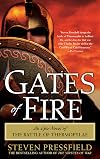
Gates of Fire is incredible. Framed as the story of the sole Spartan survivor of the Battle of Thermopylae, telling his story to the Persian Emperor Xerxes, Gates of Fire is about more than the battle. It's about the world of the warrior, and the psychology that leads men to triumph in battle.
Our narrator, Xeo, went through childhood in an unremarkable minor city until it was sacked by the Argives. He lived as a refugee in the hills with his cousin Diomanche and a blind slave, learning to show more hunt and track, and then went to Sparta because the Spartans were the finest warriors in all of Greece. The story moves on two tracks towards the confrontation at Themopylae, where 300 handpicked Spartans and a larger number of Greek allies fought a desperate rearguard action against the massive Persian army to give the rest of Greece time to gather forces and fight back.
The spiritual core of this book (and it does have one), is the centrality of fear in the warrior's experience, and the way that fear can be conquered. The Spartans have an entire discipline around mastering fear, and there are long and fascinating discussions of what courage is. I'll not spoil the answers, since they are worth waiting for.
On a personal level, I'm a Spartan revisionist. We need to acknowledge that they were a brutal slave state built on pederasty. So all the noble Spartan lords carping on about freedom and liberty is a kind of dark joke. But Gates of Fire is fantastic that even this revisionist loves it. show less
Our narrator, Xeo, went through childhood in an unremarkable minor city until it was sacked by the Argives. He lived as a refugee in the hills with his cousin Diomanche and a blind slave, learning to show more hunt and track, and then went to Sparta because the Spartans were the finest warriors in all of Greece. The story moves on two tracks towards the confrontation at Themopylae, where 300 handpicked Spartans and a larger number of Greek allies fought a desperate rearguard action against the massive Persian army to give the rest of Greece time to gather forces and fight back.
The spiritual core of this book (and it does have one), is the centrality of fear in the warrior's experience, and the way that fear can be conquered. The Spartans have an entire discipline around mastering fear, and there are long and fascinating discussions of what courage is. I'll not spoil the answers, since they are worth waiting for.
On a personal level, I'm a Spartan revisionist. We need to acknowledge that they were a brutal slave state built on pederasty. So all the noble Spartan lords carping on about freedom and liberty is a kind of dark joke. But Gates of Fire is fantastic that even this revisionist loves it. show less
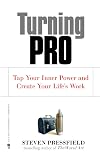
Steven Pressfield’s Turning Pro is one of those rare books that cuts through noise, ego, and excuses with surgical precision. In just over a hundred pages, Pressfield offers a wake-up call to anyone who feels stuck between who they are and who they know they could be. If The War of Art identifies the enemy—Resistance—then Turning Pro gives you the battle plan.
Pressfield’s core message is simple but disruptive: becoming “professional” is less about external achievement and more show more about internal transformation. Turning pro means trading addiction for discipline, distraction for devotion, and living as an amateur for living with intention. It’s not glamorous work. It’s often lonely, unrecognized, and uncomfortably honest. But it’s also the path to freedom.
What makes the book powerful is its clarity. Pressfield writes in short, punchy chapters that feel like truths you already knew but needed someone to say out loud. His depiction of the “shadow career” hits especially hard—those ways we busy ourselves with the appearance of progress to avoid the real work we fear. He exposes these patterns gently but unapologetically.
While not a traditional “self-help” book, Turning Pro functions as a mirror. You don’t finish it inspired so much as confronted—in the best way. It demands reflection and a decision: Will you keep dabbling, or will you show up fully to the work that matters?
Whether you're a writer, entrepreneur, creative, or professional in transition, Turning Pro is a must-read. It’s concise, challenging, and ultimately liberating. If you're ready to stop negotiating with Resistance and step into your calling, this book offers the exact mindset shift you need. show less
Pressfield’s core message is simple but disruptive: becoming “professional” is less about external achievement and more show more about internal transformation. Turning pro means trading addiction for discipline, distraction for devotion, and living as an amateur for living with intention. It’s not glamorous work. It’s often lonely, unrecognized, and uncomfortably honest. But it’s also the path to freedom.
What makes the book powerful is its clarity. Pressfield writes in short, punchy chapters that feel like truths you already knew but needed someone to say out loud. His depiction of the “shadow career” hits especially hard—those ways we busy ourselves with the appearance of progress to avoid the real work we fear. He exposes these patterns gently but unapologetically.
While not a traditional “self-help” book, Turning Pro functions as a mirror. You don’t finish it inspired so much as confronted—in the best way. It demands reflection and a decision: Will you keep dabbling, or will you show up fully to the work that matters?
Whether you're a writer, entrepreneur, creative, or professional in transition, Turning Pro is a must-read. It’s concise, challenging, and ultimately liberating. If you're ready to stop negotiating with Resistance and step into your calling, this book offers the exact mindset shift you need. show less
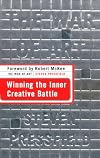
Pressfield is best known as the author of some very well regarded historical novels about
Sparta. This book of writing advice is focused on the psychology of the labor of writing. If you are a true Artist (caps intended), with a Great Work inside you, it will take real, painful effort to get it out. There's a fear inside us, preventing us from achieving our great work, which Pressfield deems Resistance.
True artists face their Resistance every day, and win. You can no more ultimately conquer show more Resistance than you can death, but every word written is another victory. Pressfield's recipe for beating resistance is turning professional. The world is full of amateur hobbyists, but the professional faces up to resistance every day and does the work that needs to be done. A professional carves out that space, both psychological and physical, that enables them to work. And if you're working, really working, emotional satisfaction will follow. As the Bhagavad Gita teaches, we're entitled only to our labor, not the fruits of our labor.
It's interesting to compare Pressfield to Cameron's The Artist's Way. The two books are more similar than different. Both seek to tap an authentic artist's self to conquer the false demons of the ego. But where Cameron follows the radical presentness of Zen, Pressfield argues for transcendent inspiration, in the framework of the Greek Muses. The cool professional is a different take from the enlightened master, but the content and style of punchy chapters is similar. With my military history orientation, I prefer Pressfield's take.
Of course, those seeking the mechanics of writing should look elsewhere. show less
Sparta. This book of writing advice is focused on the psychology of the labor of writing. If you are a true Artist (caps intended), with a Great Work inside you, it will take real, painful effort to get it out. There's a fear inside us, preventing us from achieving our great work, which Pressfield deems Resistance.
True artists face their Resistance every day, and win. You can no more ultimately conquer show more Resistance than you can death, but every word written is another victory. Pressfield's recipe for beating resistance is turning professional. The world is full of amateur hobbyists, but the professional faces up to resistance every day and does the work that needs to be done. A professional carves out that space, both psychological and physical, that enables them to work. And if you're working, really working, emotional satisfaction will follow. As the Bhagavad Gita teaches, we're entitled only to our labor, not the fruits of our labor.
It's interesting to compare Pressfield to Cameron's The Artist's Way. The two books are more similar than different. Both seek to tap an authentic artist's self to conquer the false demons of the ego. But where Cameron follows the radical presentness of Zen, Pressfield argues for transcendent inspiration, in the framework of the Greek Muses. The cool professional is a different take from the enlightened master, but the content and style of punchy chapters is similar. With my military history orientation, I prefer Pressfield's take.
Of course, those seeking the mechanics of writing should look elsewhere. show less
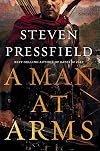
Re-read, July 2024:
Excellent novel, with some "convenient" story elements - message origin being in Jerusalem to make the trip more perilous,sorceress being constantly accepted into the gang although she is constantly betraying them , to name the few. Also it is very strange that all distances are measured in hours - I am not sure this was calculated this way in ancient times and I think "three days from here" was used instead of "thirty-six hours from here".
But even with all of the above it show more is still a very good story of redemption and finding meaning in life, while surrounded by violence, destruction and cynicism. In a way book's story is universal and story is applicable to any period of great changes in the world, including our own times.
Highly recommended.
Original review - July 2021:
If there is a capital mistake to ever be made than it is to misunderstand the people, trying to put them into the stereotypes one can live with because knowledge that someone cannot be categorized and catalogued (as Mulder would say) is always terror for those in power.
One of the science fiction stories that left huge impression on me was the story Warrior from the Dorsai universe. In it Donal Graeme goes back to Earth to punish a man who managed to psychologically twist his brother so much that he caused huge loss of life for one of the Dorsai commands. While Graeme starts his own psychological operation against the powerful brother he constantly gets misunderstood and underestimated by his opponent that at the end Graeme wins the battle and war by just using his opponents wrong starting premise, without need to inflict any physical harm. He won because Graeme was never a soldier but a warrior. And there is quite a difference between the two.
And here we have a similar situation.
Story protagonist is Telamon, our man at arms, former legionnaire turned mercenary. He is given an offer he cannot refuse - save his own life and help Roman Imperial command in Judea to obtain the secret letter sent by early Christian sect to European based hideouts. Everyone thinks of Telamon as yet just another mercenary ready to bloody his sword but as story progresses it is visible that Telamon is not just killer for hire. He is man dedicated to profession of war (or as he says strife). He sees entire life as a constant struggle - metaphorical and physical - so he decides to become a master when it comes to winning conflict situations of any sort. When he fights he is engaged but - which is important thing - he approaches it rationally and not emotionally. As story progresses and Telamon's quest gets more and more involved with the quarry he chases, he starts to show increasing professional respect towards these members of the sect that are so willing to suffer in order to protect their own - in contrast with the world they live in where everything has its price. Although outnumbered by Romans these religious outcasts (I especially liked the way author portrayed official Jewish religion perspective on early Christians) do not flinch and are more than ready to give their lives for the cause. While this portrayal of early Christians for me is a little bit too much of romantic view of things - I think they were much more pragmatic people than emotional activists considering that alternative was extermination - it is easy to see how their dedication and willingness to fight for the cause struck a cord with Telamon.
Man without the cause to live for, especially in a deadly world of professional soldiers is a ghost, lost and wandering the world, almost seeming to be a person seeking self-destruction. In a world of warfare if one finds himself in situation when he cannot justify the actions of his side he finds himself between a rock and a hard place because in war there is always quite a few questionable situations one will find himself in. And Telamon, being a non-Roman who ascended through auxilia ranks until joining the Legion, could hardly identify with the Roman Empire and it is obvious that in his time he was involved in bloody activities that forced him to leave the Legion and start living as a mercenary. At the end Telamon does find a cause [and no it is not religious one but deeply human] while fighting side by side with his allies and getting saved by them not once but multiple times.
We are given all the gritty details of the professional soldier of the time - there was no quarter given and considering there are no stand off weapons here everything is up, close and personal. While all the military action might sound as adopted from temporary war scenes it is not that difficult to imagine that Roman Legions after decades and centuries of warfare that made them the ultimate war machines in the day (and proved their worth when Legion model of war was resurrected by innovators in Renaissance period) would be not unlike professional soldiers of today - with only difference being inability to fight the enemy from afar using guns. Author gives us some insight into the life in the Legions and the way they were used in war operations. While this might not be completely faithful to the historical records, author manages to show how waging of war in its basics did not change at all from the first time people met at the battlefield.
We are shown how in murderous business of counterinsurgency there is no line between civilians and soldiers - unfortunate turn events that still remains true in remote and wild areas of Asia and Africa. Torching of Corinth was done in such a detail that one can easily imagine the destruction of Carthage and treatment its citizens received from the Legions.
Do note that this is not a story with a happy ending (same as excellent book The Profession by the same author). In here people die, nobody is safe from projectiles or sword and while our protagonist does survive very hard ordeals he is left with lasting scars and experiences loss more than once.
Excellent book on the professional soldiering and importance of serving the greater good. Highly recommended to everyone interested in military fiction. show less
Excellent novel, with some "convenient" story elements - message origin being in Jerusalem to make the trip more perilous,
But even with all of the above it show more is still a very good story of redemption and finding meaning in life, while surrounded by violence, destruction and cynicism. In a way book's story is universal and story is applicable to any period of great changes in the world, including our own times.
Highly recommended.
Original review - July 2021:
If there is a capital mistake to ever be made than it is to misunderstand the people, trying to put them into the stereotypes one can live with because knowledge that someone cannot be categorized and catalogued (as Mulder would say) is always terror for those in power.
One of the science fiction stories that left huge impression on me was the story Warrior from the Dorsai universe. In it Donal Graeme goes back to Earth to punish a man who managed to psychologically twist his brother so much that he caused huge loss of life for one of the Dorsai commands. While Graeme starts his own psychological operation against the powerful brother he constantly gets misunderstood and underestimated by his opponent that at the end Graeme wins the battle and war by just using his opponents wrong starting premise, without need to inflict any physical harm. He won because Graeme was never a soldier but a warrior. And there is quite a difference between the two.
And here we have a similar situation.
Story protagonist is Telamon, our man at arms, former legionnaire turned mercenary. He is given an offer he cannot refuse - save his own life and help Roman Imperial command in Judea to obtain the secret letter sent by early Christian sect to European based hideouts. Everyone thinks of Telamon as yet just another mercenary ready to bloody his sword but as story progresses it is visible that Telamon is not just killer for hire. He is man dedicated to profession of war (or as he says strife). He sees entire life as a constant struggle - metaphorical and physical - so he decides to become a master when it comes to winning conflict situations of any sort. When he fights he is engaged but - which is important thing - he approaches it rationally and not emotionally. As story progresses and Telamon's quest gets more and more involved with the quarry he chases, he starts to show increasing professional respect towards these members of the sect that are so willing to suffer in order to protect their own - in contrast with the world they live in where everything has its price. Although outnumbered by Romans these religious outcasts (I especially liked the way author portrayed official Jewish religion perspective on early Christians) do not flinch and are more than ready to give their lives for the cause. While this portrayal of early Christians for me is a little bit too much of romantic view of things - I think they were much more pragmatic people than emotional activists considering that alternative was extermination - it is easy to see how their dedication and willingness to fight for the cause struck a cord with Telamon.
Man without the cause to live for, especially in a deadly world of professional soldiers is a ghost, lost and wandering the world, almost seeming to be a person seeking self-destruction. In a world of warfare if one finds himself in situation when he cannot justify the actions of his side he finds himself between a rock and a hard place because in war there is always quite a few questionable situations one will find himself in. And Telamon, being a non-Roman who ascended through auxilia ranks until joining the Legion, could hardly identify with the Roman Empire and it is obvious that in his time he was involved in bloody activities that forced him to leave the Legion and start living as a mercenary. At the end Telamon does find a cause [and no it is not religious one but deeply human] while fighting side by side with his allies and getting saved by them not once but multiple times.
We are given all the gritty details of the professional soldier of the time - there was no quarter given and considering there are no stand off weapons here everything is up, close and personal. While all the military action might sound as adopted from temporary war scenes it is not that difficult to imagine that Roman Legions after decades and centuries of warfare that made them the ultimate war machines in the day (and proved their worth when Legion model of war was resurrected by innovators in Renaissance period) would be not unlike professional soldiers of today - with only difference being inability to fight the enemy from afar using guns. Author gives us some insight into the life in the Legions and the way they were used in war operations. While this might not be completely faithful to the historical records, author manages to show how waging of war in its basics did not change at all from the first time people met at the battlefield.
We are shown how in murderous business of counterinsurgency there is no line between civilians and soldiers - unfortunate turn events that still remains true in remote and wild areas of Asia and Africa. Torching of Corinth was done in such a detail that one can easily imagine the destruction of Carthage and treatment its citizens received from the Legions.
Do note that this is not a story with a happy ending (same as excellent book The Profession by the same author). In here people die, nobody is safe from projectiles or sword and while our protagonist does survive very hard ordeals he is left with lasting scars and experiences loss more than once.
Excellent book on the professional soldiering and importance of serving the greater good. Highly recommended to everyone interested in military fiction. show less
Lists
Awards


You May Also Like


Associated Authors
Statistics
- Works
- 43
- Also by
- 5
- Members
- 15,603
- Popularity
- #1,455
- Rating
- 3.9
- Reviews
- 437
- ISBNs
- 315
- Languages
- 19
- Favorited
- 24
