
Mary Renault (1905–1983)
Author of The King Must Die
About the Author
Image credit: Mary Renault. (Photo from Wikipedia)
Series
Works by Mary Renault
Walk the Night 1 copy
Story of Archaeology, The 1 copy
Písní tě chválím 1 copy
Παράξενες φιλίες 1 copy
Associated Works
The Collected Classical Stories and Classic Who Dunnits/boxed Set (2 volume set) (1996) — Contributor — 27 copies
The Best of Both Worlds: An Anthology of Stories for All Ages (1968) — Contributor — 25 copies, 1 review
Tagged
Common Knowledge
- Canonical name
- Renault, Mary
- Legal name
- Challans, Eileen Mary
- Other names
- Challans, Mary
- Birthdate
- 1905-09-04
- Date of death
- 1983-12-13
- Gender
- female
- Education
- St. Hugh's College, Oxford (English | BA | 1928)
University of Oxford (Radcliffe Infirmary) - Occupations
- nurse
novelist
biographer
radio writer - Organizations
- Black Sash Movement
International PEN - Awards and honors
- Royal Society of Literature (Fellow, 1959)
Silver Pen Award (1971) - Agent
- Gordon Wise (Curtis Brown)
- Relationships
- Mullard, Julie (partner)
- Short biography
- Mary Renault received a degree in English from Oxford University in 1928. In 1933 she began training as a nurse at the Radcliffe Infirmary in Oxford. During her training, she met Julie Mullard, a fellow nurse, with whom she established a lifelong romantic relationship.
Renault worked as a nurse while beginning a writing career, publishing her first novel, Purposes of Love, in 1939. Her historical novels, set in ancient Greece, were popular throughout the English-speaking world. In 1948, after her novel Return to Night won a prize worth $150,000, Renault and Mullard emigrated to South Africa, where they lived together for the rest of their lives. They were critical of apartheid and participated in the Black Sash movement in the 1950s. - Cause of death
- cancer
- Nationality
- UK
- Birthplace
- Forest Gate, Essex, England, UK
- Places of residence
- Durban, South Africa
Cape Town, South Africa - Place of death
- Cape Town, South Africa
- Burial location
- Cremated
- Map Location
- England, UK
Members
Discussions
British Author Challenge February 2022: Mary Renault & Timothy Mo in 75 Books Challenge for 2022 (August 2022)
Mary Renault's Alexander Trilogy in Folio Society Devotees (December 2013)
Mary Renault in Book talk (July 2013)
Reviews
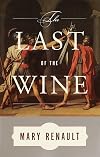
Frustrated with the state of the world, my friend Nada formed a peace studies group: a book club, really, where we read books about conflict and then discussed them. This work, which depicts humans being human during the Polypenesian wars, introduced me to Mary Renault. Astonishing writing, and a structure that lends itself to all sorts of things. The depiction of the certainty of the "rightness" of going to war was useful for our discussion group, but the book itself altered how I think of show more books, language, love, and so forth. I've gone on to read other books by Renault, but this one feels above them all. show less
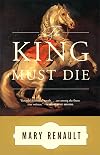
I've loved Greek (and Roman) myths since I was a kid. I remember fighting with a third-grade classmate over which of us got to check out D'Aulaire's Book of Greek Myths first when the school library bought it (I got to it; my friend went on to become a professor of classics... I should have let him have it first. Sorry, Paul.). I am not a scholar or a historian, but remember many of the tales well. Daniel Mendelsohn recently wrote a touching essay about what Mary Renault's novels meant to show more him when he was a teenager, smitten by the classics amidst personal angst. He wrote to her, she wrote back, and they sustained an affectionate epistolary relationship till her death. So I was eager to plunge in for myself, and see what Renault did to bring the ancient Greek world, its customs, beliefs, arts, and, in this case, the hero Theseus to life.
Which, for the most part, she does quite wonderfully. The writing is graceful, with a vivid feel for the country, the palaces, the mountains, and its people. It may feel a bit decorated, a bit mannered, which may date it for some tastes. I especially liked how she translated the "magical" episodes of monsters and miracles, gods and curses, into a believable, "natural" reality - Minos becomes an isolated king, disfigured from leprosy, who hides away deep in his palace, wearing a golden mask of a bull to cover his diseased countenance. The tales feel genuine, and a modern reader might easily say, yes, this could very well be how it happened.
The trouble is... Theseus. Theseus is a jerk. He is arrogant, condescending, egotistical, promiscuous, and is forever banging on about his sacred "pride." He kills without compunction, he ridicules other cultures not as macho as his. He believes in his heart he is the god Poseidon's chosen son, so whatever he does is fine because the god supposedly has approved of it. He is also smart, talented, strategic, clever, and brave. But when it comes to women.... Now, I *know* that this is fiction. I *know* that Renault's intent may have been to try to depict Theseus and his time as they were, complete with prejudices, and an appalling contempt for women everywhere he goes. Women are toys, or war booty (the "girls" are divided up along with the gold, the arms, the war horses, etc. to the victors). They are dismissed as entirely silly, selfish, cruel, superficial, cunning, helpless or just a nuisance... or childish, pretty, and f*ckable. The entire city of Eleusis is overjoyed to be "released" by Theseus from a horrible era where the government is run by women. Powerful women are either goddesses (and even then they are fickle, jealous, vengeful, and not to be trusted) or an abomination. So... I puzzle over Renault's intent. How does a woman writer - a gay woman writer - decide to depict women so dreadfully? Of course, we are being given Theseus's own thoughts and point of view throughout, but it's not clear whether this is meant to be an admiring portrait, a truthful portrayal of how women in that society were viewed and treated, or a cautionary tale. All told, I found Theseus to be very annoying company for many pages.
Well, all that said, there are some intimations of growth in the callow young hero. He gets a little smarter about persuasion and leadership. He actually learns to admire and value the skills that the young sacrificial "girls" bring to the bull arena. There are some moments when Theseus comments that now that he is old, with a string of tragedies behind him, he might not have done or said such a thing, or behaved in such a way. So perhaps, in volume 2, our hero's hubris receives its due, and he learns the hard way to be a better man. I'll stick around to find out. show less
Which, for the most part, she does quite wonderfully. The writing is graceful, with a vivid feel for the country, the palaces, the mountains, and its people. It may feel a bit decorated, a bit mannered, which may date it for some tastes. I especially liked how she translated the "magical" episodes of monsters and miracles, gods and curses, into a believable, "natural" reality - Minos becomes an isolated king, disfigured from leprosy, who hides away deep in his palace, wearing a golden mask of a bull to cover his diseased countenance. The tales feel genuine, and a modern reader might easily say, yes, this could very well be how it happened.
The trouble is... Theseus. Theseus is a jerk. He is arrogant, condescending, egotistical, promiscuous, and is forever banging on about his sacred "pride." He kills without compunction, he ridicules other cultures not as macho as his. He believes in his heart he is the god Poseidon's chosen son, so whatever he does is fine because the god supposedly has approved of it. He is also smart, talented, strategic, clever, and brave. But when it comes to women.... Now, I *know* that this is fiction. I *know* that Renault's intent may have been to try to depict Theseus and his time as they were, complete with prejudices, and an appalling contempt for women everywhere he goes. Women are toys, or war booty (the "girls" are divided up along with the gold, the arms, the war horses, etc. to the victors). They are dismissed as entirely silly, selfish, cruel, superficial, cunning, helpless or just a nuisance... or childish, pretty, and f*ckable. The entire city of Eleusis is overjoyed to be "released" by Theseus from a horrible era where the government is run by women. Powerful women are either goddesses (and even then they are fickle, jealous, vengeful, and not to be trusted) or an abomination. So... I puzzle over Renault's intent. How does a woman writer - a gay woman writer - decide to depict women so dreadfully? Of course, we are being given Theseus's own thoughts and point of view throughout, but it's not clear whether this is meant to be an admiring portrait, a truthful portrayal of how women in that society were viewed and treated, or a cautionary tale. All told, I found Theseus to be very annoying company for many pages.
Well, all that said, there are some intimations of growth in the callow young hero. He gets a little smarter about persuasion and leadership. He actually learns to admire and value the skills that the young sacrificial "girls" bring to the bull arena. There are some moments when Theseus comments that now that he is old, with a string of tragedies behind him, he might not have done or said such a thing, or behaved in such a way. So perhaps, in volume 2, our hero's hubris receives its due, and he learns the hard way to be a better man. I'll stick around to find out. show less
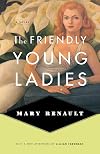
The writing is excellent which makes the story effective. The young Elsie is a very sad character who doesn't have much grasp of the reality that everybody else seems to understand so well, but their reality strains all credibility. I think that Renault intends us to sympathize with these other characters, but their reality makes so little sense. Why is it an alarming faux-pas to accidentally get a facial sunburn? What's wrong with telling someone directly what's expected of them? How can show more the way a person applies lipstick be imbued with so much significance? To me Elsie is a tragic figure, unable to escape her solipsism because even those who might have bothered with her are too reserved in what is probably an English fashion to have any effect on her. She's the only character whom I can like and yet she is doomed while the rest are overwrought, pretentious, and just as self-absorbed in their own way.
Mary Renault and Dorothy Sayers were two really talented women drinking the same disturbing Kool-Aid and then inflicting it on the rest of the world with a mordant effectiveness. Renault's early contemporary novels are direct descendants of Sayers' last, Gaudy Night. show less
Mary Renault and Dorothy Sayers were two really talented women drinking the same disturbing Kool-Aid and then inflicting it on the rest of the world with a mordant effectiveness. Renault's early contemporary novels are direct descendants of Sayers' last, Gaudy Night. show less
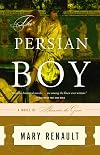
My introduction to Mary Renault was The King Must Die, the first of two novels about Theseus--it was actually assigned reading in high school. What impressed me so much there was how she took a figure out of myth and grounded him historically. After that I quickly gobbled up all of Renault's works of historical fiction set in Ancient Greece. The two novels about Theseus and the trilogy centered on Alexander the Great are undoubtedly her most famous of those eight novels.
The first book of show more that trilogy Fire from Heaven, is about the young Alexander of Macedon before his famous conquests. What we have in the second book is the conqueror of the Persian empire--as seen through the eyes of Bagoas, the "Persian boy" of the title--a eunuch--and one of Alexander's lovers. That was probably a shock to me as a sheltered young teen, pre-AIDS when homosexuality just wasn't very visible. What was amazing was the picture of a society where this was not just tolerated but completely accepted, and this novel (and her novel The Last of the Wine) also featuring a homosexual relationship) made an indelible impression on me--more than any kind of lecture on tolerance.
And this was one of those books that cemented my love of historical fiction and fascination with Ancient Greece. If I have any criticism, it's that Renault's Alexander is too much the paragon. You get the feeling Renault was more than in love with her Alexander. But it's certainly not a criticism that occurred to me while I was reading this--given how fully I was under Renault's spell. Nor am I the only one entranced by these books--you can definitely see the influence of the Alexander trilogy on such books as Jo Graham's Stealing Fire about the wake of Alexander's death and Madeline Miller's Song of Achilles. show less
The first book of show more that trilogy Fire from Heaven, is about the young Alexander of Macedon before his famous conquests. What we have in the second book is the conqueror of the Persian empire--as seen through the eyes of Bagoas, the "Persian boy" of the title--a eunuch--and one of Alexander's lovers. That was probably a shock to me as a sheltered young teen, pre-AIDS when homosexuality just wasn't very visible. What was amazing was the picture of a society where this was not just tolerated but completely accepted, and this novel (and her novel The Last of the Wine) also featuring a homosexual relationship) made an indelible impression on me--more than any kind of lecture on tolerance.
And this was one of those books that cemented my love of historical fiction and fascination with Ancient Greece. If I have any criticism, it's that Renault's Alexander is too much the paragon. You get the feeling Renault was more than in love with her Alexander. But it's certainly not a criticism that occurred to me while I was reading this--given how fully I was under Renault's spell. Nor am I the only one entranced by these books--you can definitely see the influence of the Alexander trilogy on such books as Jo Graham's Stealing Fire about the wake of Alexander's death and Madeline Miller's Song of Achilles. show less
Lists
SFFCat 2015 (1)
Asia (1)
Five star books (1)
Overdue Podcast (1)
War Literature (1)
Booker Prize (1)
Ancient Crete (2)
Nifty Fifties (2)
Female Author (2)
1950s (2)
THE WAR ROOM (5)
1970s (1)
Wish List (1)
Fiction For Men (1)
1970 Club (1)
Lost Gay Novels (1)
Read This Next (1)
Awards


You May Also Like


Associated Authors
Statistics
- Works
- 25
- Also by
- 5
- Members
- 19,011
- Popularity
- #1,149
- Rating
- 3.9
- Reviews
- 335
- ISBNs
- 445
- Languages
- 17
- Favorited
- 107

