
Gillian Bradshaw (1) (1956–)
Author of Hawk of May
For other authors named Gillian Bradshaw, see the disambiguation page.
Series
Works by Gillian Bradshaw
Associated Works
Tagged
Common Knowledge
- Legal name
- Bradshaw, Gillian Marucha
- Birthdate
- 1956-05-14
- Gender
- female
- Education
- University of Michigan (BA|1977)
University of Cambridge (Newnham College) - Occupations
- novelist
- Relationships
- Ball, Robin (spouse)
- Nationality
- USA
- Birthplace
- Falls Church, Virginia, USA
- Places of residence
- Virginia, USA
Santiago, Chile
Cambridge, Cambridgeshire, England, UK - Map Location
- Virginia, USA
Members
Reviews
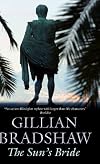
I usually find Gillian Bradshaw's historical novels a pleasure to read and this one was no exception. It has all the characteristics I particularly enjoy in her work. Its historically accurate without in any way being a dry compendium of factoids. Its full of interesting strong willed characters, male and female, who have agendas and pursue them with courage and creativity, and are sometimes funny and sometimes tragic and always of their time. I particularly appreciate that she writes strong show more women who are of their time. She doesn't make them proto feminists who have somehow absorbed ideas from the future (a wormhole in time perchance?) but she doesn't make them a bunch of spineless nellies either.
It explores some aspect of history that isn't all that widely known, a time period or a location, or a profession that is a little bit off the beaten path. In this case the story concerns a kithara player trying to build a career for herself and a galley captain for the navy of Rhodes in the time after Alexander's empire has fallen apart. Finally, its a tale, not a tome. Okay sometimes there's a place in my reading for the sprawling decades long epic with the cast of thousands. But at least as often, in fact probably more often, I like a neat, self contained story with a bit of self restraint. Its something I particularly value in historical fiction, which does sometime suffer from a tendency to go on a bit. show less
It explores some aspect of history that isn't all that widely known, a time period or a location, or a profession that is a little bit off the beaten path. In this case the story concerns a kithara player trying to build a career for herself and a galley captain for the navy of Rhodes in the time after Alexander's empire has fallen apart. Finally, its a tale, not a tome. Okay sometimes there's a place in my reading for the sprawling decades long epic with the cast of thousands. But at least as often, in fact probably more often, I like a neat, self contained story with a bit of self restraint. Its something I particularly value in historical fiction, which does sometime suffer from a tendency to go on a bit. show less

If you have had the misfortune, fellow reader, of seeing the 2004 King Arthur film, starring Clive Owen, Ioan Gruffudd, and Kiera Knightley as a warrior-babe Guinevere, then you will perhaps be aware that there is a school of thought which holds that much of the King Arthur mythology comes from an Indo-Iranian people called the Sarmatians. Don't be put off by the ahistoric melodrama of the movie - the notion of a Sarmatian influence in ancient British mythology is actually the hot new theory show more in Arthurian Studies, and is not as far-fetched as it might first appear. Those interested in pursuing the topic should locate a copy of C. Scott Littleton & Linda A. Malcor's From Scythia to Camelot: A Radical Reassessment of the Legends of King Arthur, the Knights of the Round Table, and the Holy Grail.
It was in my own search for more material concerning the Sarmatian presence in Roman Britain that I first came upon Gillian Bradshaw's novel, Island of Ghosts, which I would rank as the best work of historical fiction I have read in the last decade. It follows the story of Ariantes, a second-century Sarmatian prince and cavalry commander who finds himself transplanted from his homeland to far-off Britain, as part of the peace settlement between his people and the Roman Empire. Here, on this "island of ghosts," Ariantes struggles to adjust to and survive in a new world, to protect the interests of his men, and to retain the essential values of his own culture.
This was a satisfying novel on many levels. As an adventure story it offered action, suspense, and romance. Bradshaw's skillful handling of the many intersecting threads of her narrative, her clear understanding of the complexities of intercultural communication and exchange, and her lucid and restrained, but somehow emotive prose, all combined to create an unforgettable reading experience. In many ways I was reminded of Robin McKinley, one of my all-time favorite authors...
Ariantes' personal struggle to overcome the demons of his past, is mirrored by his experiences as a barbarian being incorporated into the vast, multicultural Roman Empire. Island of Ghosts is in many ways the classic immigrant story, for all that it is set in ancient times, and Bradshaw is to be commended for her dead-on historical accuracy. Not only does she show a keen appreciation for the larger themes of the period, with the barbarian-Roman divide playing out in the story of one man, but the minutest historical details of her story have been well-researched. show less
It was in my own search for more material concerning the Sarmatian presence in Roman Britain that I first came upon Gillian Bradshaw's novel, Island of Ghosts, which I would rank as the best work of historical fiction I have read in the last decade. It follows the story of Ariantes, a second-century Sarmatian prince and cavalry commander who finds himself transplanted from his homeland to far-off Britain, as part of the peace settlement between his people and the Roman Empire. Here, on this "island of ghosts," Ariantes struggles to adjust to and survive in a new world, to protect the interests of his men, and to retain the essential values of his own culture.
This was a satisfying novel on many levels. As an adventure story it offered action, suspense, and romance. Bradshaw's skillful handling of the many intersecting threads of her narrative, her clear understanding of the complexities of intercultural communication and exchange, and her lucid and restrained, but somehow emotive prose, all combined to create an unforgettable reading experience. In many ways I was reminded of Robin McKinley, one of my all-time favorite authors...
Ariantes' personal struggle to overcome the demons of his past, is mirrored by his experiences as a barbarian being incorporated into the vast, multicultural Roman Empire. Island of Ghosts is in many ways the classic immigrant story, for all that it is set in ancient times, and Bradshaw is to be commended for her dead-on historical accuracy. Not only does she show a keen appreciation for the larger themes of the period, with the barbarian-Roman divide playing out in the story of one man, but the minutest historical details of her story have been well-researched. show less

This was my second foray into the work of Gillian Bradshaw, whose earlier novel, Island of Ghosts , has become one of my favorite works of historical fiction. Based upon The Lai of Bisclavret, one of a series of poems composed by Marie de France in the twelfth century, The Wolf Hunt follows the story of young Marie Penthieve de Chalandrey, who finds herself an unwilling participant in the conflict between Duke Hoel of Brittany and Duke Robert of Normandy.
As she struggles to make a place for show more herself in a world of divided loyalties, Marie must strike a balance between her sense of familial duty and her own heart. Her love for the Breton knight, Tiarnan of Talensac, seems destined to remain unrequited when he marries another. But nothing is as it seems, and a creature of legend - the bisclavret - will have a decisive role in deciding her destiny.
Complete with kidnapping, escape, rescue, romance, and betrayal - this medieval swashbuckler provides an entertaining and enlightening read. Although more romantic than Island of Ghosts, it never descends into melodrama, and offers an intriguing glimpse of medieval Breton society. show less
As she struggles to make a place for show more herself in a world of divided loyalties, Marie must strike a balance between her sense of familial duty and her own heart. Her love for the Breton knight, Tiarnan of Talensac, seems destined to remain unrequited when he marries another. But nothing is as it seems, and a creature of legend - the bisclavret - will have a decisive role in deciding her destiny.
Complete with kidnapping, escape, rescue, romance, and betrayal - this medieval swashbuckler provides an entertaining and enlightening read. Although more romantic than Island of Ghosts, it never descends into melodrama, and offers an intriguing glimpse of medieval Breton society. show less
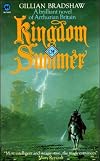
This is the second in Gillian Bradshaw's Arthurian trilogy set against a version of Dark Age Britain. In this, the focus is again on the career of Gwalchmai (Hawk of May, name taken from the Welsh version), known as Gawain in the legends, although this time from the POV of a young farmer, Rhys. Rhys is the son of Sion who helped Gwalchmai reach Arthur's camp in book 1. Nine years later, Gwalchmai is riding the countryside in winter, wounded and bedraggled, in search of Elidan a king's sister show more whom he wronged then realised he loved. Unfortunately, he killed her brother in battle after forgetting he had promised her he wouldn't, and she is from an unforgiving proud family. Sion and his family persuade Gwalchmai to stay with them and recover, and he eventually tells them about her. Rhys, who has always had the ambition to be a warrior, volunteers to become Gwalchmai's servant - at 21, he is far too old to train as a warrior, but as a Christian, he believes he can serve the Light in other ways. At present, an uneasy peace holds, following the defeat of the Saxons at a major battle some time before (in the gap between the two volumes), though Arthur's subject kings continue to cause problems.
The story shows how Rhys settles in at Camlann (Arthur's camp, known as Camelot in legend) and his impression of Gwalchmai's fellow warriors, some of whom, such as Gwalchmai's brother Agravain, abuse servants. Later, Arthur sends them on a mission, with another warrior called Rhuwan, to the court of a subject king whom he knows to be plotting, to find out who are his allies. To Gwalchmai's horror, his own father Lot, his mother Morgawse - the witch whose powers he escaped in book 1 - and his corrupted brother Medraut (Mordred) are present and it is obvious that mother and son are conspiring with the petty king against Arthur. Lot, on the other hand, is a shadow of the man we saw in book 1, and Gwalchmai decides that Morgawse has drained him with her evil sorcery. The situation becomes critical when Rhuwan starts falling under the spell of the smooth talking Medraut and Gwalchmai's reputation as someone who "goes mad" in battle is used against him.
This is a more successful story on the whole than book 1 as it is told through a down-to-earth farmer's viewpoint. We see Gwalchmai's unworldliness and the cynicism and bitterness which stem from his guilt and estrangement from Elidan. The company of Rhys is good for him, and the two men bond as time goes on, even when Medraut tries to prise them apart.
The only part of the story that drags is when they are first at the petty king's court and the situation stagnates for quite a while until Morgawse and Medraut show their hand. After that, it becomes fast paced with quite a lot of action. There is also another love story, apart from Gwalchmai's, wound through the later part of the narrative, when Rhys starts to fall for a young servant girl of Morgawse's - with the added twist of her appearing to be false. And, by the end of the novel, the story of Elidan comes to a conclusion and a young character is introduced whom it is obvious will eventually come to Camlann . More ominously, things begin to shape up for the traditional ending of the Arthurian story. show less
The story shows how Rhys settles in at Camlann (Arthur's camp, known as Camelot in legend) and his impression of Gwalchmai's fellow warriors, some of whom, such as Gwalchmai's brother Agravain, abuse servants. Later, Arthur sends them on a mission, with another warrior called Rhuwan, to the court of a subject king whom he knows to be plotting, to find out who are his allies. To Gwalchmai's horror, his own father Lot, his mother Morgawse - the witch whose powers he escaped in book 1 - and his corrupted brother Medraut (Mordred) are present and it is obvious that mother and son are conspiring with the petty king against Arthur. Lot, on the other hand, is a shadow of the man we saw in book 1, and Gwalchmai decides that Morgawse has drained him with her evil sorcery. The situation becomes critical when Rhuwan starts falling under the spell of the smooth talking Medraut and Gwalchmai's reputation as someone who "goes mad" in battle is used against him.
This is a more successful story on the whole than book 1 as it is told through a down-to-earth farmer's viewpoint. We see Gwalchmai's unworldliness and the cynicism and bitterness which stem from his guilt and estrangement from Elidan. The company of Rhys is good for him, and the two men bond as time goes on, even when Medraut tries to prise them apart.
The only part of the story that drags is when they are first at the petty king's court and the situation stagnates for quite a while until Morgawse and Medraut show their hand. After that, it becomes fast paced with quite a lot of action. There is also another love story, apart from Gwalchmai's, wound through the later part of the narrative, when Rhys starts to fall for a young servant girl of Morgawse's
Lists
Carole's List (2)
Awards


You May Also Like


Associated Authors
Statistics
- Works
- 32
- Also by
- 2
- Members
- 4,432
- Popularity
- #5,651
- Rating
- 3.8
- Reviews
- 138
- ISBNs
- 189
- Languages
- 6
- Favorited
- 29