

Cecelia Holland
Author of Floating Worlds
About the Author
Born in Henderson, Nevada, Cecelia Holland was educated at Pennsylvania State University and Connecticut College, where she received her B.A. degree. She has served as a visiting professor of English at Connecticut College since 1979. Holland's historical novels have received broad critical show more acclaim. According to one critic, she "proves that there can be more to historical thrillers than swordplay and seduction." (Time) Among her novels is City of God (1979), which is set in Rome during the period of the Borgia family. Told from the point of view of Nicolas, a secretary to the Florentine ambassador to Rome, this novel brings to life the period of the Renaissance, including the political intrigue that characterized Rome at the time. Other works include Until the Sun Falls (1969), a story of the ancient Mongols and their empire, The Firedrake (1966), her first published novel, Great Maria (1974), The Bear Flag (1990), and Pacific Street (1991). Holland is very adept at capturing the period she writes about, including the clothing, furnishings, and customs of the time. One critic has noted that Holland "is never guilty of the fatuity which plagues most historical fiction: she never nudges the reader into agreeing that folks way back then were really just like you and me, only they bathed less often." (Bowker Author Biography) show less
Image credit: Literary Lights
Series
Works by Cecelia Holland
The Cecelia Holland Historical Fiction Collection: Until the Sun Falls, Jerusalem, and Pillar of the Sky (2018) 6 copies, 1 review
Asimov's Science Fiction: Vol. 50, No. 5 & 6 [May/June 2026] — Contributor — 1 copy
Associated Works
What If? The World's Foremost Military Historians Imagine What Might Have Been (1999) — Contributor — 1,937 copies, 27 reviews
What If? 2: Eminent Historians Imagine What Might Have Been (2001) — Contributor — 1,088 copies, 11 reviews
Songs of Love and Death: All Original Tales of Star Crossed Love (2010) — Contributor — 808 copies, 37 reviews
What Ifs? of American History : Eminent Historians Imagine What Might Have Been (2003) — Contributor — 537 copies, 7 reviews
The Dragon Book: Magical Tales from the Masters of Modern Fantasy (2009) — Contributor — 488 copies, 14 reviews
MHQ: The Quarterly Journal of Military History — Autumn 1992 (1992) — Author "Firebrands of the Franks" — 18 copies
MHQ: The Quarterly Journal of Military History — Summer 1991 (1991) — Author "The Old Woman's Gun" — 16 copies
MHQ: The Quarterly Journal of Military History — Autumn 2008 (2008) — Author "Heraclius Brings Persia to Its Knees" — 14 copies
MHQ: The Quarterly Journal of Military History — Winter 1999 (1998) — Author "Tours: Medieval Battle Reconsidered" — 11 copies
MHQ: The Quarterly Journal of Military History — Spring 2000 (2000) — Co-Author "Hapless Voyage of H-3" — 10 copies
MHQ: The Quarterly Journal of Military History — Summer 2003 (2003) — Author "Bulwark of Spanish Florida" — 10 copies
MHQ: The Quarterly Journal of Military History — Autumn 2001 (2001) — Author "The Last Viking" — 9 copies
MHQ: The Quarterly Journal of Military History — Autumn 2010 (2010) — Author "Jihad by the Sea" — 4 copies
Tagged
Common Knowledge
- Legal name
- Holland, Cecelia Anastasia
- Other names
- Carter, Elizabeth Eliot (pseudonym)
- Birthdate
- 1943-12-31
- Gender
- female
- Education
- Connecticut College (BA)
Columbia University - Occupations
- creative writing teacher
novelist - Awards and honors
- Guggenheim Fellowship (1981)
- Nationality
- USA
- Birthplace
- Henderson, Nevada, USA
- Places of residence
- New York, New York, USA
Eureka, California, USA - Associated Place (for map)
- USA
Members
Reviews
Rating: 4* of five
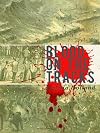
The Publisher Says: The Great Railroad Strike of 1877 wrenched American history onto a new course. Focusing on events in Baltimore and Pittsburgh, this essay brings this dramatic and bloody confrontation to life, as ordinary people, driven to the wall by oppression, rose against their masters. This was the opening act in long years of savage struggle for the rights of labor that continue to this day.
My Review: Holland's historical fiction was my eureka moment of reading show more about history. [The Firedrake], her 1965 novel of the Norman Conquest from the PoV of an Irish mercenary, woke me up as a 12-year-old voracious reader. I knew, from long-ago picture-book reading about the Bayeux Tapestry, that history was a story. That revelation made me an eager reader of all things historical (I checked out the Larousse Encyclopedia of World History so often and for so long that the librarians finally refused it to me!), but it took a novel to raise awareness that history was people's stories, average people, no one "significant" or "important"--just folks. (Specifically, the scene on one of William's ships crossing the Channel where the PoV character pees over the side when he wakes up, how human and familiar is that?)
So I saw this essay as I was browsing the Kindle store, and knowing that Holland had an entire series about the influence of the railroads on 19th-century California, I knew this would be an interesting piece of her research that didn't fit into the books.
Well. I swaNEE, boys and girls, there is interesting and there is interesting and this is the latter. The railroad riots of 1877 had barely been a blip on my mental radar as a part of labor history. (Regular readers of my reviews will recall that my views are to the left of the soulless vampire bastards that create and support the current economic system.) I had no idea of the depths of outrage that sparked this multi-city explosion. This wasn't an orchestrated, ideology-driven rebellion. This was the ultimate expression of individual people's fury and rage at the heartless, soulless exploitation of their labor for the luxury and happiness of a very, very few.
I imagine I could stop there, and most of y'all would understand why I gave the piece four stars.
But the thing that novelists do, even when they venture into non-fiction, is structure reality into a narrative. It's the way humans like to get their information, as witness the existence and survival of narratives from thousands of years ago. "Generals" Brinton and Pearson, leaders of militias called upon to suppress the rioting in Pittsburgh, were polar opposites in their approaches to the situation. Pearson's local Pittsburgh militia had a strong base of local knowledge and Pearson himself was one of the few actors in the drama with a shred of common sense. Naturally, he was sidelined and ultimately sent home. Brinton, a Philadelphia import to the scene, was by-the-book and inflexible...until shit got real and people started fighting in earnest. His men were the only ones to shoot to kill.
That did not end well.
Pittsburgh blew up, fires were set, bystanders...a four-year-old girl among them...died. This was in defense of bosses who had cut working men's wages ten percent, and announced that labor cuts were imminent. Pronunicamentoes proclaimed from the luxury of their fabulously well-appointed private rail cars. Baltimore had similar events, though for a shorter time. Martinsburg, West Virginia, where the crisis began, fared slightly better. But all were railroad towns and each had a large population sacrificed to the larger profits paid to a very few.
Greed is disgusting.
And this all takes place against the backdrop of an economy in free-fall from the Panic of 1873, unaided by the scandal- and corruption-plagued Federal Government, and record-breaking profits for the wealthiest. Does this have a revoltingly familiar sound? People made homeless, left to starve, unable to find any work ringing bells too?
Holland's point is simple: Every time capital is left without strong and painful chains, people suffer. We forget or ignore this lesson to our societal cost, and we're paying that cost yet again.
Read this historical essay. Then think about the events in Greece. In Ukraine. The Occupy movement. Just for a moment, one small shining moment, THINK ABOUT SOMEONE ELSE.
This work is licensed under a Creative Commons Attribution-NonCommercial-ShareAlike 3.0 Unported Lice show less
The Publisher Says: The Great Railroad Strike of 1877 wrenched American history onto a new course. Focusing on events in Baltimore and Pittsburgh, this essay brings this dramatic and bloody confrontation to life, as ordinary people, driven to the wall by oppression, rose against their masters. This was the opening act in long years of savage struggle for the rights of labor that continue to this day.
My Review: Holland's historical fiction was my eureka moment of reading show more about history. [The Firedrake], her 1965 novel of the Norman Conquest from the PoV of an Irish mercenary, woke me up as a 12-year-old voracious reader. I knew, from long-ago picture-book reading about the Bayeux Tapestry, that history was a story. That revelation made me an eager reader of all things historical (I checked out the Larousse Encyclopedia of World History so often and for so long that the librarians finally refused it to me!), but it took a novel to raise awareness that history was people's stories, average people, no one "significant" or "important"--just folks. (Specifically, the scene on one of William's ships crossing the Channel where the PoV character pees over the side when he wakes up, how human and familiar is that?)
So I saw this essay as I was browsing the Kindle store, and knowing that Holland had an entire series about the influence of the railroads on 19th-century California, I knew this would be an interesting piece of her research that didn't fit into the books.
Well. I swaNEE, boys and girls, there is interesting and there is interesting and this is the latter. The railroad riots of 1877 had barely been a blip on my mental radar as a part of labor history. (Regular readers of my reviews will recall that my views are to the left of the soulless vampire bastards that create and support the current economic system.) I had no idea of the depths of outrage that sparked this multi-city explosion. This wasn't an orchestrated, ideology-driven rebellion. This was the ultimate expression of individual people's fury and rage at the heartless, soulless exploitation of their labor for the luxury and happiness of a very, very few.
I imagine I could stop there, and most of y'all would understand why I gave the piece four stars.
But the thing that novelists do, even when they venture into non-fiction, is structure reality into a narrative. It's the way humans like to get their information, as witness the existence and survival of narratives from thousands of years ago. "Generals" Brinton and Pearson, leaders of militias called upon to suppress the rioting in Pittsburgh, were polar opposites in their approaches to the situation. Pearson's local Pittsburgh militia had a strong base of local knowledge and Pearson himself was one of the few actors in the drama with a shred of common sense. Naturally, he was sidelined and ultimately sent home. Brinton, a Philadelphia import to the scene, was by-the-book and inflexible...until shit got real and people started fighting in earnest. His men were the only ones to shoot to kill.
That did not end well.
Pittsburgh blew up, fires were set, bystanders...a four-year-old girl among them...died. This was in defense of bosses who had cut working men's wages ten percent, and announced that labor cuts were imminent. Pronunicamentoes proclaimed from the luxury of their fabulously well-appointed private rail cars. Baltimore had similar events, though for a shorter time. Martinsburg, West Virginia, where the crisis began, fared slightly better. But all were railroad towns and each had a large population sacrificed to the larger profits paid to a very few.
Greed is disgusting.
And this all takes place against the backdrop of an economy in free-fall from the Panic of 1873, unaided by the scandal- and corruption-plagued Federal Government, and record-breaking profits for the wealthiest. Does this have a revoltingly familiar sound? People made homeless, left to starve, unable to find any work ringing bells too?
Holland's point is simple: Every time capital is left without strong and painful chains, people suffer. We forget or ignore this lesson to our societal cost, and we're paying that cost yet again.
Read this historical essay. Then think about the events in Greece. In Ukraine. The Occupy movement. Just for a moment, one small shining moment, THINK ABOUT SOMEONE ELSE.
This work is licensed under a Creative Commons Attribution-NonCommercial-ShareAlike 3.0 Unported Lice show less
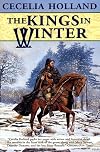
I ordered this from the library off the back of Hammer For Princes, and as luck would have it, it turns out to be set in Ireland in 1014, the lead-up to the Battle Of Clontarf, which, as it happens, happened, as it happened, a thousand years ago this coming weekend. For various ways and reasons, I haven't read much historical fiction set in Ireland. Looking over my Goodreads list, I see Year Of The French and that's it. I'd love to read more like this.
Our hero is Muirtagh, bowman and harper, show more clan chief of the O'Cullinane's, who have stayed in their refuge in the Wicklow hills for these last twenty years, since they were massacred and chased out of Meath by the mac Mahons. After pursuing and slaying a gang of Danish horse thieves, they are intercepted on their way home and summoned to Tara at the behest of the High King, Brian Boru. In the wake of the subsequent events in the High King's hall, the old feud is rekindled and Muirtagh's desperate efforts to save his clan end with him renouncing his chieftainship and fleeing as an outlaw with blood on his hands. The story culminates in the Battle of Clontarf, with Muirtagh on the side destined to lose.
I can't get over how good this is. Not being a big historical fiction head, with a few notable exceptions, I can't say whether these books are actually as underappreciated and abandoned to obscurity as they appear to be, but if so, it's truly undeserved. Holland's prose is spare, polished and unadorned. The story and the characters are superbly crafted, and the whole things is lean, smooth, tight, muscular and amazingly readable. Going by my own tastes, this book is in a magical, if unlikely, zone where Dorothy Dunnett and George RR martin overlap and I would unhesitatingly recommend it to fans of either. show less
Our hero is Muirtagh, bowman and harper, show more clan chief of the O'Cullinane's, who have stayed in their refuge in the Wicklow hills for these last twenty years, since they were massacred and chased out of Meath by the mac Mahons. After pursuing and slaying a gang of Danish horse thieves, they are intercepted on their way home and summoned to Tara at the behest of the High King, Brian Boru. In the wake of the subsequent events in the High King's hall, the old feud is rekindled and Muirtagh's desperate efforts to save his clan end with him renouncing his chieftainship and fleeing as an outlaw with blood on his hands. The story culminates in the Battle of Clontarf, with Muirtagh on the side destined to lose.
I can't get over how good this is. Not being a big historical fiction head, with a few notable exceptions, I can't say whether these books are actually as underappreciated and abandoned to obscurity as they appear to be, but if so, it's truly undeserved. Holland's prose is spare, polished and unadorned. The story and the characters are superbly crafted, and the whole things is lean, smooth, tight, muscular and amazingly readable. Going by my own tastes, this book is in a magical, if unlikely, zone where Dorothy Dunnett and George RR martin overlap and I would unhesitatingly recommend it to fans of either. show less

Laeghaire of the Long Road, from Tralee, no less, an Irish mercenary knight, a devil of a fighter and, well, a devil in general, finds his way, indirectly, into the employ of William of Normandy. The two make an impression on each other in the course of a Summer campaign, but to say much more than that might give things away, though I'm sure even the most casual student of history will work out where it's all headed.
This is Holland's first novel, and it shows a bit as in her first pages of show more terse, short sentences she's grappling with her craft and learning the difference between short sentences that are monotonous and repetitive, and short sentences interspersed with sentences of more varied length leading to an effect that would be praised as 'hard-boiled' in a crime novel, but which suits descriptions of deadly but prosaic men going about the business of warfare and statecraft. Laegharie is an intense, morose, driven, haunted man who is beating off bandits one minute and buying peasant girls the next; pillaging a landscape one minute, doting on his son by the bought peasant girl the next; but on the whole, Laeghaire is not destined for happiness, whether by mischance or his own love of violence, and if a happy life eludes him, then violence he gets a-plenty, waiting for him on a hill outside Hastings.
Anyway, it's superb. show less
This is Holland's first novel, and it shows a bit as in her first pages of show more terse, short sentences she's grappling with her craft and learning the difference between short sentences that are monotonous and repetitive, and short sentences interspersed with sentences of more varied length leading to an effect that would be praised as 'hard-boiled' in a crime novel, but which suits descriptions of deadly but prosaic men going about the business of warfare and statecraft. Laegharie is an intense, morose, driven, haunted man who is beating off bandits one minute and buying peasant girls the next; pillaging a landscape one minute, doting on his son by the bought peasant girl the next; but on the whole, Laeghaire is not destined for happiness, whether by mischance or his own love of violence, and if a happy life eludes him, then violence he gets a-plenty, waiting for him on a hill outside Hastings.
Anyway, it's superb. show less

Nicholas Dawson is the secretary to the Florentine ambassador in 16th century Rome. Having lived there for twenty years now, he is far removed from Florence, but continues thanklessly protecting the ambassador from his own indecision. However, this is the Rome of the Borgias, with Alexander VI in power and Cesare Borgia terrorising the Romagne with his army of condotierres. Nicholas is suborned as a spy by Cesare, and though his pride is rankled, he is also enamoured by the proximity of show more power, and proceeds to make some pertinent pieces of tactical advice. The Borgias, however, are pretty much utter monsters, self-serving, fickle and incredibly dangerous.
Unromantic, unsentimental, polished and sleek, this is a novel about power and corruption. Typical Holland, it is a man's world full of men plotting and killing and maneuvering. There are women in this: Lucrezia Borgia and two of her cousins and a brief, tragic appearance by Catherine Sforza. There isn't even a female love interest as Nicholas is gay, and his disreputable lover may doom him or ultimately redeem him, but neither of them are particularly fond of women at all. There's probably a Phd there for someone to explore how one woman can write so thoroughly and subversively about men in different periods of history but I'll just remark that this may be my favourite Holland yet and move on. show less
Unromantic, unsentimental, polished and sleek, this is a novel about power and corruption. Typical Holland, it is a man's world full of men plotting and killing and maneuvering. There are women in this: Lucrezia Borgia and two of her cousins and a brief, tragic appearance by Catherine Sforza. There isn't even a female love interest as Nicholas is gay, and his disreputable lover may doom him or ultimately redeem him, but neither of them are particularly fond of women at all. There's probably a Phd there for someone to explore how one woman can write so thoroughly and subversively about men in different periods of history but I'll just remark that this may be my favourite Holland yet and move on. show less
Lists
Awards


You May Also Like


Associated Authors
Statistics
- Works
- 52
- Also by
- 19
- Members
- 3,335
- Popularity
- #7,659
- Rating
- 3.5
- Reviews
- 114
- ISBNs
- 223
- Languages
- 3
- Favorited
- 12