

Helen Hollick
Author of The Forever Queen
About the Author
Image credit: Helen Hollick, 2014
Series
Works by Helen Hollick
1066 Turned Upside Down: Alternative fiction stories by nine authors (2018) — Contributor — 16 copies, 2 reviews
HISTORICAL STORIES of EXILE 2 copies
Tagged
Common Knowledge
- Legal name
- Helen Hollick
- Birthdate
- 1953
- Gender
- female
- Occupations
- historical novelist
- Nationality
- England
UK - Birthplace
- Walthamstow, England, UK
- Places of residence
- Walthamstow, England, UK
- Associated Place (for map)
- Walthamstow, England, UK
Members
Reviews
The Kingmaking: Book One of the Pendragon's Banner Trilogy (Pendragon's Banner Trilogy, 1) by Helen Hollick
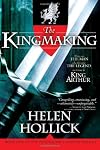
The author was going for realism with this retelling of the Arthurian legend, so there's no magic, no Merlin, no Lancelot, no round table. Arthur isn't a shining king, he's a warlord who unites Britain against the Saxon through his strength and superior tactics. Okay, sounds good, I'm down with the premise. However, Arthur is not even the remotest bit likeable. He treats women horribly, thinks servants are there to sleep with whenever he pleases and then discard. Even women who are married show more to people of the same social standing are there to be leered at, flirted with, or possibly even taken against their will. When Arthur (as a child) declares his love for Gwenhyfar but through various circumstances cannot immediately marry her, he acts like a petulant child, decides to marry the daughter of his enemy through a political marriage. But he treats her horribly, rapes her, abuses her, hates her even, and yet, she somehow falls in love with him. Gwenhyfar meanwhile becomes the side piece until Arthur can divorce his current wife, but Arthur ends up getting both of them pregnant. And while he proclaims his true love for Gwenhyfar, it doesn't stop him from eyeballing other women. Oh, and he's also somehow a brilliant warlord, but we don't have that many battles in the book at all. The author did not convince me that Arthur is a worthy leader, or even a skilled leader. show less
Shame on mainstream publishers for rejecting a book of this quality!!!!
I have to admit, I am not generally a fan of nautical adventures. I have never particularly desired to read, for example, Patrick O’Brian’s Master and Commander or Julian Stockwin’s Kydd adventures series (but did, come to think of it, enjoy Robert Louis Stevenson’s Kidnapped, hmm…), so I was a rather skeptical of my ability to become engrossed in Sea Witch. However, knowing the author is a writer of enjoyable show more historical fiction, I was open to giving this a try.
In all honesty, I have to say this is the best Indie book I’ve read to date. In fact, this is one of the best novels I have read in a very long time.
Sea Witch is set in the golden age of piracy, 1716, in the “pirate round” from Africa to the Caribbean. This is the story of Jesamiah Acorne, who is forced to leave his home by an abusive half-brother and fend for himself at age 15. He becomes a pirate, one of the few options open to men in this circumstance, and this is the story of his first adventure: a tale of revenge, love, and struggle, all entwined with his passion for the sea. There are four books so far in this series, I believe, and you can find all of Helen Hollick’s books on her website: Helen Hollick’s website
Everything that an avid reader and reviewer looks for in a novel is here: strong character development, multidimensional portrayal (one of the biggest strengths of the book), a superbly plotted story with excellent tempo and a tight narrative, gripping and fluid language, vivid description, and tension and release at just the right moments.
This is a pirate adventure with wide appeal; there is something for everyone. I have been skittish about nautical adventures because to me, the subject seems geared toward masculine tastes (and having not read many, I could be completely wrong about that!). Here, we have a pirate who is internally tormented and struggling with a sense of vulnerability; a character who may appeal to a more emotional sensibility. On the other hand, our hero is not “soft”; he is a hardened pirate through-and-through, who takes pride in his work and is very good at it. He is a complex man, fighting his past, making the most of his present circumstances, and trying to avoid terrible possibilities that lurk in the future. He gets into scrapes and makes quite human mistakes: a multidimensional rogue of sorts.
A deeply moving, but not overly sentimental, love story is also well done in Sea Witch. Tiola Oldstagh herself has been injured deeply and is the one woman who could possibly break down Jesamiah’s tough barrier. The two must exercise extraordinary patience and faith during times of great despair, and we don’t know until the conclusion if they will make it—the punches keep on coming at the end, one after the other after the other, and I couldn’t sleep until I turned the final page.
The details of the ship’s workings, the descriptions of the crew’s behavior and pirate culture throughout the book are impressive. The author has a tight grasp on nautical details (the parts of a ship, sailors’ language, the lifestyle—as far as a novice such as I can tell) and a way of writing about them that makes this book an entertaining education on top of all else.
My favorite aspect of the story, and one of the reasons, I’ve heard, that this book was rejected by mainstream publishers, is the mystical, supernatural element. The subtle, overarching theme is the epic battle for Jesamiah’s body and soul between the living, immortal “soul of the sea, spirit of the waves” Tethys and Tiola, the young healer, Jesamiah’s soul mate, who turns out to be a “White Witch,” who uses her power of “The Craft” only for good. This epic battle is a powerful element of the story. It adds a depth and a spiritual texture that is beautiful and convincing, even carrying over to the terrifying aspects of Tethys herself. There is much veneration of nature, of beauty, and of the unknowable in this theme. Let yourself float off into this element of the story, without judgment or skepticism, and your enjoyment of the book will only increase.
I appreciated the short length of the chapters—I find that short, effective chapters don’t challenge my concentration and do allow me time to digest what I’ve read. The language flows beautifully, with at least one literary reference that brought a smile to my face:
(In his first meeting with a man who would eventually come to play an important role in his future, Jesamiah is listening to Captain Woodes Rogers blathering on…)
My good friend DeFoe, back in England, so his prattling letters mention, cannot wait to meet Selkirk here. He intends to write his experiences down as an adventure story. Says he’ll call it Robinson Crusoe to protect the innocent involved in the tale. Absurd, eh? Haha! (p. 45)
How interesting to read the opinion of a rather self-indulgent traveler of the sea about a future classic of literature when it was just a thought in the author’s mind! This is the kind of intelligent detail you will find in this novel.
The author has included a map, an illustration of a square-rigged ship with parts identified, as well as a glossary of seafaring terms at the back of the book, so readers can follow along with the “sailor-speak” (which, gratefully, does not interfere with the reading flow).
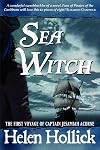
My criticisms are miniscule compared with the overall quality of this book: more than a few typos and missing words; perhaps the dependent clause-technique was overused a bit too much for the comfort of my editorially trained ear; and a cover that is a little dark for my personal taste, but does describe the atmosphere of the book. Overall, the publication is professionally laid out and pleasing to look at.
Shame on mainstream publishers for rejecting a book of this quality. Historical fiction with an infusion of fantasy is not an uncommon or unpleasant combination in a novel! I think Sea Witch would sell quite well if it were to be aggressively marketed. This is the work of a professional, experienced author, not a novice.
I absolutely loved Sea Witch and highly recommend it whether you are a fan of pirating/seafaring adventures or not—and I will be reading the next book in the series as soon as I can get my hands on it! show less
I have to admit, I am not generally a fan of nautical adventures. I have never particularly desired to read, for example, Patrick O’Brian’s Master and Commander or Julian Stockwin’s Kydd adventures series (but did, come to think of it, enjoy Robert Louis Stevenson’s Kidnapped, hmm…), so I was a rather skeptical of my ability to become engrossed in Sea Witch. However, knowing the author is a writer of enjoyable show more historical fiction, I was open to giving this a try.
In all honesty, I have to say this is the best Indie book I’ve read to date. In fact, this is one of the best novels I have read in a very long time.
Sea Witch is set in the golden age of piracy, 1716, in the “pirate round” from Africa to the Caribbean. This is the story of Jesamiah Acorne, who is forced to leave his home by an abusive half-brother and fend for himself at age 15. He becomes a pirate, one of the few options open to men in this circumstance, and this is the story of his first adventure: a tale of revenge, love, and struggle, all entwined with his passion for the sea. There are four books so far in this series, I believe, and you can find all of Helen Hollick’s books on her website: Helen Hollick’s website
Everything that an avid reader and reviewer looks for in a novel is here: strong character development, multidimensional portrayal (one of the biggest strengths of the book), a superbly plotted story with excellent tempo and a tight narrative, gripping and fluid language, vivid description, and tension and release at just the right moments.
This is a pirate adventure with wide appeal; there is something for everyone. I have been skittish about nautical adventures because to me, the subject seems geared toward masculine tastes (and having not read many, I could be completely wrong about that!). Here, we have a pirate who is internally tormented and struggling with a sense of vulnerability; a character who may appeal to a more emotional sensibility. On the other hand, our hero is not “soft”; he is a hardened pirate through-and-through, who takes pride in his work and is very good at it. He is a complex man, fighting his past, making the most of his present circumstances, and trying to avoid terrible possibilities that lurk in the future. He gets into scrapes and makes quite human mistakes: a multidimensional rogue of sorts.
A deeply moving, but not overly sentimental, love story is also well done in Sea Witch. Tiola Oldstagh herself has been injured deeply and is the one woman who could possibly break down Jesamiah’s tough barrier. The two must exercise extraordinary patience and faith during times of great despair, and we don’t know until the conclusion if they will make it—the punches keep on coming at the end, one after the other after the other, and I couldn’t sleep until I turned the final page.
The details of the ship’s workings, the descriptions of the crew’s behavior and pirate culture throughout the book are impressive. The author has a tight grasp on nautical details (the parts of a ship, sailors’ language, the lifestyle—as far as a novice such as I can tell) and a way of writing about them that makes this book an entertaining education on top of all else.
My favorite aspect of the story, and one of the reasons, I’ve heard, that this book was rejected by mainstream publishers, is the mystical, supernatural element. The subtle, overarching theme is the epic battle for Jesamiah’s body and soul between the living, immortal “soul of the sea, spirit of the waves” Tethys and Tiola, the young healer, Jesamiah’s soul mate, who turns out to be a “White Witch,” who uses her power of “The Craft” only for good. This epic battle is a powerful element of the story. It adds a depth and a spiritual texture that is beautiful and convincing, even carrying over to the terrifying aspects of Tethys herself. There is much veneration of nature, of beauty, and of the unknowable in this theme. Let yourself float off into this element of the story, without judgment or skepticism, and your enjoyment of the book will only increase.
I appreciated the short length of the chapters—I find that short, effective chapters don’t challenge my concentration and do allow me time to digest what I’ve read. The language flows beautifully, with at least one literary reference that brought a smile to my face:
(In his first meeting with a man who would eventually come to play an important role in his future, Jesamiah is listening to Captain Woodes Rogers blathering on…)
My good friend DeFoe, back in England, so his prattling letters mention, cannot wait to meet Selkirk here. He intends to write his experiences down as an adventure story. Says he’ll call it Robinson Crusoe to protect the innocent involved in the tale. Absurd, eh? Haha! (p. 45)
How interesting to read the opinion of a rather self-indulgent traveler of the sea about a future classic of literature when it was just a thought in the author’s mind! This is the kind of intelligent detail you will find in this novel.
The author has included a map, an illustration of a square-rigged ship with parts identified, as well as a glossary of seafaring terms at the back of the book, so readers can follow along with the “sailor-speak” (which, gratefully, does not interfere with the reading flow).
My criticisms are miniscule compared with the overall quality of this book: more than a few typos and missing words; perhaps the dependent clause-technique was overused a bit too much for the comfort of my editorially trained ear; and a cover that is a little dark for my personal taste, but does describe the atmosphere of the book. Overall, the publication is professionally laid out and pleasing to look at.
Shame on mainstream publishers for rejecting a book of this quality. Historical fiction with an infusion of fantasy is not an uncommon or unpleasant combination in a novel! I think Sea Witch would sell quite well if it were to be aggressively marketed. This is the work of a professional, experienced author, not a novice.
I absolutely loved Sea Witch and highly recommend it whether you are a fan of pirating/seafaring adventures or not—and I will be reading the next book in the series as soon as I can get my hands on it! show less

In this version of the King Arthur story, Arthur is a dark hero. He is young, selfish, ambitious and callous. He makes decisions based on his own desires with little thought to future consequences, making enemies left and right. Yet Ms. Hollick does a fabulous job of letting the reader glimpse just enough of his fears and vulnerabilities to keep him from being unlikeable, and to sway the reader to root for his success. Although there were instances where my reactions to his behavior were so show more strong I wanted to throw the book across the room, I had to keep reading, dying to find out what would happen next!
I thoroughly enjoyed the portrayal of Gwenhwyfar as the young, strong, independent princess of Gwynedd, forced to grow up all too quickly amidst the heartbreak and harsh realities of a chain of events beyond her control; her life on a course so different from that which she'd dreamed of. She is a worthy heroine in this story, and my favorite character in the book.
Though it may not be for the faint of heart - abuse against women, rape, murder and gore abound - this is a raw, gritty, realistic telling of the tale as it could have been. Ms. Hollick has done her research on the time period and it comes to life effortlessly within the pages of her first novel. She's also done extensive research on the various versions of the Arthurian legend and has used historical figures and settings to make her story and characters plausible; there are no wizards or knights in shining armor. The Dark Ages in Britain were a time of religious and cultural upheaval as Christianity and other foreign invaders settled on the island and this provides a rich backdrop for the story.
Full of heartpounding action, troubled heroes, wicked villains, violence, betrayal and, of course, true love, this well-written book is an intense read and a real page-turner. I look forward to reading the remaining two books in the trilogy. show less
I thoroughly enjoyed the portrayal of Gwenhwyfar as the young, strong, independent princess of Gwynedd, forced to grow up all too quickly amidst the heartbreak and harsh realities of a chain of events beyond her control; her life on a course so different from that which she'd dreamed of. She is a worthy heroine in this story, and my favorite character in the book.
Though it may not be for the faint of heart - abuse against women, rape, murder and gore abound - this is a raw, gritty, realistic telling of the tale as it could have been. Ms. Hollick has done her research on the time period and it comes to life effortlessly within the pages of her first novel. She's also done extensive research on the various versions of the Arthurian legend and has used historical figures and settings to make her story and characters plausible; there are no wizards or knights in shining armor. The Dark Ages in Britain were a time of religious and cultural upheaval as Christianity and other foreign invaders settled on the island and this provides a rich backdrop for the story.
Full of heartpounding action, troubled heroes, wicked villains, violence, betrayal and, of course, true love, this well-written book is an intense read and a real page-turner. I look forward to reading the remaining two books in the trilogy. show less
The Kingmaking: Book One of the Pendragon's Banner Trilogy (Pendragon's Banner Trilogy, 1) by Helen Hollick
This is the first in the trilogy Pendragon’s Banner and, if this first instalment is anything to go by it is going to be a great read from beginning to end.
If you are looking for the normal run of the mill rendition of the main protagonist, one that is filled with brilliantly shining armour and evildoings by witches and wizards, then this telling of the Arthurian legend is not the one for you. With a skilful use of words this Author brings to life a living human being in the form of show more Arthur. He has flaws and faults like the rest of us, and is definitely a product of the Dark Ages he lived in; cruel times that needed, at times, a cruel hand to deal with them that the reader would not find in the books that perpetuate the myth of this man. Unlike the saintly personae given to Arthur in other books, this Arthur is a 100% red-blooded male, he does whatever is necessary to take what he feels is rightly is, pleasures himself with women as and when the urge drives him, lies and cheats. This may seem as if the Author has written him this way to try and dissuade the reader from liking him, but the overall effect is to make him so human the reader actually feels sympathy for him and cheers him on in his endeavours. We are able to walk beside him on his journey thankful that we did not have to live in these times. The penmanship show by the Author is not just reserved for the main character; she treats each of them with as much skill imbuing them with all the traits and qualities that make up our species. The Gwenhwyfar (Guinevere) character in this rendition is also totally different from those readers who may remember her from the Camelot movie as being played by Vanessa Redgrave; this Gwenhwyfar is a feisty, strong young woman who definitely knows her own mind; she is not content with skulking in the background weaving her ‘womanly’ plans to ensnare Arthur, she is a typical tom boy that loves the outdoors, adventure with hidden skills that only come to the forefront when needed. Despite all this, she too is given a fallible side, which when bundled up with everything else about her makes her another character in this book that is easily liked; she is all woman as opposed to being a lady.
The elimination of magic in a story that is always surrounded and soaked in it makes this book unique. Not a great deal is known about the time between the departure of the Romans from England and the arrival of the Normans in 1066, but it is apparent from reading this novel that the Author spent a great deal of time painstakingly research this era. It is through this research and the way in which the Author translated it into their novel that lifted a lot of obscurity of the period for me, and for this I am truly grateful. This book is a little slow to get underway, but these first few chapters set the scene perfectly for what is to come; once this book has gripped the reader though it will be hard for them to put aside without finishing it.
At 574 pages, for me this wasn’t a particularly meaty tome, but everyone one of those pages is filled with something that will keep even the most timid of readers when it comes to larger books captivated. I would highly recommend this book to readers who enjoy a good historical fiction novel and lovers of Sharon Kay Penman, also to those who want a read that will keep them turning the pages long after they should have turned out the light. I have the remaining two books in the trilogy all lined and ready to read, and I would suggest anyone that picks this up grabs the other two at the same time.
Originally reviewed on: http://catesbooknuthut.com/2014/04/10/review-the-kingmaking-pendragons-banner-1-...
This work is licensed under a Creative Commons Attribution-NonCommercial-NoDerivs 3.0 Unported License. show less
If you are looking for the normal run of the mill rendition of the main protagonist, one that is filled with brilliantly shining armour and evildoings by witches and wizards, then this telling of the Arthurian legend is not the one for you. With a skilful use of words this Author brings to life a living human being in the form of show more Arthur. He has flaws and faults like the rest of us, and is definitely a product of the Dark Ages he lived in; cruel times that needed, at times, a cruel hand to deal with them that the reader would not find in the books that perpetuate the myth of this man. Unlike the saintly personae given to Arthur in other books, this Arthur is a 100% red-blooded male, he does whatever is necessary to take what he feels is rightly is, pleasures himself with women as and when the urge drives him, lies and cheats. This may seem as if the Author has written him this way to try and dissuade the reader from liking him, but the overall effect is to make him so human the reader actually feels sympathy for him and cheers him on in his endeavours. We are able to walk beside him on his journey thankful that we did not have to live in these times. The penmanship show by the Author is not just reserved for the main character; she treats each of them with as much skill imbuing them with all the traits and qualities that make up our species. The Gwenhwyfar (Guinevere) character in this rendition is also totally different from those readers who may remember her from the Camelot movie as being played by Vanessa Redgrave; this Gwenhwyfar is a feisty, strong young woman who definitely knows her own mind; she is not content with skulking in the background weaving her ‘womanly’ plans to ensnare Arthur, she is a typical tom boy that loves the outdoors, adventure with hidden skills that only come to the forefront when needed. Despite all this, she too is given a fallible side, which when bundled up with everything else about her makes her another character in this book that is easily liked; she is all woman as opposed to being a lady.
The elimination of magic in a story that is always surrounded and soaked in it makes this book unique. Not a great deal is known about the time between the departure of the Romans from England and the arrival of the Normans in 1066, but it is apparent from reading this novel that the Author spent a great deal of time painstakingly research this era. It is through this research and the way in which the Author translated it into their novel that lifted a lot of obscurity of the period for me, and for this I am truly grateful. This book is a little slow to get underway, but these first few chapters set the scene perfectly for what is to come; once this book has gripped the reader though it will be hard for them to put aside without finishing it.
At 574 pages, for me this wasn’t a particularly meaty tome, but everyone one of those pages is filled with something that will keep even the most timid of readers when it comes to larger books captivated. I would highly recommend this book to readers who enjoy a good historical fiction novel and lovers of Sharon Kay Penman, also to those who want a read that will keep them turning the pages long after they should have turned out the light. I have the remaining two books in the trilogy all lined and ready to read, and I would suggest anyone that picks this up grabs the other two at the same time.
Originally reviewed on: http://catesbooknuthut.com/2014/04/10/review-the-kingmaking-pendragons-banner-1-...
This work is licensed under a Creative Commons Attribution-NonCommercial-NoDerivs 3.0 Unported License. show less
Lists
Awards


You May Also Like


Associated Authors
Statistics
- Works
- 21
- Members
- 1,829
- Popularity
- #14,064
- Rating
- 4.0
- Reviews
- 103
- ISBNs
- 94
- Languages
- 1
- Favorited
- 9

