
Jack Whyte (1940–2021)
Author of The Skystone
About the Author
Writer Jack Whyte was born in Scotland in 1940. He was raised in Scotland, but educated in England and France before migrating to Canada in 1967. He spent one year teaching English in high school, before focusing on a career as a professional singer, musician, and actor. He wrote, directed and show more appeared in a one man show about Scotland's national poet Robert Burns in the early 1970's. Due to the show's success, he started writing for CBC national television and eventually went into advertising. He is the author of The Camulod Chronicles or A Dream of Eagles series which sets the tales of King Arthur in Roman Britain and Templar Trilogy which deals with the rise and fall of the Order of the Knights of the Temple of Solomon. (Bowker Author Biography) show less
Series
Works by Jack Whyte
Tagged
Common Knowledge
- Canonical name
- Whyte, Jack
- Birthdate
- 1940-03-15
- Date of death
- 2021-02-22
- Gender
- male
- Occupations
- singer
musician
actor
advertising
novelist - Cause of death
- cancer
- Nationality
- UK
Canada (naturalised) - Birthplace
- Johnstone, Renfrewshire, Scotland, UK
- Places of residence
- Kelowna, British Columbia, Canada
- Place of death
- Kelowna, British Columbia, Canada
- Associated Place (for map)
- British Columbia, Canada
Members
Discussions
Arthurian Theme read w/**SPOILERS** in The Green Dragon (March 2008)
Reviews
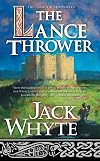
The eight book in the Camulod Chronicles. This one moves away from Camulod, into Gaul, where we meet a new character: Clothar, whom history will remember as Lancelot. This is my least favourite book in the series. Clothar displayed very little personality, and the things about him I found most interesting (his relationship with his adoptive family, his devotion to Bishop Germanus and his brief intention to become a priest, his grief for his lost friend and his fear in the face of his first show more battle) were barely touched on, pushed aside in favour of emphasising what a military genius he is and endless rambling about tactics. His backstory as the firstborn son of a deposed king who’s honour-bound to seek vengeance for his father was built up and up but never really went anywhere (and, after reading the final book, I can confirm that it never goes anywhere). I spent the whole book waiting for him to go to Camulod already, and it only happened in the last chapter. show less
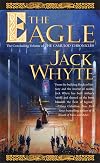
The ninth and final book in the Camulod Chronicles. I liked it more than the previous one - we spent some of the time in Camulod! People talked to each other about things besides war! Lots of recognisable stuff from the legends came to pass! And as a medical minded person I got a kick out of this scene where a knight falls down a cliff and breaks his leg, and they have to treat it and get him home again with tools they improvise from what they can find in the woods. But overall, the ending show more of this series was much weaker than the beginning. It’s a shame, I loved the beginning, I wanted it to stay good.
It says in the blurb that Jack Whyte had always considered the Arthur/Guinevere/Lancelot love triangle to be the heart of the Arthurian story, so I was disappointed by how little this version impacted me, and how little these three interacted on page. Arthur and Gwinnifer had a political marriage, and they liked and respected each other but were never really in love. Clothar and Gwinnifer liked each other too, and we’re told they eventually fell in love and got married after Arthur’s death, but everything was strictly platonic before then. And Arthur and Clothar were supposedly the very best of friends, but that just didn’t ring true for me. It’s frustrating, because I know Whyte can do better! Publius Varrus and Caius Britannicus from the first and second books in the Chronicles had a special friendship that I was very invested in. If Varrus had told Caius “You and my wife are the two people I love most in the world, I need you both to be safe”, I would have accepted it without question and felt feelings about it; but when Arthur said that to Clothar I was just like “… Is that true, though? Really? I’m gonna want some more evidence than just you saying it”.
Overall, I found this ending unsatisfying. The thing about the Arthurian story is that it’s a tragedy, and this version took away a lot of the power in that. There was nothing between Clothar and Gwinnifer, Mordred always knew he was the product of incest but he didn’t care and neither did anyone else, he was openly acknowledged as Arthur’s son and heir, Clothar left Camulod before it fell because Arthur ordered him to get out and take the queen with him, and Arthur lost his final war not due to betrayal or anyone’s fatal flaws but simply due to the overwhelming might of the enemy. It was nice, but somehow felt hollow to me. show less
It says in the blurb that Jack Whyte had always considered the Arthur/Guinevere/Lancelot love triangle to be the heart of the Arthurian story, so I was disappointed by how little this version impacted me, and how little these three interacted on page. Arthur and Gwinnifer had a political marriage, and they liked and respected each other but were never really in love. Clothar and Gwinnifer liked each other too, and we’re told they eventually fell in love and got married after Arthur’s death, but everything was strictly platonic before then. And Arthur and Clothar were supposedly the very best of friends, but that just didn’t ring true for me. It’s frustrating, because I know Whyte can do better! Publius Varrus and Caius Britannicus from the first and second books in the Chronicles had a special friendship that I was very invested in. If Varrus had told Caius “You and my wife are the two people I love most in the world, I need you both to be safe”, I would have accepted it without question and felt feelings about it; but when Arthur said that to Clothar I was just like “… Is that true, though? Really? I’m gonna want some more evidence than just you saying it”.
Overall, I found this ending unsatisfying. The thing about the Arthurian story is that it’s a tragedy, and this version took away a lot of the power in that. There was nothing between Clothar and Gwinnifer, Mordred always knew he was the product of incest but he didn’t care and neither did anyone else, he was openly acknowledged as Arthur’s son and heir, Clothar left Camulod before it fell because Arthur ordered him to get out and take the queen with him, and Arthur lost his final war not due to betrayal or anyone’s fatal flaws but simply due to the overwhelming might of the enemy. It was nice, but somehow felt hollow to me. show less
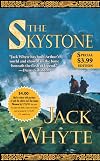
I first read this book when I was a teenager and obsessed with all things Arthurian, and that's the perspective from which I read it. The final books in the series hadn't been written when I was reading the series, so I set the series aside for over 20 years waiting for the end to be written. Rereading this book now in preparation for finishing reading the end of the series, I realize this is actually a book about preppers/survivalists anticipating the zombie apolca...er...fall of Rome! show more Still entertaining but also kind of hilarious. Also on second reading I'm more annoyed with the main character who [spoilers follow]
Insists on announcing his name all over creation after having gone through the trouble of faking his own death. I mean, really? But still a fairly fun book, if not one rich in great female characters or even vaguely authentic dialogue. I'm interested to know what other surprises are in store for me during this series re-read! show less
Insists on announcing his name all over creation after having gone through the trouble of faking his own death. I mean, really? But still a fairly fun book, if not one rich in great female characters or even vaguely authentic dialogue. I'm interested to know what other surprises are in store for me during this series re-read! show less
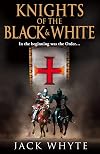
Oh deary me. It had such promise. A trilogy (this being the first) telling the story of the founding, flourishing & sudden decimation of the Templar knights sounded like a rip-roaring tale. How very wrong. At 548 pages, this is easily twice as long as it needed to be. He gets badly sidetracked into long conversations and descriptions that don't advance the story any. The characters are a bit one dimensional and I'm fairly sure he gets confused as to who is where and related to whom at show more various points along the way.
And then he felt the need to invent some ridiculous secret order that are from Christian families, but claim a direct line of descent from a bunch of Jewish priests exiled from Jerusalem in the first century. Really? And then, towards the end, there's an Egyptian temple connection - all highly improbable. The pages and pages and pages of hocus pocus that got spouted about reforming the church and how the secret order would change the world were really not worth the effort. I haven't read such tosh since Dan Brown. Put it this way, no way am I seeking out volumes 2 & 3. show less
And then he felt the need to invent some ridiculous secret order that are from Christian families, but claim a direct line of descent from a bunch of Jewish priests exiled from Jerusalem in the first century. Really? And then, towards the end, there's an Egyptian temple connection - all highly improbable. The pages and pages and pages of hocus pocus that got spouted about reforming the church and how the secret order would change the world were really not worth the effort. I haven't read such tosh since Dan Brown. Put it this way, no way am I seeking out volumes 2 & 3. show less
Lists
Awards


You May Also Like


Associated Authors
Statistics
- Works
- 37
- Members
- 11,776
- Popularity
- #1,998
- Rating
- 3.9
- Reviews
- 191
- ISBNs
- 260
- Languages
- 7
- Favorited
- 30
