
Robyn Young (1) (1975–)
Author of Brethren
For other authors named Robyn Young, see the disambiguation page.
About the Author
Image credit:
www.vjbooks.com
Series
Works by Robyn Young
Recviem 2 1 copy
Tagged
Common Knowledge
- Birthdate
- 1975
- Gender
- female
- Education
- University of Sussex (MA - Creative Writing)
- Occupations
- festival organiser
music promoter
investment advisor
festival organizer
creative writing teacher - Awards and honors
- Waterstones 25 Authors for the Future (2007)
- Nationality
- UK
- Birthplace
- Oxford, Oxfordshire, England, UK
- Places of residence
- Brighton, Sussex, England, UK
- Map Location
- England, UK
Members
Reviews
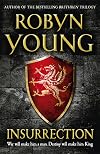
I received this book as a Goodreads First Reads giveaway.
Unfortunately, though I tried, I wasn't able to finish this book.
When I saw this book on the giveaways page, I was so very excited. I love historical fiction, especially as it pertains to Scotland. I am not a history buff by any stretch, but give me some kilted men, some action, a little romance, and I am very much there.
However, this book had no kilted men, very little action, and next to no romance. To be fair, the kilted men is not show more the author's fault. (The kilt wasn't a big part of the highland dress until many years after the book is set.)
I started reading on August 10. By August 24, I had only read 230 pages. This in itself is very odd to me. I generally devour books, but I couldn't get into this one at all. It was dry, almost textbook-like in its style. Technically, the writing is excellent. But writing requires more than technical excellence to be good... it needs to grab the reader. I never felt grabbed by Insurrection.
I never felt drawn to the characters, and at certain points I was skimming pages, not knowing or really caring what happened. The story jumps around a lot, with large chunks of time passing (weeks to years) between most of the chapters. I think that, to me, that should have been my first clue as to what I was getting into. It was a very plodding, slow moving story.
I picked the book up again on December 27 to try and finish it off. I read another 48 pages of it, and it was soon apparent that I was not going to be able to finish it. While I wasn't reading the book, I never once thought "I really need to pick that book up again" except to fulfill my obligations as a Goodreads reviewer.
I really tried, but I just couldn't finish it. I may try and read it again someday, but I don't foresee that day being any time soon.
I would, however, recommend this book to people who are sticklers for historical detail above all else. I don't actually know how accurate the book is, but since it reads more like a textbook than a work of fiction to me, I would generally recommend it more to academics rather than kilt-loving romantics like myself. show less
Unfortunately, though I tried, I wasn't able to finish this book.
When I saw this book on the giveaways page, I was so very excited. I love historical fiction, especially as it pertains to Scotland. I am not a history buff by any stretch, but give me some kilted men, some action, a little romance, and I am very much there.
However, this book had no kilted men, very little action, and next to no romance. To be fair, the kilted men is not show more the author's fault. (The kilt wasn't a big part of the highland dress until many years after the book is set.)
I started reading on August 10. By August 24, I had only read 230 pages. This in itself is very odd to me. I generally devour books, but I couldn't get into this one at all. It was dry, almost textbook-like in its style. Technically, the writing is excellent. But writing requires more than technical excellence to be good... it needs to grab the reader. I never felt grabbed by Insurrection.
I never felt drawn to the characters, and at certain points I was skimming pages, not knowing or really caring what happened. The story jumps around a lot, with large chunks of time passing (weeks to years) between most of the chapters. I think that, to me, that should have been my first clue as to what I was getting into. It was a very plodding, slow moving story.
I picked the book up again on December 27 to try and finish it off. I read another 48 pages of it, and it was soon apparent that I was not going to be able to finish it. While I wasn't reading the book, I never once thought "I really need to pick that book up again" except to fulfill my obligations as a Goodreads reviewer.
I really tried, but I just couldn't finish it. I may try and read it again someday, but I don't foresee that day being any time soon.
I would, however, recommend this book to people who are sticklers for historical detail above all else. I don't actually know how accurate the book is, but since it reads more like a textbook than a work of fiction to me, I would generally recommend it more to academics rather than kilt-loving romantics like myself. show less
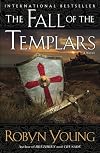
Concluding volume of the Brethren trilogy on the Templars. This one does just what its title promises: recounts the eventual fall and dissolution of the Templar order. Will Campbell, the Scottish Templar, deserts, and wanting to fight for his native land against Edward I of England, joins the rebels under William Wallace and reconnects with family members, whom he hasn't seen for decades. After the unsuccessful Battle of Falkirk, he returns to France and is caught up in the politics between show more the evil King Philippe and the Church. Heresy and disgusting, blasphemous practices are found among the Templar ranks, so Philippe, desiring their treasure for his own purposes, begins wiping them out. Although the demise of the Templars was horrific, the end was satisfying as to Will's fate.
Very well written and evocative of that period. I don't feel you have to read the two previous volumes in the trilogy; enough backstory was explained to have all make sense. The author admits to changing the order of some of the events, the better to tell a good story, despite her impeccable research. I feel the prologue unnecessary, illustrating in broad strokes an incident repeated later but more detailed. Highly recommended. show less
Very well written and evocative of that period. I don't feel you have to read the two previous volumes in the trilogy; enough backstory was explained to have all make sense. The author admits to changing the order of some of the events, the better to tell a good story, despite her impeccable research. I feel the prologue unnecessary, illustrating in broad strokes an incident repeated later but more detailed. Highly recommended. show less
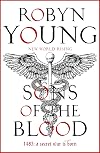
This is the first volume in Young’s third historical fiction trilogy and is set at the end of the Wars of the Roses in 15th century England, from Richard’s attempts to take the throne through to the Battle of Bosworth. The central conceit here is that the story of the Princes in the Tower is incorrect: rather than being murdered by King Richard III to help him claim the throne, the princes survive.
The central character is Jack Wynter, the illegitimate son of Thomas Vaughan. Vaughan is show more close to King Edward and guardian of the King’s son, Prince Edward. When King Richard executes Vaughan and imprisons the Prince, Jack is drawn into a complex international conspiracy involving the Prince and a secret society looking for secrets that Vaughan has entrusted to the unwitting Jack.
The historical setting and the interweaving of fact and fiction are very well done. The depiction of this as a violent age and the graphic descriptions of that violence are striking. In this book Jack comes across as a bit of a whiner, never satisfied whatever his situation, so not very sympathetic. A lot of characters are introduced and we never get a clear picture of who they are or what they stand for before we move on to someone else. The English dynastic picture is very confusing here: everyone seems to have the same name and they are all the third cousin of the wife of the Duke’s great uncle or some such.
This book is pretty good, but suffers greatly from the burdens of squeezing too many characters and an over complicated plot into what is just the first part of a much larger narrative to come. show less
The central character is Jack Wynter, the illegitimate son of Thomas Vaughan. Vaughan is show more close to King Edward and guardian of the King’s son, Prince Edward. When King Richard executes Vaughan and imprisons the Prince, Jack is drawn into a complex international conspiracy involving the Prince and a secret society looking for secrets that Vaughan has entrusted to the unwitting Jack.
The historical setting and the interweaving of fact and fiction are very well done. The depiction of this as a violent age and the graphic descriptions of that violence are striking. In this book Jack comes across as a bit of a whiner, never satisfied whatever his situation, so not very sympathetic. A lot of characters are introduced and we never get a clear picture of who they are or what they stand for before we move on to someone else. The English dynastic picture is very confusing here: everyone seems to have the same name and they are all the third cousin of the wife of the Duke’s great uncle or some such.
This book is pretty good, but suffers greatly from the burdens of squeezing too many characters and an over complicated plot into what is just the first part of a much larger narrative to come. show less
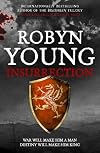
In the 13th century King Edward the First of England has conquered Wales and now sets his sights on Scotland. After the convenient death of the Scottish King Edward invades and sets up a new puppet monarch. The Scottish nobles are not happy but fight amongst themselves. One family of powerful nobles with a claim to the throne are the Bruce family and this book follows the story of Robert Bruce from childhood through service to the king and finally through to exile after supporting William show more Wallace.
As this is the 700th anniversary of the battle of Bannockburn there has been much about Bruce in the media and as someone with an interest in medieval history I thought to give this book a go. It's a weighty tome and obviously well-researched but it just didn't grab my attention as much as it could have done. The difficulty with historical fiction is melding fictional characterisation to historical facts and that is where Young's writing falls down for me. However I have bought the second book in the series so I will continue the story! show less
As this is the 700th anniversary of the battle of Bannockburn there has been much about Bruce in the media and as someone with an interest in medieval history I thought to give this book a go. It's a weighty tome and obviously well-researched but it just didn't grab my attention as much as it could have done. The difficulty with historical fiction is melding fictional characterisation to historical facts and that is where Young's writing falls down for me. However I have bought the second book in the series so I will continue the story! show less
Lists
Awards


You May Also Like


Associated Authors
Statistics
- Works
- 13
- Members
- 2,694
- Popularity
- #9,536
- Rating
- 3.7
- Reviews
- 66
- ISBNs
- 203
- Languages
- 10
- Favorited
- 5