
Giles Kristian
Author of Blood Eye
About the Author
Series
Works by Giles Kristian
Associated Works
Tagged
Common Knowledge
- Birthdate
- 1975
- Gender
- male
- Occupations
- singer-songwriter
model
advertising copywriter - Nationality
- Norway
UK - Birthplace
- Leicestershire, England, UK
- Places of residence
- New York, USA
England, UK - Associated Place (for map)
- England, UK
Members
Reviews
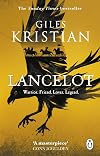
''I smell the rising fog of the crowd's breath. It warms my feathers against the thin dawn air and I watch. I feel, too. More than a bird should feel. The sorrow which lies over the assembly like a shroud. The fear. The uncertainty and the regret.''
A boy who watched his people perish. A student who became the first among his ranks, guided by Lady Nimoue and Merlin. A young warrior who fought by the side of a great leader. A man who loved the one woman he wasn't allowed to. A fighter. A show more betrayer. His name became part of the greatest saga. Lancelot.
''The day after Uther died, grey clouds rolled in from the ocean to cloak Tintagel in a dark pull and the sound of women's wailing hung in the air like the threat of rain. I'd heard some women saying that Britain was gods-cursed, which was why the Saxons were getting stronger while our own great warlord lay stiff and cold.''
It seems difficult to breathe new life to a legend that has been echoing loudly throughout the ages. No matter our cultural background, we all know about Arthur, Guinevere, Lancelot, Morgana, Merlin and Morder and the stories of the Knights of the Round Table. By placing Lancelot at the centre of the action, Kristian achieves the impossible. He makes the legend new, he creates a wondrous tale that you feel you've never heard before.
The story is stripped of most of High Fantast elements. What we have is a very realistic, raw and rich adventure of a land that tries to stand on two boats. The pagan past and Christianity, the lust of every warlord-king and the urgent need to unify and defend itself against the invaders. Whatever magic there is can be found deeply connected to the ancient roots and the sacred traditions that accompany the warriors of old before a new age that is about to begin. Lancelot embodies the very humane confusion of struggling to belong and do your duty, divided by good sense and the demands of the heart that walks on a path of its own. The druids and their conspiracies, the gods of War and the Sea and the shriek of Morrigan's call are loud and depicted in extraordinary detail and accuracy.
Lancelot is a controversial character in the Arthurian saga. Here, he becomes the protagonist, a very sympathetic voice who fights between loyalty and love. Arthur is the leader we all know, Merlin is the voice of the past, Morder is the sly one but his motives are clear and he becomes quite the tragic figure. It is Guinevere I really, really loved. Kristian presents a true heroine, enchanting, mysterious, pragmatic, level-headed. As it is always the women who are blamed for every ill that befell Arthur and his dream, this version of Guinevere is the best I've ever come across.
Fierce battles, legends that rise from the mists of a sacred land, character larger than life. Giles Kristian reimagines the Arthurian epic and the result is unique. I can't wait to read Camelot.
''A prince without a kingdom and a hawk that can't fly. The bards could weave a sad tale there.''
My reviews can also be found on https://theopinionatedreaderblog.wordpress.com/ show less
A boy who watched his people perish. A student who became the first among his ranks, guided by Lady Nimoue and Merlin. A young warrior who fought by the side of a great leader. A man who loved the one woman he wasn't allowed to. A fighter. A show more betrayer. His name became part of the greatest saga. Lancelot.
''The day after Uther died, grey clouds rolled in from the ocean to cloak Tintagel in a dark pull and the sound of women's wailing hung in the air like the threat of rain. I'd heard some women saying that Britain was gods-cursed, which was why the Saxons were getting stronger while our own great warlord lay stiff and cold.''
It seems difficult to breathe new life to a legend that has been echoing loudly throughout the ages. No matter our cultural background, we all know about Arthur, Guinevere, Lancelot, Morgana, Merlin and Morder and the stories of the Knights of the Round Table. By placing Lancelot at the centre of the action, Kristian achieves the impossible. He makes the legend new, he creates a wondrous tale that you feel you've never heard before.
The story is stripped of most of High Fantast elements. What we have is a very realistic, raw and rich adventure of a land that tries to stand on two boats. The pagan past and Christianity, the lust of every warlord-king and the urgent need to unify and defend itself against the invaders. Whatever magic there is can be found deeply connected to the ancient roots and the sacred traditions that accompany the warriors of old before a new age that is about to begin. Lancelot embodies the very humane confusion of struggling to belong and do your duty, divided by good sense and the demands of the heart that walks on a path of its own. The druids and their conspiracies, the gods of War and the Sea and the shriek of Morrigan's call are loud and depicted in extraordinary detail and accuracy.
Lancelot is a controversial character in the Arthurian saga. Here, he becomes the protagonist, a very sympathetic voice who fights between loyalty and love. Arthur is the leader we all know, Merlin is the voice of the past, Morder is the sly one but his motives are clear and he becomes quite the tragic figure. It is Guinevere I really, really loved. Kristian presents a true heroine, enchanting, mysterious, pragmatic, level-headed. As it is always the women who are blamed for every ill that befell Arthur and his dream, this version of Guinevere is the best I've ever come across.
Fierce battles, legends that rise from the mists of a sacred land, character larger than life. Giles Kristian reimagines the Arthurian epic and the result is unique. I can't wait to read Camelot.
''A prince without a kingdom and a hawk that can't fly. The bards could weave a sad tale there.''
My reviews can also be found on https://theopinionatedreaderblog.wordpress.com/ show less
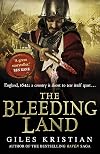
This is a compelling story, thrilling and captivating, and taking place amid the 17th Century frenzy of blood-letting and tumultuous chaos that was the unthinkable; the English Civil War.
However, I think it is actually a love story.
A story about love of family and love of country. And how they came to be incompatible. How love can become so strong - maybe too strong - and turned to hatred for those you know you should love, but seem not to understand your love. Then how the conflict it show more unleashes, in the country and within the family, despite everyone's best intentions turns that love on its head until it leads to hate.
Phew! Weighty themes maybe, but by homing in on one family, the Rivers, and thus mirroring the conflict in the country at large, Giles Kristian weaves a thoroughly satisfying and exciting tale. One that will surely shock and delight in equal measures. But only 'shock' if you read this with your 21st Century moral glasses on. This is how life was back then. We can't be shocked over something people in the 17th Century thought was just how life - and death - was. Certainly, if it was a film, there are passages where you'd look away, but then, someone was actually employed, for goodness-sake, to hang, draw and quarter people. To rip open their chest and remove their heart (check Wikipedia). We can't judge the 17th Century by our 21st Century standards (they at least had the good grace to kill each other face to face, not while sat in a control room two continents away). So don't go getting all squeamish and pretend to be shocked. Go get your 'history' from Barbara Cartland and Mills and Boon instead, if that's the case. This how it was, no way around it. This is almost touchably real. There are some graphically harsh passages, yes ('barsk' as we say here where I live in Denmark. Possibly also in Norway where Giles is partly from), but this is a vigorous book, about an apocalyptic period for society, for Church, for the State and most of all, for ordinary people and their families. And one with themes that I feel still resonate today.
Each side is of course certain they are right, the other is wrong (sound familiar?) and while the Rivers begin as a tight-knit family of reasonably well-to-do Lancashire land-owners - and supporters of the Crown, we soon see how, from small and seeming innocuous beginnings, their family - and society - implodes as the country explodes with tension and mistrust. And then it spirals out of control.
Giles gives us an excellent insight into how ordinary people were turned into combatants, and got swept away by currents beyond their experience. How they saw the situation at close quarters and merely tried to stay alive. I particularly enjoyed the way he shows how differing viewpoints could spring from the same well of passion and how King-supporting brother could be set against a brother forced away by hate to the Parliamentarian side. How love can turn to passionate, heart-breaking hatred. Then how the period's deep-seated fears of hidden religious agendas, agent provocateurs, witchcraft and devil-worship, burst through and fear and retribution was given full reign. In a land where a suitable punishment for having the wrong religious beliefs, was to be hung drawn and quartered; anything went.
Yeah, obviously I haven't a full understanding of how life really was back then. I mean; I'm old, but not THAT old. But 'The Bleeding Land' - from what I remember of my studies of this period in English History at school - is surely how life really was (we studied this period through analysing period documents. The period before the Civil War, the Interregnum, then the 'climb-down' as we called it, and the re-instatement of the (changed) monarchy to England). It's a hard-edged book about a hard time. Death easier than life, it seems.
'The Bleeding Land' is jam-packed full of the sights and sounds - and smells - of 17th Century English life at its roughest and its rawest, bristling with noisy passions on the edge of reason. Or the abyss - depending on your point of view at the time. A period - as Giles himself notes - people have heard of, but few know much about. Let's face it, even for people of my generation, most when hearing 'Cavalier' will think of a car.
And this is just the mouth-watering start of the Rivers family story. There is surely much more excitement to come.
One more thing: I found the 'Afterward' a thought-provoking read. What I came to think of after reading it - and taking it on much further than is probably wise - is that with 'The Bleeding Land' and the divisive English Civil War, maybe one can see the start of the polar opposite, two-party system that we had/have in England/Britain and which the Puritans took with them too the USA. Where, if it isn't white, it must be black. If you aren't with us, you must be against us. No surprise then, that the US had their own Civil War, I say. As opposed to, as I see it, the much more sensible, cross-party, coalition system of consensus I now enjoy living here in Europe, here in Denmark. It took a bit of getting used to, I can tell you, when I heard that the Government would invite the Opposition to come in and discuss policy the Government was responsible for. But then, they never had their society torn asunder by civil war as England and the (early) US did. They never had to take sides against family and friends. And it shows.
So, as the traditional "We're 100% right. You're 100% wrong" US Presidential battle moves on to its depressingly divisive final conclusion in a day's time, Giles Kristian has written a book about the past, still relevant today. An apocalyptic period for England, for Church, for society; a gift for a writer of Giles Kristian's tremendous narrative abilities. A period that could possibly have shaped how we are now. show less
However, I think it is actually a love story.
A story about love of family and love of country. And how they came to be incompatible. How love can become so strong - maybe too strong - and turned to hatred for those you know you should love, but seem not to understand your love. Then how the conflict it show more unleashes, in the country and within the family, despite everyone's best intentions turns that love on its head until it leads to hate.
Phew! Weighty themes maybe, but by homing in on one family, the Rivers, and thus mirroring the conflict in the country at large, Giles Kristian weaves a thoroughly satisfying and exciting tale. One that will surely shock and delight in equal measures. But only 'shock' if you read this with your 21st Century moral glasses on. This is how life was back then. We can't be shocked over something people in the 17th Century thought was just how life - and death - was. Certainly, if it was a film, there are passages where you'd look away, but then, someone was actually employed, for goodness-sake, to hang, draw and quarter people. To rip open their chest and remove their heart (check Wikipedia). We can't judge the 17th Century by our 21st Century standards (they at least had the good grace to kill each other face to face, not while sat in a control room two continents away). So don't go getting all squeamish and pretend to be shocked. Go get your 'history' from Barbara Cartland and Mills and Boon instead, if that's the case. This how it was, no way around it. This is almost touchably real. There are some graphically harsh passages, yes ('barsk' as we say here where I live in Denmark. Possibly also in Norway where Giles is partly from), but this is a vigorous book, about an apocalyptic period for society, for Church, for the State and most of all, for ordinary people and their families. And one with themes that I feel still resonate today.
Each side is of course certain they are right, the other is wrong (sound familiar?) and while the Rivers begin as a tight-knit family of reasonably well-to-do Lancashire land-owners - and supporters of the Crown, we soon see how, from small and seeming innocuous beginnings, their family - and society - implodes as the country explodes with tension and mistrust. And then it spirals out of control.
Giles gives us an excellent insight into how ordinary people were turned into combatants, and got swept away by currents beyond their experience. How they saw the situation at close quarters and merely tried to stay alive. I particularly enjoyed the way he shows how differing viewpoints could spring from the same well of passion and how King-supporting brother could be set against a brother forced away by hate to the Parliamentarian side. How love can turn to passionate, heart-breaking hatred. Then how the period's deep-seated fears of hidden religious agendas, agent provocateurs, witchcraft and devil-worship, burst through and fear and retribution was given full reign. In a land where a suitable punishment for having the wrong religious beliefs, was to be hung drawn and quartered; anything went.
Yeah, obviously I haven't a full understanding of how life really was back then. I mean; I'm old, but not THAT old. But 'The Bleeding Land' - from what I remember of my studies of this period in English History at school - is surely how life really was (we studied this period through analysing period documents. The period before the Civil War, the Interregnum, then the 'climb-down' as we called it, and the re-instatement of the (changed) monarchy to England). It's a hard-edged book about a hard time. Death easier than life, it seems.
'The Bleeding Land' is jam-packed full of the sights and sounds - and smells - of 17th Century English life at its roughest and its rawest, bristling with noisy passions on the edge of reason. Or the abyss - depending on your point of view at the time. A period - as Giles himself notes - people have heard of, but few know much about. Let's face it, even for people of my generation, most when hearing 'Cavalier' will think of a car.
And this is just the mouth-watering start of the Rivers family story. There is surely much more excitement to come.
One more thing: I found the 'Afterward' a thought-provoking read. What I came to think of after reading it - and taking it on much further than is probably wise - is that with 'The Bleeding Land' and the divisive English Civil War, maybe one can see the start of the polar opposite, two-party system that we had/have in England/Britain and which the Puritans took with them too the USA. Where, if it isn't white, it must be black. If you aren't with us, you must be against us. No surprise then, that the US had their own Civil War, I say. As opposed to, as I see it, the much more sensible, cross-party, coalition system of consensus I now enjoy living here in Europe, here in Denmark. It took a bit of getting used to, I can tell you, when I heard that the Government would invite the Opposition to come in and discuss policy the Government was responsible for. But then, they never had their society torn asunder by civil war as England and the (early) US did. They never had to take sides against family and friends. And it shows.
So, as the traditional "We're 100% right. You're 100% wrong" US Presidential battle moves on to its depressingly divisive final conclusion in a day's time, Giles Kristian has written a book about the past, still relevant today. An apocalyptic period for England, for Church, for society; a gift for a writer of Giles Kristian's tremendous narrative abilities. A period that could possibly have shaped how we are now. show less
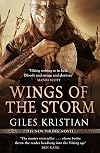
A quite brilliant read from first to last page, and much to my disgust the last of a trilogy, but why stop there Giles, Sigurd is still a young man not yet even in his prime, why not follow Bernard Cornwell's example with "Uhtred" who is positively ancient by the standards of the time still going strong and recently survived book 10.
As previously stated this is the final part of a trilogy, but don't fear if you have not read the previous books(though WHY NOT) this can be read as a stand show more alone book. Well written and with outstanding characterisations throughout a real sense of time and place, and action packed, in fact the battle when our heroes army comes face to face with his nemesis the oath breaker lasts 84 pages, of almost non stop action, you almost feel a part of the shield wall full of the blood and gore of close up hand to hand combat.
Outstanding and heartily recommended. show less
As previously stated this is the final part of a trilogy, but don't fear if you have not read the previous books(though WHY NOT) this can be read as a stand show more alone book. Well written and with outstanding characterisations throughout a real sense of time and place, and action packed, in fact the battle when our heroes army comes face to face with his nemesis the oath breaker lasts 84 pages, of almost non stop action, you almost feel a part of the shield wall full of the blood and gore of close up hand to hand combat.
Outstanding and heartily recommended. show less
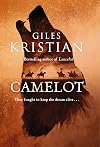
Escape the modern world and be taken back to a time when life's challenges were of a far different nature. Adventure and danger run alongside emotion and growth in this new grand epic. A wonderful cast of characters and a plot that leads to destinations unknown. Beautifully written, the language lacks the archaic nature of some historical works and yet it fits so beautifully to the story. A modern narration with the soul of times long gone past. I had already read its predecessor, Lancelot, show more and perhaps it would help place some of the characters if you have, but I think you could easily read this as a standalone, as it is very much its own full story. show less
Lists
Awards


You May Also Like


Associated Authors
Statistics
- Works
- 19
- Also by
- 1
- Members
- 1,442
- Popularity
- #17,832
- Rating
- 3.8
- Reviews
- 39
- ISBNs
- 108
- Languages
- 8