
Rosalind Miles
Author of I, Elizabeth
About the Author
Rosalind Miles, PhD, is a critically acclaimed English novelist, essayist, lecturer, and BBC broadcaster. Her novels-including Guenevere, Queen of the Summer Country and I, Elizabeth-have been international bestsellers. She lives in Hertfordshire, England.
Image credit: Rosalind Miles
Series
Works by Rosalind Miles
Associated Works
Tagged
Common Knowledge
- Birthdate
- 1943-01-06
- Gender
- female
- Education
- University of Oxford
King Edward VI High School for Girls, Edgbaston, Birmingham, UK
University of Birmingham (Shakespeare Institute)
University of Leicester - Occupations
- novelist
essayist
broadcaster
journalist
social activist - Awards and honors
- Royal Society of Arts (Fellow)
- Relationships
- Cross, Robin (husband)
- Short biography
- From her website: Born in Warwickshire, Rosalind is the youngest of three sisters and had a happy and lucky childhood, surviving a spell in an iron lung during an attack of polio at the age of four. She was flown up to the academic hothouse of King Edward VI High School for Girls at the age of 10, and from there to read English at Oxford University, where she won the Eleanor Rooke Memorial Prize, the Principal’s Prize of St Hilda’s College and a State Studentship Award. She subsequently studied at the Shakespeare Institute, University of Birmingham, where she was awarded an MA and a Ph.D, and at the Centre for Mass Communication Research at the University of Leicester, where she collected her fifth degree, a starred MA*, the only Distinction to be awarded in the history of the program.
Rosalind Miles has taught and lectured at the universities of London, Birmingham and Coventry in the UK, and at City University of New York and the University of Texas at Austin in the USA, among others. Before leaving academe to pursue writing and consultancy full time, she was the deputy Head of the Media Centre at Coventry University. She's the author of 23 books of fiction and non-fiction.
She has presented her own radio and television programs, and also has appeared on ITV’s The Monarchy Debate, as five times national champion of BBC R4’s Round Britain Quiz, CNN, CBS, PBS, WNBC, WBS, RTE, and countless local stations. The mother of two grown-up children, Rosalind is married to fellow writer and Oxford scholar, the historian Robin Cross, and lives in Kent. - Nationality
- UK
- Birthplace
- Warwickshire, England, UK
- Places of residence
- Kent, England, UK
Los Angeles, California, USA - Associated Place (for map)
- England, UK
Members
Reviews
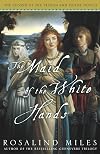
Two books in to this re-read, and the story of the doomed Tristan and Isolde becomes ever more complicated. We’ve jumped perspectives since the final pages of the first novel, which saw Isolde mistakenly marry Tristan’s uncle, King Mark of Cornwall, and now we’re seeing the outcome of what 10 years of secrets has done. I’m honestly not sure how they’ve managed to get away with their tryst for so long, since neither party seems to be that cunning and there’s no way they spend all show more their time away from Mark’s home castle… That aside, we see Isolde begin to take the reigns of her own power, as the death of her mother gives her the crown of Ireland by the Mother-right. Miles’ main themes for these novels also begins to become apparent here, as we see the shift towards Christianity that defined the Arthurian era create tension in terms of royal lineages, seats of power, and basic relationships between men and women. Even without a distinct exploration of themes, this novel has even more adventure and storyline than the first book, as we see a multitude of journeys carried out by each of the many characters, driving interweaving plotlines as schemes play out around Tristan and Isolde. We know we’re headed towards a final book with a melancholy ending, and here we also begin to see the joy of the two lovers begin to intermingle more freely with the tragedy of their eventual separation, setting the tone for the final dramatic act that will complete their story. show less
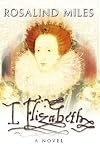
This book is dire.
It suffers from the 'hey-nonny-no' school of historical novel which tries desperately to reproduce the spoken language of Tudor times. In this it is no worse than any other badly written historical novel.
However, it is full of anachronisms. The one that made me laugh out loud was the name of King Henry VIII's physician...Dr Wendy. The name Wendy was invented by J M Barrie when he created his novels and plays about Peter Pan. The name comes from 'frwendy' which is baby show more talk. It did not exist either as a first name or surname until Barrie invented it in the early years of the 20th century. So to name a character Wendy in a novel set in Tudor times is absolutely ludicrous. Any editor worth his or her salt should have been aware of this. Another howler is the use of the word 'dieting' - Tudor people would not have understood the term, it is again a 20thC concept.
It is anachronisms like these that give historical fiction a bad name. I have put this book in the recycling bin; I was going to take it to the charity shop but on second thoughts it's far too bad to inflict on other readers. show less
It suffers from the 'hey-nonny-no' school of historical novel which tries desperately to reproduce the spoken language of Tudor times. In this it is no worse than any other badly written historical novel.
However, it is full of anachronisms. The one that made me laugh out loud was the name of King Henry VIII's physician...Dr Wendy. The name Wendy was invented by J M Barrie when he created his novels and plays about Peter Pan. The name comes from 'frwendy' which is baby show more talk. It did not exist either as a first name or surname until Barrie invented it in the early years of the 20th century. So to name a character Wendy in a novel set in Tudor times is absolutely ludicrous. Any editor worth his or her salt should have been aware of this. Another howler is the use of the word 'dieting' - Tudor people would not have understood the term, it is again a 20thC concept.
It is anachronisms like these that give historical fiction a bad name. I have put this book in the recycling bin; I was going to take it to the charity shop but on second thoughts it's far too bad to inflict on other readers. show less
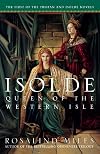
I originally read this series of novels back in high school, when I was deeply obsessed with the Arthurian mythos, and immediately loved Rosalind Miles’ feminist take on these classic tales of knights and ladies. To a more mature eye, her language is a touch stilted in comparison to many other books, but the slightly lofty tone takes on the verbage of mythology itself and still works to tell the story in an engaging way. This style gives readers a bit more distance from the characters than show more we’re used to, even though Miles uses a varying narrative perspective to explore the minds and motivations of a vast number of the characters. Most importantly, she explores the titular Isolde, Princess of Ireland and later Queen of Cornwall, and her lover, Tristan of Lyonesse. Their story is expectedly tragic (we all know the outcome that is forthcoming unfortunately), and even though we can see that in some instances it is the sheer human stupidity and happenstance that causes their misfortune we can’t help but be swept up in their epic romance. Miles grounds their story in relatively realistic family drama (taken to an occasional overdramatic height, because, well, royalty) and a wonderfully fantastic historicity that while definitely fictitious harkens back to the Goddess-worshipping days before the domination of Christianity on the British Isles. Overall, Miles tells a very intriguing and engaging tale, and I might finish a full re-read of the trilogy later this summer if I’m feeling it! show less
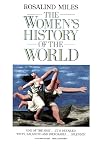
Wit and a love of language prevent Rosalind Miles' rage at the suppression of women overwhelming this fascinating history of the female experience and the place of women in the world from the earliest times. Her scholarly research supports her contention that the prehistoric religion of a Great Goddess came to be supplanted my a phallocentric culture that is only now beginning to be diluted by the liberating influence of contraception. She highlights the many women whose importance is show more overlooked by established history and celebrates some of those whose names are known. Rewarding in its information and its form, this is a history book to revisit. show less
Lists
Awards


You May Also Like


Associated Authors
Statistics
- Works
- 30
- Also by
- 1
- Members
- 6,397
- Popularity
- #3,850
- Rating
- 3.6
- Reviews
- 83
- ISBNs
- 182
- Languages
- 13
- Favorited
- 8
